

A sublimation paper roll trades pre-cut convenience for cut-your-own economics: 8.5-inch rolls start at $29.95, 17-inch at $34.95-45, and 24-inch production rolls run $34.95-79, cutting effective sheet cost 40-70% against pre-cut packs once a shop prints past roughly 1,000 letter-equivalents monthly. This guide prices the width ladder with real 2026 listings, names the printers that feed each roll, and runs the break-even math against sheet buying. The roll decision is a volume decision wearing a hardware question.
\n\n\n\n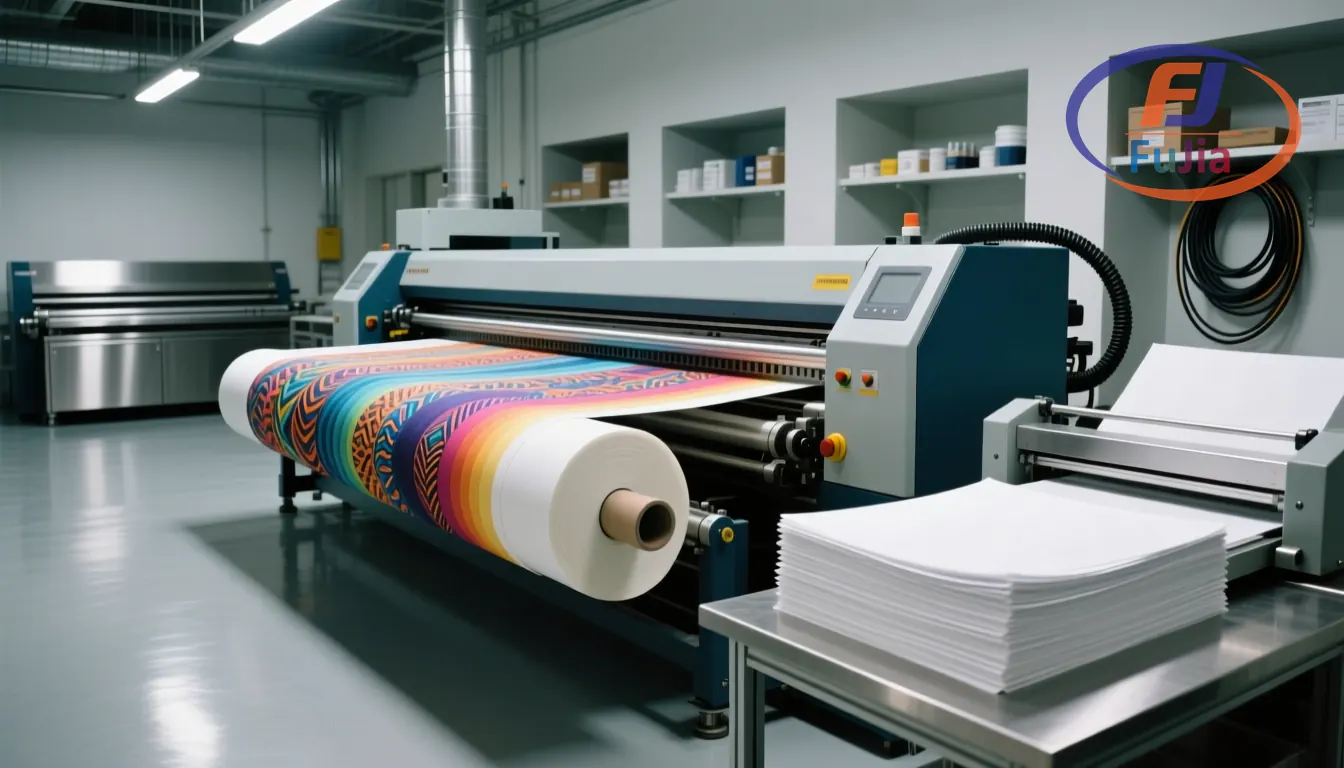
Key Takeaways
\n\n\n\n- \n\n\n
- Real 2026 roll pricing: 8.5 in x 100 ft at $29.95, 17 in x 110 ft Koala at $34.95-45, 24 in x 100 ft at $34.95-79, and 44 in x 394 ft production rolls near $79. \n\n\n
- Roll economics activate near 1,000 letter-size-equivalent prints monthly: below that, cutting labor eats the savings; above it, rolls return 40-70% per-sheet savings that compound monthly. \n\n\n
- The printer gates the format: roll feeding needs an F570-class 24-inch machine, a roll-capable wide format, or a 60 cm sublimation platform, and sheet-only desktops cannot upgrade into rolls; the wider consumables sourcing picture lives in our sublimation paper bulk guide. \n\n\n
- Cut-your-own sizes unlock odd formats, 20 oz tumbler wraps and oversized panels, that pre-cut sheets serve poorly or not at all. \n\n\n
- Roll storage discipline mirrors sheet storage, sealed and dry, plus roll tension care because a poorly wound roll telescopes and misfeeds. \n\n\n
The Width Ladder and 2026 Prices
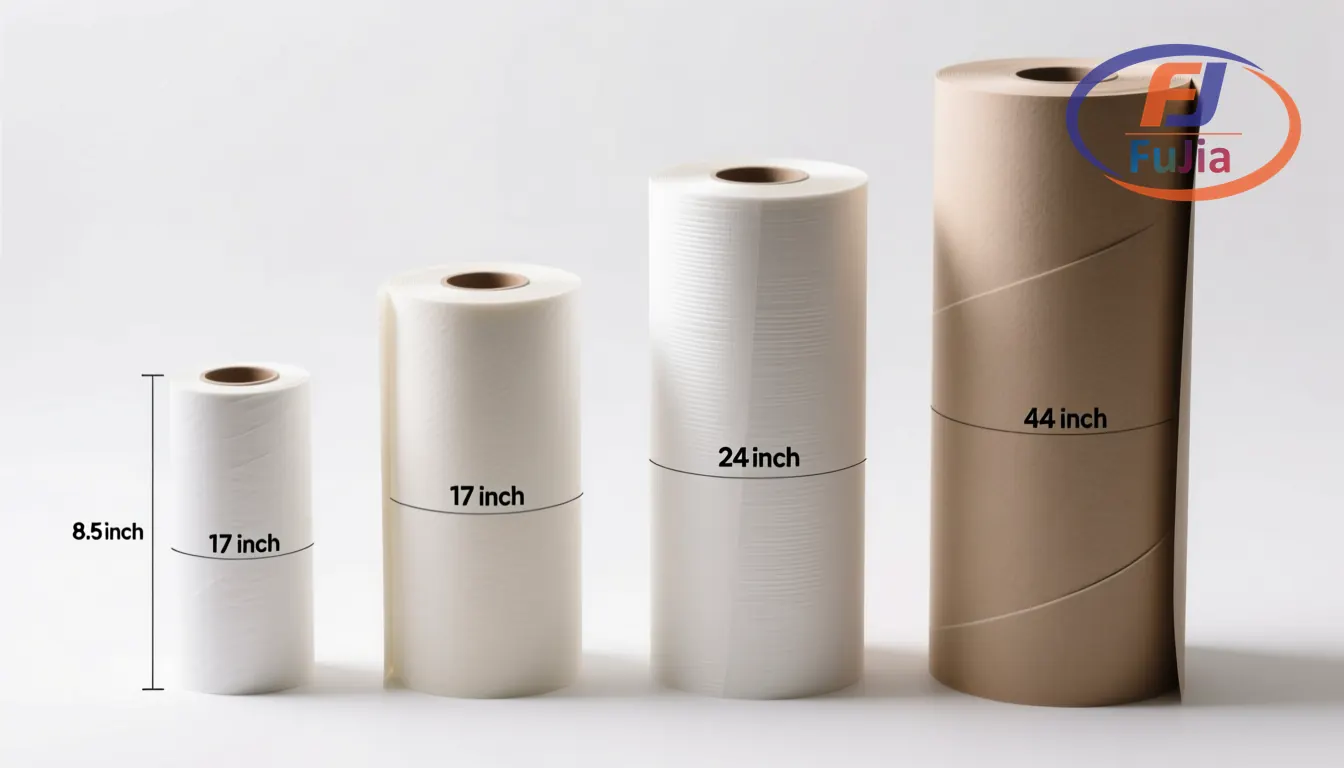
\n\n\n\n| Width | \nLength | \n2026 price | \nFeeds | \nEffective cost | \n
|---|---|---|---|---|
| 8.5 in | \n100 ft | \n$29.95 | \nconverted desktops with roll kits | \n~$0.07/sheet eq. | \n
| 17 in | \n110 ft | \n$34.95-45 | \nA3+ conversions, 17-inch wide format | \n~$0.03-0.04/sheet eq. | \n
| 24 in | \n100-110 ft | \n$34.95-79 | \nEpson F570, T3170x class | \n~$0.03-0.06/sheet eq. | \n
| 44 in | \n394 ft | \n~$79 | \nproduction wide format | \n~$0.03-0.06 per sq ft | \n
The 8.5-inch roll is the quiet value play for desktop converters: it feeds the same width as letter sheets through roll-attachment kits, at roughly $0.07 per letter-equivalent against $0.10-0.18 for pre-cut packs. The 17-inch tier serves the A3+ conversion crowd whose ET-15000-class machines take roll attachments, and the 24-inch tier is the production mainstream, priced openly at $34.95 by InkOwl for F570 and T3170x feeding. The 44-inch tier serves sign-and-banner-scale sublimation where volume per linear foot matters more than per-sheet arithmetic.
\n\n\n\nThe real question with roll pricing is simple: the pattern worth noticing is the flatness across widths, 24-inch rolls cost barely more than 17-inch rolls per foot, which is why shops sizing up printers for throughput find their paper cost per print falling as width grows, the same gang-density logic that drives wide DTF film. Roll buying rewards the format commitment twice, once in width utilization and once in format freedom.
\n\n\n\nRoll vs Sheet: The Break-Even Math
\n\n\n\n| Buyer profile | \nMonthly volume | \nBetter format | \nWhy | \n
|---|---|---|---|
| Weekend crafter | \nunder 150 prints | \nsheets | \ncutting labor dominates | \n
| Working Etsy shop | \n150-1,000 | \nsheets or 8.5 in roll | \ncrossover zone | \n
| Serious seller | \n1,000-3,000 | \nrolls | \n40-60% paper savings | \n
| Production shop | \n3,000+ | \nrolls, 24 in+ | \nsavings compound weekly | \n
The break-even sits where cutting labor stops being free. A pre-cut 8.5×11 sheet costs $0.10-0.18; the same area from a 24-inch roll at $34.95 per 100 feet costs $0.03-0.06, but someone must cut it, and hand-cutting at 20-30 sheets per hour prices labor at $0.50-plus per hour of saved paper. Shops past roughly 1,000 prints monthly either batch-cut with a paper cutter in dedicated sessions or graduate to machines that print-then-cut, and either way the roll wins. Below that volume, the ritual of cutting 40 sheets for tomorrow’s 15 orders is a tax no discount justifies.
\n\n\n\nA sports bag brand we supply runs the production end of that arithmetic: full-bleed edge-to-edge designs print directly from 60 cm roll stock through a roll heat press, order value doubled against cut-sheet production, and the zero-seam warranty record traces to roll workflow removing the misalignment seams introduce. Their setup presumes the wide platform already exists, which is the honest gate on the whole format: the $34.95 roll price is real, but the printer that feeds it is the purchase decision that came first, a ladder documented across our sublimation printers lineup.
\n\n\n\nStorage, Handling, and Cut Discipline
\n\n\n\nRolls carry two failure modes sheets do not.
\n\n\n\nTelescoping, where loose winding lets roll edges slide into a cone, misfeeds every printer and rewards storing rolls on horizontal pins rather than flat surfaces. Edge damage travels: one crushed inch on a roll’s outer edge ruins the first several feet, so the protective wrap stays on until loading and gets replaced on partial rolls. Moisture rules match sheets, sealed and dry, but rolls expose more surface per handling event, which is why production shops load rolls once and print them down rather than swapping formats weekly.
\n\n\n\nCut discipline is where roll economics are actually collected, and most of it happens at the planning stage. The productive pattern is batch-cutting: design day ends with tomorrow’s queue nested onto roll width, one cutting session produces the day’s formats, and a paper cutter with a measured fence turns 10 minutes into 100 sheets. Free-form cutting per order, by contrast, quietly re-prices labor back into every piece and erases the format’s advantage within a week. We recommend a printed cut log taped near the cutter, format, count, and date, because roll savings are a discipline outcome rather than a purchase outcome.
\n\n\n\n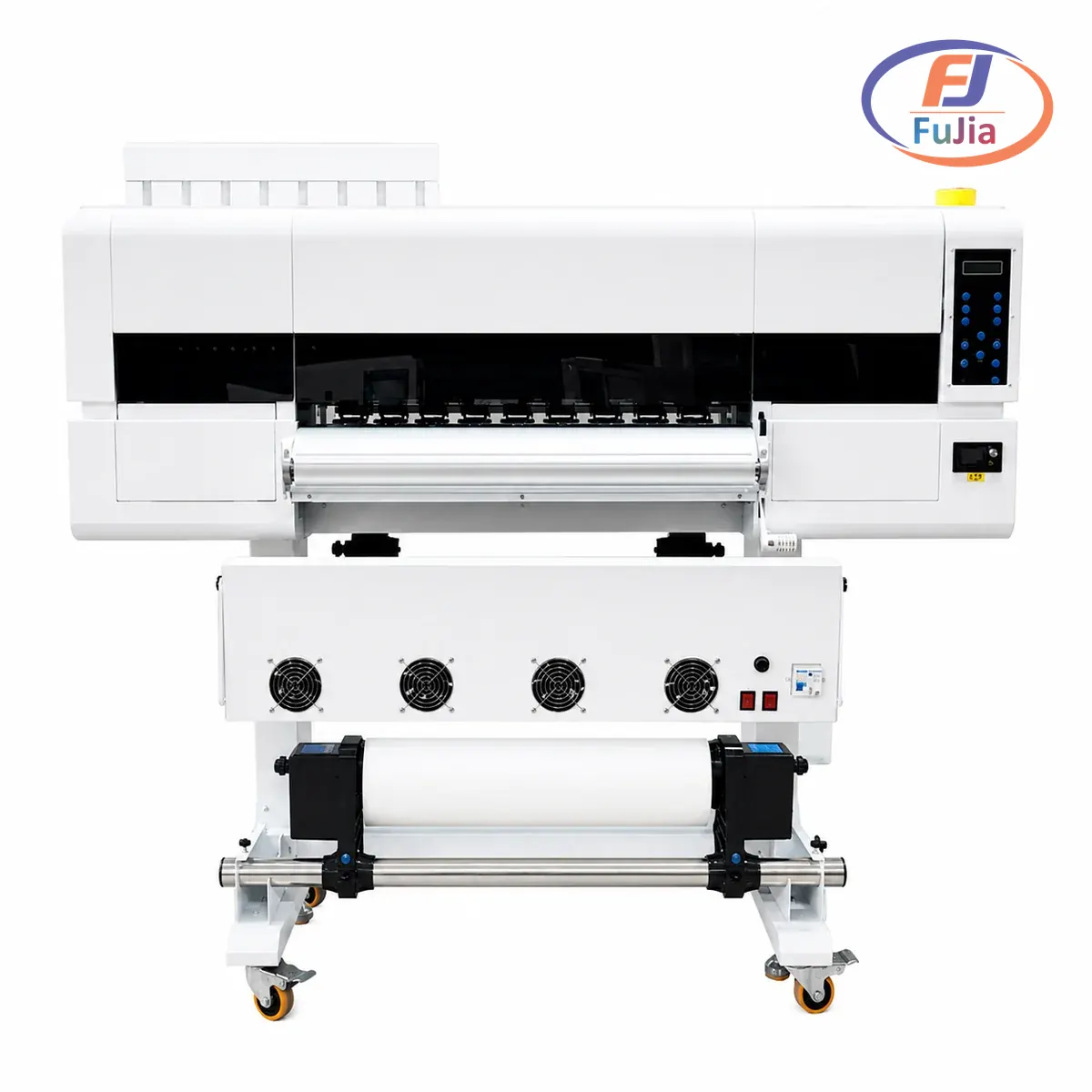
What paper is best for sublimation?
\u003cp\u003eFor volume work, the best sublimation paper is a roll matched to your printer width: 105-125 gsm high-release stock like the Koala 17-inch or InkOwl 24-inch rolls feeds F570-class machines at $34.95-45 with 40-70% per-sheet savings over pre-cut. For craft volumes, mainstream 120 gsm sheets at $19.99 per 110 serve honestly without cutting labor. Judge paper by transfer rate, lot consistency, and the format your printer actually feeds, in that order.\u003c/p\u003e
What is sublimation paper used for?
\u003cp\u003eSublimation paper carries printed dye-sublimation ink from printer to press: its receptive coating captures the ink, holds it through handling, and releases it as gas at 180-200 °C into polyester fabric, polymer-coated mugs, hard blanks, and coated wood. The end products are personalized apparel, drinkware, photo panels, signage, and promotional goods. The paper is a one-use transfer medium, consumed by every print rather than reused. That single-use nature is why its unit economics matter at volume.\u003c/p\u003e
Does Hobby Lobby have sublimation paper?
\u003cp\u003eYes, Hobby Lobby stocks retail sublimation paper, overwhelmingly in pre-cut 8.5×11 sheets from craft brands at $12-27 per pack, with no roll formats because rolls serve production workflows rather than store shelves. Roll buyers order online, where the InkOwl 24-inch at $34.95 and Koala 17-inch at $34.95-45 ship consistently, and case pricing improves on top of that at volume. Craft retail serves the sheet market well and the roll market not at all.\u003c/p\u003e
Can I print sublimation paper on a regular printer?
\u003cp\u003eA piezo inkjet printer dedicated to sublimation ink prints sublimation rolls and sheets perfectly, which covers converted EcoTanks and purpose-built machines alike; the paper format follows the printer’s feed system rather than its brand. A printer still running ordinary dye ink produces nothing transferable. Laser printers cannot sublimate because toner fuses instead of gas-transferring. Dedication to sublimation ink is permanent, since the chemistries contaminate lines and heads beyond recovery.\u003c/p\u003e
Verdict
\n\n\n\nSublimation paper rolls pay where volume and format freedom matter: $29.95-79 across the width ladder cuts per-print paper cost 40-70% past the 1,000-print monthly line, unlocks odd formats sheets serve poorly, and pairs naturally with the roll-capable printers from the F570 class upward. Store rolls pinned and sealed, batch-cut with a log, and let the printer purchase decide the width. To price a roll-fed sublimation cell end to end, contact Fujia Print for a configuration review.
\n\n\n\nSources
\n\n\n\n- \n\n\n
- InkOwl sublimation rolls: 24-inch roll pricing and printer compatibility. \n\n\n
- Koala sublimation paper: 17-inch roll specifications. \n\n\n
- Wikipedia: Dye-sublimation printing: transfer chemistry. \n\n\n
- Wikipedia: Paper density: gsm grading background. \n\n\n
