

Roland DG builds two DTF printer families: the 20-inch VersaSTUDIO BY-20 desktop and the 30-inch TY-300i commercial unit, with street prices from $3,499 to $17,195. This review covers what Roland actually offers, who it suits, and how it compares with factory-direct DTF printers on price and throughput. The goal is to show where the Roland badge earns its premium and where it does not.
\n\n\n\n\n\n\n\nThe BY-20 brings direct-to-film production to the desktop, with a compact 20-inch design built around Roland DG’s ink system for consistent color.
Key Takeaways
\n\n\n\n- \n\n\n
- Roland’s BY-20 is a 20-inch desktop DTF printer using S-PG2 inks (CMYK + White), priced from $3,499. \n\n\n
- The TY-300i is a 30-inch commercial DTF printer with CMYK plus 4x White, listed at $17,195. \n\n\n
- Roland sells through a professional dealer network, which raises price but adds local support. \n\n\n
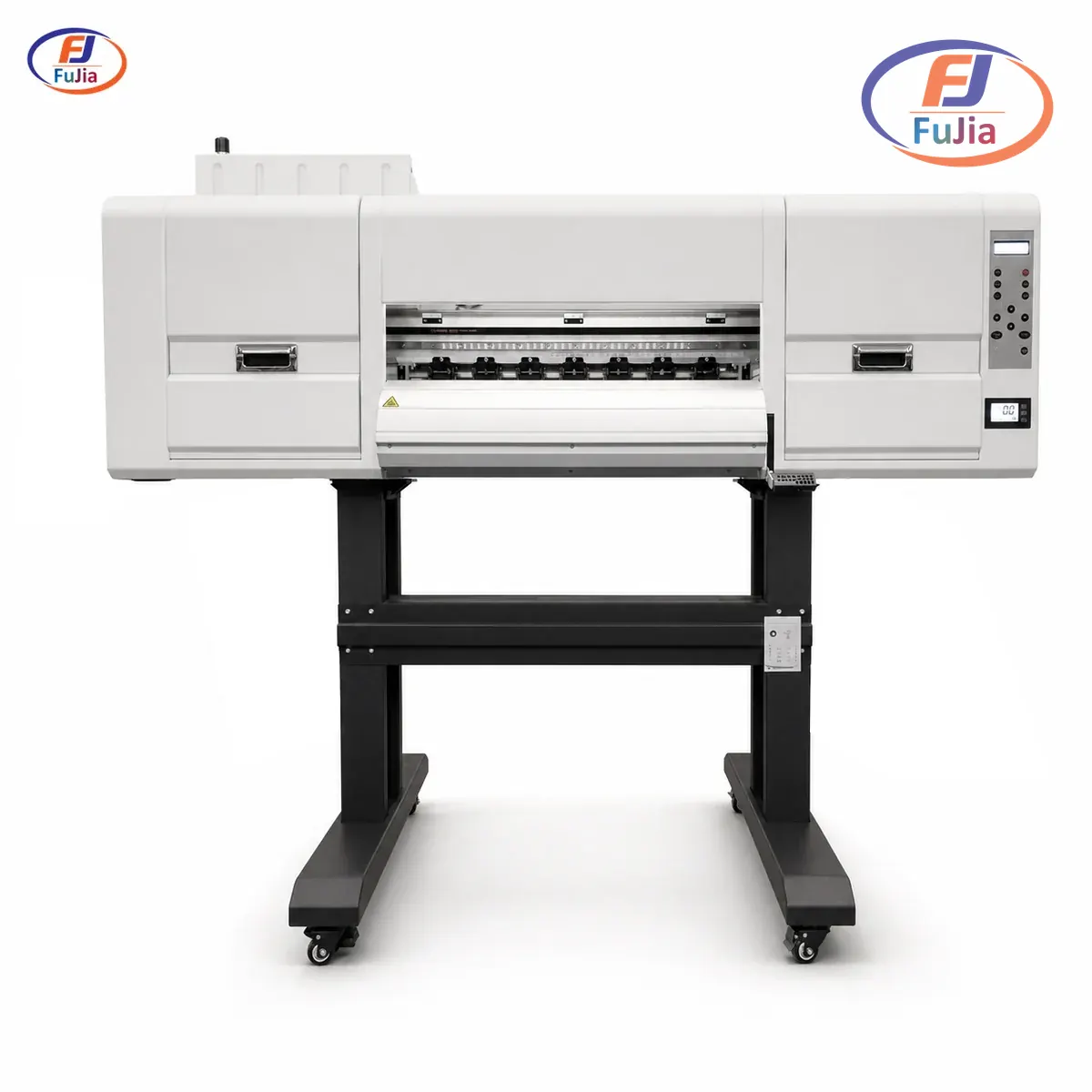
- Fujia builds factory-direct A1 DTF printers with dual and quad Epson I3200 heads for higher volume. \n\n\n
- Choose Roland for brand-backed peace of mind. Choose Fujia A1 when throughput and price per print drive the decision. \n\n\n
Does Roland Make a DTF Printer?
\n\n\n\nYes. Roland DG entered direct-to-film printing with the VersaSTUDIO BY-20, a compact 20-inch desktop unit, and later the TY-300i, a 30-inch commercial printer. Roland positions DTF as an extension of its long history in wide-format inkjet, not a sideways experiment. The BY-20 runs on Roland’s own S-PG2 inks in CMYK and White, paired with S-F164 direct transfer film and S-POWDER transfer powder.
\n\n\n\n\n\n\n\nRoland’s DTF line targets print shops that already trust the brand for eco-solvent and UV work. The BY-20 fits a desk, while the TY-300i fills a production bay. Both ship inside Roland’s closed ink ecosystem, which keeps color consistent but locks you to Roland supplies. Our guide to what DTF printing is explains the workflow these machines follow.
\n\n\n\nRoland DTF Lineup at a Glance
\n\n\n\n| Model | \nWidth | \nPosition | \nList price | \n
|---|---|---|---|
| VersaSTUDIO BY-20 | \n20 inches | \nDesktop | \nFrom $3,499 | \n
| BN-20D | \n20 inches | \nDesktop DTF | \n$4,795.99 | \n
| TY-300i | \n30 inches | \nCommercial | \n$17,195 | \n
The BY-20 and BN-20D cover the same 20-inch desktop segment at different price points. The TY-300i is the volume machine, built for shops that already run Roland eco-solvent and want one DTF bay beside it.
\n\n\n\nRoland vs Fujia A1 DTF Printers
\n\n\n\n| Factor | \nRoland TY-300i | \nFujia A1 Dual-Head | \n
|---|---|---|
| Printheads | \nRoland OEM | \n2x Epson I3200 | \n
| Width | \n30 inches | \n25.5 inches (650 mm) | \n
| White ink | \nCMYK + 4x White | \nCMYK + White | \n
| Speed | \nUp to 45% faster than rivals | \n8-13 m2/hr (2H) | \n
| Support | \nDealer network | \n12-month warranty + 48 hr parts | \n
| Best for | \nBrand-backed shops | \nThroughput-focused buyers | \n
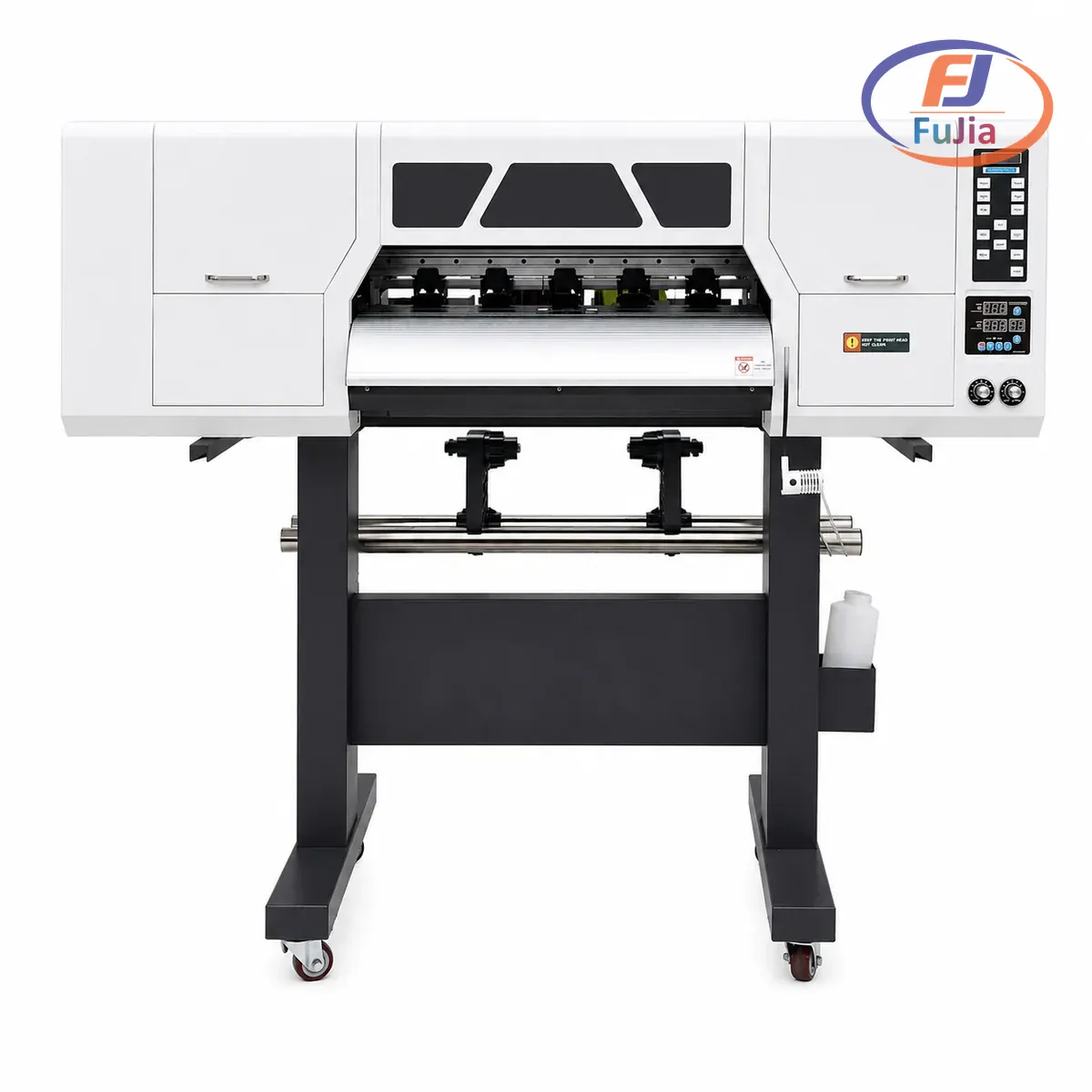
Fujia’s A1 dual-head printer uses two Epson I3200 printheads on a named transmission stack: Honson mainboard, Leadshine servo motor, and THK silent guide rail. That stack lets the machine hold 12-hour continuous runs without drift. The same approach sits in the Turkish garment factory that lifted throughput 40% and cut cost 30% after moving off screen printing.
\n\n\n\nThe honest truth is that Roland wins on dealer trust, while Fujia wins on price per square meter. Pick the one your business case actually rewards.
\n\n\n\nPricing and What You Pay For
\n\n\n\nRoland’s pricing reflects brand, build, and local dealer service. The BY-20 starts near $3,499 at promotional pricing, with dealer bundles reaching $7,375 to $11,110 depending on ink and film inclusions. The TY-300i is listed at $17,195, down from a $23,195 launch price. The BN-20D desktop model sits at $4,795.99.
\n\n\n\n\n\n\n\nBased on data from our customers across 50+ countries, shops that buy on brand name alone often find the per-print ink cost 20% to 40% higher than factory-direct supply within the first year. Fujia’s 13-color DTF ink and 5-year-developed film keep recurring cost predictable for high-volume users.
\n\n\n\nWho Should Buy a Roland DTF Printer?
\n\n\n\nRoland fits three buyers. First, established shops that already run Roland eco-solvent or UV and want one trusted vendor. Second, businesses in regions where a local Roland dealer provides fast on-site service. Third, buyers who value a closed, color-consistent ink system over the lowest cost per print.
\n\n\n\nIf you’re just starting out and volume is uncertain, the BY-20 is a safe, well-supported entry. Once daily output passes 200 transfers, the dealer price premium starts to outweigh the comfort. For small-business DTF printing, a factory-direct A1 dual-head often clears the same work for less.
\n\n\n\nMaintenance and Support
\n\n\n\nRoland promotes a mature support structure through authorized dealers, with training, warranty, and local service. That network is Roland’s real product advantage for risk-averse buyers. The TY-300i’s CMYK plus 4x White configuration also stabilizes white ink laydown on long runs.
\n\n\n\nFujia takes a direct path. Every printer ships with a 12-month warranty, common parts dispatched within 48 hours, and a 3-day remote onboarding plan. A lifetime WhatsApp engineering group backs that with real engineers, not bots. Fujia also holds ISO 9001 and CE certification for its factory-direct DTF line. The trade is less local hand-holding, more direct accountability. See our DTF printer maintenance guide for the daily routine both brands expect.
\n\n\n\n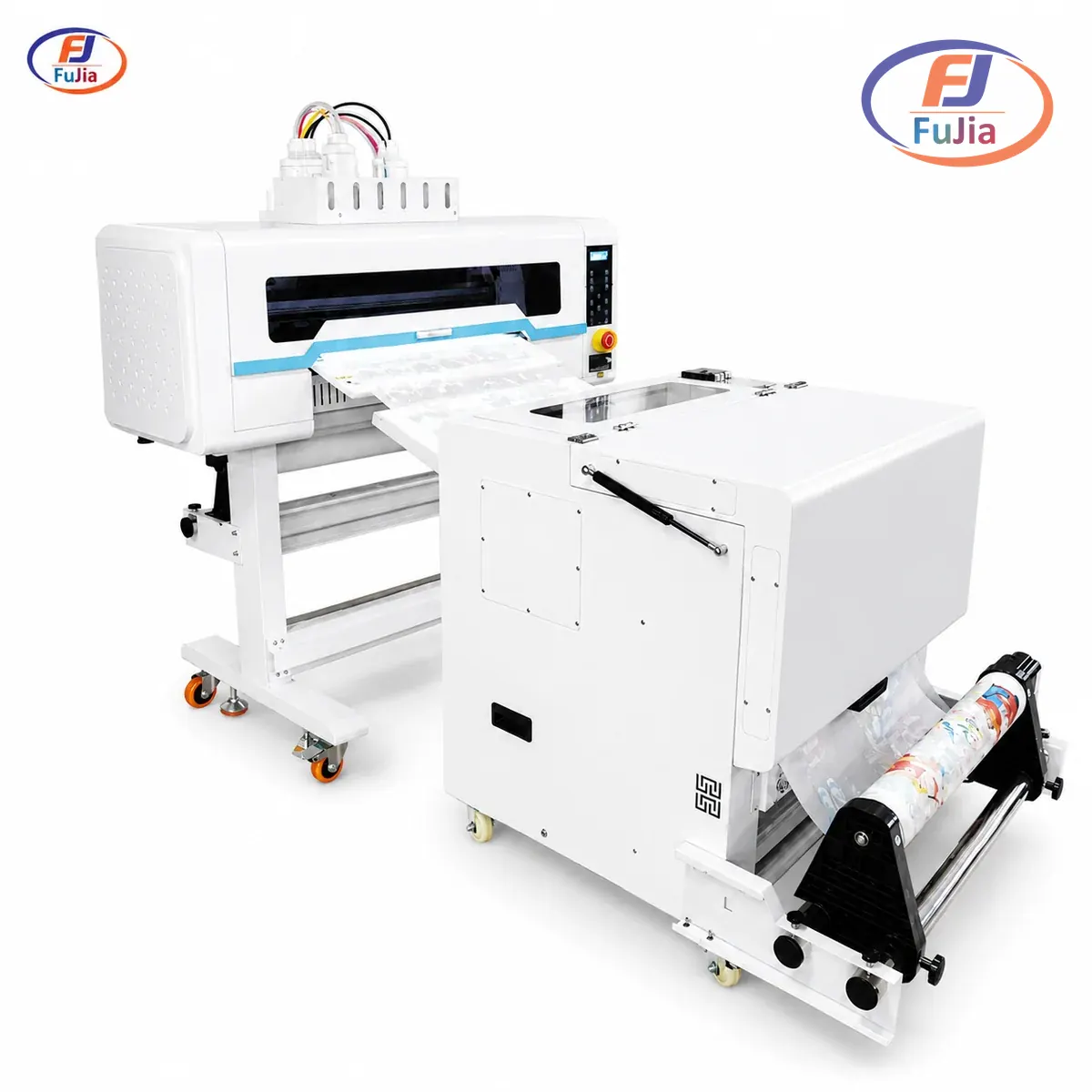
Frequently Asked Questions
\n\n\nDoes Roland make a DTF printer?
\u003cp\u003eRoland DG makes DTF printers. The VersaSTUDIO BY-20 is a 20-inch desktop DTF unit using S-PG2 inks in CMYK and White, and the TY-300i is a 30-inch commercial DTF printer with CMYK plus 4x White. Roland markets these alongside its eco-solvent and UV lines, so a shop can run one brand across processes. Prices run from $3,499 for the BY-20 up to $17,195 for the TY-300i. If you already own Roland wide-format gear, adding a Roland DTF bay keeps training and support under one roof. If you need the lowest cost per print at volume, a factory-direct A1 unit is the stronger play.\u003c/p\u003e
What is the difference between Roland BN-20 and DTF?
\u003cp\u003eThe BN-20 is Roland’s older desktop printer that handles eco-solvent and, in the BN-20D variant, DTF. The key difference is process and ink: the original BN-20 prints eco-solvent solvent inks for stickers and decals, while the BN-20D adds a DTF path with white ink, powder, and cure for garment transfers. The BY-20 is the cleaner purpose-built DTF desktop at a lower entry price than the BN-20D’s $4,795.99. For garment work specifically, the BY-20 or BN-20D beats a converted eco-solvent BN-20, because DTF needs white ink circulation and a powder system the base unit lacks.\u003c/p\u003e
What is the best printer for DTF printing?
\u003cp\u003eThe best DTF printer depends on volume and support needs. For hobby and low volume, a 13 to 20-inch desktop unit like the HTVRONT D2 or Roland BY-20 is enough. For production past 200 transfers a day, a 25.5-inch A1 dual-head printer such as Fujia’s DTF-A1-2H wins on speed at 8 to 13 m2/hr and lower per-print ink cost. Roland’s TY-300i is the brand-backed choice at 30 inches. Our \u003ca href=\u0022https://fujiaprinter.com/a1-dtf-printer-buying-guide/\u0022\u003eA1 DTF printer buying guide\u003c/a\u003e breaks the upgrade path down by daily output. Match the machine to your weekly sheet count, not to the logo on the side.\u003c/p\u003e
Which printers can print DTF?
\u003cp\u003eAny purpose-built DTF printer can print DTF transfers, from 13-inch desktops to 30-inch commercial rolls. Dedicated brands include Fujia, Roland, Epson, and several Chinese OEMs, while converted eco-solvent or inkjet machines generally cannot do it well because they lack white ink circulation and a powder shaker. The printer must lay CMYK plus white ink onto PET film, then powder and cure before heat pressing. Check for white ink circulation, a built-in or paired shaker, and a cure oven before buying. A true DTF unit ships with all three, while a converted machine leaves you building the workflow yourself.\u003c/p\u003e
Conclusion
\n\n\n\nRoland builds credible DTF printers, from the $3,499 BY-20 desktop to the $17,195 TY-300i, with dealer support as the main premium. For factory-direct A1 DTF printers built for throughput, see the Fujia DTF printer lineup.
\n\n\n\nSources
\n\n\n\n- \n\n\n
- Roland DG Direct-to-Film printers: BY-20 and TY-300i specs, S-PG2 inks, 20 and 30-inch widths. \n\n\n
- Epson printhead technology: I3200 printhead architecture used in Fujia A1 models. \n\n\n
- Inkjet printing, Wikipedia: drop-on-demand inkjet principles behind DTF. \n\n\n
- Digital textile printing market, Grand View Research: market context for DTF adoption. \n\n\n
- ISO 9001 quality management: certification standard held by Fujia. \n\n\n
