

A fabric printing machine transfers digital designs onto textile materials using one of four technologies: DTF (direct-to-film) for cotton and blends, dye sublimation for polyester, DTG (direct-to-garment) for pre-treated cotton garments, and screen printing for bulk runs of 500+ identical pieces. The global digital textile printing market reached $10.3 billion in 2026, with cotton accounting for 52.1% of all digitally printed fabric, according to Grand View Research. Choosing the right fabric printing technology depends on the fabric type, not the brand name.
Key Takeaways
- DTF printing handles cotton, polyester, blends, denim, and leather. Sublimation only works on polyester (60% minimum) and white or light fabrics. Matching the wrong technology to the fabric wastes money.
- The digital textile printing market grew to $10.3 billion in 2026 at 13% CAGR, with apparel representing 54.3% of demand and cotton representing 52.1% of printed material.
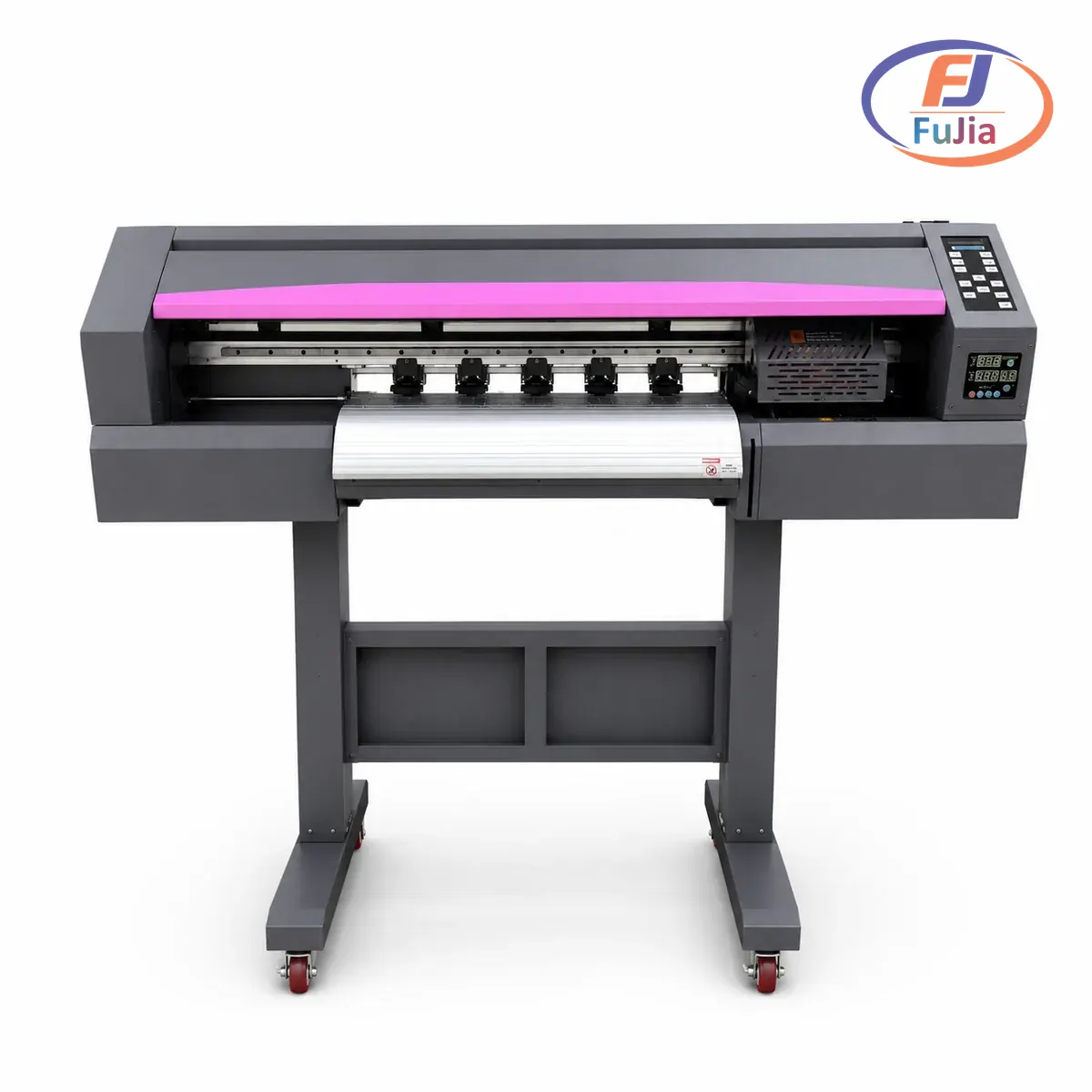
- Fabric printing machine prices range from $799 for the Brother PrintModa (cotton-only, 11.6-inch width) to $23,000 for industrial quad-head DTF systems like the Fujia A1 4-Head at 650mm width.
- A 60cm DTF printer produces 8-13 m²/hr at approximately $8,000-$12,000 factory-direct from Fujia Print, fitting 4 adult-size designs per gang-sheet row.
- Screen printing remains cheaper per piece above 500 identical units per design. Below that volume, digital fabric printing eliminates setup costs and minimum order quantities entirely.
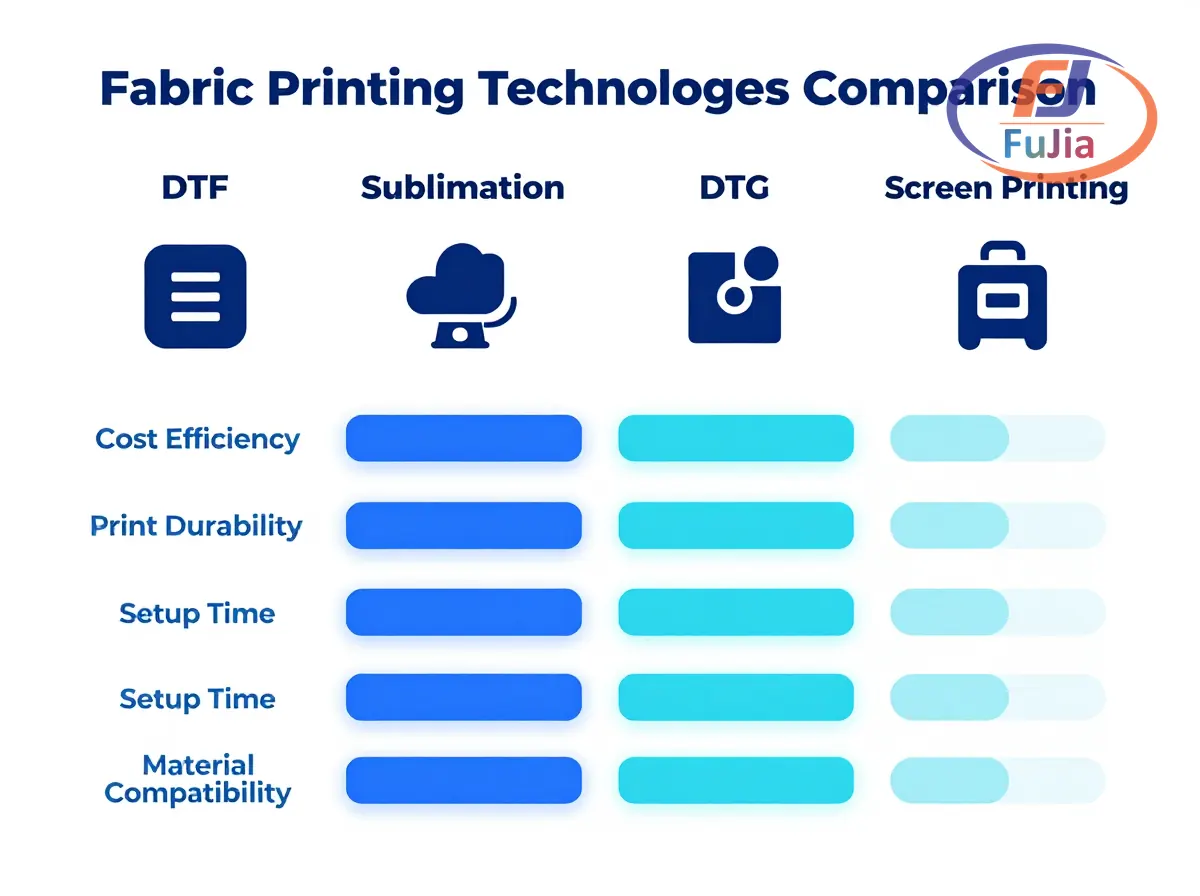
Fabric Printing Technologies: DTF vs Sublimation vs DTG vs Screen
Four technologies dominate fabric printing in 2026. Each bonds ink to fabric through a different physical process, which determines which fabrics each technology can handle.
DTF (direct-to-film) prints CMYK plus white ink onto PET film, applies hot melt powder, then heat-presses the design onto fabric at 160 degrees Celsius for 15 seconds with cold peel. The white ink layer creates an opaque underbase that makes colors visible on dark fabrics. DTF adheres to cotton, polyester, cotton-poly blends, nylon, denim, and leather. Wash durability reaches Grade 4-5 on the AATCC colorfastness scale, surviving 50+ heavy machine wash cycles. The Fujia A1 DTF system at 650mm width produces 8-27 m²/hr depending on head configuration.
Dye sublimation uses heat to convert solid dye particles into gas that bonds with polyester fibers at the molecular level. Sublimation requires 60% or higher polyester content and works only on white or light-colored fabrics (the dye is transparent and cannot produce white). Sublimation produces exceptionally soft-hand prints with zero texture, because the dye becomes part of the fabric rather than sitting on top. The Fujia A1 sublimation printer handles 650mm rolls at 720×1440 dpi for sportswear, soft signage, and home textiles.
DTG (direct-to-garment) sprays water-based ink directly onto pre-treated cotton garments. DTG produces the softest hand-feel on cotton but requires pre-treatment liquid application for dark garments and cannot print on polyester without special ink formulations. DTG suits one-off custom pieces and photo reproduction on 100% cotton tees.
Screen printing pushes ink through mesh stencils onto fabric. Each color requires a separate screen ($150-$400 per screen setup). Screen printing delivers the lowest per-piece cost at high volumes (500+ identical units) but cannot economically produce short runs or multi-color small batches.
| Technology | Best Fabric | Colors | Min Order | Setup Cost | Per-Print Cost (100 units) |
|---|---|---|---|---|---|
| DTF | Cotton, poly, blends, denim | Full CMYK+W | 1 piece | $0 | $0.50-$1.50 |
| Sublimation | Polyester 60%+ | Full color (no white) | 1 piece | $0 | $0.30-$0.80 |
| DTG | 100% cotton | Full CMYK+W | 1 piece | $0 | $1.00-$3.00 |
| Screen | Any fabric | Per-screen (4-8 max) | 50-200 pcs | $600-$3,200 | $0.25-$0.75 |
DTF Fabric Printing: The Versatile Option
DTF earns the “versatile” label because one machine handles every common apparel fabric. A garment factory in Istanbul, Turkey documented this versatility after switching from screen printing to a Fujia A1 dual-head DTF system. The factory’s previous screen setup required separate screens for each fabric type and color. DTF printed cotton tees, polyester jerseys, cotton-poly hoodies, and denim jackets from the same machine without changing ink or setup.
The 12-month results: throughput increased 40%, per-unit production cost dropped 30%, and delivery times compressed from 7 days to 2.5 days. Small-batch orders under 50 pieces per design, previously unprofitable under screen printing’s 200-piece minimum, grew to represent 60% of revenue. The Fujia A1’s Honson-Leadshine-THK transmission stack (Honson mainboard, Leadshine servo motor, THK guide rail) sustained 12-hour continuous production runs without measurable quality drift.
DTF heat press parameters apply universally across fabric types: 160 degrees Celsius, 15 seconds, cold peel. The Fujia DTF system’s auto-circulating white ink management prevents titanium dioxide settling through a siphon and positive-pressure supply holding 1,000-1,500ml per color. This circulation runs even during power interruptions, protecting printheads from overnight clogging. The apparel printing solutions page documents additional DTF application cases including a sportswear brand running 3,000+ pieces per month at 60% margins.
Sublimation Fabric Printing: The Polyester Specialist
Sublimation dominates polyester fabric printing. The process produces prints with zero hand-feel because the dye gas penetrates polyester fibers and becomes part of the fabric structure. Sublimation works for sportswear jerseys, polyester banners, soft signage, home textile polyester fabrics, and sublimation-coated hard substrates like ceramic mugs and metal plates.
The limitation is strict: sublimation requires 60% or higher polyester content. On cotton or cotton-blend fabrics, the dye gas cannot bond and washes out within 1-3 laundry cycles. Sublimation also cannot print white or light designs on dark fabrics, because the transparent dye has no opacity layer.
Fujia’s A1 sublimation printer handles 650mm rolls using dual Epson printheads at 720×1440 dpi. Typical applications include full-polyester sportswear (200 degrees Celsius, 45-60 seconds press), polyester soft signage, and sublimation-coated mugs (180 degrees Celsius, 60 seconds per 11oz mug). The Fujia sublimation printer lineup covers both roll-to-roll fabric and flat product applications.
Fabric Printing Machine Prices in 2026
Fabric printing machine prices span from $799 for hobbyist craft printers to $23,000 for industrial production systems. The Grand View Research market data shows the apparel segment representing 54.3% of all digital textile printing demand in 2026, driving manufacturers to split their product lines into clear price tiers.
| Machine | Technology | Fabric Width | Price | Best For |
|---|---|---|---|---|
| Brother PrintModa HLJF1 | Inkjet (cotton-only) | 29.7cm / 11.6″ | $799-$1,200 | Hobby crafting |
| Fujia FJ-A30 | DTF (XP600) | 30cm / A3 | ~$2,500 | Startup apparel |
| Procolored K13 Lite | DTF (XP600) | 33cm / 13″ | $2,799 | Small business |
| Fujia A1 Dual-Head | DTF (2x i3200) | 65cm / 25.5″ | ~$8,000-$12,000 | Professional shop |
| Epson SureColor G6070 | DTFilm | 89cm / 35″ | $21,373 | Brand-name industrial |
| Fujia A1 4-Head | DTF (4x i3200) | 65cm / 25.5″ | ~$15,000-$18,000 | Factory production |
The Brother PrintModa at $799-$1,200 illustrates the entry-level craft tier. The PrintModa prints only on pre-coated cotton fabric rolls at 11.6 inches wide, uses CMYK ink without white, and Brother’s own documentation notes “washability limited and colours may fade after washing.” The machine targets quilters and crafters, not apparel production.
The professional tier from $5,000 to $15,000 is where fabric printing becomes a business tool. The Fujia A1 dual-head at 650mm width prints on any fabric type, produces 8-13 m²/hr, and includes a 12-month warranty with 48-hour parts dispatch from a 3,500 m² Guangzhou factory producing 2,000 machines annually. The Epson i3200 printhead components in the Fujia A1 match the printheads used in Epson’s own SureColor line at less than half the price.
How to Choose a Fabric Printing Machine
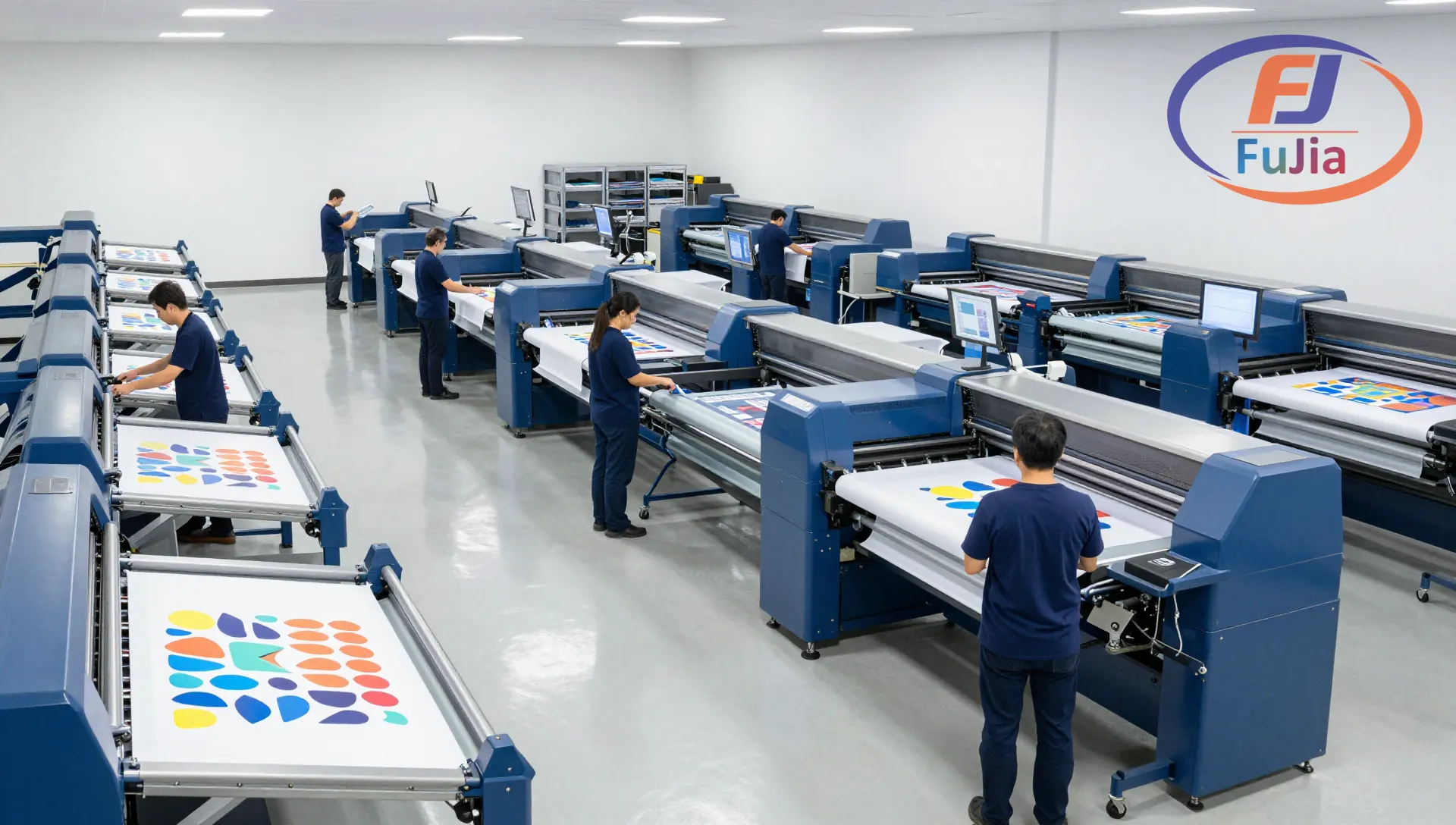
Three questions determine which fabric printing machine fits a business.
What fabric types will the business print on? Cotton-only operations can use DTG or DTF. Polyester-only operations (sportswear, signage) should choose sublimation. Mixed-fabric operations need DTF, the only technology that handles cotton, polyester, blends, and denim from a single machine.
What is the daily transfer volume? Under 100 transfers: a single-head A3 desktop like the Fujia FJ-A30 at approximately $2,500. Between 100-500 transfers: a dual-head A1 like the Fujia A1 dual-head at $8,000-$12,000. Above 500 transfers: a quad-head A1 like the Fujia A1 4-Head at $15,000-$18,000.
What is the budget for consumables? DTF ink costs $30-$60 per liter for CMYK and $40-$80 for white. Sublimation ink costs $25-$50 per liter. PET film for DTF runs $20-$40 per roll. Sublimation paper runs $15-$35 per roll. A 100-transfer-per-day DTF operation spends $50-$150 monthly on consumables. The same volume in sublimation costs $30-$80 monthly.
How much does a fabric printing machine cost?
Fabric printing machine costs range from $799 for the Brother PrintModa (cotton-only craft printer, 11.6-inch width) to $23,000 for industrial quad-head DTF systems. The three price tiers in 2026 break down as follows: hobby and craft machines at $799-$3,000 (single-head, limited fabric compatibility, low wash durability), professional machines at $5,000-$15,000 (dual i3200 heads, multi-fabric capability, 8-15 m²/hr), and industrial production systems at $15,000-$23,000 (quad i3200 heads, 650mm width, 22-27 m²/hr). Factory-direct sourcing from manufacturers like Fujia Print reduces the professional and industrial tier prices by 30-40% compared to Western-branded equivalents. The Grand View Research market report values the digital textile printing industry at $10.3 billion in 2026, reflecting the scale of equipment demand across all price points.
What printer is best for printing on fabric?
The best fabric printer depends on the fabric type. For cotton and mixed fabrics, a DTF printer using Epson i3200 printheads delivers the most versatile results: full CMYK plus white ink, wash durability at AATCC Grade 4-5, and compatibility with cotton, polyester, blends, denim, and leather. The Fujia A1 Dual-Head at 650mm width, the Epson SureColor G6070, and the Mimaki TxF series represent the professional tier. For polyester-only operations (sportswear, soft signage), a dye sublimation printer produces softer-hand prints at lower per-unit cost. For cotton-only crafting, the Brother PrintModa at $799 prints directly onto pre-coated cotton rolls. Buyers should match the technology to the fabric first, then compare machines within that technology category.
What is the machine that prints on fabric at home?
The Brother PrintModa HLJF1 at $799-$1,200 is the most popular home fabric printing machine. The PrintModa prints directly onto pre-coated cotton fabric rolls at 29.7cm (11.6 inch) width, using standard CMYK inkjet cartridges. Brother includes a starter cotton fabric roll and design app called Artspira. The machine also functions as a regular paper printer from its second tray. Limitations for home users: the PrintModa prints only on Brother’s proprietary pre-coated cotton fabric (not standard fabric), uses CMYK without white ink (no dark fabric capability), and Brother notes washability is limited. For home users wanting to print on any fabric type including dark garments, the Fujia FJ-A30 DTF printer at approximately $2,500 offers full CMYK plus white ink, 1440×1440 dpi resolution, and compatibility with any fabric type. The FJ-A30 requires a separate heat press ($150-$300) for transfer application.
What is the cost of fabric printer?
Fabric printer cost has two components: the machine itself and ongoing consumables. Machine costs range from $799 (Brother PrintModa) to $23,000 (industrial DTF). Consumable costs per transfer run $0.30-$1.50 for DTF (ink, film, powder), $0.20-$0.60 for sublimation (ink, paper), and $1.00-$3.00 for DTG (ink, pre-treatment). Annual maintenance costs $200-$800 for printhead cleaning supplies and replacement dampers. The Fujia FJ-A30 includes a 12-month warranty covering printhead defects, reducing first-year maintenance to near zero. The Fujia A1 dual-head and 4-head systems include auto-circulating white ink management that extends printhead life to 18-24 months, compared to 6-12 months in machines lacking active circulation. Total cost of ownership over two years for a 100-transfer-per-day DTF operation: machine $2,500-$12,000 plus consumables $1,200-$3,600 plus maintenance $400-$1,600.
Conclusion
Fabric printing machine selection starts with fabric type: DTF for cotton and blends, sublimation for polyester, DTG for pre-treated cotton garments. The Fujia A1 DTF series handles every common apparel fabric at 650mm width, producing 8-27 m²/hr with Honson-Leadshine-THK industrial transmission and a 12-month warranty. For factory-direct fabric printing machine pricing and free sample inquiries, contact Fujia Print.
Sources
- Grand View Research: Digital Textile Printing Market: Market size ($10.3B in 2026), CAGR (13%), cotton share (52.1%), and apparel segment share (54.3%).
- Epson Direct-to-Film Printers: Official Epson i3200 printhead specifications and SureColor DTFilm printer documentation.
- AATCC Test Methods: Wash durability colorfastness grading standards (Grade 4-5) for fabric print quality evaluation.
- Mimaki DTF Product Line: Industrial fabric printing machine specifications and operating environment requirements.
