

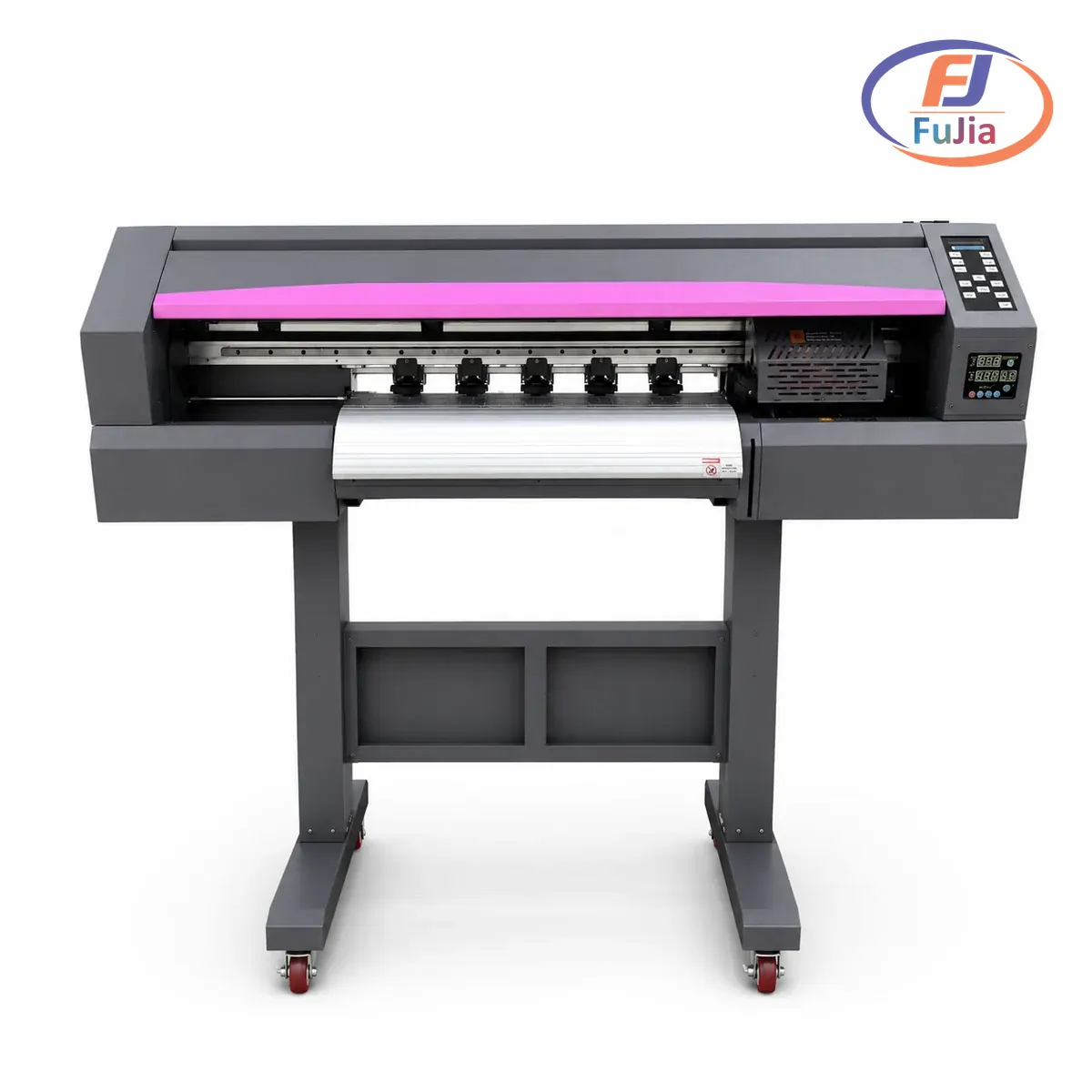
A wide format DTF printer uses a 60cm to 160cm (24-64 inch) print bed to produce gang sheets, multiple designs arranged side by side on a single film pass. The Fujia A1 series at 650mm width fits 4-6 adult-size designs per row and delivers 27 m²/hr with four Epson i3200 heads, compared to single-design output from 30cm desktop machines. For garment factories processing 500+ transfers daily, wide format DTF equipment cuts per-transfer labor time by 50-70% through gang-sheet printing.
Key Takeaways
- Wide format DTF printers range from 24 inches (60cm) to 64 inches (160cm) in print width, compared to 12 inches (30cm) for desktop A3 models.
- The Fujia A1 at 650mm fits 4-6 adult designs per gang-sheet row, producing 27 m²/hr with quad i3200 heads at 720×2400 dpi.
- Market prices range from $525 for entry 24″ conversions to $22,995 for the Roland TY-300 at 30 inches, with the Fujia A1 at factory-direct pricing.
- Gang-sheet printing reduces film waste by 30-50% and doubles or triples effective throughput compared to single-design printing.
- Wide format requires 2-4 Epson i3200 printheads, active white ink circulation, and a heavy-duty transmission rated for 12-hour continuous operation.
What Defines a Wide Format DTF Printer
Wide format in DTF printing means any machine with a print bed wider than 42cm (A2 size). The category spans three sub-tiers based on print width, each targeting different production volumes.
The 24-inch (60cm) tier represents the entry point to wide format. Machines like the UScutter 36-inch DTF and the Fujia A1 at 650mm occupy this category. At 60cm width, operators lay out 4 adult-size designs (approximately 30x40cm each) in a single row, producing a complete gang sheet in one pass. The Fujia A1 dual-head configuration prints these gang sheets at 8-13 m²/hr. The quad-head version reaches 27 m²/hr at 4-pass.
The 30-inch (76cm) tier adds capacity for larger designs or more designs per row. The Roland TY-300 at 30 inches and the Epson SureColor series occupy this tier. The Epson DTFilm printer line advertises up to 64-inch print width, fitting oversized graphics and full-back jersey designs that smaller machines cannot handle in a single piece.
Print width directly determines gang-sheet efficiency. A 30cm desktop machine prints one adult design per pass. A 60cm machine prints 4 designs per pass. A 65cm machine with gang-sheet layout software prints 6 designs per pass. The per-design labor time drops proportionally: setting up and running one 65cm gang sheet takes the same operator time as running one 30cm single design.
| Width Tier | Print Width | Designs per Row | Typical Heads | Speed Range | Price Range |
|---|---|---|---|---|---|
| Desktop (A3) | 30cm / 12″ | 1 | 1 XP600 | 2-3 m²/hr | $880-$2,800 |
| Wide (A2) | 42cm / 17″ | 2 | 1-2 i3200 | 5-8 m²/hr | $3,000-$8,000 |
| Wide (A1) | 60-65cm / 24-26″ | 4-6 | 2-4 i3200 | 8-27 m²/hr | $5,000-$18,000 |
| Extra Wide | 76-160cm / 30-64″ | 8-16 | 4-6 i3200 | 20-40 m²/hr | $15,000-$33,000 |
Wide Format DTF Printer Specs Comparison
Three engineering factors determine whether a wide format DTF printer delivers consistent output across a full 65cm gang sheet.
Transmission precision affects edge-to-edge print quality. Wide format machines transport film across 60cm or more of print platen. Any lateral drift compounds across the width, causing misregistration at the sheet edges. The Fujia A1 uses a THK silent guide rail rated for positional accuracy within 0.01mm, paired with a Leadshine servo motor that maintains consistent feed speed across the full 650mm width. Machines using generic guide rails develop visible banding at the outer 5-10cm of each gang sheet after 4-6 hours of continuous use.
Printhead count determines both speed and white ink density. A dual i3200 configuration dedicates one head to CMYK and one to white ink, delivering the dense white layer that wide-format gang sheets require for dark-garment coverage. The Fujia A1 dual-head produces 8-13 m²/hr. The quad-head configuration splits CMYK across two heads and white across two, doubling both speed (27 m²/hr at 4-pass) and white ink density. Single-head wide format machines exist at lower price points but cannot produce uniform white coverage across a full 65cm width.
Temperature consistency across the platen prevents color shifts between gang-sheet positions. The Fujia A1 implements dual-section front and rear heating with real-time monitoring across the full 650mm width, maintaining substrate temperature within 2 degrees Celsius across the entire platen. Mimaki specifies similar environmental controls for its industrial TxF series. Machines with single-zone heating show measurable color differences between designs printed at the center versus the edges of a wide gang sheet.
How Much Does a Wide Format DTF Printer Cost
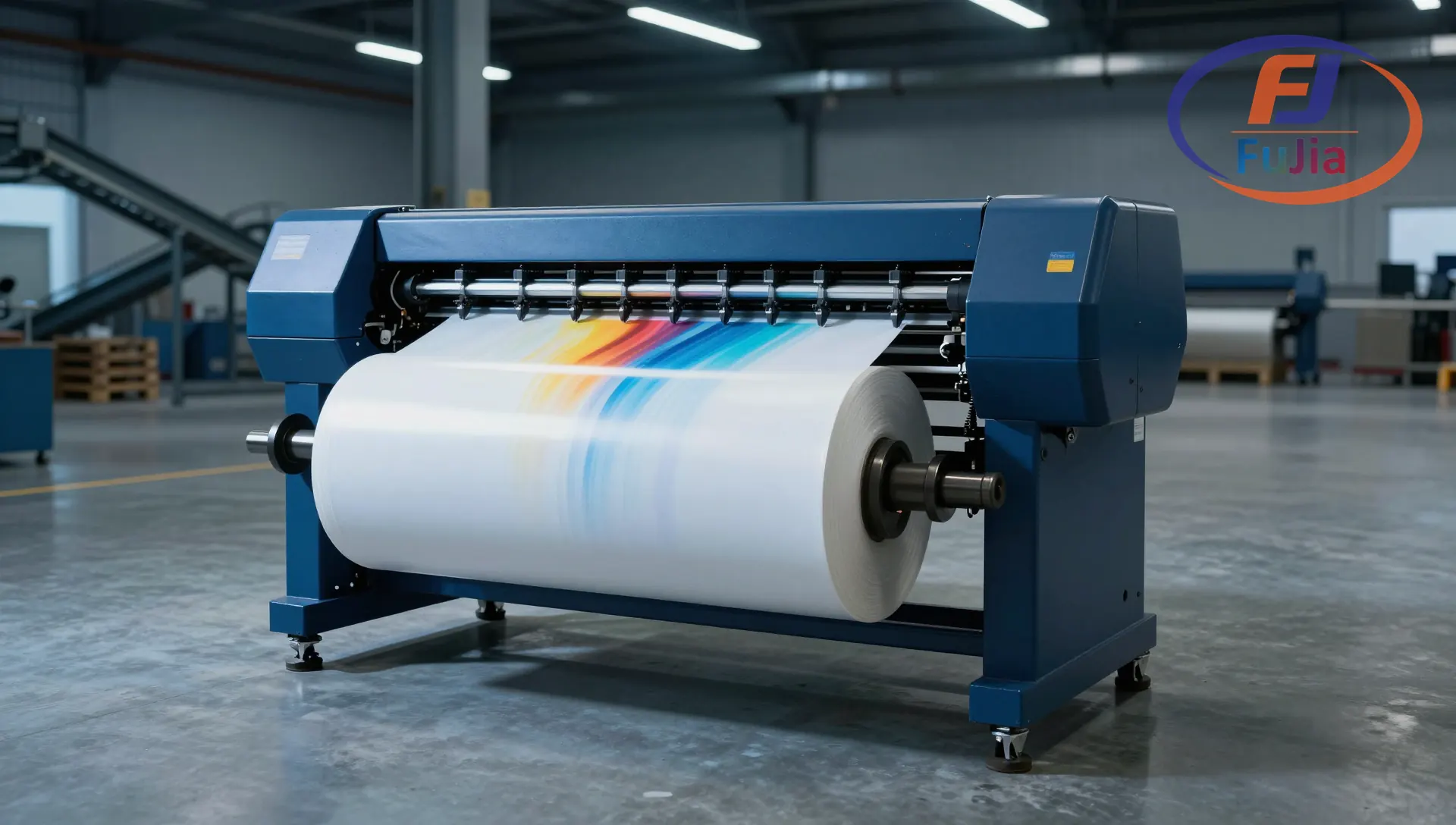
Wide format DTF printer prices span from $525 for entry-level 24-inch conversions to $33,995 for top-tier industrial systems. The price depends primarily on print width and printhead count.
Google Shopping and SERP data from August 2025 shows the following real-world pricing across the wide format category.
| Model | Print Width | Heads | Price | Notes |
|---|---|---|---|---|
| DTF Northeast wide format | 24″ | 1 | $525 | Budget conversion |
| LINKO DTF printer | 24″ | 1-2 | $1,650-$7,700 | Range of models |
| Fujia A1 Dual-Head | 65cm / 25.5″ | 2 i3200 | ~$8,000-$12,000 | Factory-direct |
| Mimaki TxF150-75 | 24″ | 1 | $8,495 | Branded entry |
| Epson SureColor G6070 | 35″ | Industrial | $21,373 | Brand flagship |
| Fujia A1 4-Head | 65cm / 25.5″ | 4 i3200 | ~$15,000-$18,000 | Factory-direct |
| Roland TY-300 | 30″ | Roll | $22,995 | 30″ wide format |
| Arcus Pioneer 24 | 24″ | 4 i3200 | $33,995 | Premium industrial |
Fujia Print’s factory-direct wide format A1 targets $8,000-$18,000 depending on head configuration, positioning between the Mimaki TxF150-75 ($8,495 for single-head) and the Epson G6070 ($21,373). The 3,500 m² Guangzhou factory produces 2,000 machines annually with ISO 9001 and CE certifications, shipping to 50+ countries through DDP logistics.
When Wide Format DTF Printing Pays Off
The ROI calculation for wide format DTF printing centers on gang-sheet efficiency and daily transfer volume. Based on data from Fujia customers across 50+ countries, wide format becomes profitable at 200+ transfers per day.
A garment factory in Istanbul, Turkey documented the transition from screen printing to a Fujia A1 dual-head wide format DTF system. The 65cm print width enabled 4-design gang sheets that the factory’s previous 30cm desktop machine could not produce. Results over 12 months: throughput increased 40%, production costs dropped 30%, and delivery times compressed from 7 days to 2.5 days. Small-batch orders under 50 pieces per design grew from unprofitable to representing 60% of revenue, because the gang-sheet workflow eliminated the per-design setup time that constrained the previous system.
The Istanbul factory’s Honson-Leadshine-THK transmission stack ran 12-hour continuous shifts without quality drift. File-to-finished-print time measured under 30 minutes, compared to 2-3 hours per design on the previous desktop system. The apparel printing solutions page documents additional wide format application cases including a sportswear brand running 3,000+ pieces per month at 60% margins.
Regional cost structures affect payback timeline. Labor-intensive markets see faster returns because wide format gang-sheet printing replaces 3-5 manual printing positions. North American buyers typically see payback through outsourcing elimination at 6-10 weeks when monthly outsourcing spend exceeds $8,000.
What are the downsides of using a wide format printer?
Wide format DTF printers have three main downsides compared to desktop models. First, space requirements: a 65cm wide format machine with powder shaker occupies 4-6 m² of floor space, compared to 1-2 m² for an A3 desktop. The Fujia A1 printer weighs 155kg and the shaker adds 230kg, requiring a sturdy workbench or floor installation. Second, higher upfront cost: wide format systems start at $5,000-$8,000 for dual-head configurations, compared to $880-$2,800 for A3 desktops. Third, increased consumable usage: wide format machines hold 1,000-1,500ml of ink per color and consume film and powder at 4-6 times the rate of a desktop machine. For businesses producing fewer than 200 transfers per day, the capacity goes unused and the consumable costs exceed the per-transfer savings. The Fujia FJ-A30 desktop remains more cost-effective below that volume threshold.
What are the common widths of DTF printers?
DTF printer widths fall into four standard categories. A3 desktop format at 30cm (12 inches) fits one adult-size design per pass and handles 30-80 transfers daily. A2 format at 42cm (17 inches) fits 2 designs per row and targets 100-300 transfers daily. A1 format at 60-65cm (24-26 inches) fits 4-6 designs per gang-sheet row and targets 200-1,000+ transfers daily. Extra wide format at 76-160cm (30-64 inches) fits 8-16 designs per row and targets industrial production of 1,000+ transfers daily. The Epson SureColor DTFilm line extends to 64 inches for oversized graphics. The Fujia A1 at 650mm represents the most common wide format width for garment decoration, balancing gang-sheet capacity against equipment cost and floor space requirements.
What is the best wide format printer?
The best wide format DTF printer depends on daily volume and budget. For 200-500 daily transfers, the Fujia A1 dual-head at 650mm with two Epson i3200 heads delivers 8-13 m²/hr at approximately $8,000-$12,000 factory-direct. For 500-1,000+ daily transfers, the Fujia A1 4-Head at 27 m²/hr with quad i3200 heads targets $15,000-$18,000. The Epson SureColor G6070 at $21,373 and the Roland TY-300 at $22,995 represent the branded alternatives. Buyers should verify three engineering details: named-brand transmission components (Honson mainboard, Leadshine servo, THK guide rail), active white ink circulation, and a written manufacturer warranty with remote video diagnosis. The Fujia A1 series includes all three as standard, backed by 500+ clients across 50+ countries and a 12-month warranty with 48-hour parts dispatch.
Is DTF good for large prints?
DTF is excellent for large prints because the film-based transfer process handles full-size designs that direct-to-garment (DTG) printing cannot produce consistently. DTF prints full-color CMYK plus white ink onto PET film, applies hot melt powder, and heat-presses the result onto fabric at 160 degrees Celsius for 15 seconds. This process produces uniform color and white underbase across designs up to 65cm wide on the Fujia A1, with no visible banding or density variation. DTG struggles with large solid color areas because direct fabric absorption creates uneven ink distribution. Wide format DTF gang sheets also allow multiple large designs to print simultaneously, reducing per-design production time by 50-70%. Wash durability for large DTF prints matches smaller formats at AATCC Grade 4-5, surviving 50+ heavy machine wash cycles without cracking or peeling.
Conclusion
Wide format DTF printers transform production economics for garment businesses processing 200+ daily transfers. The Fujia A1 series at 650mm delivers gang-sheet efficiency that desktop machines cannot match, with Honson-Leadshine-THK transmission sustaining 12-hour continuous production runs. For factory-direct wide format DTF printer pricing and gang-sheet workflow consultation, contact Fujia Print.
Sources
- Epson Direct-to-Film Printers: Official wide format DTFilm printer specifications including 64-inch maximum print width and SureColor G6070 pricing.
- Mimaki DTF Product Line: Industrial DTF printer environmental specifications and width configurations for the TxF series.
- AATCC Test Methods: Colorfastness and wash durability testing standards (Grade 4-5) for large-format DTF transfer quality verification.
