

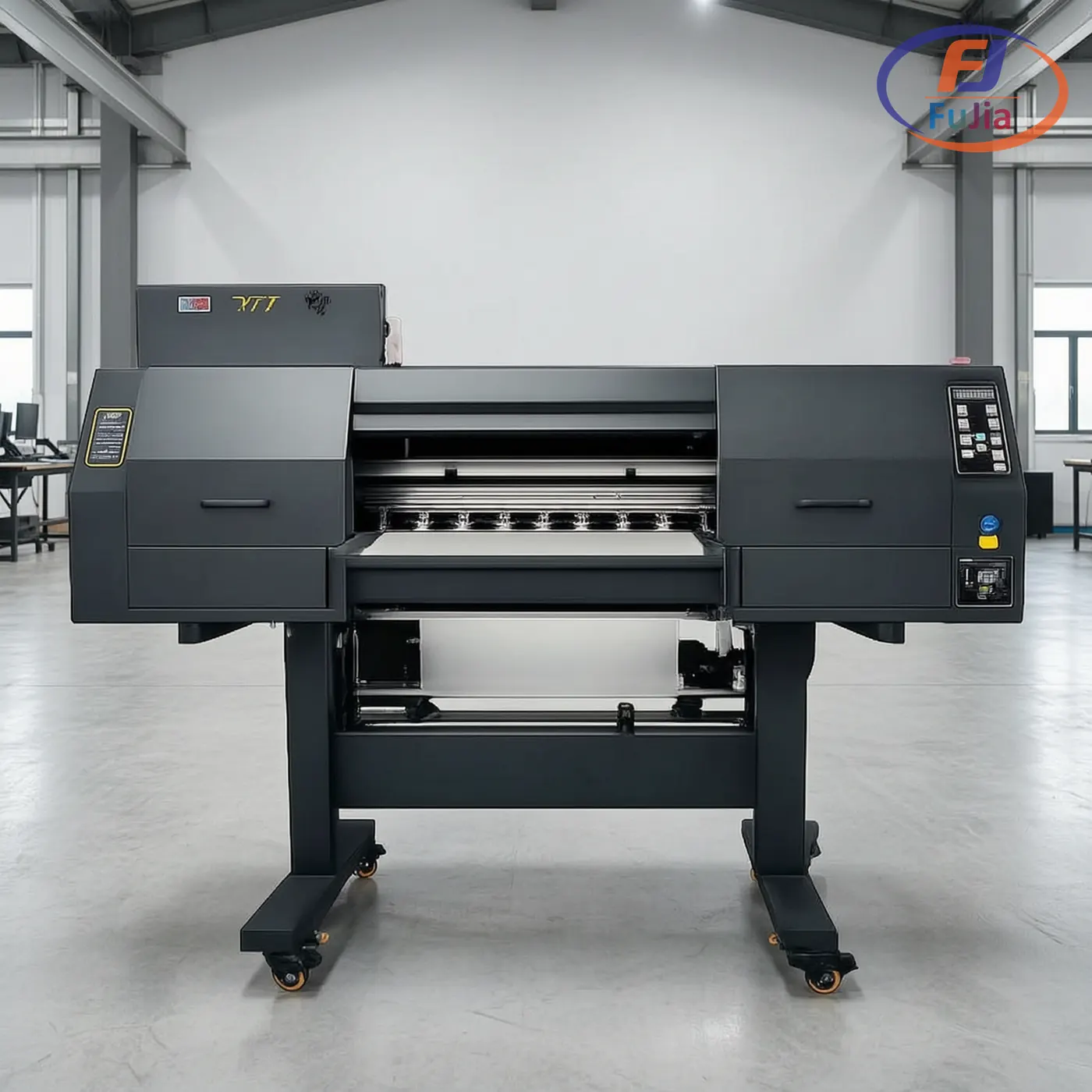
An Epson DTF printer usually means one of two machines: Epson’s own SureColor DTFilm line, or a DTF printer built around Epson’s i3200 printhead by an OEM such as Fujia Print. This guide compares both paths so you can match the right machine to your shop’s volume and budget.
Key Takeaways
- “Epson DTF printer” maps to two product types: Epson-branded DTFilm printers and Epson-i3200 powered DTF printers from OEMs.
- Epson’s own models (SureColor G6070, G9070, F1070) use PrecisionCore heads and ship with on-site service.
- Epson-i3200 DTF printers dominate the production market with factory-direct pricing and 1 to 4 head configurations.
- Fujia Print, founded in 2011, ships 2,000 machines per year from a 3,500 m² Guangzhou facility to 50+ countries.
- Next step: match your monthly print volume to head count, then request a factory quote.
Epson DTF Printer: Two Machines, Not One
Most buyers typing “Epson DTF printer” do not realize they are searching for two different categories. Epson sells a branded DTFilm printer range under the SureColor name. Separately, dozens of manufacturers build DTF printers around Epson’s i3200 printhead, the same industrial piezo head Epson supplies to the industry. The distinction matters because the two paths differ in price, support model, and how far you can scale.
Epson’s own machines are closed commercial systems. You buy from Epson or an authorized reseller, and Epson handles service. The i3200-based market is open. An OEM like Fujia Print sources the same class of Epson printhead, builds the printer, and ships it factory-direct. For a production shop, that difference shows up in both the invoice and the support phone call. To understand what a DTF printer is at the process level, the two categories still share one workflow: print to film, powder, cure, transfer.
Epson’s Own DTFilm Printers
Epson’s DTFilm line currently centers on three models. The SureColor G6070 is a 35-inch roll-to-roll DTFilm printer. The SureColor G9070 scales to 64 inches for wider production. The SureColor F1070 is a compact hybrid that prints both DTG and DTFilm from a desktop footprint. All three use Epson’s PrecisionCore Micro TFP printhead and UltraChrome DF garment ink. The direct-to-film printing method these machines use has matured into a standard apparel decoration workflow.
Epson markets these to makers and small businesses that want a single vendor and on-site service. Epson highlights nozzle verification technology that reduces clogs and downtime, plus sealed ink packs and a space-saving front-loading design. Pricing is quote-based through Epson’s commercial channel rather than a public sticker price.
The trade-off is cost and control. A branded SureColor system carries a premium and locks you into Epson’s consumables and service network. For a shop that wants one machine and a known support line, that is a fair deal. For a shop planning to scale output, the fixed configuration becomes a ceiling.
Epson-i3200 DTF Printers: The OEM Path
The Epson i3200 is an industrial piezo printhead. Epson sells it to equipment makers, and those makers build DTF printers around it. Fujia Print is one such manufacturer. This path produces most of the DTF printers in the global market under both the manufacturer’s brand and private labels. You can read how Epson i3200 and XP600 printheads compare before choosing a head class.
Fujia Print runs as a focused manufacturer, not a trading company. The company was founded in Guangzhou in 2011 and now operates a 3,500 m² facility with 80 employees and a 2,000 machines per year production capacity. Every printer and consumable batch passes through an in-house testing center before shipment. Two dedicated after-sales teams handle support, and common replacement parts ship within 48 hours. The company has served 500+ print businesses across 50+ countries since its global expansion began in 2022.
This model favors scalability. An i3200-based DTF printer can run 1, 2, 3, or 4 heads, so the same platform grows from a startup A3 desktop unit to an A1 production line. Fujia has documented the results: a Turkish garment factory reached +40% printing efficiency after switching to a Fujia A1 DTF printer, and a Brazilian creative studio grew 45% after adding a Fujia A3 desktop DTF printer. For OEM and ODM DTF printer programs, the i3200 platform supports custom branding and region-specific specs.
Printhead Reality: PrecisionCore vs i3200
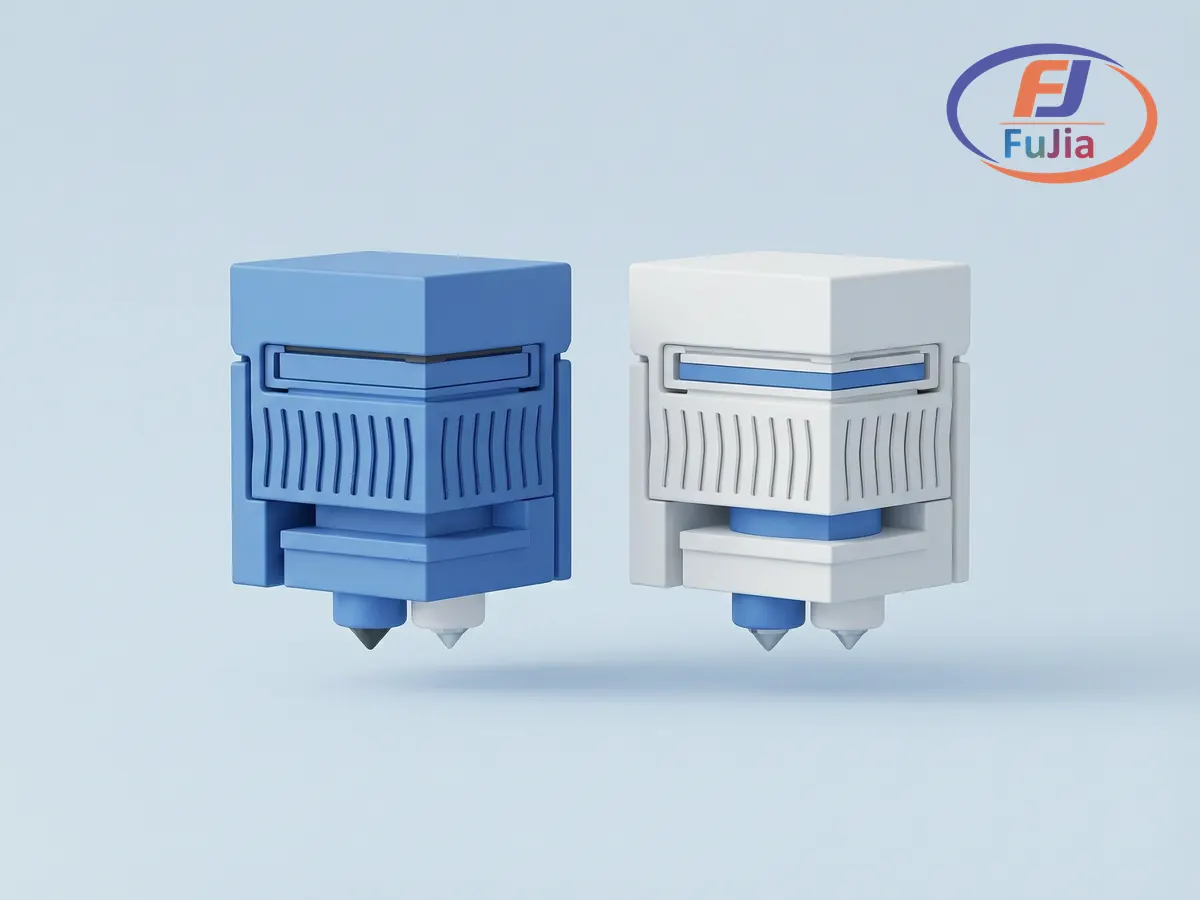
Both Epson’s own printers and i3200-based units use piezo printhead technology. The piezoelectric principle behind these heads, explained alongside inkjet printing on Wikipedia, fires ink with a crystal that changes shape under voltage rather than boiling it. That principle is why Epson heads are known for fine detail and durability. The practical difference is the head variant and who services it.
| Spec | Epson SureColor (PrecisionCore Micro TFP) | Epson i3200 (OEM units) |
|---|---|---|
| Head family | PrecisionCore Micro TFP | PrecisionCore i3200 |
| Form factor | Fixed commercial models | A3 to A1, 1 to 4 heads |
| Ink system | UltraChrome DF (Epson) | Open, OEM-specified |
| Service model | Epson on-site | OEM factory support |
| Scaling path | Fixed | Add heads as volume grows |
| Best fit | Makers, single-vendor buyers | Scaling production shops |
Epson’s nozzle verification is a genuine advantage on its own machines. An i3200-based printer inherits the same head class but depends on the OEM’s firmware and maintenance design for clog control. Choose the OEM path only when the manufacturer proves its testing and support, not just its price. Pair any unit with the right DTF film, ink, and powder from one supplier to avoid finger-pointing between vendors.
Can You Convert a Desktop Epson to DTF?
The conversion is possible, and search data shows the question is common among buyers. People ask about converting an Epson EcoTank such as the L1800 or ET-8550 with a DTF conversion kit. The conversion adds a film feed, a powder shaker, and DTF ink to a printer never designed for it. It works for hobbyists and very low volume.
The limits appear fast in production. A converted desktop Epson lacks the media path, tension control, and cure integration of a purpose-built DTF printer. Printhead clogging rises because the original feed was not engineered for continuous film transport. For a business, the downtime cost outweighs the savings. A purpose-built Epson-i3200 DTF printer is the professional route, and it pairs with a proper shaker and cure unit.
Fujia Print’s own origin story speaks to this gap. The founder ran a print shop before building printers, and recalls a failed batch at night where the printer supplier blamed the ink, the ink supplier blamed the film, and the film supplier blamed the printer. Fujia was built so there is one supplier, one standard, and one team to call. That single-source model is the real argument for buying a complete system over a converted desktop.
What Epson printer can I use for DTF?
You have two routes. The first is Epson’s own DTFilm printer range, the SureColor G6070 (35-inch), G9070 (64-inch), and the F1070 hybrid desktop. These are complete, supported systems that print DTFilm out of the box. The second route is any DTF printer built around the Epson i3200 printhead from an OEM such as Fujia Print. These cover A3 desktop units up to A1 production lines with 1 to 4 heads. If your goal is a turnkey machine with Epson’s own service, choose a SureColor. If your goal is production-scale output at factory-direct pricing, choose an i3200-based unit from a manufacturer that proves its testing and after-sales. Avoid relying on a converted desktop EcoTank for anything past hobby volume, because the original feed was not built for continuous film transport and clogging will cut into uptime.
Is the Epson 8550 a DTF printer?
No. The Epson ET-8550 is an EcoTank photo printer designed for standard paper and specialty media, not direct-to-film printing. It is a popular base for DTF conversion kits because it shares the piezo head architecture found across Epson’s consumer line. Converting an ET-8550 to DTF means adding film feed, adhesive powder, and DTF ink to a printer that Epson never certified for that workflow. The result can produce transfers at low volume, but it lacks the tension control, shaker integration, and cure path of a purpose-built DTF printer. For business use, a dedicated Epson-i3200 DTF printer delivers steadier output and lower downtime than a converted ET-8550, which pays for itself once daily production begins.
Can any Epson printer be converted to DTF?
Most piezo Epson printers can be converted in principle, and the market sells kits for models like the L1800 and ET-8550. The conversion installs a film path, a powder shaker, and DTF ink. The real question is whether the converted printer holds up in production. Desktop Epson models were engineered for paper, not continuous film, so media tension and head clogging become recurring problems under daily load. A purpose-built DTF printer, such as an Epson-i3200 unit from Fujia Print, integrates the feed, shaker, and cure as one system and ships after passing a testing center. For a print business, the built system wins on reliability even when the conversion looks cheaper up front, because lost production days cost more than the saved purchase price.
What is the difference between Epson DTFilm and an Epson-i3200 DTF printer?
The names sound similar but describe different supply chains. “Epson DTFilm” is Epson’s own branded printer, serviced by Epson, using PrecisionCore Micro TFP heads and UltraChrome DF ink, with quote-based commercial pricing. An “Epson-i3200 DTF printer” is built by an OEM that buys the Epson i3200 head and assembles the full machine, often factory-direct. The i3200 unit typically costs less, scales to multiple heads, and lets you source film, ink, and powder from one supplier. Epson’s own unit offers a single-vendor support experience. Fujia Print represents the OEM path: founded in 2011, shipping 2,000 machines per year to 50+ countries, with a 1-year warranty and 48-hour parts dispatch. Pick Epson’s own unit for simplicity, or the i3200 path for scale and cost control.
Conclusion
Epson DTF printer searches cover two machines with different price, support, and scaling profiles. Epson’s SureColor DTFilm line suits makers who want a single vendor. Epson-i3200 DTF printers from manufacturers like Fujia Print suit shops that need to grow output without switching platforms. For factory-direct Epson-i3200 DTF printer pricing and a free sample print, contact Fujia Print.
