
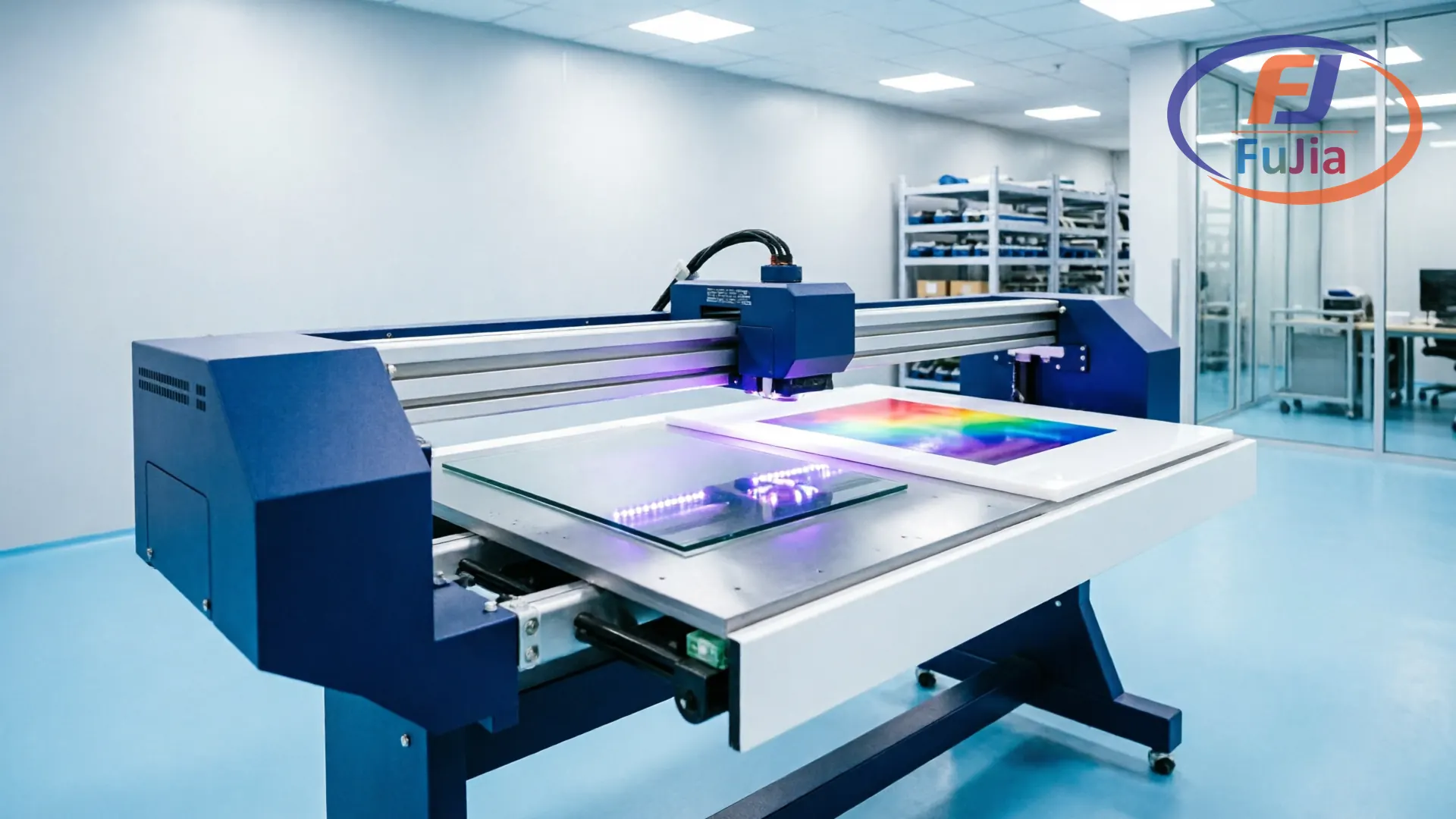
UV curable ink is a solvent-free liquid ink that solidifies instantly when exposed to ultraviolet light at wavelengths between 200 and 450 nanometers. Unlike solvent-based inks that dry through evaporation, UV curable ink polymerizes through a photochemical reaction initiated by photoinitiator molecules, transforming from liquid to solid film in under 1 second. The global UV cured printing inks market reached $1.75 billion in 2025 and is projected to grow to $2.65 billion by 2031 at a compound annual growth rate of 7.17%, according to Mordor Intelligence.
Key Takeaways
- UV curable ink contains zero solvents and produces near-zero VOC emissions, complying with EU and EPA environmental regulations
- Curing speed is under 1 second under LED UV light at 395nm wavelength, enabling print speeds exceeding 100 square meters per hour
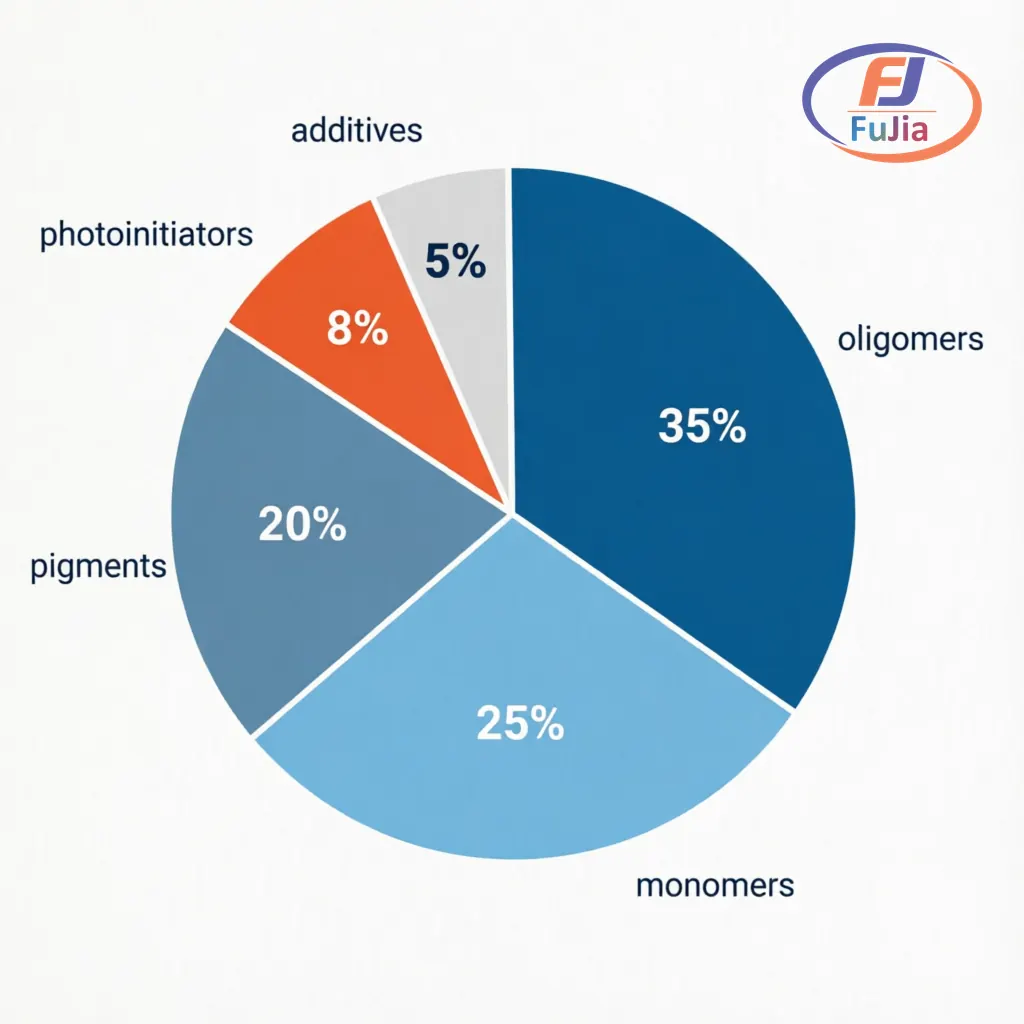
- Four primary components: pigments (15-25%), oligomers (25-40%), monomers (15-30%), and photoinitiators (4-10%) by weight
- LED UV systems captured 56.14% market share in 2025, displacing mercury vapor lamps due to 60-65% lower energy consumption and 25,000+ hour lifespan
- Substrate versatility: UV curable ink bonds to glass, metal, plastic, wood, ceramics, acrylic, and leather without pre-treatment
- Disadvantages: higher cost per liter ($80-200 vs $30-80 for solvent ink), potential skin sensitivity to uncured monomers, and limited adhesion on certain low-surface-energy plastics
What Is UV Curable Ink?
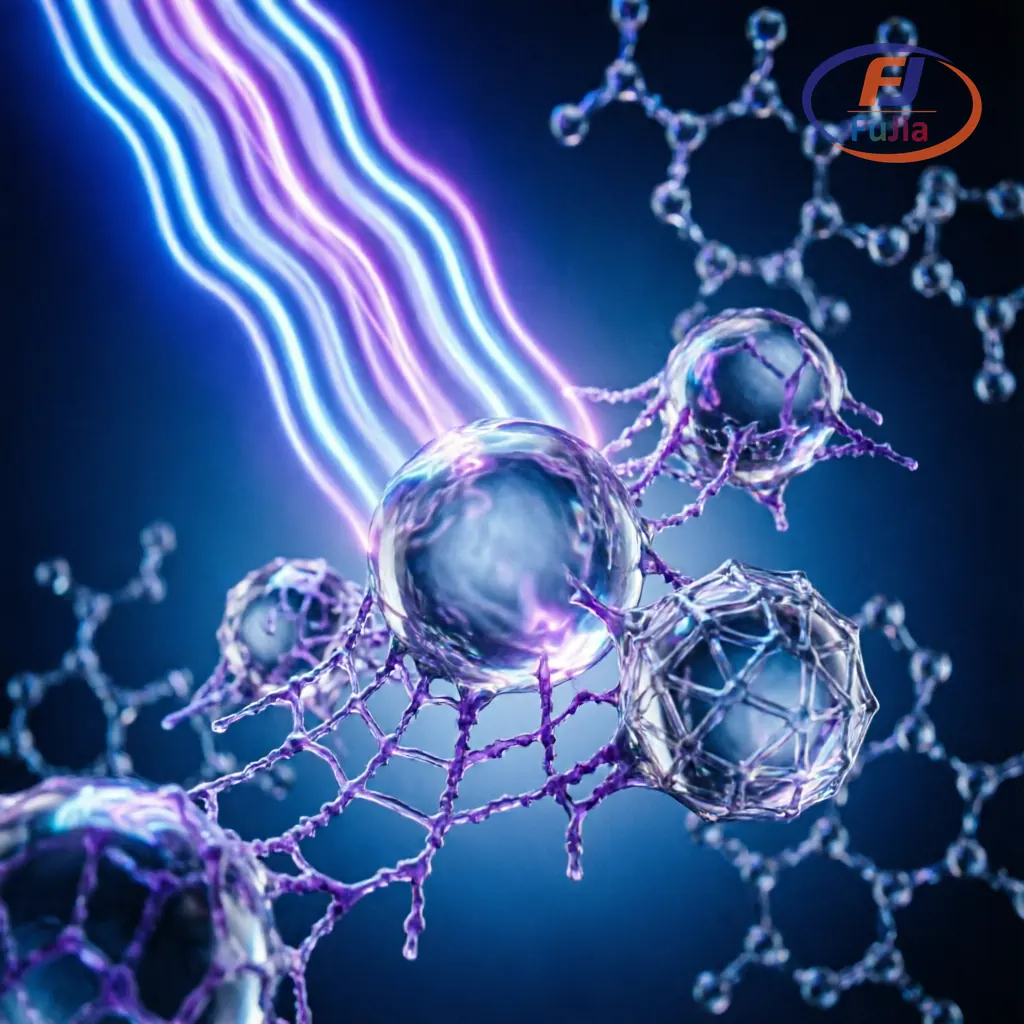
UV curable ink is a 100% solid formulation that cures through photopolymerization rather than solvent evaporation. When UV light at a specific wavelength strikes the ink, photoinitiator molecules absorb photons and decompose into free radicals. These free radicals trigger a chain reaction that crosslinks monomer and oligomer molecules into a durable polymer network, trapping pigment particles within a solid matrix.
This curing mechanism is fundamentally different from traditional ink drying. Solvent inks require 5 to 30 minutes for carrier solvents to evaporate, during which VOCs are released into the atmosphere. UV curable inks emit close to zero VOCs because no evaporation occurs. The European Union designates UV and electron beam curing technologies as environmentally preferred alternatives under its Best Available Techniques (BAT) Reference Documents, and the US EPA classifies UV curing as a clean technology under its pollution prevention framework.
The UV cured printing inks market was valued at $1.75 billion in 2025 by Mordor Intelligence, with packaging applications accounting for 60.25% of total demand. The market is driven by three forces: the shift from mercury vapor to energy-efficient LED UV systems, tightening VOC regulations in the EU and India, and the growth of digital inkjet printing on diverse substrates.
UV Curable Ink Composition
UV curable ink consists of four primary chemical components plus additives. Each component serves a specific function in the curing process and final film properties.
| Component | Percentage by Weight | Function |
|---|---|---|
| Pigments | 15-25% | Provide color, opacity, and UV stability |
| Oligomers | 25-40% | Form the polymer backbone; determine hardness and flexibility |
| Monomers | 15-30% | Act as reactive diluents; control viscosity and curing speed |
| Photoinitiators | 4-10% | Absorb UV light and generate free radicals to start polymerization |
| Additives | 1-5% | Surfactants, defoamers, inhibitors, and adhesion promoters |
Pigments
Pigments in UV curable ink must withstand UV exposure without fading or shifting color. Inorganic pigments such as titanium dioxide (white), carbon black, and iron oxides offer superior lightfastness rated at 7 or higher on the Blue Wool Scale, tested according to ISO 12040 which specifies methods for assessing the light fastness of prints. Organic pigments provide brighter colors but may degrade under prolonged UV exposure, requiring UV absorbers in the formulation to protect the pigment during outdoor applications.
White UV ink is the most critical color in UV DTF and flatbed printing, serving as an opaque underbase for colored designs on transparent or dark substrates. White ink typically contains 20-25% titanium dioxide by weight, making it the most viscous color and the most prone to printhead clogging if not properly circulated.
Oligomers
Oligomers are the prepolymer resins that form the structural backbone of the cured ink film. The most common oligomers in UV printing inks are acrylate-based, selected for their fast curing speed and excellent adhesion:
- Epoxy acrylates provide high chemical resistance and hardness, used for industrial part marking and metal decoration
- Urethane acrylates offer flexibility and abrasion resistance, preferred for flexible packaging and leather printing
- Polyester acrylates deliver weather resistance for outdoor signage applications
The choice of oligomer determines whether the cured ink film is rigid (hard ink for glass and metal) or flexible (soft ink for leather and TPU films). UV DTF printers typically use both formulations: hard ink for the design layer and flexible ink for applications requiring post-transfer bending.
Monomers
Monomers function as reactive diluents that reduce ink viscosity to the 8-20 centipoise range required for piezoelectric inkjet printheads. Unlike solvents in traditional inks, monomers do not evaporate. They chemically bond into the polymer network during curing, meaning 100% of the liquid ink becomes solid film with zero volume loss. This is why UV curable ink achieves higher color density and opacity per liter compared to solvent ink, where 40-60% of the ink volume evaporates as VOCs.
Photoinitiators
Photoinitiators are the chemical triggers that start the curing reaction. When a photoinitiator molecule absorbs a UV photon, it cleaves into free radicals that attack the double bonds in monomers and oligomers, initiating a chain reaction that propagates through the entire ink layer within milliseconds.
Mercury vapor UV lamps emit a broad spectrum (200-400nm) that activates most photoinitiators. LED UV lamps emit a narrow band, typically at 395nm, requiring photoinitiators specifically tuned to that wavelength. LED-optimized photoinitiators were a major formulation breakthrough that enabled the adoption of LED UV systems, which captured 56.14% of the UV curable ink market in 2025 according to Mordor Intelligence.
How UV Curing Works
UV curing is a photochemical process that converts liquid ink to solid polymer in three stages: initiation, propagation, and termination.
| Stage | Duration | Chemical Process |
|---|---|---|
| Initiation | <1 millisecond | Photoinitiator absorbs UV photon, cleaves into 2 free radicals |
| Propagation | 50-200 milliseconds | Free radicals crosslink monomers and oligomers into polymer chains |
| Termination | <1 second | Polymer chains reach full crosslink density; ink is fully cured |
The total curing time from liquid to fully solid film is under 1 second for standard UV curable inks under properly calibrated UV lamps. This instantaneous curing enables immediately handling, stacking, or shipping printed products with zero drying time, a critical advantage for high-volume production environments.
Mercury Vapor vs LED UV
| Property | Mercury Vapor Lamp | LED UV Lamp |
|---|---|---|
| Wavelength range | 200-400nm (broadband) | 385-405nm (narrowband, typically 395nm) |
| Power consumption | 200-400 W/inch | 8-24 W/inch |
| Lamp lifespan | 1,000-2,000 hours | 25,000+ hours |
| Heat output | High (requires cooling) | Minimal (near-zero heat transfer to substrate) |
| Energy savings | Baseline | 60-65% lower than mercury |
| Market share (2025) | 43.86% | 56.14% |
LED UV systems reduce printing machine power consumption by 60-65% compared to mercury vapor lamps, according to Mordor Intelligence market analysis. The longer lifespan (25,000+ hours versus 1,000-2,000 hours) eliminates frequent lamp replacement costs and reduces maintenance downtime.
Types of UV Curable Ink
UV curable inks are categorized by substrate compatibility and curing characteristics. The three primary formulations serve different printing applications.
| Ink Type | Substrate Suitability | Cured Film Property | Typical Application |
|---|---|---|---|
| Hard ink (rigid) | Glass, metal, ceramic, wood, acrylic | High hardness, scratch-resistant, brittle | Industrial part marking, signage, phone cases |
| Flexible ink (soft) | Leather, TPU, PVC, fabric, vinyl films | Elongation up to 200%, abrasion-resistant | Apparel transfers, flexible packaging, car wraps |
| Formable ink | Thermoformable plastics, PMMA, polycarbonate | Survives post-print bending and heat forming | Appliance panels, automotive interior trim |
Hard UV Ink
Hard UV ink cures to a rigid polymer film with pencil hardness of 3H to 6H, suitable for permanent marking on rigid substrates. The high crosslink density provides chemical resistance to solvents, acids, and alkalis. Hard ink is the standard formulation for UV flatbed printers producing signage, promotional items, and industrial component labeling. The cured film does not stretch or bend, meaning hard ink will crack if applied to flexible substrates.
Flexible UV Ink
Flexible UV ink uses urethane acrylate oligomers that produce a polymer film with elongation at break of 150-200%. This elasticity allows the ink to bend, stretch, and compress without cracking, making it essential for applications such as heat-transfer films, leather goods, and flexible packaging. In UV DTF printing, flexible ink is used when the transferred design must survive repeated handling or bending on the target object.
Low-Migration UV Ink
Low-migration UV ink is formulated for food and pharmaceutical packaging where ink components must not migrate through the packaging substrate into the product. These inks use specially purified photoinitiators with molecular weights above 1,000 Daltons, preventing them from penetrating plastic films. The EU regulation on food contact materials (EC 1935/2004) and India’s FSSAI toluene ban in food-grade inks are driving demand for low-migration UV formulations, which are projected to grow at the fastest rate in the packaging segment.
UV Curable Ink Advantages and Disadvantages
Advantages
| Advantage | Data |
|---|---|
| Instant curing | Under 1 second; no drying time between print layers |
| Zero VOC emissions | Near-zero solvent evaporation; meets EU and EPA standards |
| Substrate versatility | Bonds to glass, metal, plastic, wood, ceramic, leather |
| Color density | 100% solid formulation; no volume loss during curing |
| Energy efficiency | LED UV uses 60-65% less energy than solvent ink drying ovens |
| Outdoor durability | 3-5 years UV resistance with proper pigment selection |
| Productivity | 40%+ throughput improvement reported by industrial adopters |
Disadvantages
| Disadvantage | Impact |
|---|---|
| Higher cost per liter | $80-200/liter vs $30-80/liter for solvent ink |
| Skin sensitivity | Uncured monomers and oligomers cause contact dermatitis; require gloves |
| Limited shelf life | 6-12 months when stored below 40 degrees Celsius, away from UV light |
| Curing incomplete risk | Thick ink layers or underpowered lamps leave uncured residue |
| Adhesion challenges | Low-surface-energy plastics (PP, PE) require plasma or flame treatment |
| Waste disposal | Uncured ink is hazardous waste; must be fully cured before disposal |
The cost per liter disadvantage is partially offset by higher coverage efficiency. Because UV curable ink loses zero volume during curing, one liter covers 20-30% more surface area than an equivalent volume of solvent ink. Industrial adopters report 25% reduction in ink waste after switching to UV curable systems, according to AndresJet case studies.
UV Curable Ink Applications by Industry
| Industry | Application | Ink Type | Market Share |
|---|---|---|---|
| Packaging | Labels, folding cartons, flexible films | Flexible, low-migration | 60.25% |
| Signage and display | Indoor/outdoor signs, POS displays, backlit films | Hard | 15% |
| Industrial | Part marking, barcodes, decorative panels | Hard | 10% |
| Electronics | Membrane switches, touchpanel decoration | Formable, low-migration | 5% |
| Promotional | Phone cases, tumblers, awards, gifts | Hard, flexible | 5% |
| Textile and leather | Heat transfers, leather decoration | Flexible | 3% |
Packaging dominates the UV curable ink market with 60.25% share in 2025, driven by flexible food packaging conversion and label printing. The promotional products segment, which includes UV DTF applications such as custom tumblers and phone cases, is growing rapidly as small businesses adopt desktop UV printing systems.
UV Curable Ink Regulatory Compliance
UV curable ink formulations must comply with chemical safety regulations that vary by region and application:
| Regulation | Region | Requirement |
|---|---|---|
| EU REACH (EC 1907/2006) | European Union | Registration of all chemical substances; restriction of hazardous photoinitiators |
| EU EC 1935/2004 | European Union | Food contact materials must not transfer harmful components |
| US EPA Clean Air Act | United States | VOC limits; UV inks qualify as clean technology |
| India FSSAI / IS:15495 | India | Toluene ban in food-grade printing inks |
| China GB 4806.14-2023 | China | Tightened migration limits for food contact materials from 2026 |
| OEKO-TEX Standard 100 | Global | Certified free of harmful substances for textile applications |
| RoHS Directive | European Union | Restricts hazardous substances in electronic equipment components |
REACH compliance requires UV ink manufacturers to register photoinitiator formulations with the European Chemicals Agency (ECHA) and restrict specific substances of very high concern (SVHC). UV ink suppliers to the EU market must provide Safety Data Sheets (SDS) documenting all chemical components and their registration status.
UV Curable Ink Price and Cost
UV curable ink is priced at $80 to $200 per liter depending on formulation type, color, and order volume. The table below shows 2025 market pricing across common UV ink categories.
| Ink Category | Price per Liter | Notes |
|---|---|---|
| Standard CMYK (bulk) | $80-120 | Most common; 1-liter bottles |
| White ink | $120-180 | Higher titanium dioxide content |
| Varnish/gloss | $90-130 | Clear topcoat for gloss effects |
| Low-migration | $180-250 | Food packaging grade |
| Flexible/soft | $100-160 | Urethane acrylate formulation |
| LED-optimized | $110-180 | Tuned photoinitiators for 395nm |
White ink is consistently the most expensive CMYK+W configuration due to the high percentage of titanium dioxide pigment required for opacity. A standard UV DTF or flatbed printer consuming 2-3 liters per month across all colors faces monthly ink costs of $200-500, which translates to $0.05-0.15 per print depending on coverage area. For detailed per-print cost analysis, see our UV printing costs breakdown.
How to Choose UV Curable Ink
Selecting the correct UV curable ink requires matching ink chemistry to substrate material, application requirements, and curing equipment.
| If You Need… | Recommended Ink Type | Key Specification |
|---|---|---|
| Print on glass, metal, acrylic | Hard UV ink | Pencil hardness 3H-6H; adhesion to non-porous surfaces |
| Print on leather, TPU, vinyl | Flexible UV ink | Elongation at break >150% |
| Thermoform after printing | Formable UV ink | Survives 120 degrees Celsius post-print forming |
| Food packaging | Low-migration ink | Photoinitiator MW >1,000 Da; EC 1935/2004 compliant |
| LED UV printer (395nm) | LED-optimized ink | Photoinitiators tuned to 385-405nm absorption |
| Outdoor signage (3+ years) | High-lightfastness formulation | Pigments rated Blue Wool 7+ (ISO 12040) |
Three purchasing principles reduce risk:
- Request adhesion test results on your specific substrate before bulk purchase. UV ink adhesion varies significantly between substrate grades and surface treatments.
- Verify curing compatibility with your UV lamp system. LED-optimized inks will not fully cure under mercury lamps, and vice versa.
- Check regulatory compliance documentation if shipping printed products to the EU or US. Request SDS and REACH registration certificates from the supplier.
For factory-direct UV curable ink supply compatible with Epson DX7, XP600, I1600, and I3200 printheads, explore Fujia Print UV ink products.
UV Curable Ink vs Solvent Ink vs Latex Ink
| Property | UV Curable Ink | Solvent Ink | Latex Ink |
|---|---|---|---|
| Curing mechanism | UV photopolymerization | Solvent evaporation | Thermal curing |
| VOC emissions | Near-zero | High | Moderate |
| Curing time | Under 1 second | 5-30 minutes | 30-120 seconds |
| Substrate range | Glass, metal, plastic, wood, leather | Vinyl, coated media | Textiles, paper |
| Outdoor durability | 3-5 years | 1-3 years | 2-3 years |
| Cost per liter | $80-200 | $30-80 | $60-120 |
| Energy consumption | Low (LED UV) | High (drying ovens) | High (heaters) |
UV curable ink wins on substrate versatility, curing speed, and environmental compliance. Solvent ink remains cheaper per liter but faces tightening VOC regulations globally. For a broader comparison including DTF and sublimation ink types, see our UV printing machine guide.
Frequently Asked Questions
What is UV curable ink?
UV curable ink is a solvent-free liquid ink formulation that solidifies through photopolymerization when exposed to ultraviolet light at wavelengths between 200 and 450 nanometers. The ink contains four primary components: pigments for color at 15-25% by weight, oligomers that form the polymer backbone at 25-40%, monomers that control viscosity at 15-30%, and photoinitiators that trigger the curing reaction at 4-10%. When UV light strikes the photoinitiators, they generate free radicals that crosslink the monomers and oligomers into a durable solid polymer film in under 1 second. Unlike solvent-based inks that release volatile organic compounds (VOCs) during drying, UV curable ink produces near-zero emissions because no evaporation occurs during the curing process. This environmental advantage has driven the global UV cured printing inks market to reach $1.75 billion in 2025 according to Mordor Intelligence, with packaging applications representing 60.25% of total demand. The technology is designated as an environmentally preferred alternative by the European Union under its Best Available Techniques framework.
How long does it take for UV ink to cure?
UV curable ink fully cures in under 1 second when exposed to properly calibrated UV light at the correct wavelength and intensity. The curing process occurs in three stages: initiation (under 1 millisecond, when photoinitiators absorb UV photons and generate free radicals), propagation (50-200 milliseconds, during which free radicals crosslink monomers and oligomers into polymer chains), and termination (under 1 second, when crosslinking reaches full density). LED UV lamps operating at 395nm wavelength cure most UV inks in 0.1 to 0.5 seconds. Factors that affect curing time include ink layer thickness, pigment loading (white ink with 20-25% titanium dioxide requires more UV energy), UV lamp intensity, and printing speed. Incomplete curing occurs when ink layers exceed 30 microns or when lamp power falls below manufacturer specifications, leaving tacky or uncured residue.
What are the disadvantages of UV curable ink?
UV curable ink has five main disadvantages compared to solvent-based alternatives. First, the cost per liter is higher: UV ink ranges from $80 to $200 per liter, while solvent ink costs $30 to $80 per liter. This cost difference is partially offset by UV ink’s higher coverage efficiency, since 100% of the formulation becomes solid film with zero evaporation loss. Second, uncured monomers and oligomers can cause contact dermatitis, requiring operators to wear nitrile gloves during printhead maintenance and ink handling. Third, UV ink has a limited shelf life of 6 to 12 months when stored below 40 degrees Celsius and away from UV light exposure. Fourth, thick ink layers above 30 microns risk incomplete curing, particularly with high-opacity white ink formulations. Fifth, adhesion to low-surface-energy plastics such as polypropylene (PP) and polyethylene (PE) requires plasma or flame surface treatment before printing.
What does UV-curable mean?
UV-curable means a material can transform from liquid to solid state through exposure to ultraviolet light, without requiring heat or solvent evaporation. In printing, UV-curable ink contains photoinitiator molecules that absorb UV photons at specific wavelengths, typically 200-450nm for mercury vapor lamps or 385-405nm for LED UV systems. Each absorbed photon causes the photoinitiator to cleave into two free radicals, which then attack the double bonds in monomer and oligomer molecules, initiating a chain reaction called photopolymerization. This reaction crosslinks all liquid components into a solid polymer network in under 1 second. The term “100% solid formulation” describes the fact that every component of the ink formula (pigments, oligomers, monomers, photoinitiators, and additives) becomes part of the final cured film, with zero material lost to evaporation. This property contrasts with solvent-based inks, where 40-60% of the ink volume evaporates as volatile organic compounds during the drying process. UV-curable technology is used in printing, coatings, adhesives, and 3D printing due to its speed, precision, and environmental profile.
Is UV curable ink safe for food packaging?
UV curable ink is safe for food packaging when formulated as low-migration ink that complies with EU regulation EC 1935/2004 and relevant national food contact standards. Low-migration UV inks use photoinitiators with molecular weights above 1,000 Daltons, which prevents them from penetrating plastic packaging films and migrating into food products. Standard UV inks are not suitable for food packaging because smaller photoinitiator molecules can migrate through substrates under certain conditions, posing contamination risk. India’s FSSAI banned toluene in food-grade printing inks, accelerating the shift to UV and low-migration formulations across the South Asian packaging market. China’s GB 4806.14-2023 standard tightens migration limits for food contact materials starting in 2026, requiring converters to recertify their ink systems with updated safety documentation. Buyers sourcing UV ink for food packaging must request migration test reports, Safety Data Sheets, and regulatory compliance documentation from their supplier before beginning production. OEKO-TEX Standard 100 certification provides additional verification for textile applications requiring consumer safety compliance.
Conclusion
UV curable ink delivers instant curing, near-zero VOC emissions, and unmatched substrate versatility for industrial and digital printing. With the global market growing at 7.17% annually toward $2.65 billion by 2031, LED UV systems now dominate with 56% market share. For factory-direct UV curable ink compatible with all major printhead types and backed by REACH-compliant safety documentation, contact Fujia Print for specifications and pricing.
