

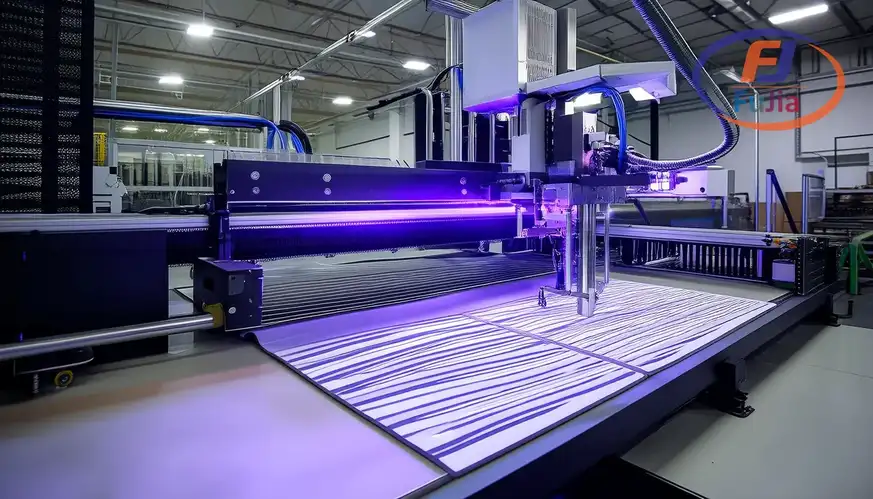
A wide format UV flatbed printer carries a bed of 1.2-2.5 meters and prices $18,000-60,000, printing oversized rigid panels, doors, furniture sheets, and multi-up nesting runs that desk-class machines physically cannot accept. Width is the product: the buyer paying for a 2-meter bed is buying the jobs that 60×90 cm machines decline, from full-size cabinet panels to retail wall cladding. This guide maps the width classes, the applications that justify them, the throughput math at scale, and the honest point at which width pays for itself.
Key Takeaways
- Wide format UV flatbeds run $18,000-60,000 across 1.2-1.6 m mid-width and 2-2.5 m grand-width classes, with 8-27 m2/hour throughput.
- The application canon is oversized: doors, cabinet sheets, 4×8 foot panels, wall cladding, furniture faces, and multi-up nesting.
- Nesting efficiency is the ROI engine: a 2 m bed prints 6-10 desk-bed jobs per pass, collapsing per-job handling labor.
- Floor, power, and freight grow with width, and a 2.5 m machine needs industrial doors and three-phase power at most sites.
- We recommend the 1.2-1.6 m class for shops adding oversized work to existing volume, and 2 m-plus for dedicated panel production.
The Width Classes and Their Machines
| Class | Bed width | Price band | Throughput | Buyer |
|---|---|---|---|---|
| mid-width | 1.2-1.6 m | $18,000-35,000 | 8-15 m2/hour | sign shops adding panels |
| grand-width | 2-2.5 m | $35,000-60,000 | 15-27 m2/hour | panel production houses |
| hybrid roll combo | 1.6-2.5 m + roll | $30,000-45,000 | mixed | mixed rigid and banner |
The class table prices the width ladder, and the first rung is where most wide-format journeys start: a 1.2-1.6 m bed accepts the 4×8 foot panel that defines construction and retail work, plus door blanks and furniture faces, while keeping the footprint inside a normal workshop. The grand class serves houses whose product is the panel itself, running 8-hour nesting schedules where bed width multiplies into daily square meters. The hybrid row serves shops split between rigid and banner volume, and its trade-offs mirror the hybrid analysis our hybrid printer guide documents in depth. Width buys the job; throughput buys the day, and the two price separately, per the class logic our UV printers lineup maintains across every market.
Motion class separates the tiers within each width, because a 2 m bed on belt drive drifts where servo gantries hold tolerance. Year-three registration on grand-format work is a servo story, and the buyers whose panels must align across multiple sheets should price the motion system before the bed size, per the same motion-class arithmetic our flatbed pricing guide applies at every tier.
The Applications That Justify Width
| Application | Panel size | Why width wins |
|---|---|---|
| doors, 4×8 panels | 80×200 cm | one piece, no seam |
| cabinet and furniture sheets | 120×240 cm | full sheet nesting |
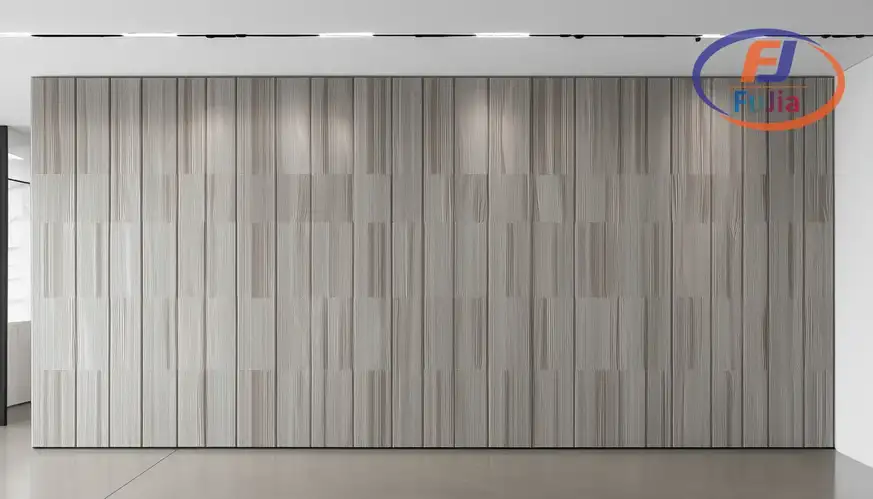
| retail wall cladding | multi-meter runs | tile-matched across sheets |
| multi-up nesting | mixed small jobs | 6-10 desk jobs per pass |
The application table is the width business case, and the seam column is its quiet logic: a door or a 4×8 panel printed in one pass carries continuous grain, continuous gradient, and no alignment risk, while the same job split across a smaller bed becomes a tiling project with visible risk at every joint. Wall cladding pushes the argument furthest, because retail and hospitality clients pay premiums for matched patterns across multi-meter runs, and only the grand bed prints the matching in one setup. Nesting is the volume multiplier, a 2 m bed arranging 6-10 small jobs per pass, collapsing the per-job handling that dominates desk-class labor, per the nesting economics our signage production guides document.
The customer profile behind these applications is industrial by nature: fit-out contractors, furniture makers, and production houses whose order books quote in square meters rather than pieces. A studio serving craft and personalization demand rarely fills a grand bed, and the width decision follows the order book’s units rather than its ambition, which is the same buy-for-the-orders-you-have principle our every buying guide applies.
Throughput Math at Scale
| Metric | mid-width 1.6 m | grand 2.5 m |
|---|---|---|
| panel jobs per hour | 8-12 | 12-20 |
| nested small jobs per pass | 4-6 | 8-12 |
| operator labor per m2 | 15-25 min | 8-15 min |
| monthly capacity, 8h days | 1,300-2,400 m2 | 2,900-5,200 m2 |
The throughput table converts width into capacity, and the labor column is where the ROI actually lives: nested printing cuts operator minutes per square meter nearly in half, because one setup serves many jobs and the machine runs while the operator loads the next sheet. A shop billing $15-30 per square meter for printed panels covers a mid-width machine inside 12-24 months of steady nesting volume, and the grand class follows the same math at roughly double the volume threshold. We recommend computing the capacity against signed orders rather than market size, because the machine that pays on paper and the machine that pays on invoices differ by exactly the sales function.
Ink and consumables scale linearly rather than stepwise, running $0.40-1.20 per square meter by coverage, so a grand bed’s daily output carries proportionally larger ink orders without new economics. Maintenance scales with duty cycle, and the 8-hour nesting schedules that justify grand width also justify the daily ritual discipline our maintenance guides prescribe, because a stopped 2 m bed stops a bigger revenue line than a stopped desk. The labor column is the number to quote from, and nesting efficiency is the ROI engine that width actually buys. The real question with wide-format capacity is simple: it is only capacity until the order book fills it.
Site Requirements: Floor, Power, Freight
| Requirement | mid-width | grand-width |
|---|---|---|
| floor footprint | 12-20 m2 | 25-40 m2 |
| power | single or three-phase | three-phase typical |
| door and path clearance | 2 m | 2.6-3 m |
| crating weight | 800-1,500 kg | 2,000-4,000 kg |
The site table is the unglamorous half of the buying decision, and grand-format machines fail deliveries more often than they fail technically. A 2.5 m bed ships crated at 2-4 tonnes, needs an industrial door and a straight path, and wants three-phase power that older workshops lack, so the site survey belongs before the PO rather than after the truck arrives. Floor loading matters on mezzanine installations, and the leveling ritual that follows installation decides bed flatness for the machine’s life. We recommend photographing the delivery path and sending it to the vendor before ordering, because the freight quote and the install plan both price off that path, and the same site-first logic our India market guide applies to power applies here to geometry.
A panel case we supply anchors the grand-class fit: a furniture producer running 1,500-2,500 m2 monthly of printed cabinet faces on a 2.5 m servo bed, nesting 8-10 sheet jobs per pass with color-matched runs across whole kitchens, quoting panel work that desk-class competitors decline by geometry alone. The producer’s width decision followed its contract pipeline, and the machine’s uptime discipline followed the same daily-ritual standards our maintenance guides document at every scale.

What is the best large format UV printer?
The best large format UV printer is the width class matched to your panel work: 1.2-1.6 m mid-width at $18,000-35,000 for shops adding 4×8 panel and door jobs, and 2-2.5 m grand width at $35,000-60,000 for dedicated panel production with nesting volume. Servo motion, vacuum bed truth at the bed’s full extent, and a vendor with grand-format installation experience are the verification points that spec sheets flatten. Best is the machine your site can receive, your power can feed, and your order book can fill, decided in that order. Demo on full-size panels rather than samples, because width is the product being purchased.
What are the downsides of UV printing at wide format?
Wide format UV printing carries the category’s standard downsides, adhesion on unprimed plastics, no food-contact certification, white ink circulation, at scales that amplify their cost: a stopped 2.5 m bed idles more revenue per hour than a stopped desk unit, consumable orders grow with daily square meters, and the site requirements of floor, power, and freight exclude workshops that desk class fits. Panel work also inherits the substrate’s movement, with wood sheets needing sealed edges and acclimatization before printing. None of these downsides is disqualifying for a production house, and all of them price into the site survey and the maintenance ritual before the deposit. Scale multiplies both the earning and the stopping. The floor space a wide bed demands is the class’s way of asking whether you meant it.
How much does a flatbed UV printer cost?
A flatbed UV printer costs $1,799-2,800 at the desk tier, $3,500-8,000 in the mid class, $9,000-28,000 for 6090 production gantries, and $18,000-60,000 in the wide-format classes this guide covers, with width and motion class setting each rung. The ladder prices jobs rather than quality, because a desk machine prints a phone case as sharply as a grand bed prints a door, and the buyer climbs rungs to accept larger work, not better work. The full tier logic sits in our flatbed pricing guide, and the wide-format rungs serve buyers whose order books quote panels and square meters. That framing, jobs not quality, is the sentence that prevents most overbuying.
What are some good large format UV printer machines?
Good large format UV printers match width to verified work: mid-width 1.2-1.6 m machines from established flatbed factories serve panel-adding sign shops, grand 2-2.5 m servo-gantry machines serve dedicated production houses, and hybrid roll combinations serve mixed rigid-and-banner volume at $30,000-45,000. Good means demo prints on full-size panels at the bed’s corners and center, servo motion documented, and an installation plan that includes the delivery path your site actually has. We recommend shortlisting by width class first, then applying the same white-ink and support checks our reviews guide applies at every tier, because width changes the job and not the verification.
Verdict
The wide format UV flatbed printer is a geometry investment: beds of 1.2-2.5 meters at $18,000-60,000 that accept the doors, panels, cladding runs, and nested multi-job passes smaller machines decline, with nesting efficiency cutting operator labor nearly in half and site requirements that filter the buyers before the deposit. Survey the path, feed the power, match the width to signed panel work, and let the nesting math price the ROI on real orders. Width buys the jobs, throughput buys the day, and the shops that fill both keep the machine earning. For a wide-format test print on your own oversized panel, contact Fujia Print with your panel dimensions.
Sources
- Wikipedia: UV curing: LED ink chemistry.
- Wikipedia: Large-format printing: format context.
- AATCC: durability testing standards.
- Fujia Print signage cases: panel production examples.
