

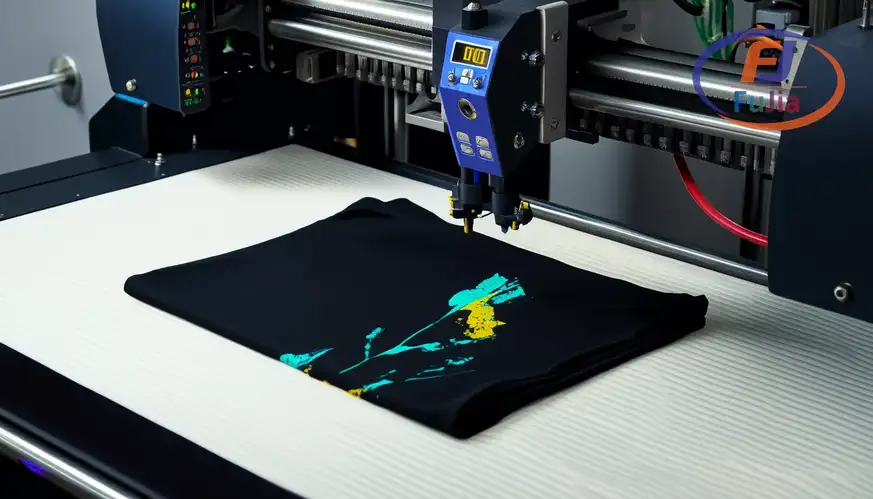
DTG printing on dark shirts works by printing a white ink underbase beneath the color layer, and that one extra pass doubles the ink cost, adds a pretreatment step, and separates the shops that survive dark-garment orders from the ones that wash out. The physics is simple: DTG ink is water-based and translucent, black fabric eats it, and the white layer is the ground the colors stand on. This guide covers the underbase math, the pretreat weights by color depth, the durability rituals that hold through 50 washes, and the honest comparison against DTF transfers on the same dark shirt.
Key Takeaways
- Dark shirts need a white underbase pass, doubling ink consumption to $1.20-2.50 per shirt versus $0.60-1.20 on white garments.
- Pretreat runs 15-25 grams for dark shirts, applied by machine for even coverage, and it must dry fully before printing.
- Underbase settings trade opacity against hand feel: 100% coverage is crisp but stiff, 80-90% halftone underbase keeps the drape.
- Properly printed dark shirts survive 40-50 washes with bright color, and the wash ritual, inside-out, cold, no bleach, protects the margin.
- We recommend DTF transfers for mixed-fabric or one-off dark orders, and DTG for pure-cotton dark volume above 20 pieces.
Why Dark Shirts Change the Economics
| Cost line | white shirt | dark shirt |
|---|---|---|
| ink per shirt | $0.60-1.20 | $1.20-2.50 |
| pretreat | 8-12 grams | 15-25 grams |
| print time | 1 pass | 2 passes |
| margin per $20 retail | $14-16 | $11-14 |
The cost table prices the color decision, and the doubling comes from two directions: the white underbase consumes as much ink as the colors above it, and the second print pass halves the machine’s hourly output. Pretreat doubles too, because dark garments need heavier laydown to keep the white from yellowing against the fabric. The margin table shows the consequence at retail: the same $20 shirt carries $3-5 less margin in dark, which is why dark-garment quotes need their own price list rather than a white-shirt multiplier, per the cost logic our DTG printers guides document across garment colors.
The economics are still favorable, and the honest framing is that dark shirts price their physics rather than lose money. A shop quoting dark work at $3-5 above white-garment pricing covers the ink honestly, and customers accept the premium because they see the vibrancy the underbase buys. We recommend publishing the two-tier pricing openly rather than absorbing the cost silently, because the customer who understands the white layer values it, and the same cost-transparency logic our apparel guides document applies across every process premium. Transparency converts the surcharge from an annoyance into a specification, and that conversion is worth more than the surcharge itself.
Pretreat: The Step That Decides Wash Survival
Pretreat is a liquid primer sprayed onto the garment before printing, and on dark shirts it does two jobs at once: it bonds the white underbase to the fibers, and it keeps the white bright against the black dye. Dark garments take 15-25 grams depending on fabric weight, applied by pretreat machine for even coverage, because hand spraying leaves the hot spots that yellow and the gaps that shed white. The pretreat must dry completely before printing, pressed or heat-dried, since wet pretreat repels ink the way rain repels paint.
The yellowing complaint that haunts dark-garment DTG traces to pretreat almost every time: too much laydown, uneven application, or insufficient drying leaves oxidized patches that read as stains on black. We recommend calibrating the pretreat machine weekly with a test garment, weighing the applied grams against the target, because the calibration drifts and the drift shows on the darkest blanks first. A correctly applied and dried pretreat is invisible on the finished shirt, and the shops that treat calibration as a ritual never meet the yellowing ticket, per the pretreat discipline our DTG process guides document in full.
Curing closes the pretreat conversation: the printed dark shirt needs a full heat press at 160-170 °C for 30-90 seconds depending on the ink system, and under-cured prints fail the first wash while over-cured ones scorch. The temperature discipline mirrors the press settings our sublimation guides document, and an IR thermometer reading the garment surface, not the platen, is the calibration that settles curing arguments in one test.
Underbase Settings: Opacity Versus Hand
| Underbase style | Coverage | Hand feel | Best for |
|---|---|---|---|
| solid 100% | maximum opacity | stiffer | photographic, corporate |
| halftone 80-90% | high | soft drape | retail fashion |
| no underbase | none | softest | distressed vintage looks |
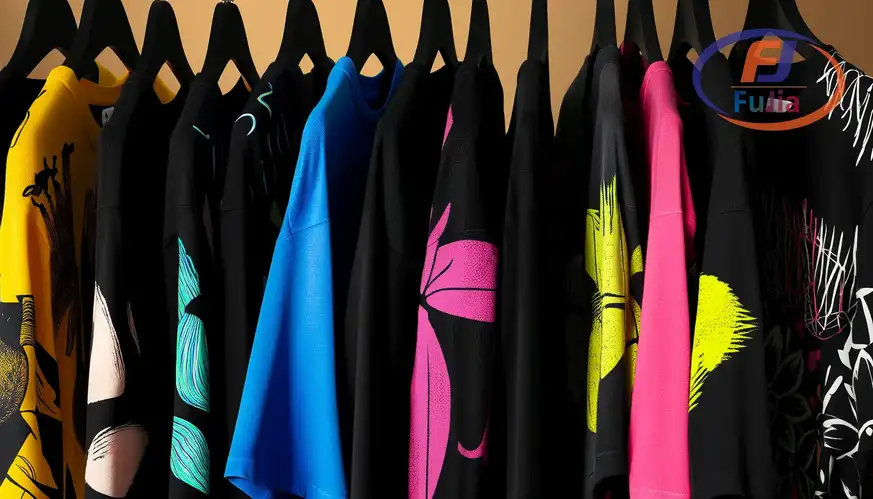
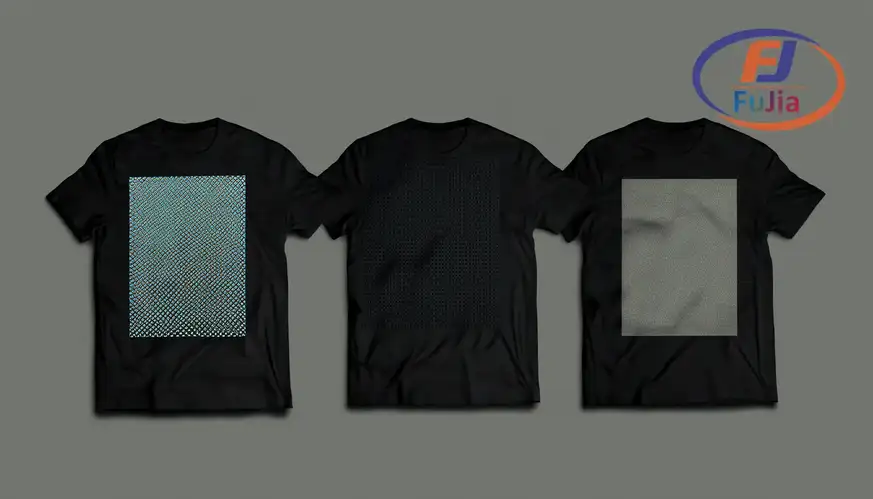
The underbase table is a design decision disguised as a technical one, because all three rows are sellable and they sell to different buyers. Solid underbase delivers the crisp, opaque graphics that corporate orders expect, at the cost of a firmer hand where the ink sits. Halftone underbase lays the white in a dot pattern that keeps 80-90% opacity while letting the fabric breathe, and it is the retail-fashion default for good reason. The no-underbase look, colors sitting directly on black, produces the muted vintage aesthetic that some brands sell deliberately, and knowing it exists prevents misquoting it as a defect.
The drape-versus-opacity trade is a conversation worth having at the quote, because the customer who expects silk-soft hand and crisp full coverage is ordering two contradictory things. We recommend showing printed samples of all three underbase styles at the first dark-garment meeting, because the choice made by hand is the one that survives the customer’s expectations, and the same sample-first logic our process guides apply to every finish decision applies here.
Wash durability on properly printed dark shirts runs 40-50 cycles with bright color, provided the print cured fully and the owner washes inside-out in cold water without bleach. The care card is part of the product, and the durability numbers that survive customer laundry are the ones the quote promised, per the wash-testing standards our sources document for the category.
DTG Versus DTF on Dark Shirts
| Factor | DTG on dark | DTF transfer on dark |
|---|---|---|
| hand feel | soft, ink in fabric | film layer on top |
| fabric range | cotton best, blends tricky | cotton, poly, blends all work |
| one-off economics | setup-heavy per shirt | identical per piece |
| durability | 40-50 washes | 30-45 washes |
| color vibrancy | excellent with underbase | excellent, film-bright |
The comparison table prices the two dark-shirt paths honestly, and the split follows fabric and volume. DTG on cotton delivers the softest hand and the strongest durability, and it wins pure-cotton dark volume above 20 pieces where per-shirt economics amortize the pretreat and setup. DTF transfers handle polyester, blends, and one-off orders with identical per-piece economics, trading some hand feel for fabric freedom, and the film layer’s brightness is genuinely competitive on dark grounds. Shops serving both paths run both, because the customer’s fabric and quantity pick the process rather than the shop’s preference, per the process-split logic our apparel guides document across garment work.
A retail case we supply anchors the choice: a streetwear label printing its black heavyweight tees by DTG with halftone underbase at 200-400 pieces per drop, hand feel being the product, while its polyester cap and jacket programs run DTF transfers because the fabric demands it. The label’s customers never discuss the technology, and both product lines wash true a year in, which is the outcome every process decision serves.
Can you DTG print on dark shirts?
Yes, DTG prints on dark shirts using a white ink underbase printed beneath the colors, paired with a heavier pretreatment of 15-25 grams that bonds the white to the fabric and keeps it bright against the black dye. The underbase doubles ink consumption to $1.20-2.50 per shirt and adds a second print pass, which is why dark-garment pricing sits above white-garment pricing. Done correctly with full curing at 160-170 °C, dark-shirt DTG survives 40-50 washes with vibrant color. The white layer is the whole trick, and it is also the reason dark shirts deserve their own price list.
How to print on dark colored shirts?
Printing on dark colored shirts runs four steps: pretreat the garment with 15-25 grams of liquid primer applied by machine, dry the pretreat completely under heat, print the white underbase pass followed by the color pass at the RIP’s dark-garment settings, and cure the finished shirt at 160-170 °C for 30-90 seconds. The underbase can be solid for maximum opacity or halftone at 80-90% for softer hand, and the choice is a design conversation rather than a default. Wash survival of 40-50 cycles depends on full curing and inside-out cold washing, and the care card ships with the product. Calibrate the pretreat weekly, because drift shows on black first.
Can I use transfer paper on dark fabric?
Standard transfer paper designed for light fabrics does not work on dark fabric, because light-transfer paper is transparent and the dark garment shows through, destroying the design. Dark-fabric transfer paper carries its own white backing layer that transfers with the image, which is the product to buy for iron-on dark work, and the finished print carries that backing as part of the design. For commercial dark-garment results, DTF transfers have largely replaced dark transfer paper, delivering better wash durability and brighter color without the backing rectangle.The craft transfer paper is a one-off solution, and DTF is the production answer for dark fabric. One shirt for a family reunion: transfer paper. A team order: DTF. The white layer has to come from somewhere, and DTF prints its own.
Will sublimation show up on black?
No, sublimation does not show up on black or any dark garment, because dye sublimation colors the fibers themselves and adds no white layer, so dark fabric swallows the dye entirely. Sublimation requires light-colored, polyester-rich substrates, which is why the dark-garment market belongs to DTG with white underbase and DTF transfers with their own white ink. Hybrid products exist, sublimating onto a white patch pressed onto a dark shirt, but the decoration area remains white-based rather than printing on the black itself. For all-over dark garment color, the white-ink processes are the only honest routes, per the substrate logic our sublimation guides document. The dye goes where the fibers go, and dark fibers keep their color.
Verdict
DTG printing on dark shirts is a white-ink business: the underbase doubles ink to $1.20-2.50 per shirt, pretreat at 15-25 grams decides wash survival, underbase style trades opacity against hand at the quote, and full curing delivers 40-50 washes of vibrant color. Price the dark premium openly, calibrate the pretreat weekly, and route polyester and one-off dark orders to DTF where the fabric wants it. The dark-garment market pays for vibrancy, and the shops that engineer the white layer honestly keep both the color and the margin. For dark-shirt test prints on your own blanks, contact Fujia Print with your design.
Sources
- Wikipedia: Direct-to-garment printing: process overview.
- Wikipedia: Heat transfer printing: transfer context.
- AATCC: wash durability standards.
- Fujia Print apparel cases: dark garment production examples.
