

UV flatbed printing directly onto wood works on almost any species at thicknesses up to about 2 inches, with sanding to 180-220 grit and a wipe of the surface as the whole prep ritual, and white ink under the design as the choice that decides whether grain shows through. Wood is the most forgiving substrate in the UV canon because it is porous, matte, and dimensionally patient, and it is the substrate where the wood itself becomes part of the design. This guide covers the prep that makes adhesion boring, the species quirks that matter, and the pricing math that makes wood panels a real product line.
Key Takeaways
- Sand to 180-220 grit and vacuum the dust: that is the entire prep for most species, with no primer needed on stable woods.
- White ink blocks grain for crisp graphics; skipping white lets the wood show through for the rustic look that sells at premiums.
- Oily species like teak and rosewood resist adhesion, and a fast IPA wipe or light sealer scuff solves most of them.
- Bed clearance runs to about 2 inches, which covers live-edge slabs, cutting boards, crates, and doors.
- We recommend quoting wood jobs at $25-80 per panel retail against $3-12 in blank and ink cost.
Surface Prep: The Boring Ritual That Prevents Everything
| Step | Spec | Why |
|---|---|---|
| sand | 180-220 grit | removes mill glaze, opens grain |
| vacuum or tack cloth | no visible dust | dust embeds in ink |
| deburr edges | no splinters | head clearance safety |
| optional sealer | thin, sandable | oily or resinous species |
The prep table is short because wood is cooperative, and the discipline it encodes is dust control rather than chemistry. Mill glaze, the burnished surface that planing leaves, resists ink the way glass does, and two passes at 180-220 grit knock it down enough for the UV film to grip mechanically in the grain. Dust is the only contaminant that survives casual shops, because a single grain embedded under the print becomes a permanent crater, so vacuum-then-tack is the ritual that separates clean panels from reprints. We recommend prepping every panel the day it prints, because sanded wood reoxidizes within days and the fresh surface is the grippy one, per the surface-prep logic our UV printers guides apply across rigid substrates.
Sealing splits opinion, and the honest rule is by species rather than by habit. Stable, dry species like birch ply, maple, and pine print beautifully bare, and a sealer only adds a layer that can crack with the wood’s seasonal movement. Oily and resinous species, teak, rosewood, cedar, and fresh pine with heavy sap, push oils and resins into the curing ink for weeks, and there a thin sandable sealer or a thorough IPA wipe is what keeps the design from ghosting later. The species row of the prep table is the only row that requires judgment, and a test patch on the actual board settles every species question in minutes.
White Ink and the Grain Decision
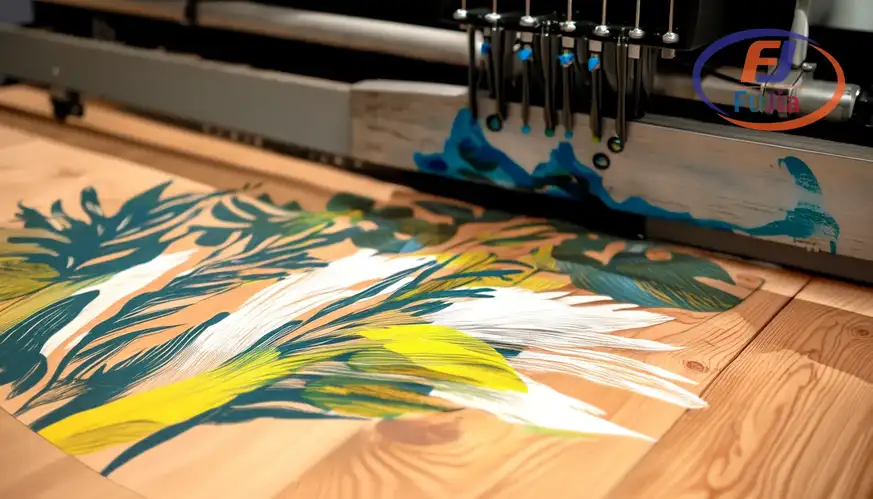
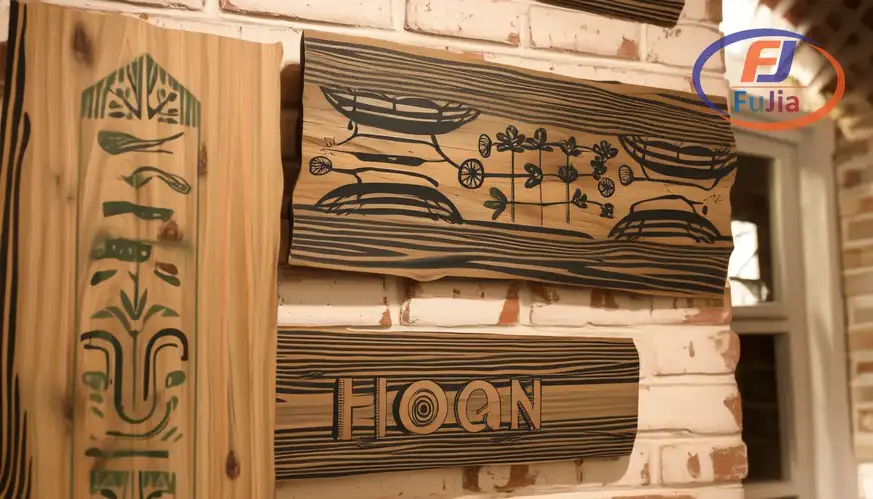
The white-under-white-over choice is the design decision that defines wood printing, because both options are sellable and they sell differently. Printing white under the graphic produces crisp, opaque, color-accurate marks that sit on the wood like a decal, which is what corporate logos and photographic reproduction require. Skipping the white layer lets the grain carry through the colors, producing the rustic, reclaimed aesthetic that craft markets price at premiums, and the same file prints both ways on the same machine, so the choice is a product-line decision rather than a capability one.
Grain-through printing has one honest limitation: the design inherits the wood’s randomness, and a customer expecting corporate consistency should never receive a rustic panel. We recommend quoting the two finishes as separate products with separate expectations, because the rustic finish’s charm is exactly its inconsistency, and setting that expectation at the quote prevents the refund conversation later. Shops that offer both run them as good-better tiers on the same blanks, and the grain-through tier often carries the better margin per hour of machine time, per the product-tier logic our product labeling applications document for branded goods. Name the finishes, price the finishes, and the wood line sells itself twice.
Adhesion on properly prepped wood is the least dramatic part of the category, and the cured film survives handling, stacking, and indoor display for years. Outdoor wood work changes the conversation, because the wood itself moves, checks, and greys under weather, and no ink film survives its substrate’s movement, so outdoor pieces need sealed wood and sealed print together. Indoor rules, outdoor honesty, and the AATCC-class durability tests our sources document give shops the language to quote both honestly.
Thickness, Fixturing, and the Object Canon
| Object | Thickness | Fixture need |
|---|---|---|
| cutting boards | about 1 inch | flat vacuum hold |
| live-edge slabs | 1-2 inches | shims for warp |
| crates and boxes | assembled | clearance check |
| doors and panels | up to 2 inches | full-bed support |
The canon table shows why wood rewards a flatbed owner, because the thickness ceiling of about 2 inches covers every wood product that sells by hand. Live-edge slabs are the warp risk: a slab that rocks on the bed prints out of focus at the lifted edge, and shimming until the surface sits true is part of the setup, not a defect of the machine. Assembled crates and boxes print on any face the bed can accept, and doors and panels run edge-to-edge at full bed width. The fixturing answer for wood is usually the simplest in the shop, and the same vacuum-hold logic our signage display production guides document for panels applies unchanged.
Ink laydown on wood runs $0.40-1.20 per square foot depending on white coverage, against blank costs of $3-12 for typical boards and slabs, and retail of $25-80 per finished panel. A craft-fair weekend that moves 15-30 wood pieces covers a meaningful share of a desk machine’s cost, and corporate award programs re-order seasonally on the same fixtures. When it comes to wood pricing, the blank is cheap, the machine time is short. The perceived value is high, which is the margin triangle every product business wants. Wood sits inside it naturally.
A maker case we supply anchors the line: a studio printing farmhouse-style kitchen signage on pine boards, grain-through designs at $45 retail against $6 in blank and ink, restocking weekly from a single fixture set. The owner added white-under corporate panels as a second tier for local business orders, and the two finishes share one machine, one workflow, and one inventory of blanks, per the multi-tier product logic our applications cases document across studios.
Can you print directly on wood with a UV printer?
Yes, UV flatbed printers print directly onto wood, and wood is among the easiest substrates in the category: sand to 180-220 grit, remove dust, load the panel up to about 2 inches thick, and print with CMYK or white-under designs. No primer is required on stable species, while oily woods like teak need an IPA wipe or light sealer scuff for reliable adhesion. The cured print handles immediately, stacks, and survives indoor display for years, and the choice between white-blocked crisp graphics and grain-through rustic finish is a product decision rather than a technical one. A test patch on the actual board confirms any species in minutes.
Does UV ink stick to wood?
UV ink bonds strongly to properly prepped wood, because the matte, porous surface gives the cured film mechanical grip inside the grain that glass and plastic cannot offer. The two failure cases are mill glaze, which sanding removes, and oily species whose natural oils push into the ink film over weeks, which an IPA wipe or sealer handles. Indoor prints survive years of handling and display, while outdoor pieces need the wood itself sealed, since substrate movement and weathering govern outdoor life more than ink chemistry does. Prep is the whole adhesion story on wood, and the test patch prices it in minutes.
What is the best printer for printing on wood?
The best printer for wood is a flatbed with at least 2 inches of head clearance and a vacuum bed, which covers every desk and mid-tier UV flatbed in the $1,799-8,000 classes for boards, slabs, crates, and panels. Bed size sets the product ceiling rather than resolution, because wood graphics print comfortably within any machine’s dpi, and the warp shimming skill matters more than the head spec. Roll-to-roll and cylindrical machines do not serve the wood canon, and the flatbed’s rigidity is what makes thick, heavy panels printable at all. The tier choice follows panel size and volume, and the desk class serves most craft-scale wood businesses. Clearance and bed, not dpi, are the wood specs.
Is wood printing profitable?
Wood printing is profitable because the margin triangle lines up naturally: blanks cost $3-12, ink runs $0.40-1.20 per square foot, machine time per panel is minutes, and retail lands at $25-80 for finished pieces, with grain-through rustic designs often carrying the best margin per hour. Break-even on a desk machine lands inside 50-150 panels of steady orders, and seasonal corporate programs plus craft-fair weekends give wood lines two complementary demand channels. The profit risks are blank quality surprises and outdoor promises, both managed by test patches and honest quoting.Wood is among the fastest-paying product lines a UV flatbed owner can add, and the blank supplier relationship is the asset that compounds.
Verdict
UV flatbed printing directly onto wood is the category’s friendliest substrate play: sand-and-vacuum prep, a white-or-grain design choice that defines two product tiers, a 2-inch thickness ceiling that covers the whole sellable canon, and $25-80 retail against $4-13 in consumables per panel. Prep on the day of printing, shim the warp, test oily species before the PO, and quote outdoor work with sealed-wood honesty. The wood line rewards a flatbed owner with the fastest payback in the rigid canon. To see your artwork printed both ways, white-blocked and grain-through, on your own board stock, contact Fujia Print for wood samples.
Sources
- Wikipedia: UV curing: LED ink chemistry.
- Wikipedia: Wood finishing: surface preparation context.
- AATCC: durability testing standards.
- Fujia Print applications: wood panel production cases.
