

The UV flatbed printer 2030 format covers 20 by 30 centimeter desktop beds at $1,200-2,800, positioning as the entry rung of the flatbed ladder where phone cases, card holders, small awards, and promo items print in single passes. The format’s economics are desk economics: it runs from a household outlet, fits a meter of table space, and serves product lines whose items never exceed A4 size, while its compact bed is also its ceiling, because anything larger routes to 6090 machines at double the price. This page specs the 2030 class, prices its real ledger, and matches the buyers it serves against the buyers it does not.
\n\n\n\n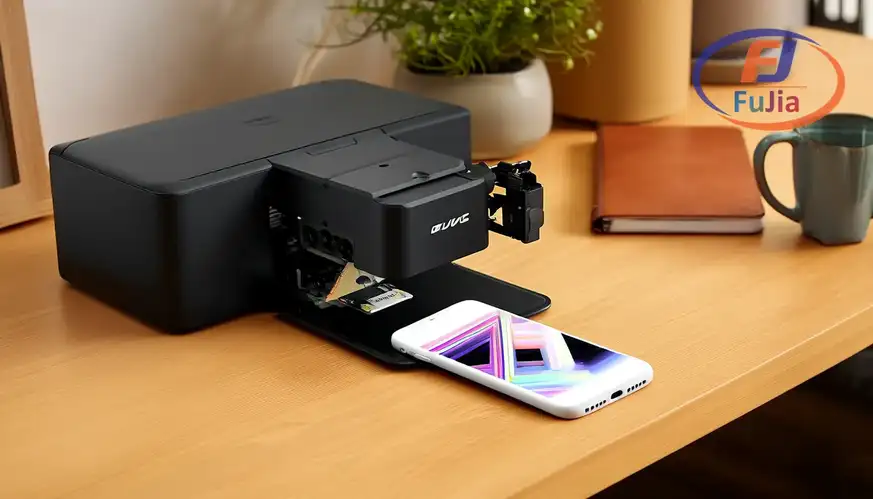
Key Takeaways
\n\n\n\n- \n\n\n
- The 2030 bed prints 20×30 cm at $1,200-2,800 with 1-2 XP600 heads, white channel available, and LED curing standard in 2026. \n\n\n
- Product fit: phone cases 4-8 per pass, card holders 6-10, small awards 2-4, and the format serves anything under 30 centimeters. \n\n\n
- Running ledger: ink at $0.15-0.40 per m2 and all-in cost near $0.50-0.90 per m2, with monthly capacity of 100-300 m2 at daily use. \n\n\n
- The format ceiling is real: products over 30 centimeters or volumes past 300 m2 monthly belong to the 6090 class at $3,500-16,000. \n\n\n
- We recommend the 2030 for product-validation sellers and desk-based businesses, and the 6090 for anyone whose catalog already includes signs or full panels. \n\n\n
The Format Table and Its Ladder Position
\n\n\n\nThe ladder table places the 2030 against the flatbed classes above it, and the price progression shows what each step buys:
\n\n\n\n| Format | \nBed size | \nPrice band | \nHeads | \nUser stage | \n
|---|---|---|---|---|
| 2030 desktop | \n20×30 cm | \n$1,200-2,800 | \n1-2 XP600 | \nvalidation, desk business | \n
| A3 flatbed | \n30×42 cm | \n$1,800-3,500 | \n1-2 XP600 | \ngrowing craft | \n
| 6090 | \n60×90 cm | \n$3,500-16,000 | \n2-3 heads | \nproduct production | \n
| 2513 | \n120×250 cm | \n$18,000-45,000 | \n2-4 Gen5 | \nsignage | \n
The 2030 in its habitat:
\n\n\n\nThe 2030’s position in the ladder is a genuine product decision rather than a compromise: its bed fits the phone-case, small-award, and promo-item categories that dominate personalized-gift catalogs, and those products never ask for 60 centimeters, per the format-fit logic our UV printers pillar applies across the ladder.The 2030 buyer who thrives is the one whose product list already fits the bed, and the buyer who struggles is the one who bought compact hoping the catalog would follow.
\n\n\n\nProduct Fit and the Running Ledger
\n\n\n\nThe product table lists what the 2030 bed holds per pass, and the ledger table that follows prices the format’s running costs. Both assume XP600 heads at production settings:
\n\n\n\n| Product | \nUnits per pass | \nNotes | \n
|---|---|---|
| Phone cases | \n4-8 | \nthe format’s core product | \n
| Card holders, wallets | \n6-10 | \nflat leather and PU | \n
| Small awards, plaques | \n2-4 | \nacrylic and wood | \n
| Pens, small promo | \n10-20 with jigs | \nfixture dependent | \n
| Ledger line | \nCost | \nNotes | \n
|---|---|---|
| Ink | \n$0.15-0.40 per m2 | \ncoverage dependent | \n
| All-in per m2 | \n$0.50-0.90 | \nheads, fluid, power included | \n
| Monthly capacity | \n100-300 m2 | \ndaily desk use | \n
| White ink discipline | \ndaily circulation | \nsame as any platform | \n
The ledger in view:
\n\n\n\nWhen it comes to the 2030 ledger, its all-in cost per square meter runs slightly above larger formats because fixed costs spread over fewer meters. The difference is the price of a desk-sized footprint plus a household power connection, per the scale economics our pricing guides document across the ladder. White ink is the one ledger line that punishes compact owners disproportionately, because small tanks settle faster and the daily circulation habit decides whether the white channel survives its first quarter. We recommend buyers who need white on dark products treat the circulation schedule as part of the machine’s price, because skipping it converts a $1,800 printer into a $900 repair within months.
\n\n\n\nWho the 2030 Serves and Where It Ends
\n\n\n\nThe buyer table matches profiles to the format honestly, and the ceiling section marks where the 2030 hands off to the 6090 class:
\n\n\n\n| Buyer profile | \nFit | \nWhy | \n
|---|---|---|
| Phone case seller | \nstrong fit | \nthe format’s core product | \n
| Etsy gift starter | \nstrong fit | \ndesk scale, household power | \n
| Small promo business | \nworkable | \njigs extend the catalog | \n
| Sign or panel producer | \npoor fit | \n6090 class serves | \n
| High-volume decorator | \npoor fit | \ncapacity ceiling at 300 m2 | \n
The ceiling in one frame:
\n\n\n\nA phone-case seller we supply runs a 2030 at 40-60 cases daily from a home office, and its unit economics of $0.60-1.50 in production cost against $12-25 retail prices need nothing the compact bed cannot give, per the micro-business economics our promotional products cases document across personalized-gift sellers. The ceiling arrives as a product decision rather than a machine failure: the day the catalog adds a full-size plaque or a sign panel, the 6090 class at $3,500-16,000 becomes the honest next purchase, and the 2030 keeps serving the small-product line beside it. We recommend buyers map their catalog against the 20×30 bed before purchasing. The format serves a real and large market, and it serves only that market, which is exactly what an entry format should do.
\n\n\n\n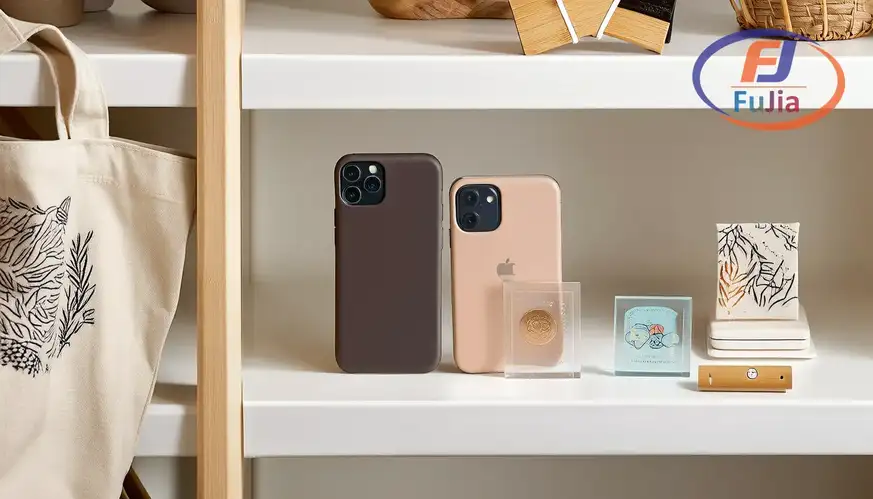
What is a 2030 UV flatbed printer?
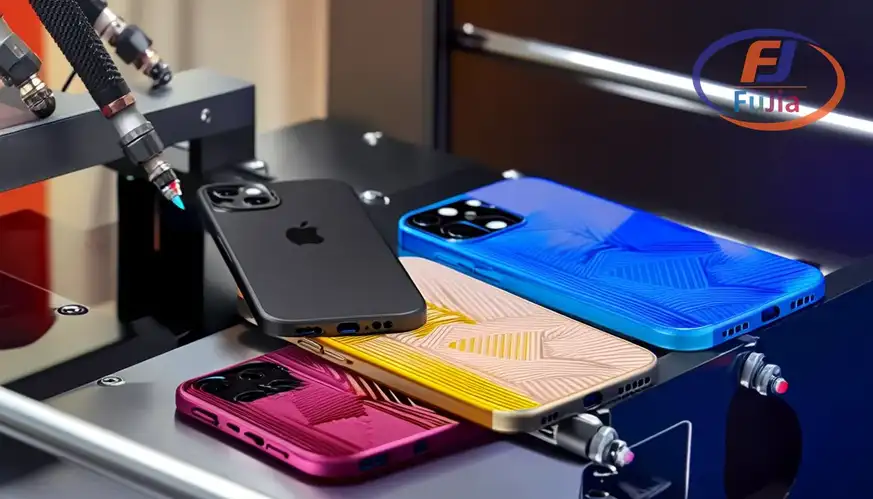
A 2030 UV flatbed printer is a compact desktop machine with a 20 by 30 centimeter print bed, priced $1,200-2,800 with 1-2 Epson XP600 heads, white ink channel options, and LED curing, running from standard household power on a meter of table space. The format prints phone cases, card holders, small awards, and promo items in single passes, with 4-8 phone cases per pass as its core workload. It is the entry rung of the flatbed ladder, serving desk-based businesses whose products fit within 30 centimeters.
How much does a 2030 UV printer cost?
A 2030 UV printer costs $1,200-2,800 depending on head count and white-ink configuration, with complete setups adding $100-300 for jigs, cleaning supplies, and opening ink stock. Running costs hold at $0.15-0.40 per square meter in ink and $0.50-0.90 all-in, with monthly capacity of 100-300 square meters at daily desk use. Factory-direct pricing drives these bands, and dealer channels add 40-100 percent while wrapping remote support around identical hardware.
What can I make with a 2030 UV printer?
A 2030 UV printer makes phone cases at 4-8 per pass, card holders and wallets at 6-10, small acrylic or wood awards at 2-4, and pen or small promo items at 10-20 with jigs, covering the personalized-gift catalog that fits within 30 centimeters. The products carry retail margins of 70-85 percent on decorated goods, and the format’s desk footprint plus household power make it viable for home-based sellers. Products larger than 30 centimeters or volumes past 300 square meters monthly belong to the 6090 class at $3,500-16,000. The catalog that fits the bed is the business the machine serves, and that business is larger than most buyers expect.
Is a 2030 UV printer worth buying?
A 2030 UV printer is worth buying when your product list fits its 20×30 centimeter bed and your volume stays under roughly 300 square meters monthly, because it delivers full UV printing capability at a third of the 6090 price with desk-scale economics. It is not worth buying for sign work, full panels, or high-volume decoration, where the larger class serves honestly. The purchase decision is a catalog exercise: lay your products on a 20×30 centimeter outline, and if everything fits, the 2030 is the rational entry, and if anything hangs over, the 6090 is the rational start.
Verdict
\n\n\n\nThe UV flatbed printer 2030 format is the ladder’s honest entry: 20×30 centimeter beds at $1,200-2,800 printing the phone-case and promo catalog at $0.50-0.90 all-in per square meter, with desk economics, household power, and margins that personalized-gift sellers monetize from day one. Its ceiling is its definition, because products over 30 centimeters and volumes past 300 square meters monthly belong to the 6090 class, and the catalog-mapping exercise decides the purchase before any quote does. Map your products to the bed, respect the white-ink circulation habit, and the compact class serves its market completely. For 2030 and 6090 quotes side by side, contact Fujia Print for factory-side pricing.
\n\n\n\nSources
\n\n\n\n- \n\n\n
- Epson industrial printheads: XP600 head specifications. \n\n\n
- Wikipedia: UV curing: LED curing systems. \n\n\n
- SGIA printing resources: production benchmarks. \n\n\n
- Fujia Print UV format guides: ladder comparisons. \n\n\n
- Fujia Print promo product cases: micro-business economics. \n\n\n
