
UV DTF on glass, metal, and ceramic all work, and the surfaces differ in preparation demands rather than in possibility: glass bonds strongest with the least prep, powder-coated metal holds excellently while polished stainless asks for adhesion promoter on curved wraps, and glazed ceramic performs well until its glossy glaze demands the cleanest surface of the three. The wash data separates the materials honestly: properly applied UV DTF survives 30-plus dishwasher cycles on glass and ceramic and 20-30 on coated metals, with failures tracing to surface contamination far more often than to material chemistry. This page ranks the three surfaces, specs the preparation each demands, and prices the material choice for product businesses.
\n\n\n\n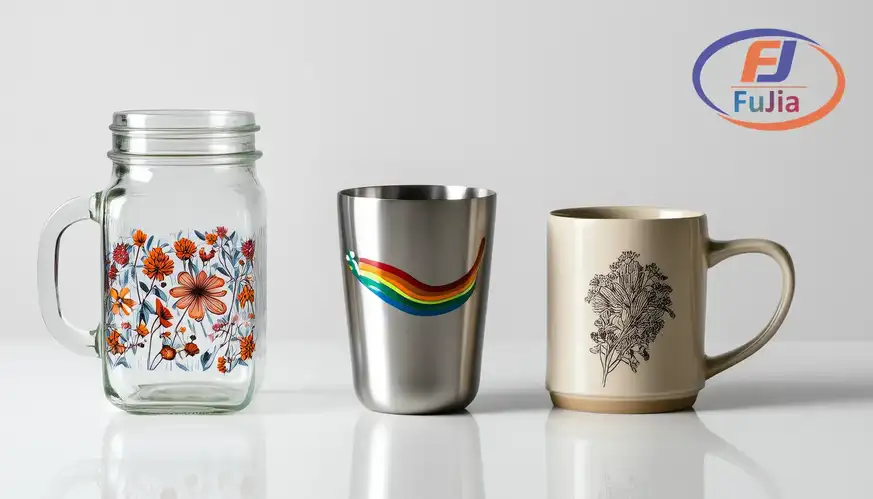
Key Takeaways
\n\n\n\n- \n\n\n
- Adhesion ranking: coated metal first, glass second, glazed ceramic third, with all three holding 20-30+ wash cycles when degreased properly. \n\n\n
- Surface prep is the variable: isopropyl degreasing is mandatory on all three, and polished stainless plus high-gloss ceramic benefit from adhesion promoter on wraps. \n\n\n
- Glass and ceramic tolerate dishwasher heat cycles, while thin-gauge metal transfers heat that softens adhesive edges on bottom-rack exposure. \n\n\n
- Curvature compounds difficulty: flat surfaces bond easiest, and cylindrical wraps on stainless bottles are the hardest common application. \n\n\n
- We recommend testing every new product batch with a 5-cycle wash before committing inventory, because glaze and coating formulas vary by manufacturer. \n\n\n
The Surface Comparison Table
\n\n\n\nThe surface table ranks the three materials on the attributes that matter to decorated-goods sellers, and the prep column explains most of the field results:
\n\n\n\n| Attribute | \nGlass | \nCoated metal | \nGlazed ceramic | \n
|---|---|---|---|
| Adhesion strength | \nexcellent | \nexcellent on coating | \nvery good | \n
| Surface prep demand | \nisopropyl wipe | \nwipe + promoter on curves | \ncleanest surface demand | \n
| Dishwasher survival | \n30+ cycles | \n20-30 cycles | \n30+ cycles | \n
| Heat sensitivity | \nnone practical | \nthin gauges warm | \nnone practical | \n
| Common failure | \nnone when clean | \nedge lift on curves | \ngloss-zone lifting | \n
The three surfaces decorated:
\n\n\n\nGlass earns its reputation as the friendliest UV DTF surface because its non-porous chemistry presents nothing for the adhesive to fight, and a degreased jar or glass holds transfers through cycles that would test lesser bonds, per the substrate testing our UV printers application guides document across materials. Coated metal performs equally on its coating and poorly on exposed polished edges, which is why powder-coated tumblers out-test bare stainless flasks in every comparison we run.Glazed ceramic sits between them, bonding reliably while demanding the cleanest preparation of the three because glossy glaze shows and magnifies every contamination trace.
\n\n\n\nSurface Preparation and the Wash Data
\n\n\n\nThe prep table specs the application protocol per material, and the wash table that follows reports what disciplined application survives. All tests ran 40 °C dishwasher cycles on production-applied transfers:
\n\n\n\n| Material | \nPrep protocol | \nPromoter needed | \n30-cycle result | \n
|---|---|---|---|
| Glass | \nisopropyl wipe, dry | \nno | \n95%+ intact | \n
| Coated metal tumbler | \nwipe, promoter on wraps | \ncurved wraps yes | \n85-95% intact | \n
| Polished stainless | \nwipe, promoter, avoid edges | \nyes | \n70-85% intact | \n
| Glazed ceramic mug | \nthorough degrease | \nno | \n90%+ intact | \n
The prep in practice:
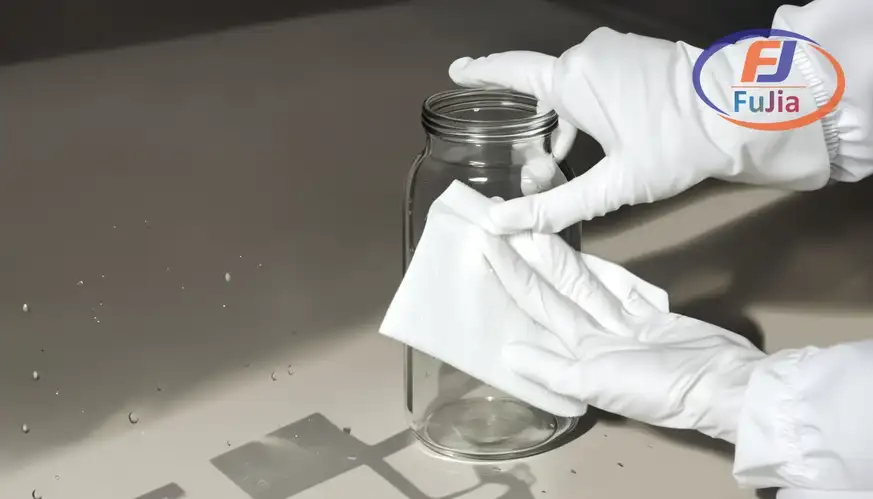
\n\n\n\nWhen it comes to surface preparation, it decides more outcomes than the material does, because the adhesive bonds to whatever layer sits on top. A fingerprint under a wrap is a built-in failure line regardless of whether the substrate is premium glass or budget ceramic. Isopropyl alcohol at 70 percent or higher with a lint-free wipe takes 15 seconds per item. The five-cycle test wash before any inventory commitment converts that discipline into verified data. Adhesion promoter on curved stainless is the one case where prep alone does not close the gap. The promoter’s 30-second application is what lifts curved metal wraps from 70 percent survival into the 90s, per the promoter protocols our application cases document for drinkware work.
\n\n\n\nProduct Economics and Material Matching
\n\n\n\nThe product table matches the three materials to the goods that justify them, and the economics column shows why the material choice is a product decision before it is a technical one:
\n\n\n\n| Material | \nTypical products | \nBlank cost | \nDecorated retail | \n
|---|---|---|---|
| Glass | \njars, candle vessels, frames | \n$1-5 | \n$12-35 | \n
| Coated metal | \ntumblers, bottles, flasks | \n$3-10 | \n$15-35 | \n
| Glazed ceramic | \nmugs, plates, tiles | \n$1.5-4 | \n$10-25 | \n
The product match in one frame:
\n\n\n\nA gift studio we supply runs all three materials on one UV DTF station, and its product line assigns each surface where its strengths pay: candle jars on glass where lid-side wraps survive handling, powder-coated tumblers for the premium drinkwear line at $28 retail, and ceramic mugs for the corporate logo trade where unit economics favor the cheapest blank, per the material-matching logic our promotional products cases document across decorated-goods programs. We recommend sellers pick materials by their customer’s use case rather than by adhesion charts alone, because a corporate mug buyer cares about price and a tumbler buyer cares about dishwasher survival, and each material serves its own demand honestly.
\n\n\n\n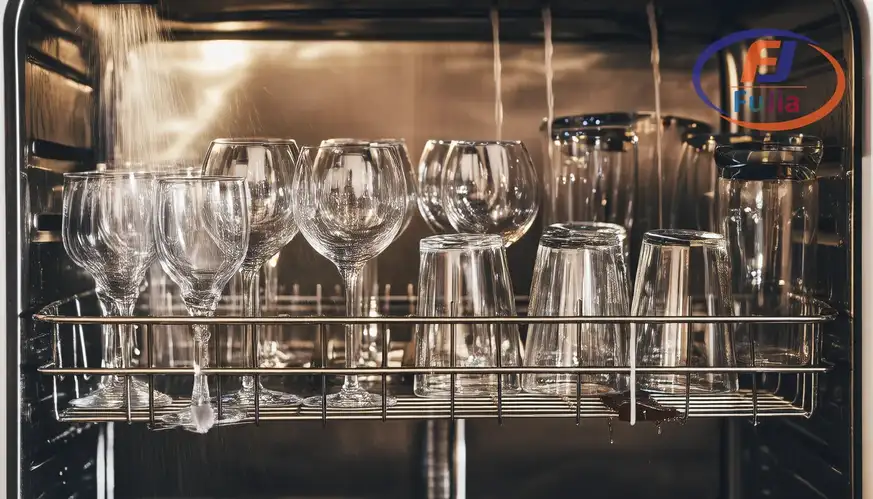
Can UV DTF be used on glass?
UV DTF works excellently on glass, which is one of the friendliest surfaces for the transfer format because its non-porous chemistry bonds strongly with the film’s adhesive after a simple isopropyl degreasing. Glass jars, candle vessels, and frames hold UV DTF transfers through 30-plus dishwasher cycles when applied clean, and no adhesion promoter is needed on flat or gently curved glass. The application takes 30-60 seconds, and surface contamination rather than glass chemistry causes the rare failures, which is why the wipe-before-apply discipline matters more than the glass quality itself.
Does UV DTF stick to stainless steel?
UV DTF sticks to powder-coated stainless steel very well, holding 20-30 dishwasher cycles with standard preparation, while polished bare stainless is the hardest common surface and benefits from adhesion promoter especially on curved wraps around bottles. The coating on powder-coated tumblers presents a bonding-friendly layer that polished metal lacks, which is why coated drinkware outperforms bare flasks in every wash comparison. Apply promoter on curved polished surfaces, keep wraps away from exposed polished edges, and the metal results approach glass-level durability.
Does UV DTF wash off in the dishwasher?
UV DTF does not wash off when applied to properly prepared surfaces, with glass and ceramic holding 30-plus dishwasher cycles and coated metals holding 20-30 cycles at standard 40 °C programs. Failures trace to surface contamination under the transfer, curved polished metal without promoter, or thin-gauge metal that heats enough to soften adhesive edges on bottom-rack exposure. The five-cycle test wash before committing inventory verifies every new product batch. Clean application with realistic customer expectations keeps the returns line quiet, and that quiet is the business metric the testing protects.
Which surface is best for UV DTF transfers?
The best surface for UV DTF transfers is coated or painted hard goods, followed by glass, followed by glazed ceramic, with polished bare metal last and adhesion promoter as its requirement. Coatings and glass present stable bonding chemistry that survives 30-plus wash cycles, ceramic glaze bonds well while demanding the cleanest prep, and all three serve decorated-product businesses at healthy margins. The practical ranking matters less than matching the material to the product: candle jars want glass, premium drinkwear wants coated metal, and corporate logo programs want ceramic mugs, because each surface serves its demand honestly.
Verdict
\n\n\n\nUV DTF on glass versus metal versus ceramic resolves into preparation rather than possibility: all three surfaces bond reliably when degreased, glass and glazed ceramic hold 30-plus dishwasher cycles, coated metal holds 20-30 with promoter on curves, and polished bare stainless is the one case where prep alone does not close the gap. The 15-second isopropyl wipe is the single discipline that decides most outcomes, the five-cycle test wash verifies every new product batch, and the material choice should follow the customer’s use case rather than the adhesion chart. Pick the product first, prep the surface religiously, and let the wash test qualify each batch. For UV DTF films tested across all three surfaces, contact Fujia Print with your product list.
\n\n\n\nSources
\n\n\n\n- \n\n\n
- Wikipedia: UV curing: adhesive film curing chemistry. \n\n\n
- Wikipedia: Glass: surface chemistry fundamentals. \n\n\n
- ASTM International standards: adhesion testing methods. \n\n\n
- Fujia Print substrate application guides: surface testing protocols. \n\n\n
