

A sublimation printer with white ink cannot exist and never will, because sublimation ink is disperse dye that bonds inside polyester fibers at around 200 °C, and white is what fabric looks like when no dye is present at all. This guide explains the chemistry behind that answer, maps the four real workarounds for dark polyester, and clears up the screen printing white ink confusion that dominates the search results. Ten minutes here saves the wasted ink bottles the craft forums cannot.

Key Takeaways
- White sublimation ink is chemically impossible: sublimation dyes are colorants that bond inside polyester, and white is the absence of colorant, not a dye that can be manufactured.
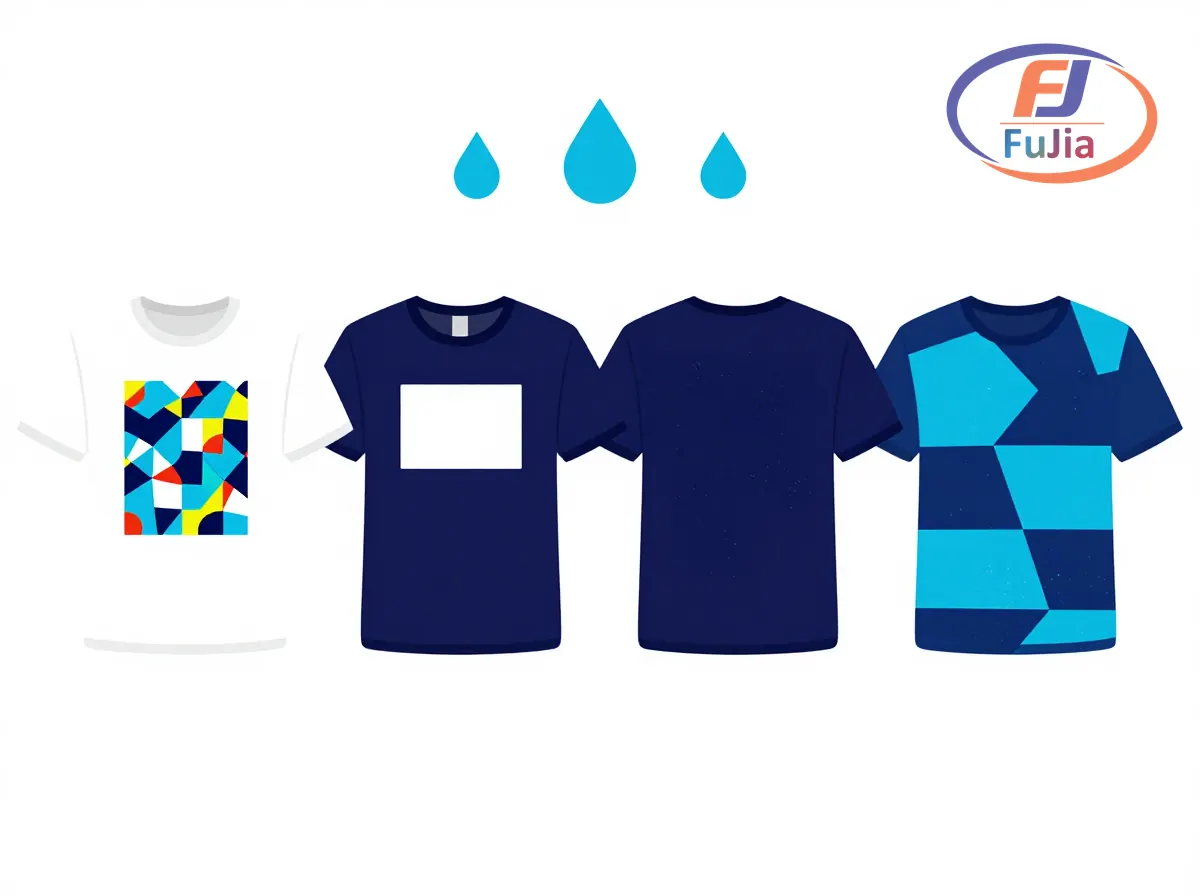
- On white polyester, designs simply leave the fabric white wherever nothing is printed, which is why the vast majority of sublimation work never needs white ink at all.
- Four real workarounds exist for dark garments: white polyester blanks, sublimation HTV with a white base layer, white coating spray, and white toner transfer, each with distinct cost and durability trade-offs.
- Screen printing white ink is a different technology entirely, using plasticizer-based plastisol that sits on top of fabric, and it is what most “white ink” search results are actually about.
- Shops needing regular white-on-dark production should run DTF or white toner alongside sublimation rather than forcing one process to do both.
Why White Sublimation Ink Cannot Exist
The chemistry is unforgiving in a useful way. Sublimation ink is disperse dye: solid dye particles that turn to gas at about 200 °C and re-solidify inside polyester fibers, becoming part of the material rather than a layer on it. Color in that system comes from dye molecules absorbing specific wavelengths of light, and white is what results when no absorption happens at all, light simply reflecting off the substrate. There is no white dye molecule because white is not a color dye can produce; it is the canvas showing through. Every “can I print white” question collapses into that single fact, and the honest answer is that asking for white sublimation ink is like asking for clear paint.
That absence also explains the rest of sublimation’s known limits, and they share one root. The process only bonds with polyesters, which is why cotton fails, and it only shows on light backgrounds, which is why dark garments fail. For shops hunting a process that handles both dark and light fabric, our fabric printing machine guide maps the technology split; the color half is this article’s job, and both trace back to the same chemistry: dye must bond with polyester and displace nothing to be visible. Buyers evaluating a sublimation printer for production should know up front that the dye-based architecture rules out white ink entirely, regardless of brand or channel count.
What Happens on White Polyester (The Good News)
The good news hiding inside the limitation: white polyester blanks already provide the white layer for free. A design printed without white underbase on white fabric looks exactly as intended, because every unprinted area stays fabric-white, which is why mugs, tumblers, mouse pads, and light garments dominate sublimation order books and why the workflow has no white-ink maintenance, no settling, and no circulation hardware to babysit. Compared against DTF’s daily white ink discipline, sublimation’s no-white architecture is a genuine operational advantage, not a missing feature, and it is a large part of why a two-technology shop runs cleaner than a do-everything-with-one shop.
The corollary matters for product planning: photographic designs on white polyester reproduce beautifully, but any design intending white text or white graphic elements on colored areas will render those elements as base-fabric white only if the base is white; on anything darker they vanish. Design software cannot fix physics, so the fix happens at the blank selection stage.
Four Real Workarounds for Dark Polyester
| Workaround | How it works | Cost profile | Durability | Best for |
|---|---|---|---|---|
| White polyester blanks | print on white fabric or white-coated blanks | lowest, no extra step | full sublimation life, 50+ washes | mugs, tumblers, light apparel |
| Sublimation HTV | white HTV base with printed design, pressed onto dark fabric | medium, per-transfer | good, edges with wear | cotton-poly dark shirts, small runs |
| Coating spray | white spray layer applied, then sublimate | cheap materials, labor-heavy | weakest, fades within 5-10 washes | prototypes, crafts, non-wear items |
| White toner transfer | laser prints white toner layer + color, heat press | highest hardware cost | strong, wash-tested, 50+ cycles | dark-garment production without DTF |
Sublimation HTV is the craft market’s favorite because it preserves the sublimation workflow end to end: print on the special HTV sheet, weed if needed, press onto the dark garment, and the white base layer carries the design. Coating spray occupies the opposite end, cheap and forgiving for crafts but genuinely unsuited to garments that will see regular washing, and recommending it for production work would be dishonest advice. White toner transfer occupies the serious-production end of the dark-garment bracket, and our white toner vs DTF comparison maps exactly where it beats and loses to ink-based transfer.
The Screen Printing White Ink Confusion
Half the search results for white sublimation ink are actually about screen printing, and the confusion deserves a direct clearing. Screen printing white ink is plastisol: a PVC-based ink that sits on top of fabric in a physical layer, opaque by construction, and it exists precisely because dye-based processes cannot make white. The two technologies answer different questions, sublimation asking what can permanently tint polyester and screen printing asking what can coat any fabric opaquely, and a shop conflating them will buy the wrong machine for the job.
| Technology | Prints true white | How the white is made | Dark garments | Photorealistic |
|---|---|---|---|---|
| Sublimation | no | none possible (dye chemistry) | workarounds only | excellent on light polyester |
| Screen printing (plastisol) | yes | opaque PVC layer on fabric | yes | limited, spot color |
| DTF | yes | white ink underbase | yes, any fabric | excellent |
| White toner transfer | yes | fused toner layer | yes | good |
The practical decision rule: all-over photographic work on light polyester belongs to sublimation, opaque white and spot-color work on dark cotton belongs to screen printing or its modern transfer cousins, and mixed-product shops increasingly run both rather than compromise either.
What Production Shops Actually Do
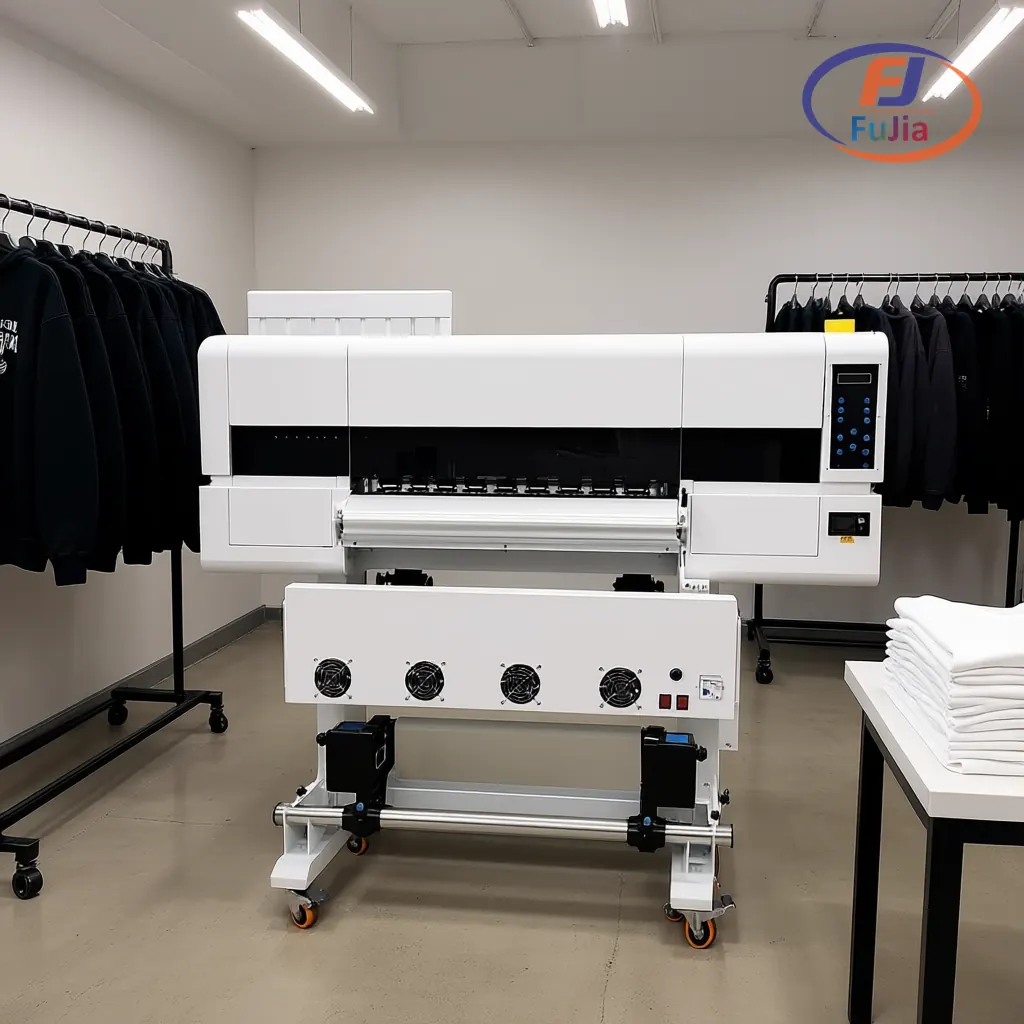
The short version from the factory floor: volume decides the workflow, and the pattern across our customer base is consistent: sublimation owns the light-polyester and hard-blank lines, and when dark-garment demand appears, shops add a second process rather than distort the first. DTF is the most common partner technology because a single 60 cm machine covers dark cotton, mixed fabrics, and full-color transfers with real white underbase, sharing the heat press with the sublimation line; Fujia’s sublimation printers and SUI-STD ink system, part of the consumables lineup, are engineered for exactly that two-line split, with the sublimation side running white blanks at speed and the DTF side absorbing everything white ink must exist for. Based on data from our customers across 50+ countries, shops that pair the two technologies stop asking the white ink question within a month, because the answer stops being a workaround and becomes an equipment layout.
The simplest advice for a buyer standing at the start: choose the process by the product list, not the other way around. White mugs and polyester shirts mean sublimation alone; dark cotton hoodies mean DTF or white toner; both lists together mean both machines, ordered by whichever product line pays first.
Can a sublimation printer print white ink?
No, and the reason is chemistry rather than engineering: sublimation ink is disperse dye that bonds inside polyester fibers at 200 °C, and white is the visual result of no dye being present, so a white sublimation ink is a contradiction in terms rather than a product gap. Unprinted areas of a design show the base fabric, which is why white polyester blanks deliver white elements for free, and why dark garments need one of the physical workarounds like sublimation HTV with a white base layer. Buyers who internalize this stop looking for an ink that cannot exist and start choosing blanks or a second process, which is where the actual solutions live.
Is there white ink for sublimation?
There is not, and listings that appear to offer it are selling one of three different things: sublimation-ready HTV with a white base layer, white coating spray for hard blanks, or white toner for laser transfer systems. None of those are sublimation ink in the chemical sense, because each works by putting a physical white layer on or under the design rather than dyeing fibers, which is also why their durability profiles differ and why wash testing matters before production. The honest purchasing rule is to buy the workaround that matches the substrate and wash expectations, not the one whose listing borrows the sublimation name.
Is there a sublimation printer that can print white?
No consumer or production sublimation printer prints white, including the six-channel industrial machines, because the ink set itself cannot contain white dye and adding channels cannot change that chemistry. Machines marketed on white capability are white toner laser systems or DTF printers, both of which create white as a physical layer rather than a dye bond. Both are different purchases with different consumables and different maintenance rhythms, and a buyer reading “white ink capable” on a sublimation spec sheet is reading marketing, not engineering. The same dye chemistry rules out spot white for dark shirts, full-bleed white for premium apparel, and graphic white for promotional substrates, regardless of brand or channel count. A buyer whose product list is dominated by dark garments should evaluate those technologies directly rather than waiting for a sublimation machine that physics will never ship.
Is it possible to print white ink?
Yes in every technology except dye sublimation: screen printing plastisol, DTF with white ink channels, white toner laser transfer, and UV printing all produce genuine white, each by depositing opaque material on the surface rather than dyeing fibers. DTF is the closest modern general-purpose answer for garment decorators because it prints photorealistic color with white underbase on any fabric color at 160 °C press for 15 seconds with cold peel, which is why two-technology shops pair it with sublimation so cleanly. The selection question is never “which machine prints white” but “which white layer survives my substrate and wash cycle.” We recommend answering it with a wash test on your actual best-selling garment, and for mixed-fabric apparel the answer usually points to DTF.
Verdict
White sublimation ink does not exist, cannot exist, and the search for it ends in one of three productive places: white polyester blanks that make the question moot, physical workarounds like sublimation HTV for occasional dark-garment work, or a second technology, most often DTF, that handles white-on-dark as a native capability. The shops printing profitably at volume run the process split deliberately, sublimation owning light polyester and hard blanks at unmatched speed while DTF or white toner absorbs the dark-garment line, and the equipment decision reduces to the product list rather than any ink bottle. To plan that split with real configurations and same-file samples, contact Fujia Print and run your designs on both lines before you buy either.
Sources
- Wikipedia: Sublimation (phase transition): the physical process behind disperse dye sublimation.
- Wikipedia: Dye-sublimation printing: process overview referenced in the chemistry section.
- Wikipedia: White: color science background for why white is the absence of dye.
- Heat Press Nation: white toner vs sublimation: competing technology comparison context.
