

Sublimation ink bulk buying drops per-milliliter cost by 40-70% against cartridge pricing, with 100 ml bottles running $8-25 and liter containers at $40-120, and the savings are real only when the ink gets used inside its shelf life and matches the printer’s ecosystem. The bulk decision is a chemistry and volume decision rather than a price-per-ml decision, because sublimation ink settles, expires, and locks to printer platforms in ways that standard ink purchases never encounter. This guide prices the sizes, explains the compatibility locks, and runs the volume math that times bulk buying honestly.
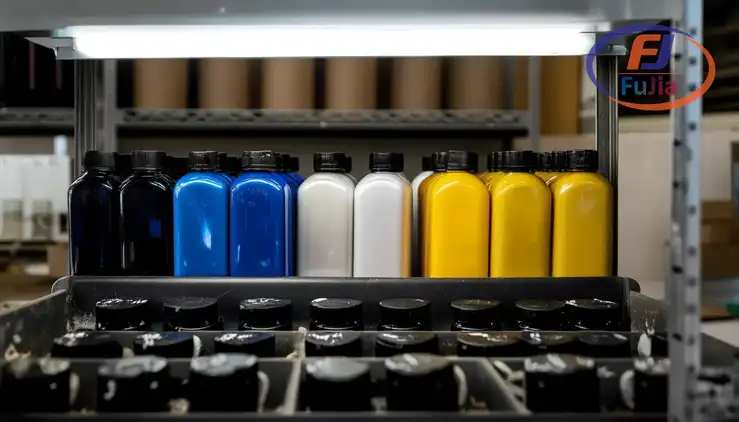
Key Takeaways
- Bulk sizes run 100 ml at $8-25, 250 ml at $15-50, and 1 liter at $40-120, saving 40-70% per ml against cartridges.
- Printer ecosystems lock ink: EcoTank and converted platforms take third-party bulk freely, while dedicated sublimation printers warranty their own.
- Unopened sublimation ink lasts 1-2 years sealed and dark; opened bottles use within 6-12 months for best density.
- The crossover to bulk sits around 40-80 ml of monthly ink use, roughly 200-400 prints depending on coverage.
- We recommend 100 ml bottles for the first bulk step and liters only for printers with proven monthly consumption.
The Size Ladder and Real Savings
| Size | Price band | Per-ml cost | Savings vs cartridge |
|---|---|---|---|
| cartridge 70 ml equivalent | $25-40 | $0.35-0.57 | baseline |
| 100 ml bottle | $8-25 | $0.08-0.25 | 40-60% |
| 250 ml bottle | $15-50 | $0.06-0.20 | 50-65% |
| 1 liter container | $40-120 | $0.04-0.12 | 60-70% |
The size table prices the ladder, and the savings column is real only down the rows the buyer actually consumes: a shop printing 50 shirts monthly uses roughly 50-100 ml of ink, so the 100 ml bottle is its bulk step and the liter is shelf inventory that ages past its density. Per-ml math flatters every larger size, and shelf life cuts the flattery back to arithmetic, per the consumable-volume logic our consumables guides apply to every ink class.
The cartridge comparison carries a nuance worth naming: cartridges price convenience and warranty simplicity, and the buyer who abandons them for bulk assumes the filling workflow and any warranty consequences. Converted EcoTank platforms were born for bulk, dedicated sublimation printers were not, and the platform question precedes the price question because the savings only exist where the printer accepts the ink.
The Compatibility Locks That Govern Bulk
Sublimation ink bulk divides the market by printer ecosystem. Converted EcoTank and similar tank printers accept third-party bulk freely, and they are the platform the bulk market was built around, with chip-less filling and open ink lines. Dedicated sublimation printers from major brands ship with chip-managed cartridges, and their firmware rejects or warns on third-party ink, which means bulk buying there means chip resetting or warranty decisions, and both are commitments the buyer makes knowingly.
The second lock is chemistry matching: sublimation ink profiles pair with specific ink sets, and switching brands mid-printer requires a full flush rather than a top-up, because the chemistries interact in dampers and lines. We recommend committing to one ink brand per printer and buying that brand in bulk, because the mixed-ink experiment costs a flush cycle and a head cleaning every time it fails, per the same ecosystem discipline our ink guide documents for UV systems.
The third lock is color management: profiles are built for specific ink-and-paper pairs, and bulk ink from a new brand shifts colors until the profile catches up. The test prints that verify a new bulk supply belong in the first week of any switch, and the ICC profile re-build is part of the switch’s true cost, per the color-management logic our printing guides document across ink systems.
Shelf Life and Storage Rules
Sealed sublimation ink lasts 1-2 years stored dark and stable, and opened bottles should be consumed within 6-12 months for full density, because the dye suspension degrades with air exposure and temperature swings. We recommend dating every bottle on opening day, because the shelf-life clock starts there. Bottles live sealed, upright, and away from windows, and cold is the storage killer, because freezing crashes the dispersion permanently even after rewarming. The dated-bottle habit, writing the open date on every bottle, turns shelf life from a guess into a schedule, per the same storage discipline our ink guide documents for UV chemistry.
The printer-side clock runs faster than the bottle-side clock: ink sitting in lines and dampers ages regardless of the bottle’s dates, and printers that sit idle settle their pigment within days.
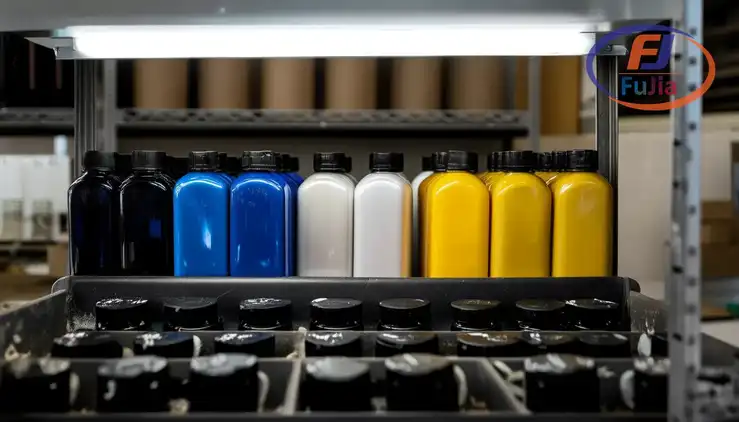
Dated bottles in one view:
Old ink announces itself as washed-out color that no setting recovers, and the diagnosis is a density comparison against a control print from known-good ink. We recommend keeping one reference print per ink batch, because the comparison turns “my colors look off” into a dated bottle check, and the reference archive costs nothing while settling every density dispute. The archive only works if the dates are on the bottles.
The Volume Math That Times Bulk Buying
The crossover to bulk sits at 40-80 ml of monthly ink use, which corresponds to 200-400 prints monthly depending on coverage, and the shop below that volume buys 100 ml bottles as they empty rather than speculating on liters.The two-month consumption log is the cheapest consultant in the bulk decision. The crossover math runs on the shop’s own consumption: cartridge invoices and bottle fill logs both count milliliters, and the count converts the bulk decision from estimation to measurement. We recommend tracking consumption for two months before the first bulk order, because the two-month average is the order size the shelf life supports.
The second-order decision is easier than the first, because the first bulk order calibrates consumption and the reorders match the burn rate with a shelf-life margin. A shop consuming 60 ml monthly orders 250 ml bottles on a four-month cycle and never meets expired ink, while the same shop ordering a liter donates its last 400 ml to the shelf-life gods, per the same consumption-matching logic our supply guides apply to every bulk purchase.
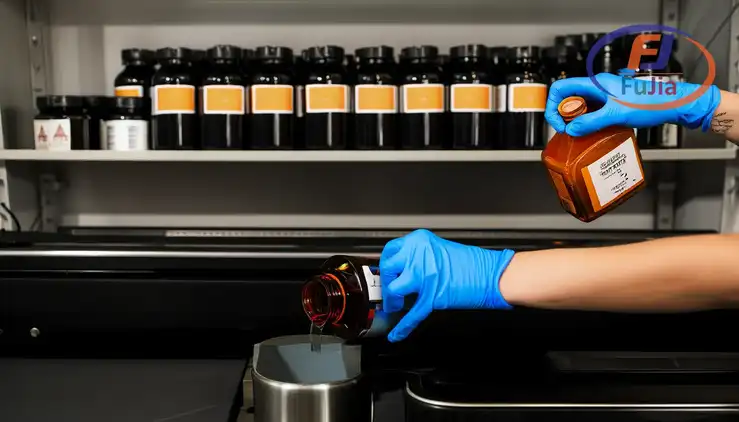
The consumption log in one view:
A print-shop case we supply anchors the crossover: a sublimation business consuming 90 ml monthly through cartridges at $30 each, switching to 250 ml bulk bottles at $35, cutting monthly ink spend from $38 to $13 after a one-time ICC rebuild, and reordering on a quarterly cadence that shelf life comfortably covers. The switch followed two months of measured consumption, and the measurement is what made the savings real rather than projected.
What is the cheapest way to sublimate?
The cheapest way to sublimate at quality is a converted tank printer with bulk sublimation ink at $0.04-0.25 per ml, blank polyester-coated blanks bought in bulk, and sublimation paper purchased in 100-sheet packs, which lands per-print consumables at $0.30-0.80 for typical designs. The upfront conversion runs $300-700 including the printer, and craft-store supplies price the same prints at three to five times that. The honest cheap route is measured consumption rather than bargain supplies, because expired ink and cheap blanks waste every dollar the printer saves, per the true-cost logic our cost guides apply across consumables. Cheap is a system, and the system includes shelf life.
Where can I find cheap sublimation blanks wholesale?
Cheap sublimation blanks wholesale come from China factory-direct at 20-40% under domestic pricing once orders clear 500 pieces, from US wholesalers at case quantities with 5-15 day turns, and from craft-tier suppliers at 25-100 piece MOQs for testing. The landed cost rather than the sticker decides the cheap question. Coating quality varies inversely with price at the bottom of the market, which is why the sample ritual precedes any bulk order. The full supplier map sits in our blanks sourcing guide, and the cheapest blank is the one that presses right on the last piece of the box.
Where can I buy ink in bulk?
Sublimation ink buys in bulk from specialty ink suppliers in 100 ml to 1 liter sizes at $8-120, from the printer manufacturer’s own supply channel where the platform allows it, and from marketplace sellers whose storage history is unverifiable, and the specialty channel is the honest default because shelf life and chemistry consistency are the bulk purchase’s real risks. The buying decision follows the printer’s ecosystem lock first, since converted tank platforms accept third-party bulk freely while dedicated printers manage chips. We recommend 100 ml bottles for the first bulk step, dated and consumed within 6-12 months, per the storage rules our ink guide documents for pigment systems.
Which ink is best for sublimation?
The best sublimation ink is the one formulated for your printer platform with a color profile you have verified on your paper and blanks, from a supplier whose batches arrive consistent, because sublimation quality lives in the ink-paper-profile triple rather than in any single bottle. Brand loyalty matters less than ecosystem commitment: switching brands mid-printer requires a full flush and a profile rebuild, and the best ink is therefore the one you commit to and keep stable. Test prints against a reference archive settle any brand question on your own equipment, per the ink-verification logic our guides apply across ink systems.
Verdict
Sublimation ink bulk buying saves 40-70% per ml down a size ladder from 100 ml to 1 liter, and the savings survive only inside the ecosystem locks, the shelf-life rules, and the measured consumption that turn price-per-ml into actual savings. Commit to one ink brand per printer, date every bottle, keep a reference print per batch, and let two months of measured consumption size the first bulk order. The bulk decision is arithmetic once the ink gets used, and it is speculation when it does not. To verify bulk ink density against your current supply on the same blanks, contact Fujia Print for a comparison print set.
Sources
- Wikipedia: Dye-sublimation printing: dye chemistry.
- Wikipedia: Ink cartridge: cartridge economics context.
- AATCC: wash durability standards.
- Fujia Print consumables: ink program cases.
