

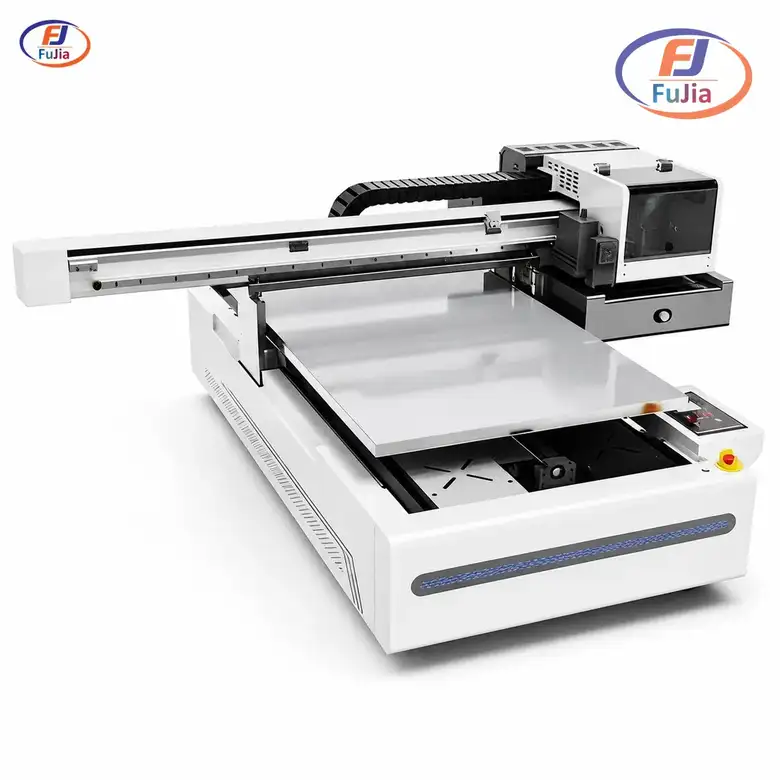
The Canon Arizona 350 UV flatbed printer is a 1.2 by 2.5 meter production flatbed in the $60,000-90,000 class, printing 8-11 m2 per hour at 1200 dpi with 6-7 piezo heads and dual-roll media handling on the GT series variants. The Arizona line built its reputation on bed flatness, head reliability, and dealer service depth, and the 350 series carries that legacy into a market where Chinese 2513-class flatbeds now quote $18,000-35,000 for comparable table formats. This page specs the 350 honestly, prices its class against the alternatives, and identifies the buyer profiles each platform actually serves.
Key Takeaways
- The Arizona 350 class prints on a 1.2 by 2.5 m vacuum bed at 8-11 m2 per hour in production mode with 1200 dpi output and 51 mm media height.
- Pricing sits at $60,000-90,000 through Canon dealer channels, versus $18,000-35,000 for Chinese 2513 flatbeds of comparable table size.
- The premium buys OEM head sourcing, a national dealer service network, and FDA-class build quality, worth paying when downtime prices above $500 per hour.
- White and varnish channels, flow-through vacuum hold-down, and 10 smph draft modes are the workflow features that production shops actually use.
- We recommend the Arizona class for duty-cycle buyers and the Chinese class for capability buyers, and the choice follows downtime cost rather than print quality.
The Arizona 350 Platform in Spec Terms
The spec table places the 350 series within its platform class, and the numbers explain both the price and the loyalty. Values reflect the 300/350 series family as dealer-configured:
| Specification | Arizona 350 class | What it delivers |
|---|---|---|
| Table format | 1.2 x 2.5 m vacuum | full 4×8 panels in two passes |
| Heads | 6-7 piezo channels | CMYK + white + varnish |
| Resolution | up to 1200 dpi | text and fine detail on rigid media |
| Speed | 8-11 m2/hour production | 25-35 smph draft |
| Media height | 51 mm | foam board, thick acrylic |
| Price class | $60,000-90,000 | dealer installed |
The machine class in context:
The Arizona’s engineering case rests on three pillars that spec sheets under-weight: bed flatness machined to hold registration across full panels, head electronics protected by OEM ink circulation that extends head life past 3 years in documented fleets, and a dealer network that answers service calls within contracted hours, per the platform history Canon’s wide-format documentation records across the Arizona generations.The 350 class prints no better than a healthy Chinese 2513 at equal settings, and the difference shows at year 3-5 in head replacement costs, uptime records, and resale value, per the fleet economics our UV printers pillar tracks across brands. The premium is real, and so is what it purchases.
The Alternatives Table: Same Table, Different Money
The comparison table prices the 350 against the platforms a buyer actually shortlists, and the gap defines the decision space. Chinese figures assume factory-direct 2513 and 2030 class machines:
| Platform | Table | Price class | Speed | Service model |
|---|---|---|---|---|
| Canon Arizona 350 | 1.2 x 2.5 m | $60,000-90,000 | 8-11 m2/h | national dealer |
| Chinese 2513 Gen5 twin | 1.2 x 2.5 m | $18,000-35,000 | 6-14 m2/h | remote + courier |
| Chinese 2513 quad Gen5i | 1.2 x 2.5 m | $30,000-45,000 | 12-20 m2/h | remote + courier |
| Used Arizona 300s | 1.2 x 2.5 m | $25,000-40,000 | 7-10 m2/h | dealer, aging |
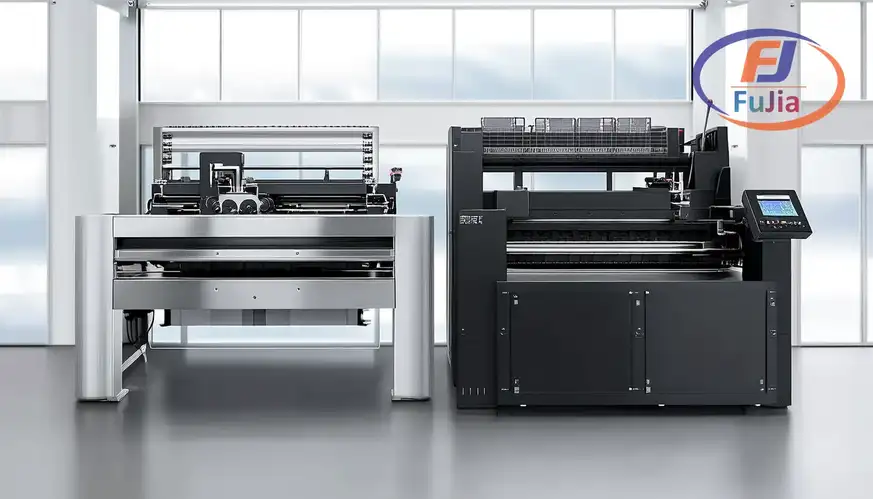
The alternatives in one frame:
When it comes to the comparison, the Chinese quad-head 2513 outruns the Arizona on paper at a third of the price. Production shops still buy Arizonas, because the buying criterion differs by shop type. A sign production house running two shifts prices downtime at $500-1,000 per hour. The dealer contract plus OEM head supply converts the $40,000 premium into insurance that pays on the first major failure. A startup or decoration shop running single shifts with tolerant deadlines carries downtime costs the premium never recovers. The Chinese platform funds the same revenue with $30,000 left for consumables and marketing, per the buyer-matching logic our sourcing cases apply across capital equipment. We recommend buyers compute their own hourly downtime cost before quoting either platform, because that single number decides the comparison more reliably than any spec sheet.
Who Should Buy the Arizona Class in 2026
The buyer table matches shop profiles to the honest platform answer, and the profile boundaries are duty cycle, staffing, and contract exposure rather than print quality:
| Buyer profile | Right choice | Deciding factor |
|---|---|---|
| Two-shift production house | Arizona class | downtime cost dominates |
| Single-shift sign shop | Chinese 2513 | capability at a third |
| Government or audited contract | Arizona class | documentation chain |
| Startup decoration shop | Chinese 2513 | capital efficiency |
| Existing Arizona fleet | add Arizona | operator and parts commonality |
The buyer landscape:
A panel producer we supply ran the decision explicitly in 2025: its two-shift Los Angeles floor priced downtime at $800 hourly and bought a new Arizona-class machine to join two aging units, while its Austin satellite shop running single shifts bought two Chinese quad-head 2513 machines for the price of one Arizona and carries identical customer-facing output, per the mixed-platform pattern our signage and display operations document for multi-site producers. The used Arizona market completes the picture at $25,000-40,000, and it serves exactly the mid-size shops that want dealer-grade build at Chinese-class pricing, with head-hour documentation as the entry ticket. Used units past 2018 deserve the same head-supply verification as any used platform, because OEM head sourcing has generation limits that no service contract rescues.
How much does a Canon Arizona UV flatbed printer cost?
A Canon Arizona UV flatbed printer costs $60,000-90,000 new through dealer channels depending on configuration, with white and varnish ink channels, roll-media options, and installation pushing configurations toward the top of the band. Used Arizona 300-series units trade at $25,000-40,000 with head hours and service history as the pricing variables. Chinese 2513 flatbeds of identical table size quote $18,000-45,000 factory-direct, and that $30,000-50,000 gap is the decision the Arizona premium must justify through service, duty cycle, and resale.
Is the Canon Arizona worth the premium over Chinese UV flatbeds?
The Canon Arizona premium is worth paying when downtime costs $500 or more per hour, when contracts require OEM documentation chains, or when the shop already runs Arizona units whose operators and parts inventory transfer. The premium buys national dealer service, OEM head sourcing that extends head life past 3 years, and resale value that Chinese platforms do not match. Single-shift shops with tolerant deadlines recover nothing like the $30,000-50,000 premium. The Chinese 2513 class prints equivalent customer-facing work at a third of the capital, which is why both platforms coexist across every production market.
What can the Arizona 350 print on?
The Arizona 350 prints on rigid media up to 51 mm thick across its 1.2 by 2.5 meter vacuum bed: foam board, acrylic, wood, aluminum composite, glass, and coated boards are its daily diet, and roll-to-roll options on GT variants add banner vinyl and flexible media. White ink channels enable printing on clear and dark substrates, and the varnish channel adds spot gloss finishes that command premium pricing on awards and retail graphics. The vacuum hold-down handles full 4×8 panels in two passes, and the platform’s rigid-media focus is exactly where flatbed economics beat roll printers.
What is the best UV flatbed printer for a production shop?
The best UV flatbed printer for a production shop is the platform whose service model matches the shop’s downtime cost: national-dealer machines of the Arizona class for two-shift operations, audited contracts, and existing fleet commonality, and Chinese Gen5i platforms for single-shift shops that price capability over service depth. Production buyers should spec twin or quad heads, verify white-ink circulation, and compute hourly downtime cost before comparing quotes, because that number places every platform on the same scale. The best machine is the one whose failure response fits the production calendar, and print quality differences at 1200 dpi class have effectively vanished across the serious platforms.
Verdict
The Canon Arizona 350 UV flatbed printer remains the duty-cycle benchmark of its 1.2 by 2.5 meter class at $60,000-90,000, buying OEM head economics, dealer response, and resale value that two-shift production houses and audited contracts can justify, while Chinese 2513 platforms at $18,000-45,000 serve capability buyers with identical customer-facing output at a third of the capital. The decision variable is downtime cost rather than print quality, and the used Arizona market at $25,000-40,000 serves the middle ground with head-hour documentation as its entry ticket. Price your hourly downtime, spec the head count your volume needs, and let the service model close the choice. For factory-direct 2513 quotes against the Arizona baseline, contact Fujia Print for a side-by-side proposal.
Sources
- Canon wide format printers: Arizona series platform documentation.
- Wikipedia: UV curing: ink and lamp systems behind flatbed platforms.
- Fujia Print UV fleet economics: platform cost tracking across brands.
- SGIA printing resources: production benchmarks and training.
