
Hard UV ink is a rigid-surface formulation with higher crosslink density and scratch-resistant resin chemistry, trading the flexibility that textile and wrap applications need for the hardness that awards, panels, and glass demand, measured in pencil-hardness ratings of 2H-4H against 1H-and-below for flexible inks, with LED curing discipline at 385-395 nm, ink viscosity of 8-12 cps, and cure temperatures near 60 °C substrate surface across both classes. The formulation choice is substrate-driven rather than preference-driven: printing on polycarbonate or sign vinyl with hard ink invites cracking at the first bend, and printing on glass with flexible ink invites scratching at the first cleaning. This page explains the chemistry split, the adhesion behavior by substrate, and the decision rule that assigns each ink class to its jobs.
\n\n\n\n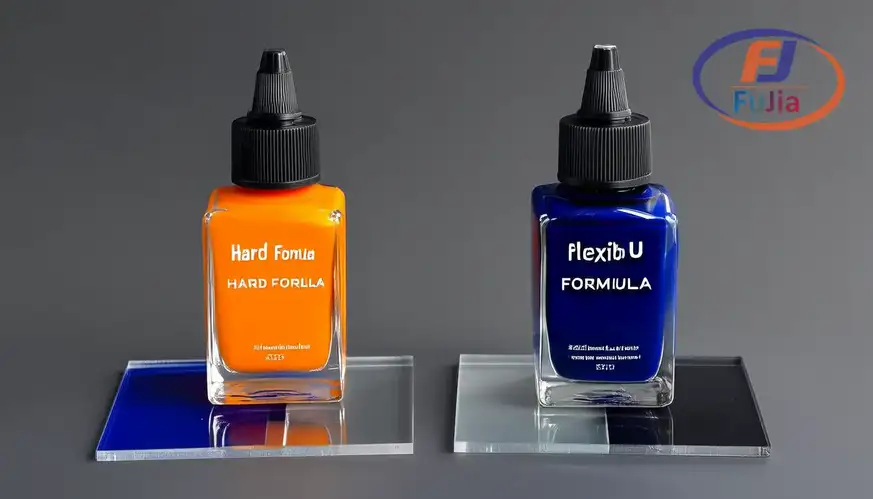
Key Takeaways
\n\n\n\n- \n\n\n
- Chemistry split: hard inks run high crosslink density resins for scratch resistance at 2H-4H pencil hardness; flexible inks keep elongation for bending substrates. \n\n\n
- Adhesion reality: hard ink bonds excellently to glass, metal, and acrylic including 3-6 mm panel stock, and cracks on polycarbonate, vinyl, and anything that flexes after cure. \n\n\n
- The scratch test decides: hard ink on awards resists coin scratches that mark flexible ink, which is why trophy and signage work specifies hard. \n\n\n
- Temperature matters: hard inks handle outdoor UV exposure better with correct pigment selection, and both classes need LED cure discipline at 385-395 nm with substrate surface near 60 °C. \n\n\n
- Ink cost runs 20 to 30 percent higher on hard formulations, a premium the scratch-resistant substrates repay in warranty and review outcomes. \n\n\n
- We recommend running flexible ink as the default and hard ink for the substrate list that demands it, because flexibility failures appear immediately while scratch failures appear in reviews. \n\n\n
The Chemistry Split Table
\n\n\n\nThe chemistry table contrasts the two formulation families, and every line is a trade the formulator makes once and the printer lives with:
\n\n\n\n| Property | \nHard UV ink | \nFlexible UV ink | \n
|---|---|---|
| Crosslink density | \nhigh | \nmoderate | \n
| Pencil hardness | \n2H-4H | \nB-1H | \n
| Elongation | \nminimal | \nhigh | \n
| Scratch resistance | \nexcellent | \nmoderate | \n
| Bend tolerance | \ncracks | \nsurvives | \n
| Ideal substrates | \nglass, metal, acrylic, wood | \nvinyl, PC, wraps, banners | \n
The two inks in the shop:
\n\n\n\nThe trade is polymer chemistry 101: crosslink density buys hardness by locking the cured network rigid, and the same locking removes the elongation that lets flexible ink ride a bending banner or a flexing phone case, per the resin chemistry our consumables guides document across UV ink classes.The mistakes run one direction: shops print flexible ink everywhere because it came in the machine, then discover their glass awards scratch when the client’s keys share a drawer, and the hard-ink upgrade becomes the fix they should have specified at purchase.
\n\n\n\nAdhesion and Durability by Substrate
\n\n\n\nThe substrate table reports how hard ink behaves across the rigid family, and the wash and scratch data reflect disciplined LED curing at 385-395 nm:
\n\n\n\n| Substrate | \nHard ink adhesion | \nScratch result | \nWash cycles (40 °C) | \n
|---|---|---|---|
| Glass | \nexcellent | \nresists keys and coins | \n30+ | \n
| Aluminum, coated metal | \nexcellent | \nresists daily handling | \n20-30 | \n
| Acrylic | \nexcellent | \nresists cleaning | \n30+ | \n
| Wood, sealed | \nvery good | \nresists handling | \nn/a | \n
| Glass panels 3-6 mm | \nexcellent | \nresists keys | \n30+ | \n
| Polycarbonate | \ncracks at flex | \nexcellent when flat | \nn/a | \n
The results in view:
\n\n\n\nWhen it comes to the polycarbonate line, pC is the phone-case substrate. It flexes microscopically in pockets and on clips, which is exactly the motion that hard ink’s locked network cannot follow. The cracks appear at stress points within days. Awards studios we supply run hard ink on glass and acrylic where nothing moves after mounting. Their scratch complaints went to zero after the switch, while their PC phone-case line stayed on flexible ink for the same reason, per the substrate-matching discipline our ink selection cases document across rigid programs. We recommend labeling the two ink lines physically in the shop, because a wrong-bottle mistake is visible at the first bend test rather than at the first customer call.
\n\n\n\nWhen Hard Ink Matters and the Decision Rule
\n\n\n\nThe decision table assigns ink class by product line, and the rule compresses into a single question about post-print motion:
\n\n\n\n| Product line | \nInk class | \nWhy | \n
|---|---|---|
| Glass awards, mirrors | \nhard | \nscratch exposure, zero flex | \n
| Signage panels | \nhard | \noutdoor handling, cleaning | \n
| Acrylic decor | \nhard | \ncleaning abrasion | \n
| Phone cases, PC items | \nflexible | \npocket flex | \n
| Banners, wraps | \nflexible | \nroll and bend | \n
| Wood decor | \neither | \nflex-free, scratch varies | \n
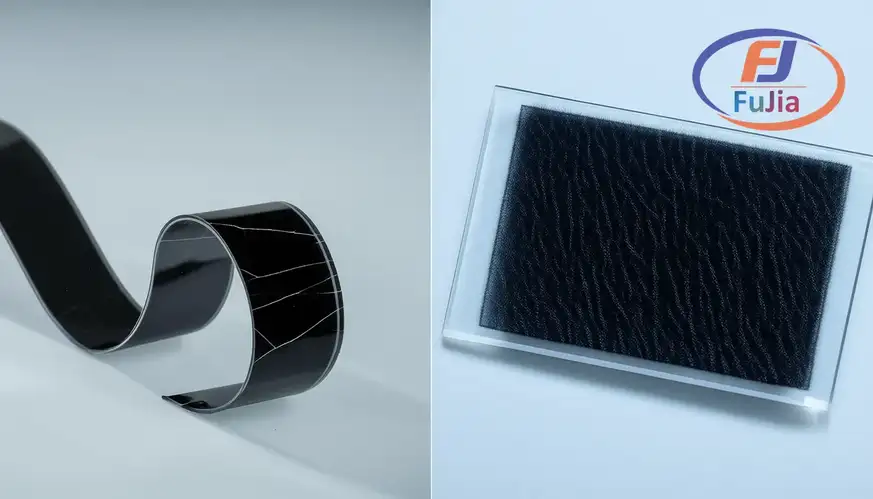
The decision in one frame:
\n\n\n\nWe recommend the bend-test rule for any borderline product: cure a sample at production settings, flex it the way the customer will handle it, and let the crack or the survival choose the ink class, per the qualification logic our ink guides apply across substrate families. Temperature tolerance deserves a mention in the same decision: hard inks with outdoor-rated pigments hold exterior signage color longer, and indoor decor never asks the question, which is why exterior sign shops specify hard before interior shops even hear the term.
\n\n\n\n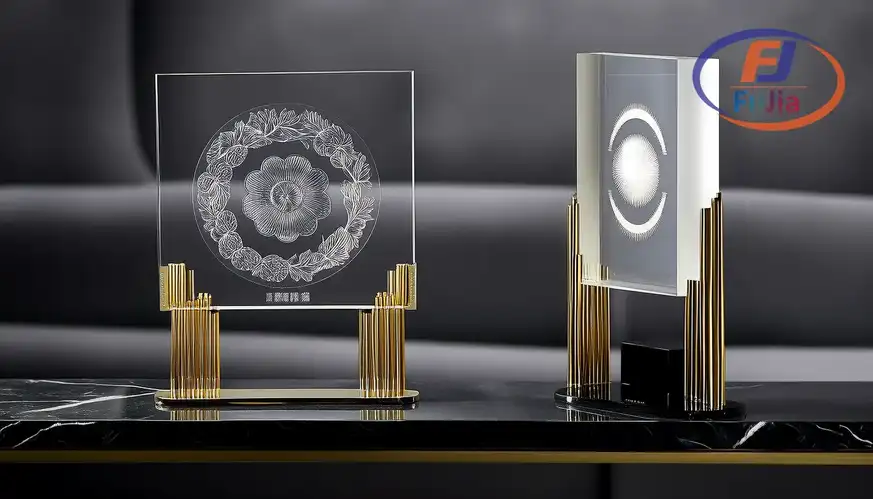
What is hard UV ink?
Hard UV ink is a rigid-surface ink formulation with high crosslink density resins that cure to 2H-4H pencil hardness, trading the flexibility of standard inks for scratch resistance on substrates that never bend after printing. It bonds excellently to glass, metal, acrylic, and sealed wood, and it cracks on polycarbonate, vinyl, or any substrate that flexes in handling. Hard ink is the specification for awards, signage panels, acrylic decor, and glass work where cleaning abrasion and key scratches are the durability tests that matter.
Can UV ink be used on glass?
UV ink works excellently on glass, and hard UV ink is the preferred formulation because glass never flexes after printing and rewards the scratch-resistant chemistry with years of clean handling. Degreasing with isopropyl alcohol before printing delivers 30-plus wash cycles on drinkware and decades of indoor durability on panels and awards. White ink underlay provides visibility on clear glass, and the flatbed print process on glass needs no primer for flat decorative work. Drinkware benefits from adhesion promoter on curved surfaces, and that single addition closes most of the gap to flat-stock durability.
What is the difference between hard and flexible UV ink?
Hard and flexible UV ink differ in crosslink density and the mechanical properties that follow: hard ink cures to a rigid 2H-4H scratch-resistant network with minimal elongation, while flexible ink keeps high elongation that survives bending, rolling, and pocket flex. Hard ink serves glass, metal, acrylic, and wood; flexible ink serves vinyl, polycarbonate, banners, and wraps. The failure modes are symmetric and immediate: hard ink cracks on flex, and flexible ink scratches on abrasion, which is why substrate motion after printing chooses the class.
Why are UV inks for rigid surfaces different?
UV inks for rigid surfaces differ because rigid substrates never flex after printing, so formulators can maximize crosslink density for scratch and chemical resistance without the crack risk that flexibility-dependent substrates carry. The rigid formulations trade elongation for hardness at 2H-4H pencil ratings, outdoor-grade pigment options, and cleaning-chemical tolerance that flexible textile and wrap inks cannot match. The substrates define the chemistry. Glass and acrylic ask for armor, vinyl and PC ask for gymnastics, and each ink class is built for one assignment.
Verdict
\n\n\n\nHard UV ink is the rigid-surface specification: high crosslink chemistry cures to 2H-4H scratch resistance that glass, metal, and acrylic reward with decades of clean handling, and the same locked network cracks on polycarbonate and vinyl where flexible ink remains the only rational choice. The bend-test rule assigns any borderline product in minutes, physical separation of the two ink lines prevents wrong-bottle mistakes, and substrate motion after printing is the single question the whole decision answers. Default to flexible, specify hard for the armor list, and let the flex test referee. For hard and flexible UV ink lines with substrate-matched recommendations, contact Fujia Print with your product surfaces.
\n\n\n\nSources
\n\n\n\n- \n\n\n
- Wikipedia: UV curing: crosslink chemistry fundamentals. \n\n\n
- Wikipedia: Pencil hardness: hardness rating scale. \n\n\n
- ASTM International standards: adhesion and hardness test methods. \n\n\n
- Fujia Print ink chemistry guides: ink class selection cases. \n\n\n
