

Eco-solvent printing is the technology behind most vinyl banners, vehicle graphics, and durable decals you see outdoors: a mild-solvent inkjet process that etches color into vinyl and PVC surfaces and shrugs off rain and sun for years. This guide explains the chemistry in plain terms, runs the real cost math from ink to margin, and positions eco-solvent against its neighbor UV so the two stop blurring together in search results. If your work lives on vinyl rather than fabric, this is the machine category that owns it.
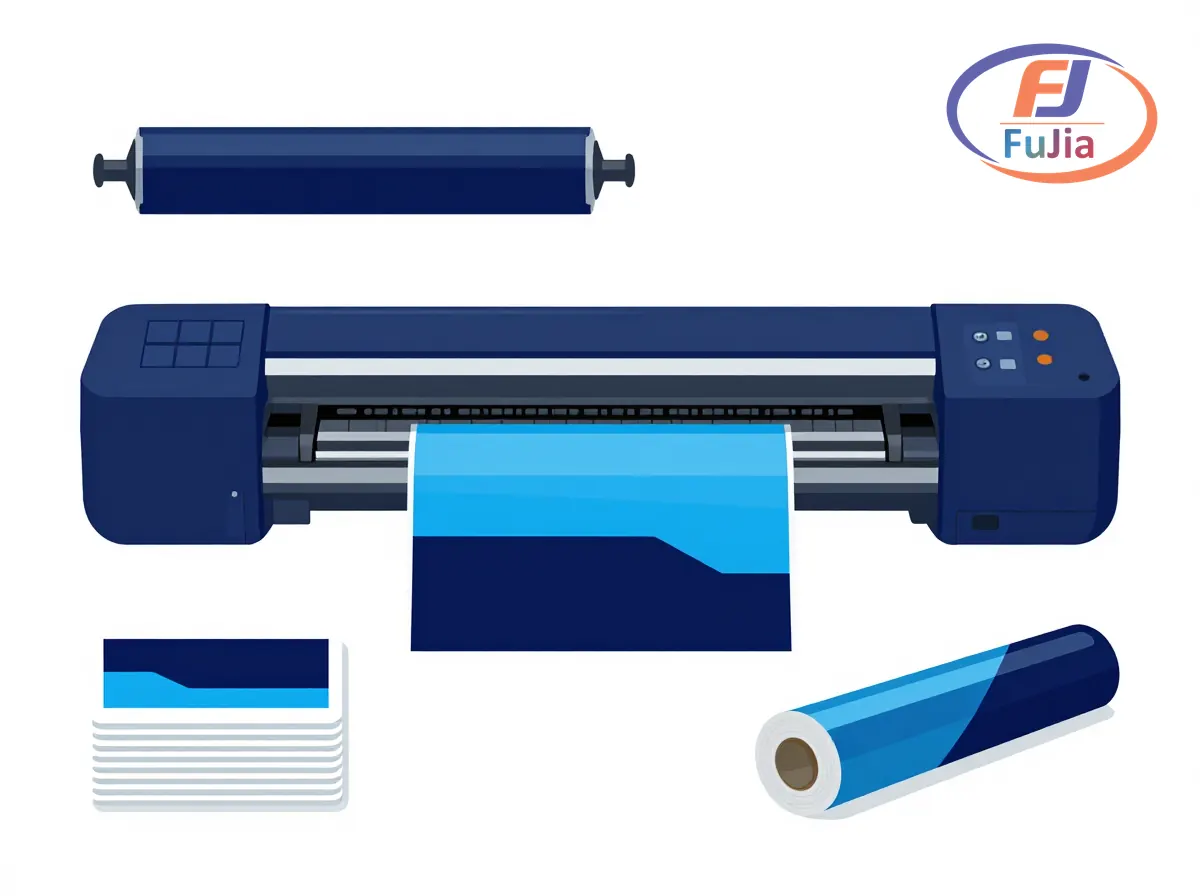
Key Takeaways
- Eco-solvent ink is solvent carried in glycol ether esters, a milder chemistry than full solvent that still bites into vinyl and PVC for outdoor-grade adhesion without aggressive fumes.
- The economics are the strongest in digital printing: ink costs run $0.30-0.80 per square meter against sell prices of $15-35 per square meter, margins of 80-95% on banners and decals.
- Outdoor durability is the headline: unlaminated prints survive 2-plus years outdoors, with operating tolerance from -20 to 60 °C.
- Speed fits the work: a 1.6 m eco-solvent printer lays a 3-meter banner in about 5 minutes, and printed vinyl is ready to finish without extended off-gassing.
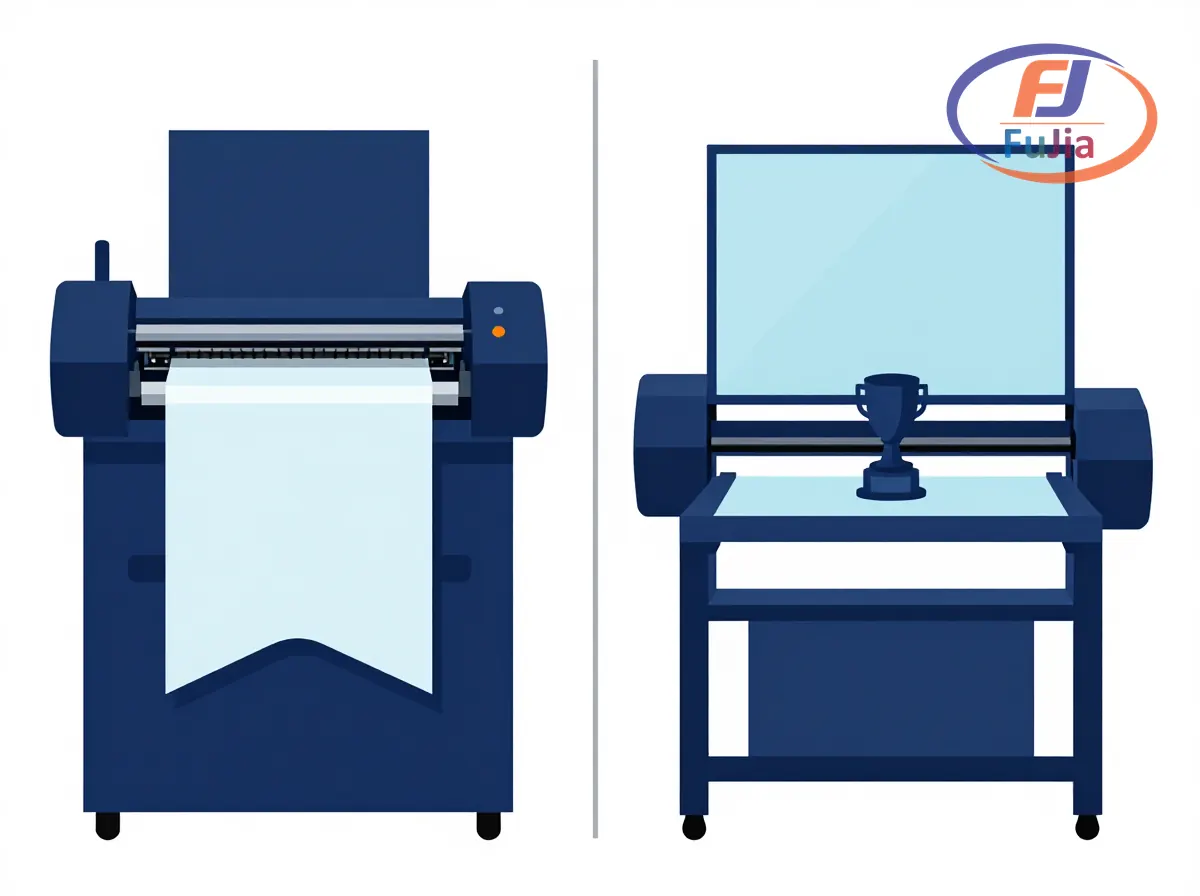
- Eco-solvent prints flexible roll vinyl media; UV prints rigid objects, and the two are complements in a signage shop rather than rivals, per our signage and display breakdown.
What Eco-Solvent Ink Actually Is
Eco-solvent ink is a refined solvent formulation: pigment suspended in glycol ether ester carriers that are gentler than the aggressive cyclohexanone-based solvents of legacy full-solvent inkjet, hence the “eco” prefix, which signals milder odor and reduced harshness rather than environmental certification. The solvent’s job is mechanical chemistry: it softens the surface of vinyl and PVC media just enough for pigment to anchor below the surface as the carrier evaporates, producing the outdoor adhesion that water-based inks cannot achieve on plastic substrates. Prints come off the printer dry to the touch in seconds, needing no lamp curing, and lamination is optional rather than required for two-plus years of outdoor service.
That chemistry defines the substrate list as strictly as sublimation’s does, and here’s the thing: the list is short enough to memorize. Eco-solvent bites into vinyl, PVC banner material, self-adhesive film, heat-transfer vinyl for apparel decoration, and coated papers; it does not bond to bare glass, metal, or ceramic the way UV curing does, and it is not the right tool for garments, where DTF and DTG own the workflow. The eco-solvent printers lineup maps width classes to those substrates. The process prints on rolls, which is why its natural products are banners, decals, wraps, and heat-transfer media rather than objects.
The Economics: Why Signage Shops Run It
| Cost line | Figure (2026) | Note |
|---|---|---|
| Ink cost | $0.30-0.80 per m² | the lowest consumable cost in wide format |
| Typical sell price | $15-35 per m² | printed banner/decals, finished |
| Gross margin | 80-95% | before labor and overhead |
| Banner throughput | 3 m in ~5 minutes | 1.6 m printer class |
| Outdoor life | 2+ years unlaminated | -20 to 60 °C tolerance |
The honest truth about this category’s economics: at 80-95% gross margins, a single 1.6 m eco-solvent printer covering its own daily capacity pays for itself in weeks, not months, because consumable cost per square meter is nearly invisible against finished pricing. One local ad shop we supplied moved from outsourced banner production to an in-house 1.6 m eco-solvent line, cut delivery from 5 days to same-day, lifted margins from 20% to 70%, and added a vehicle wrap service within 90 days on the same machine. That said, the economics reward capacity utilization above all else, so we recommend matching printer width to real order history rather than aspirational banner dreams.
What Eco-Solvent Prints Best (and Worst)
The substrate map follows the chemistry. Best-case work: PVC banners, self-adhesive vinyl decals, vehicle wrap film, wall graphics, heat-transfer vinyl for apparel, backlit film, and canvas, all roll media that bond with the solvent bite and survive outdoor exposure. Wrong-tool work: rigid objects like bottles, phone cases, and awards, where the roll printer has nothing to grip, and cotton garments, where solvent chemistry is irrelevant; those jobs belong to flatbed UV and DTF respectively. The practical shop test is a simple question, is the product a roll or an object, and the answer routes work to eco-solvent or UV without ambiguity.
| Substrate | Eco-solvent result | Alternative process |
|---|---|---|
| PVC banner | excellent, 2+ yr outdoor | none needed |
| Self-adhesive vinyl decals | excellent | UV for small rigid pieces |
| Vehicle wrap film | excellent, industry standard | none |
| Heat-transfer vinyl (apparel) | good, press-applied | DTF for direct-to-garment |
| Glass / metal / ceramic | no adhesion | UV flatbed |
| Cotton garments | wrong chemistry | DTF or DTG |
Color and durability expectations are equally chemistry-driven. Eco-solvent delivers solid process color with good density for text and graphics, and it handles photographic banners respectably, though it lacks the white ink channel that UV and DTF use for dark substrates, so dark vinyl is printed on white or clear media rather than with white ink. Outdoor life reaches 2-plus years unlaminated in the -20 to 60 °C range signage requires, and lamination extends it further for floor graphics and high-abrasion installs.
Eco-Solvent vs UV: Complements, Not Competitors
The comparison that dominates this search category resolves cleanly once the substrate is named. Eco-solvent prints flexible roll media cheaply and fast; UV cures rigid objects and unusual surfaces instantly with a varnish option. A signage shop running both covers banners and decals on the eco-solvent line and awards, glass, and promo objects on the UV line, the pairing behind every full-menu signage and display operation; one corporate brand agency we supplied consolidated from two suppliers to one after adding exactly that pairing, cutting minimums from 500 pieces to 10 per design and eliminating color rejections entirely, and booked a 40% brand-value gain from the finish consistency. The short version on the two-machine debate: the failure mode is buying one machine to do both jobs, because a flatbed UV struggles on 50-meter banner rolls and an eco-solvent cannot print a wine glass, and the market has no patient middle ground.
What is eco-solvent print?
Eco-solvent print is output from inkjet printers running mild-solvent ink, where pigment carried in glycol ether esters anchors into vinyl and PVC surfaces as the solvent evaporates. The prints are outdoor-grade, surviving 2-plus years unlaminated across -20 to 60 °C, and they come off the printer dry, ready for lamination or finishing without extended off-gassing. The category owns banners, decals, vehicle wraps, wall graphics, and heat-transfer vinyl, all roll-fed products where adhesion to plastic media decides durability.
What is the cheapest eco-solvent printer?
Entry 1.6 m eco-solvent printers from Chinese manufacturers start around $2,500-4,000, with Epson-head A1-class machines from established brands running $5,000-10,000 and production 1.8-3.2 m lines above that. The honest cheapest is the machine whose width matches your media: buying a 3.2 m printer to run 1.4 m banner stock wastes money per square meter, while buying 1.6 m width and turning away 3 m banner orders wastes opportunity. Match width to your actual order history before comparing badges.
Which is better for printing, UV or eco-solvent?
Neither is better in general because they print different things: eco-solvent owns flexible roll media, banners, decals, and wraps at the lowest consumable cost in wide format, while UV owns rigid objects, glass, acrylic, wood, and awards with instant curing and varnish finishes. A shop serving both product families runs both technologies. The pairing covers a signage customer’s full menu, rolls on one machine and objects on the other. The wrong question is which machine wins; the right question is whether your products are rolls or objects.
How much does an Epson eco-solvent printer cost?
Epson’s SureColor S-series eco-solvent line spans roughly $7,000-30,000 by width, with the 24-inch S40610 entry class near the bottom and 64-inch production models higher. Chinese-manufactured eco-solvent printers with Epson heads start near $2,500-4,000 for 1.6 m widths and dominate the budget segment. Factor ink and media into any comparison, because eco-solvent’s $0.30-0.80 per square meter consumable cost is where the category’s real economics live, and cheap machines with expensive media habits reverse the math.
Verdict
Eco-solvent printing is the economics champion of digital wide format: $0.30-0.80 per square meter in ink against $15-35 sell prices, 2-plus-year outdoor durability, and a substrate kingdom of vinyl and PVC that no rival process serves as cheaply. Its borders are equally clear: no rigid objects, no white ink, no garments, all jobs that belong to UV or DTF respectively. Signage businesses should run eco-solvent as their roll-media backbone and add UV when object work arrives, and buyers pricing their first machine should match printer width to real order history. To see Fujia’s eco-solvent line and run your media as a test file, contact Fujia Print for samples and a width-matched quote.
Sources
- Wikipedia: Solvent: solvent chemistry background for ink carriers.
- Wikipedia: Vinyl polymer: substrate chemistry behind eco-solvent adhesion.
- CompAndSave: what is eco-solvent ink: general market reference on ink composition.
