

DTF printing ink is the pigment-based textile ink that carries your design from film to fabric, and in 2026 it sells from about $30 per liter at the budget end to $176 for a 1.6-liter Epson OEM pack, with white ink structurally the most expensive color in every lineup. This guide runs the real price table, explains why white costs more and why it is still the ink that decides your reputation, and covers the extended color gamut that most sellers never mention. Ink is where DTF margins are quietly won or lost, so the arithmetic matters more than the brand noise.
Key Takeaways
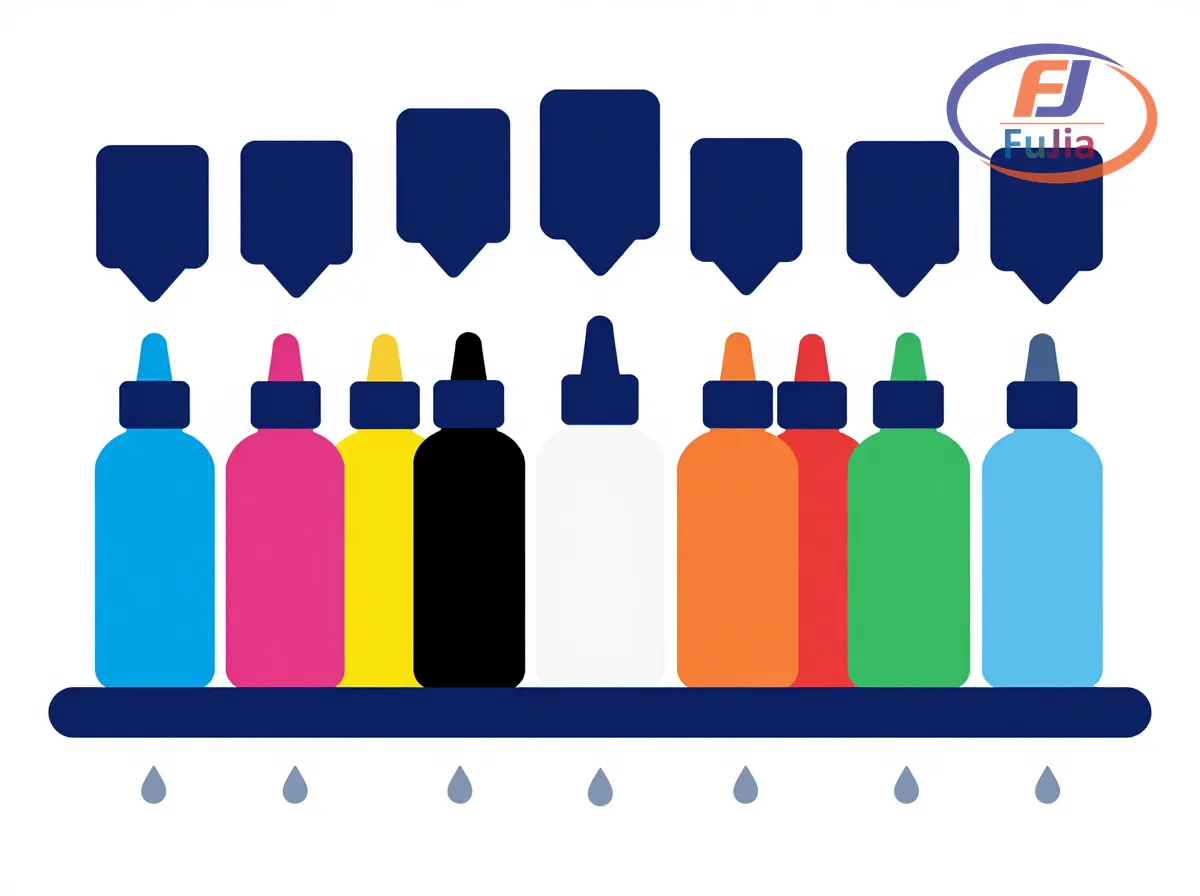
- Real 2026 market pricing: budget CMYK runs $30-40 per liter, mainstream 900ml bottles $40-60, premium lines like Super Gamut $75-85 per liter, and Epson T57S OEM packs $63-176 depending on color.
- DTF ink is water-based pigment, not dye: pigment particles sit in the fabric’s surface structure after powder bonding, which is what delivers 50-plus-wash durability that dye inks cannot match.
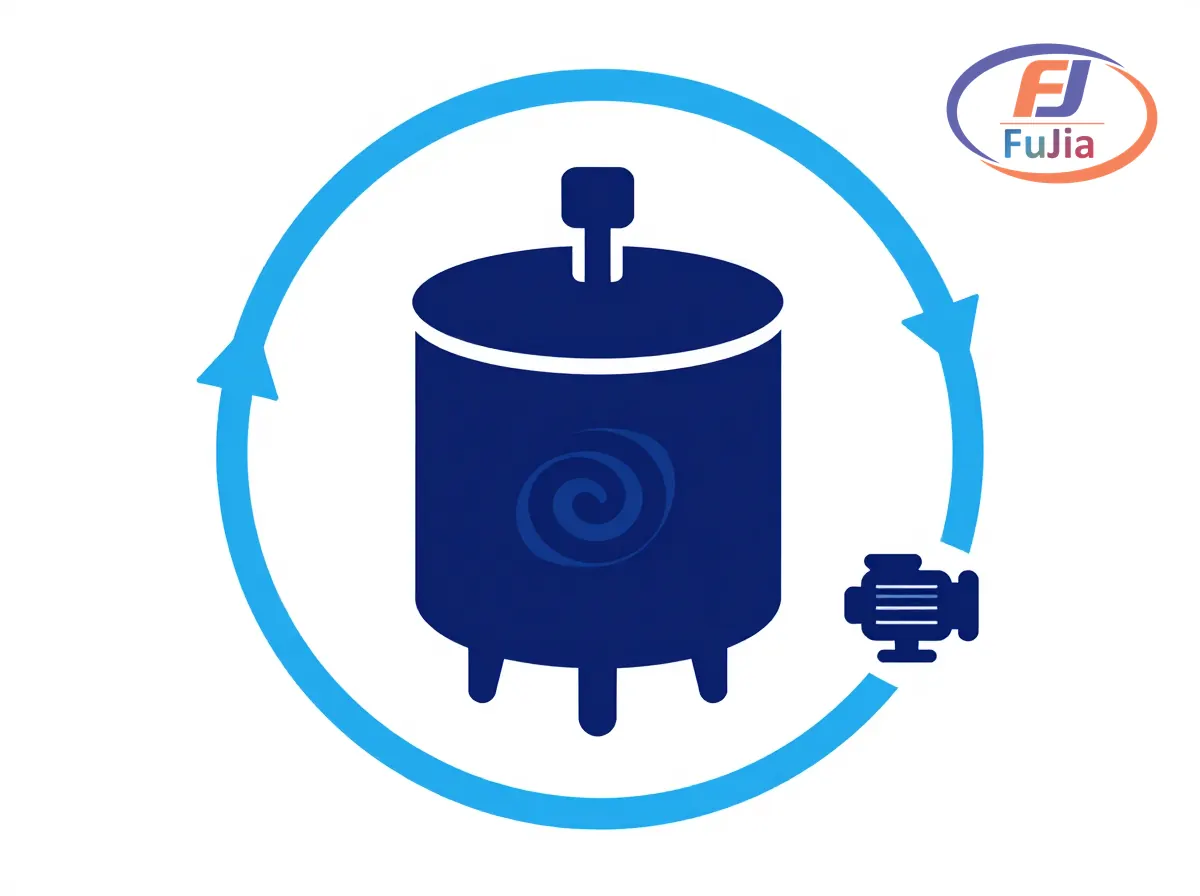
- White ink is the most expensive color and the most failure-prone, because titanium dioxide pigment settles within hours, and daily circulation is what separates working white from ruined heads.
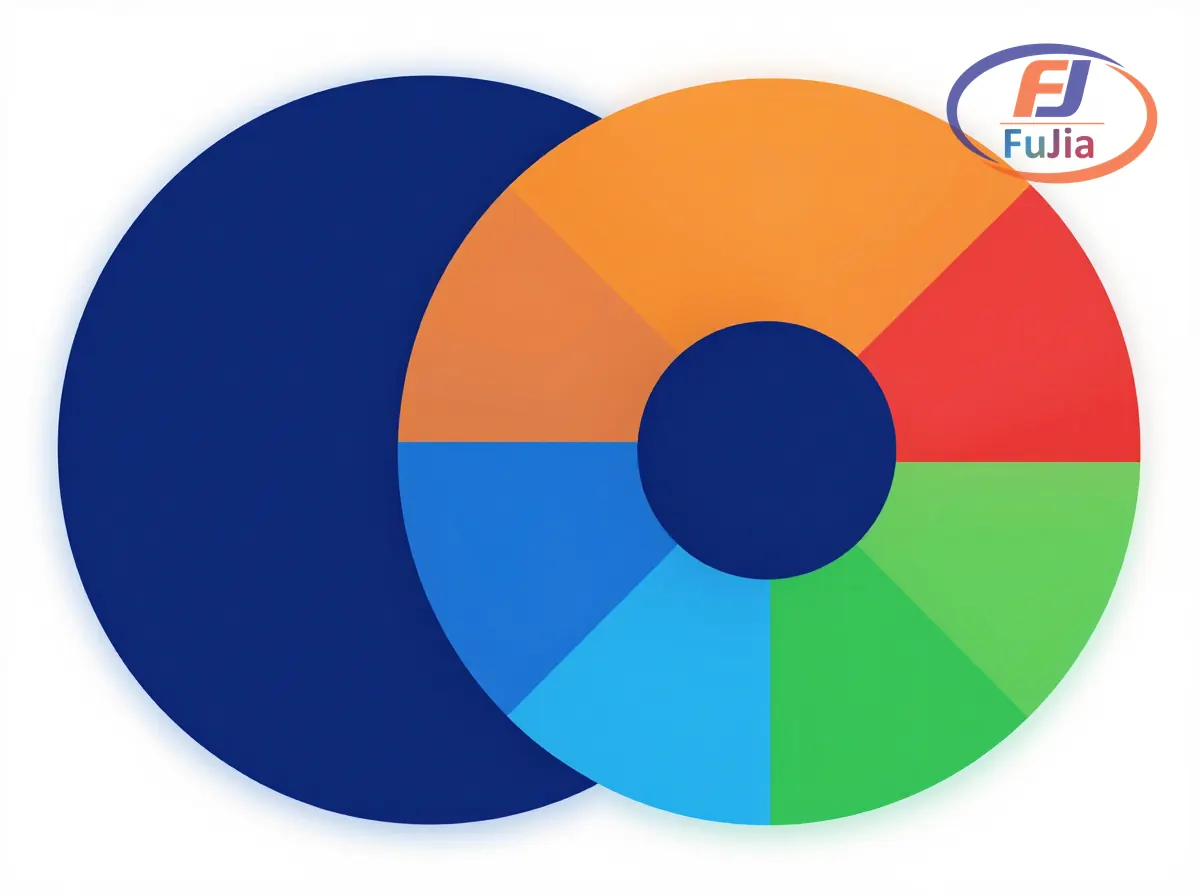
- Extended-gamut systems exist beyond the standard six channels: Fujia’s DTI-STD runs 13 colors including light cyan, light magenta, orange, red, green, and blue, closing the gamut gap on saturated brand colors that CMYK-plus-white renders dull.
- Match ink to head and machine, buy from sellers with turnover, and budget roughly $0.10-0.30 of ink per full-front transfer at 2026 prices.
What DTF Printing Ink Actually Is
DTF ink is a water-based pigment formulation engineered for two unusual jobs. The first is firing cleanly through piezo heads onto coated PET film without beading or sedimentation. The second is surviving the powder-melt step, where hot-melt adhesive fuses into the printed image at curing temperature. The colorant is pigment, solid particles suspended in a carrier, rather than dissolved dye, and that choice is the entire durability story: after pressing, pigment particles lodge in the fabric’s surface structure bonded by the melted adhesive layer, surviving 50-plus heavy machine washes at grade 4-5 color fastness on the AATCC scale, where dye-based systems fade visibly within a fraction of that cycle. The engineering challenge is keeping those particles uniformly suspended, which is why particle size consistency and viscosity stability separate working ink from clogged heads, and why the cheap end of the market carries real risk beyond color quality.
That chemistry also defines compatibility. DTF ink is not sublimation ink, which is disperse dye engineered to gas-bond with polyester at around 200 °C, and it is not regular desktop pigment ink, which lacks the surfactant package that lets large pigment loads wet PET film without beading.
| Ink type | Chemistry | Wash durability | Use case |
|---|---|---|---|
| DTF pigment ink | pigment particles in water carrier, powder-bonded | 50+ washes, grade 4-5 | the standard for all DTF work |
| Desktop pigment ink | general-office pigment, no film wetting agents | fails fast on film | not suitable, beading risk |
| Dye ink | dissolved dye, no particle structure | fades in a few washes | not suitable for DTF |
| Sublimation ink | disperse dye, gas-bonds to polyester at 200 °C | permanent on polyester only | different process entirely |
Our DTF ink types comparison covers the full formulation landscape by category.
Real 2026 Price Table
| Product | Size | 2026 price | Per-liter equivalent |
|---|---|---|---|
| Ink Bank 5600 (budget) | 1 kg | $30-35 | $30-35 |
| Wide Format DTF Inks (mainstream) | 900 ml | $39.99 | ~$44 |
| White DTF Ink 900ml | 900 ml | $59.99 (was $79.99) | ~$67 |
| MAX White DTF Ink | 1 L | $69.99 (was $89.99) | ~$70 |
| Super Gamut premium line | 1 L | $75-85 | $75-85 |
| Epson T57S OEM pack (G6070) | 1.6 L | $63-176 by color | $39-110 |
Three readings from that table. White costs 40-90% more than process colors at every tier, driven by titanium dioxide pigment loading and the anti-settlement carrier package, and no vendor escapes that structure. OEM sealed packs carry a per-liter premium over bottles, the same trade-off documented in our G6070 review, buying filtration assurance and shelf stability for roughly double the consumable cost. The budget floor is real but risky: $30-per-liter ink exists because pigment loading and filtration are the first costs cut. The honest comparison is cost per good print, not cost per liter, which is why our DTF ink buying guide insists on same-file test prints before committing to any supplier.
White Ink: The Color That Decides Your Reputation
White is the underbase every dark-garment design stands on, and it is also the ink that clogs heads, settles overnight, and prints muddy when mishandled. Titanium dioxide particles are heavier and denser than color pigments, they settle within hours of stillness, and a white channel left un-circulated over a weekend can seed a clog that ends a head. Every reliable DTF machine therefore ships white circulation, agitation, and often continuous stirring, and every reliable operator runs the daily routine: circulation check, capping wipe, and a purge after any idle stretch beyond a few days. Buyers comparing inks should weight white performance above all other colors, because a printed shirt’s visual quality is decided by the white layer’s opacity and evenness long before the CMYK on top matters.
Here’s the thing about white ink economics, they reward discipline: at roughly $60-70 per liter for mainstream white, a dense full-front underbase consumes 8-12 ml, about $0.50-0.85 of white per shirt, which is a fraction of the $3-8 resale the transfer supports. Based on data from our customers across 50+ countries, shops that budget white as their premium consumable and never chase the cheapest white on the market report both fewer head replacements and fewer wash-fade complaints, because the two failure modes share the same root cause.
Beyond Six Colors: The 13-Color Advantage
Most DTF ink conversations stop at CMYK plus white, but the standard six-channel layout leaves a measurable gamut gap on saturated brand colors: athletic oranges, deep reds, and bright greens render noticeably duller in CMYK-only builds because those hues sit outside what four-process color can mix. Extended systems close that gap at the ink level. Fujia’s DTI-STD line runs a 13-color system, adding light cyan and light magenta for smooth skin-tone gradients plus orange, red, green, and blue spot channels for the saturated hues brands actually specify, built on imported premium resin and pigment raw materials with high concentration and uniform particle size for stable viscosity through long production runs. For shops printing team jerseys and corporate brand work, the spot channels are not a luxury: they are the difference between “close enough” and on-pantone, and they come from ink configuration rather than RIP heroics.
A custom sportswear brand we supplied prints 3,000-plus pieces monthly on a 60 cm dual-head machine at around 60% margin, and their 60-day expansion into dark jerseys only worked because white underbase and saturated spot colors survived team-color proofing; the ink spec was the expansion enabler, not the printer badge.
What ink is used for DTF printing?
DTF printing uses water-based pigment ink in six standard channels, CMYK plus white, formulated to fire through piezo heads onto PET film and survive powder melting at press time. The pigment particles, not dissolved dyes, are what bond with the hot-melt adhesive layer and lodge in fabric structure, producing the 50-plus-wash wash durability the process is known for at grade 4-5 color fastness. Extended systems add light cyan, light magenta, and spot colors like orange and green for wider gamut, and every serious setup also runs dedicated cleaning and moisturizing fluids as maintenance consumables rather than optional extras.
What is the best ink for DTF printing?
The best ink matches your head, your machine’s circulation capability, and your volume, and it comes from a seller with real turnover rather than the lowest price per liter. In practice that means pigment loading high enough for opaque white, particle size uniformity smooth enough to survive long runs without viscosity drift, and batch consistency you can verify with a same-file test print before committing; Fujia’s DTI-STD line, part of the consumables lineup, is formulated in-house against those criteria for its own printers’ color pipelines. We recommend judging any candidate ink on white opacity, wash durability after 20 cycles, and head health after two weeks, because those three tests expose formulation shortcuts faster than any spec sheet.
Can you print DTF with regular ink?
No, and the failure shows up in three distinct ways. Desktop pigment ink lacks the surfactant chemistry to wet PET film evenly, so it beads and patches instead of laying a continuous image. Dye-based ink fades within a handful of washes because dye molecules have no particle structure to bond with the powder layer. And neither formulation carries the pigment loading that white underbase opacity demands, so even colors that print initially will wash out or look translucent on dark garments. DTF-specific ink is an engineered product, and substitutions damage heads as reliably as they ruin prints, which makes the small price difference per liter the cheapest insurance in the workflow.
Is DTF ink the same as sublimation ink?
No, and the difference is chemistry at the deepest level. DTF ink is pigment suspended in water, printed onto film, bonded with molten adhesive, and pressed onto nearly any fabric as a surface-layer transfer. Sublimation ink is disperse dye that turns to gas at around 200 °C and bonds inside polyester fibers permanently, working only on polyester or coated blanks and offering no white because white dye cannot exist. Wash behavior differs accordingly: DTF transfers hold grade 4-5 fastness on cotton, polyester, and blends alike, while sublimation is unmatched on white polyester but physically absent on cotton. The two inks are not interchangeable in any direction, and a shop running both keeps them in separate sealed systems by machine, never by tank.
Verdict
DTF printing ink rewards buyers who treat it as engineered chemistry rather than colored water: real 2026 prices run $30-85 per liter for bottled lines and up to $176 for OEM packs, white ink carries the structural premium and the operational risk, and formulation quality, particle uniformity, pigment loading, batch consistency, decides cost per good print far more than the sticker. The 13-color end of the market exists because brand-color accuracy is a real revenue requirement for team and corporate work, and any shop serious about saturated spot colors should evaluate extended systems alongside the standard six. Test with your own files, judge by wash cycles and head health, and buy from sellers whose ink moves; to sample DTI-STD against your current supply, contact Fujia Print for a comparison print kit.
Sources
- DTF Superstore ink collection: 2026 market pricing for budget through OEM ink lines.
- Wikipedia: Ink: pigment versus dye chemistry background.
- Wikipedia: Pigment: particle-based colorant properties referenced in the durability section.
- OEKO-TEX ECO PASSPORT: safety certification standard for textile inks.
