

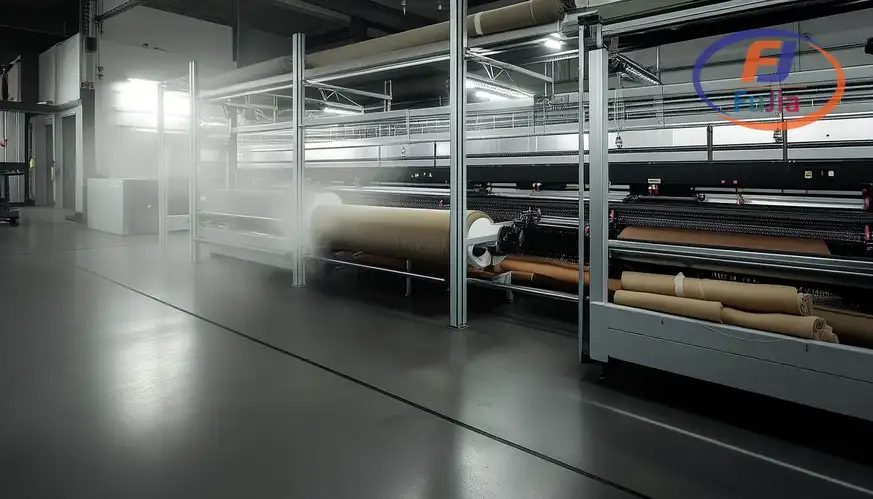
A digital textile printer manufacturing plant setup organizes four functional zones around a printing line: pretreatment, printing, fixation, and finishing, laid out across 200-800 m2 depending on roll width and target output. The modern plant differs from its screen-printing ancestor in one structural way: it replaces screens and color separation with a printer line and an ink room, which compresses the plant from a building-scale project into a hall-scale one that 8-20 people staff at commercial volumes. This page maps the zones, sizes the utilities, and sequences the build from first roll to contract production.
Key Takeaways
- The four-zone layout runs pretreat, print, fixation, and finishing in a straight line, and a 1.8 m roll line fits in 300-500 m2 with 3.5-4 m ceiling clearance.
- A single 1.8 m twin-head line produces 300-800 m daily on two shifts, and each added line adds capacity linearly without added color-change labor.
- Utilities size as follows: 15-25 kW power per line, compressed air at 6-8 bar for media handling, and humidity held at 50-65 percent for ink jetting stability.
- Staffing runs 8-20 people across two shifts: operators, a color manager, maintenance, and material handlers, with RIP and color skills commanding the premium.
- We recommend building capacity one line at a time against contracted demand, because idle textile lines cost more in ink expiry and head service than in rent.
The Four-Zone Layout and What Each Zone Does
The zone table maps the production floor, and the sequence matters because fabric moves through it in one direction. Distances assume a single 1.8 m line at commercial scale:
| Zone | Function | Footprint | Key equipment |
|---|---|---|---|
| Pretreat | coat and dry fabric | 50-80 m2 | pretreat machine, dryer |
| Printing | jet disperse or pigment ink | 60-100 m2 | 1.8 m roll printer, RIP station |
| Fixation | steam or heat cure | 40-70 m2 | steamer or calendar |
| Finishing | wash, dry, inspect, roll | 80-120 m2 | washer, drying frames, inspection |
The floor plan in one view:
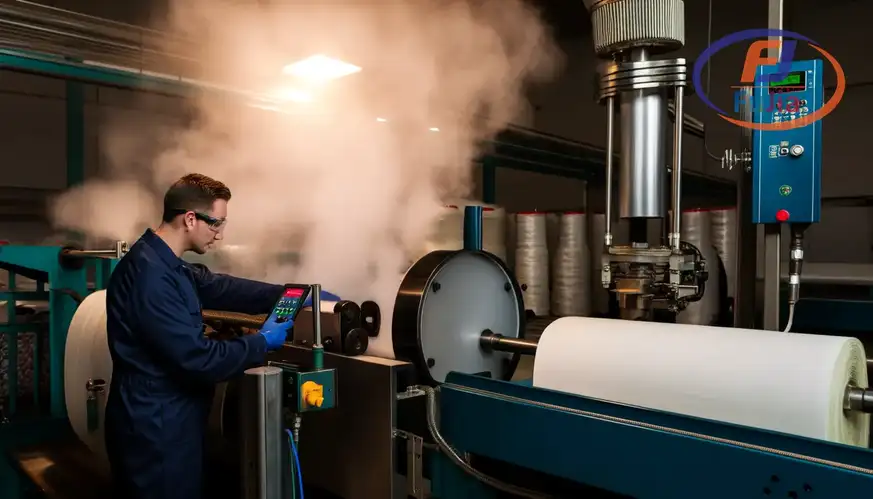
The line order is not negotiable in practice: pretreated fabric must stay within its chemistry window before printing, printed fabric must fixate before washing releases unfixed dye, and the straight-line flow keeps rolls moving without cross-traffic, per the layout discipline our apparel printing operations document for fabric programs.The zone that new planners underbuild is fixation, because steaming capacity sets the plant’s true ceiling: a printer line that outruns its steamer prints inventory rather than product, and the steamer deserves sizing to 120 percent of printer throughput from day one. The zone that planners overbuild is printing, and the money it saves funds the wash water treatment that regulators actually inspect.
Utilities, Capacity, and the Line Math
The utility table sizes a plant per line, and the capacity table that follows converts hardware into daily meters. Figures assume disperse-sublimation or pigment lines at 1.8 m widths:
| Utility | Per line requirement | Notes |
|---|---|---|
| Power | 15-25 kW | dryers dominate the load |
| Compressed air | 6-8 bar, 20-40 L/min | media handling and heads |
| Water | wash zone, 200-500 L/hour | fixation method dependent |
| Humidity | 50-65 percent RH | jetting stability |
| Floor | 300-500 m2 | straight-line flow |
The line math follows directly: a twin-head 1.8 m printer at 6-10 m2 per hour runs 40-70 m2 per productive hour, and a two-shift day at 70 percent utilization yields 400-700 m2 daily, which annualizes near 100,000-160,000 m2 per line, per the capacity benchmarks our textile operations cases document across client plants. Humidity is the quiet line in the utility table: ink jetting stability degrades visibly below 45 percent RH, and a $2,000-5,000 humidification system protects head health that costs 100x more to replace, which is why we recommend climate control before capacity in every build budget.
Staffing, Stages, and the Phased Build
The staffing table lists the roles a commercial plant hires, and the stage plan sequences hiring against capacity rather than against the org chart:
| Role | Count per line | Skill premium | When to hire |
|---|---|---|---|
| Line operators | 4-6 | moderate | line install week |
| Color manager / RIP | 1-2 | high | before first production run |
| Maintenance tech | 1 | high | with first line |
| Material handlers | 2-3 | moderate | at two shifts |
| QC and finishing | 2-4 | moderate | with fixation zone |
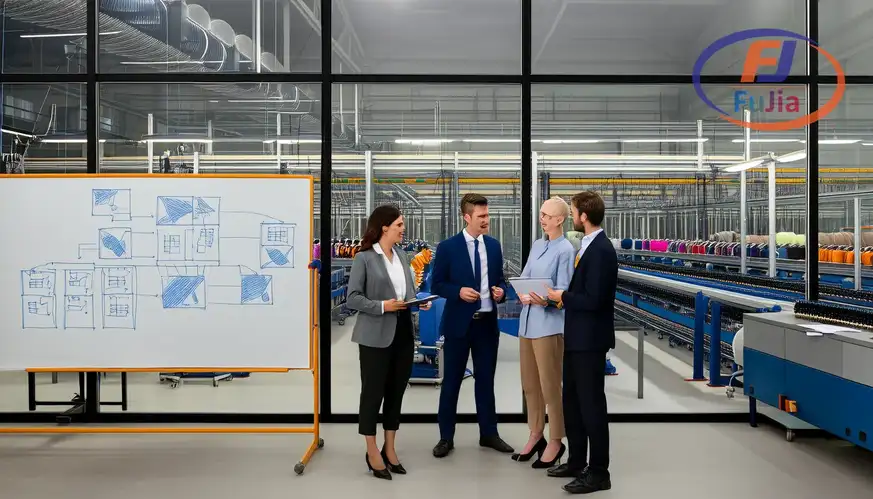
The phased build in one frame:
When it comes to phasing, the plant that buys two lines on day one carries two line payments against one line’s demand. Idle textile hardware depreciates in a specific expensive way, because ink expires, heads dry. Service contracts renew regardless of output. The build sequence we recommend runs one line to 70 percent utilization, adds the second line only when contracted volume covers its payment. Trains the second line’s operators on the first, per the scaling discipline our consumables and production guides apply to capacity planning. One exception justifies day-one multi-line builds: contracts with minimum annual meterage that a single line cannot serve, which convert idle-line risk into contractual obligation from the first month.
How much space does a digital textile printing plant need?
A digital textile printing plant needs 300-500 m2 for a single 1.8 m line with its four zones of pretreat, printing, fixation, and finishing laid out in a straight flow, with ceiling clearance of 3.5-4 m for roll handling and ventilation ducting. Each added line adds 200-300 m2 including roll storage, and a two-line commercial plant typically occupies 600-800 m2. The finishing zone is the most commonly underbuilt area at 80-120 m2, because wash, dry, and inspection equipment each demand real floor depth that compressed plans cut first and regret last.
How many people does a textile printing plant employ?
A commercial digital textile printing plant employs 8-20 people across two shifts for a one-to-two line operation: four to six line operators per line, one or two color and RIP specialists whose skills command the hiring premium, one maintenance technician, two or three material handlers, and two to four finishing and QC staff. Single-line single-shift plants run near the low end at 6-8 people, and each additional line adds 6-10 staff at full utilization. The color manager is the first hire that matters. Color matching capability decides client retention before any capacity metric does, and the role pays for itself in the first contract renewal.
What utilities does a textile printing plant require?
A textile printing plant requires 15-25 kW of electrical power per line with dryers dominating the load, compressed air at 6-8 bar feeding media handling and print heads, water supply of 200-500 liters per hour where steaming or washing runs, and humidity control holding 50-65 percent RH for ink jetting stability. The humidity line is the most frequently skipped and the most expensive to skip, because sub-45 percent environments visibly degrade jetting and shorten head life. Ventilation sized to the fixation zone completes the list. All utilities belong in the floor plan before equipment orders rather than after, and the electrical panel sized for line two from day one costs little and saves a shutdown later.
Can you start a textile printing plant with one printer?
Yes, a textile printing plant can start with one 1.8 m roll printer plus its pretreat, fixation, and finishing supports, and that single-line configuration produces 400-700 m2 daily on two shifts at 70 percent utilization, which serves contract volumes near 100,000 m2 annually. The single-line start matches hiring, utilities, and cash flow to demonstrated demand, and the second line becomes a demand-driven decision rather than a capacity gamble. The configuration fails only when signed contracts already exceed single-line capacity, and in that case the multi-line build is obligation rather than optimism.
Verdict
A digital textile printer manufacturing plant setup succeeds on line discipline rather than line count: four zones in straight flow across 300-500 m2, utilities sized per line with humidity control as the cheapest insurance in the building, fixation capacity at 120 percent of print throughput, and staffing that hires the color manager before the second printer. The phased build from one line to 70 percent utilization converts capacity spending into a demand-driven decision, and idle textile hardware punishes optimism through ink expiry, dry heads, and renewable contracts. Map the flow before the floor, size the steamer honestly, and let contracted meters order the next line. For a plant equipment quote matched to your target capacity, contact Fujia Print for factory-side planning support.
Sources
- Wikipedia: Digital textile printing: process and ink chemistry.
- ITMA textile machinery showcase: equipment class landscape.
- Fespa printing federation: plant operations and training resources.
- Fujia Print textile operations cases: plant layouts and capacity benchmarks.
- Fujia Print consumables planning: ink expiry and inventory discipline.
