
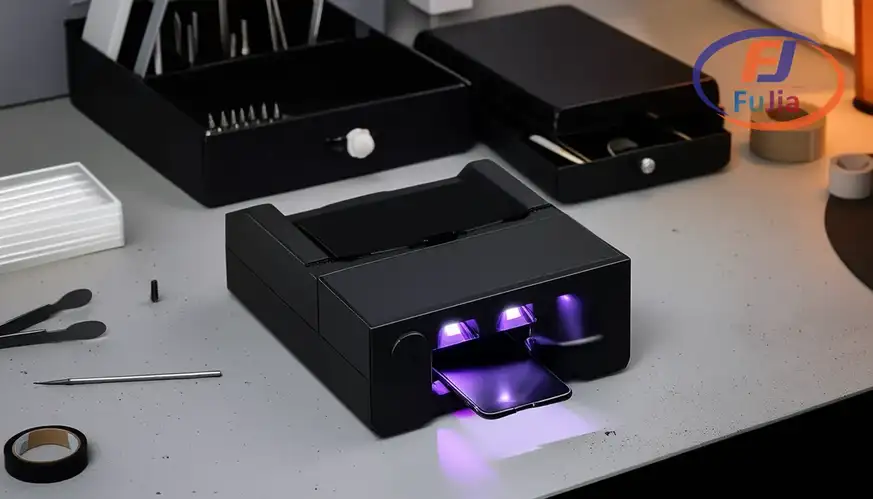
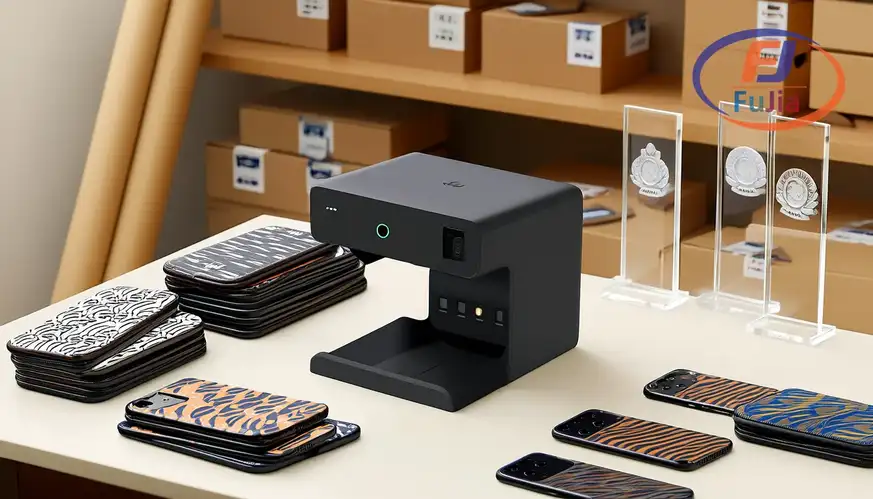
An affordable UV flatbed printer lives in the $1,799-2,800 desk class, where single XP600 heads, 30×50 cm beds, and white ink circulation now package the same LED-cure physics that production machines charge ten times for. Affordable is real in this category, and so is the trap market underneath it, because the sub-$1,000 listings that look like bargains cut exactly the engineering that year one punishes. This guide prices the honest floor, names the hidden lines beyond the sticker, and lists the specs that separate a cheap machine from an affordable one.
Key Takeaways
- The honest affordable floor is $1,799-2,800, covering desk A3 beds, XP600 heads, white ink circulation, and LED curing.
- Sub-$1,000 machines cut circulation, bed flatness, and support, and their year-one costs erase the saving.
- The sticker is 80% of the budget: fixtures, blanks, first inks, and power protection add $200-500 that every buyer pays.
- White ink circulation and a true vacuum bed are the two specs that decide whether the affordable class actually works.
- We recommend buying at the honest floor with factory support rather than below it without, because support is the cheapest insurance in the class.
What $1,799-2,800 Actually Buys
| Spec | What the class includes | Why it matters |
|---|---|---|
| bed | 30×50 cm vacuum table | holds objects flat and still |
| head | single Epson XP600 | 1.5 m2/hour at 1200 dpi |
| ink system | CMYK+W with circulation | white stays alive between sessions |
| cure | LED array, instant | prints exit finished |
The class table is the value proposition, and each row is engineering that the trap market deletes first. The vacuum bed holds phone cases, plaques, and panels at printing height, which is the difference between sharp registration and ghosted edges. The XP600 head prints at production-adjacent resolution for a $400-600 component, and the white circulation loop is what keeps the expensive channel alive over weekends, per the head economics our UV printers pricing guide documents for every tier. LED curing needs no warm-up and no heat press, so a beginner prints sellable product on day one, which is the real affordability metric for a business buyer. Value at this tier is measured in first-week output, not in datasheet rows.
What the class does not buy matters as much as what it does. Throughput sits at 1-1.5 m2 per hour, so the desk class is a product machine rather than a production machine, and buyers with daily volume belong one tier up at $3,500-8,000. Bed width of 30×50 cm frames the product canon at phone cases, awards, panels, and decor, and jobs wider than the bed become two-pass work that shows a seam. Affordable buys a complete small business, and it prices the throughput it carries honestly.
The Hidden Lines Beyond the Sticker
| Hidden line | Cost | Skippable? |
|---|---|---|
| fixtures and blanks | $100-250 | no |
| first inks and cleaning fluid | $150-300 | no |
| power protection | $30-80 | no |
| training time | 1-2 weeks | no |
The hidden table adds the $200-500 that every real buyer pays beyond the sticker, and none of the lines is optional no matter what the listing promises. Fixtures and test blanks are how the machine learns your objects, and the first ink set plus cleaning fluid is the fuel the warranty requires. Power protection at $30-80 guards the head board that costs $400-600 to replace, which is the highest-return insurance in the budget. The training line is time rather than money, and the buyers who budget a quiet first week outlearn the ones who schedule orders for day two, per the startup discipline our printer guides prescribe across every class.
The listing that hides these lines is usually the listing that hides other things too, which is the pattern worth learning early. Machines marketed at $999-1,400 routinely ship without circulation pumps, with decorative vacuum beds, and with warranty terms that cover the frame while the head carries none, and each omission is a year-one invoice the buyer wrote themselves. We recommend pricing any comparison at total first-year cost, machine plus consumables plus protection plus expected head risk, because that number ranks machines more honestly than any sticker.
The Cheap-Traps That Cost More
| Trap | Sticker saving | Year-one cost |
|---|---|---|
| no white circulation | $200-400 | head rebuild or white channel loss |
| decorative vacuum bed | $100-200 | ghosted prints, wasted blanks |
| gray-market head, no warranty | $150-300 | $400-600 replacement |
| firmware locked to vendor ink | $0 upfront | 30-50% ink premium forever |
The trap table is the pattern library, and each row reads the same way: the sticker saved hundreds, and the year-one invoice recovered them with interest. Circulation-less machines are the most common, because the pump and loop are invisible in photos and decisive in operation, and white pigment that settles in 6 idle hours turns a weekend machine into a Monday repair. Decorative vacuum beds, beds with suction in name only, show themselves as ghosting on the first long print, and gray-market heads price their gamble at exactly one failure. Ink lock-in is the quietest trap, a machine that rejects third-party ink prices every future liter at the vendor’s margin, per the consumable-lock logic our consumables guides document across the category.
The defense is three questions asked before any deposit, and vendors answer them honestly or reveal themselves. Does the machine circulate white ink continuously, and can you show the pump. Is the bed a true vacuum table, and can you demo a long print. What does the head warranty cover, and whose name is on the head. When it comes to these questions, they cost nothing, they filter the market instantly. The vendors who answer them with documents rather than adjectives are the affordable ones regardless of sticker.
The Value Specs That Matter at This Tier
Two specs separate working affordable machines from decorated ones, and both are verifiable in a demo. White ink circulation, already covered as the survival spec, shows in the machine’s side profile: a pump, a loop, and an agitated cartridge are visible engineering rather than a menu option. Vacuum bed truth shows in the demo print: a full-bed print with sharp edges on both extremes proves the table holds flat, and a demo that avoids the bed’s corners is telling you where its flatness ends.
The third value spec is support response, which no photo shows and every buyer eventually measures. A vendor who answers a pre-sale technical question within a day, in writing, with a video if needed, is the vendor whose year-two answer arrives in time to matter. We recommend sending one real technical question before buying, because the answer is a sample of the service the machine carries, and the same support-signals logic our logo printer guide applies to branded tiers applies at the value tier too.
A startup case we supply anchors the class fit: a personalization seller running phone cases, awards, and sign samples on a $1,999 desk unit, completing the true budget at about $2,400 with fixtures, inks, and protection, and recovering the whole figure inside 6 weeks of marketplace orders at case margins. That buyer priced the class honestly, avoided every row of the trap table, and the affordable machine did exactly what the class promises, which is the whole category in one story.

How much does a flatbed UV printer cost?
A flatbed UV printer costs $1,799-2,800 at the affordable desk tier, $3,500-8,000 in the mid class, and $9,000-28,000 for production gantries, with the affordable class buying a 30×50 cm vacuum bed, a single XP600 head, white ink circulation, and LED curing. The true entry budget adds $200-500 for fixtures, blanks, first inks, and power protection, and listings below about $1,500 are cutting the engineering that year one invoices back. The full cost ladder sits in our flatbed pricing guide, and the affordable tier is the tier where total-first-year cost, not sticker, does the ranking.
What is the best and most affordable UV printer?
The best and most affordable UV printer is a desk-class machine at $1,799-2,800 that passes three checks: a visible white ink circulation pump, a true vacuum bed proven by a full-bed demo print, and a head warranty with a named head brand. Machines below that floor cut one of the three, and the saving reappears as a year-one repair invoice. Best affordable means the machine whose vendor answers pre-sale technical questions in writing within a day, because support response is the spec that photographs worst and matters most. Run the three checks on any shortlisted machine and the field narrows itself.
What is the best UV flatbed print head?
The Epson XP600 is the best print head for affordable UV flatbeds, delivering 1200 dpi at 1.5 m2 per hour for a $400-600 replacement cost, with Epson’s i3200 sitting one tier up for mid-class throughput. Head choice matters less than head support: a genuine head with warranty from a responsive vendor beats a gray-market premium head with no recourse, because every head fails eventually and the question is what the failure costs. The affordable class has standardized on the XP600 for good reason, and buyers should confirm the head’s authenticity and warranty terms before the deposit. Head lifetime is mostly a maintenance story, and the circulation routine writes it.
What are some good small UV flatbed printers?
Good small UV flatbed printers live in the $1,799-2,800 desk class with 30×50 cm beds, single XP600 heads, and engineered white ink circulation, a spec set that multiple factory-direct and branded vendors meet with real machines. Good means the machine passes the three checks, circulation visible, vacuum bed proven, warranty documented, and the vendor demonstrates on your own objects rather than catalog samples. Below the floor, the small-printer market fills with trap units whose omissions are covered earlier in this guide. Small is a size, not a spec compromise, and the working small machines cost what honest engineering costs. Buy inside the class lines and the small machine is a business rather than a hobby invoice.
Verdict
The affordable UV flatbed printer is real at $1,799-2,800, a complete small-business machine once the honest $200-500 of fixtures, inks, and protection joins the budget, and the category’s cheap-traps are priced and named: missing circulation, decorative vacuum beds, gray-market heads, and ink lock-in. Verify the three checks before any deposit, demo on your own objects, and let total first-year cost rank the field. Affordable is a number the market advertises and a discipline the buyer applies, and the discipline is what the $1,799 class actually rewards. For a factory-direct machine at the honest floor with a demo on your own samples, contact Fujia Print with your product list.
Sources
- Epson print heads: XP600 specifications.
- Wikipedia: UV curing: LED ink chemistry.
- AATCC: durability testing standards.
- Fujia Print applications: production cases.
