

A3 vs A2 DTF printer resolves into print area and throughput: an A3 machine covers 30×42 cm at $2,500-5,000 complete, an A2 covers 42×60 cm at $4,500-9,000, and the larger format prints roughly 2.3 times the area per pass while demanding double the film and powder consumption per run. Neither is universally better, because the formats serve different production stages: A3 validates designs and serves shirt-scale businesses, and A2 serves shops whose gang-ups outgrow the smaller sheet. This page compares the formats on area, cost, and throughput, then hands buyers the trigger that times the upgrade honestly.
\n\n\n\n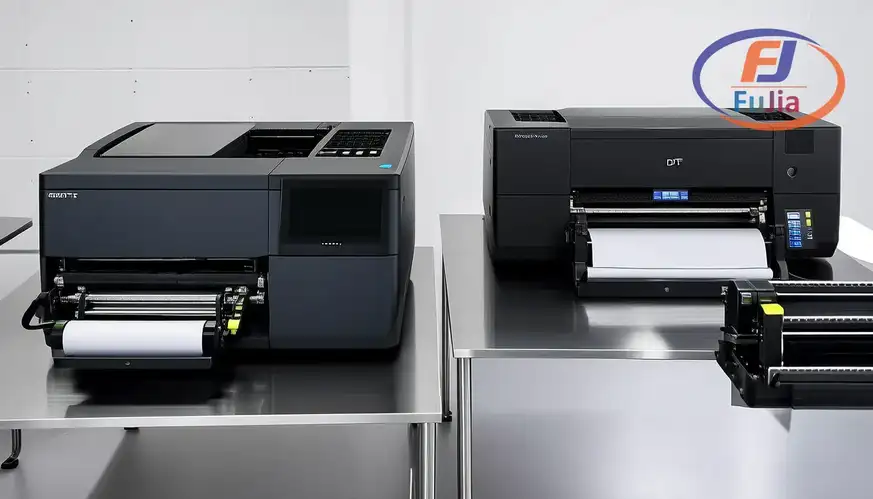
Key Takeaways
\n\n\n\n- \n\n\n
- Print areas: A3 at 30×42 cm against A2 at 42×60 cm, a 2.3x area difference that converts directly into garments per pass on gang-up layouts. \n\n\n
- Station pricing: A3 complete at $2,500-5,000 with shaker, A2 at $4,500-9,000, and the $2,000-4,000 gap is the upgrade question in one number. \n\n\n
- Throughput runs 25-50 shirts hourly on A3 and 50-90 on A2 at production settings, with the shaker or powder station as the usual bottleneck either way. \n\n\n
- Nesting efficiency decides real-world value: A2 sheets fit 9-12 adult fronts against 4-6 on A3, cutting per-garment film waste 10-20 percent at volume. \n\n\n
- We recommend A3 below 100 shirts daily and A2 above it, because the format should follow paid demand rather than precede it. \n\n\n
The Format Comparison Table
\n\n\n\nThe comparison table lines the two formats up on the specs that matter to production, and the area column drives everything downstream:
\n\n\n\n| Spec | \nA3 DTF | \nA2 DTF | \nDelta | \n
|---|---|---|---|
| Print area | \n30×42 cm | \n42×60 cm | \n2.3x area | \n
| Adult fronts per sheet | \n4-6 | \n9-12 | \n2x nesting | \n
| Station price complete | \n$2,500-5,000 | \n$4,500-9,000 | \n+$2,000-4,000 | \n
| Hourly output | \n25-50 shirts | \n50-90 shirts | \n1.8-2x | \n
| Film cost per shirt | \n$0.35-0.50 | \n$0.30-0.42 | \n-10-20% at volume | \n
The formats side by side:
\n\n\n\nThe nesting column is where the A2 earns its keep: adult front designs gang 9-12 per sheet at the larger format against 4-6 on A3, and the per-shirt film saving compounds at volume even before the throughput gain enters, per the format economics our apparel printing operations document across DTF tiers.The throughput numbers understate the real difference, because the A2’s larger sheet spends less time on sheet changes per garment, and continuous production favors the format that pauses less.
\n\n\n\nThe Cost Model and the Real Bottleneck
\n\n\n\nThe cost table runs the ownership math at working volumes, and the powder line reminds buyers that the printer is one link in a consumables chain:
\n\n\n\n| Cost line | \nA3 at 1,500 shirts monthly | \nA2 at 3,000 shirts monthly | \n
|---|---|---|
| Film | \n$525-750 | \n$900-1,260 | \n
| Ink | \n$300-450 | \n$600-900 | \n
| Powder | \n$150-240 | \n$300-480 | \n
| All-in per shirt | \n$0.65-0.96 | \n$0.60-0.88 | \n
The consumables chain in view:
\n\n\n\nWhen it comes to the per-shirt line, the A2 saves $0.05-0.08 per shirt at scale through nesting efficiency. That saving alone pays the format premium inside 3,000-5,000 shirts, which arrives quickly at any busy shop. The real bottleneck at either format is the powder station, because printing outruns shaking whenever the shaker is undersized. Buyers upgrading formats should audit their shaker throughput in the same breath, per the workflow balance our DTF production cases document across growing shops. We recommend pairing any A2 purchase with a shaker rated for its full sheet width, because a mismatched pairing converts a format upgrade into a new bottleneck.
\n\n\n\nThe Upgrade Trigger and Business Matching
\n\n\n\n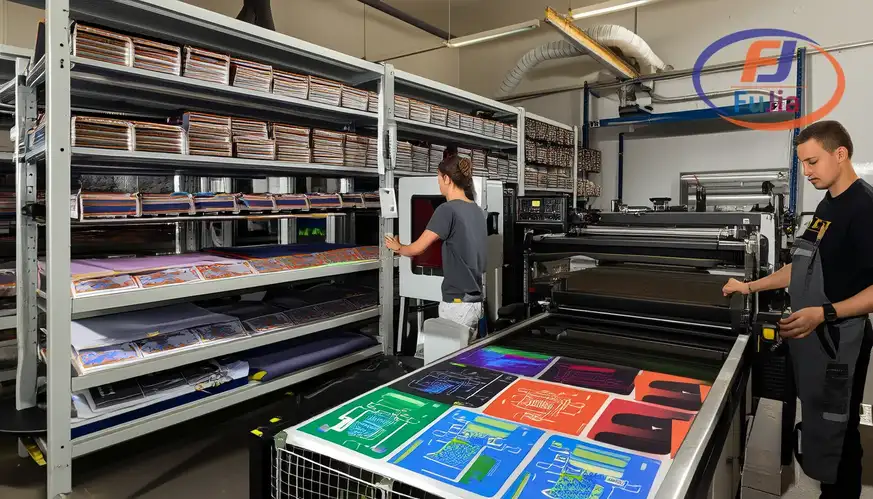
The trigger table times the A3-to-A2 move against observable business signals, and the matching table confirms which format each shop profile deserves today:
\n\n\n\n| Upgrade signal | \nThreshold | \nAction | \n
|---|---|---|
| Daily volume | \npast 100 shirts | \nA2 pays back in months | \n
| Sheet changes | \noperator reshuffles hourly | \nnesting relief needed | \n
| Rush orders | \ngang-ups overflow A3 | \nlarger sheet absorbs peaks | \n
| Film waste | \ntrimming scraps exceed 15% | \nlarger sheet nests tighter | \n
The matching in one frame:
\n\n\n\nA shop we supply ran exactly this trigger: its A3 machine served two years of growth until bulk team orders made operators reshuffle layouts hourly, and the A2 upgrade at $5,800 absorbed order peaks that previously forced overtime, per the capacity-trigger pattern our scaling cases document across DTF operations. We recommend buyers time the upgrade to observed crowding rather than to projected growth, because the A3 at idle capacity prints the same quality as the A2 and the capital difference funds consumables in year one. Shops with signed team-order contracts should buy to the contract. The exception that format ladders always honor is committed volume, and committed volume makes the larger sheet a day-one obligation rather than an upgrade.
\n\n\n\n
What is the difference between A3 and A2 DTF printers?
A3 and A2 DTF printers differ in print area and throughput: A3 machines cover 30×42 cm sheets at $2,500-5,000 complete, fitting 4-6 adult front designs per sheet at 25-50 shirts hourly, while A2 machines cover 42×60 cm at $4,500-9,000, fitting 9-12 fronts and running 50-90 shirts hourly. Print quality is identical at the same head configuration, so the formats differ only in scale economics. The A2 saves 10-20 percent per shirt in film waste through tighter nesting, and that saving compounds at production volumes past 100 shirts daily.
Is an A2 DTF printer worth the extra cost?
An A2 DTF printer is worth its $2,000-4,000 premium once daily volume passes roughly 100 shirts, because the nesting efficiency saves $0.05-0.08 per shirt and the throughput gain absorbs order peaks that A3 workflows handle with overtime. Below that volume, the A3 prints identical quality at lower capital and the premium sits idle. The upgrade trigger is observed crowding rather than projected growth. Operators reshuffling layouts hourly, gang-ups overflowing sheets, and film scraps past 15 percent are the signals that the larger sheet pays for itself within months.
What printer can print A2 size?
A2-size printing requires a DTF or inkjet printer with at least 42×60 cm of feed width, available in DTF production machines at $4,500-9,000 complete with powder application, or in wide-format inkjet printers across the Epson and Chinese factory ranges. For DTF specifically, A2-class machines carry twin XP600 or i3200 heads feeding 60-centimeter film rolls, and the format needs a matching-width shaker to keep powder application from bottlenecking the printer. Buyers should confirm the usable print width rather than the media width, because feed margins trim 2-3 centimeters from nominal specifications.
How much does an A2 DTF printer setup cost?
A complete A2 DTF printer setup costs $4,500-9,000 for the printer with integrated or paired powder shaker, plus $300-600 of opening consumables covering film rolls, ink liters, and powder stock. The setup total reaches $5,000-10,000 with software, worktable, and a shaker matched to full sheet width. Consumables run $0.60-0.88 per shirt at production volumes, and the setup pays back inside months at volumes past 100 shirts daily where the A2’s nesting efficiency and throughput earn the premium over A3.
Verdict
\n\n\n\nA3 vs A2 DTF printer is a production-stage question with a clean answer: A3 at 30×42 cm and $2,500-5,000 serves validation and sub-100-shirt days with identical print quality, while A2 at 42×60 cm and $4,500-9,000 earns its premium through 2x nesting, doubled throughput, and 10-20 percent film savings once daily volume crosses 100 shirts. The upgrade trigger is observed crowding rather than optimism, the shaker must match the new sheet width or it becomes the bottleneck, and signed contracts are the exception that buys format on day one. Start A3, watch for the crowding signals, and let paid volume order the A2. For both formats with matched shaker pairings, contact Fujia Print for factory-side quotes.
\n\n\n\nSources
\n\n\n\n- \n\n\n
- Wikipedia: Paper size: ISO A-series format definitions. \n\n\n
- Wikipedia: Direct-to-film printing: process chain and consumables. \n\n\n
- Epson industrial printheads: XP600 and i3200 head specifications. \n\n\n
- Fujia Print DTF format guides: tier comparisons and scaling cases. \n\n\n
- Fujia Print production cases: capacity trigger documentation. \n\n\n
