

Digital flatbed LED UV printer price sorts into four clean bands in 2026: A3 desktop machines from $1,800, 6090 production beds at $3,500-16,000, 2513 wide beds from $18,000, and industrial multi-head lines above $40,000, with LED curing standard across every tier. The price conversation that matters happens after the sticker, because ink at $0.10-0.50 per m2, lamp irradiance decay, and head amortization decide what each printed square meter truly costs, and a $4,000 machine with a $1.50 ledger can lose to a $7,000 machine with a $0.60 one. This page prices the bands, exposes the spec lines that move real money, and runs the ledger math a purchase decision deserves.
\n\n\n\n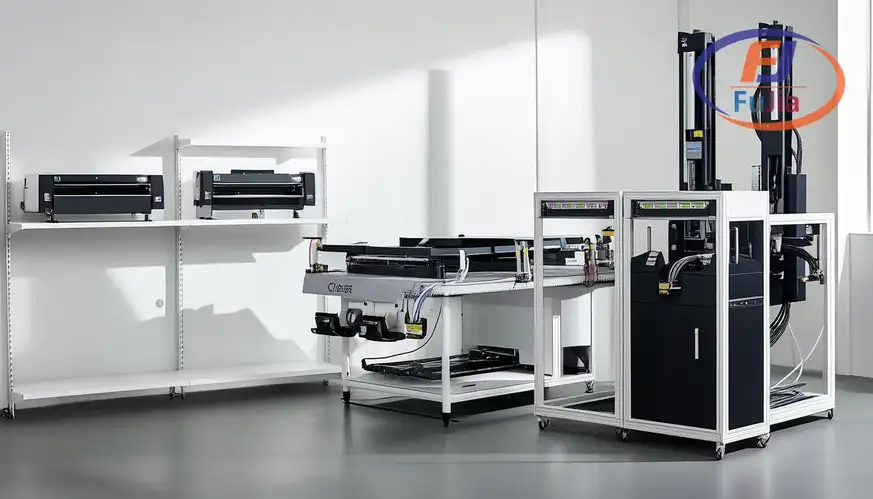
Key Takeaways
\n\n\n\n- \n\n\n
- The band ladder: A3 desktop $1,800-3,500, 6090 class $3,500-16,000, 2513 wide-bed $18,000-45,000, multi-head industrial $40,000-90,000. \n\n\n
- LED curing is now table stakes at every tier: lamps run 30,000-50,000 hours against 1,500-3,000 for legacy mercury lamps, deleting a bulb-replacement line from the ledger. \n\n\n
- Ink holds at $0.10-0.50 per m2 depending on coverage and white use, and white ink costs 2-3x CMYK per square meter when the underbase runs. \n\n\n
- Cost per m2 all-in runs $0.40-1.20 at working coverage, and product-level margins of 70-85% absorb it easily on decorated goods. \n\n\n
- We recommend pricing the ledger before the machine: two quotes at the same print area should be compared on ink cost, lamp life, and head price, not on stickers. \n\n\n
The Price Band Table by Format
\n\n\n\nThe band table prices the 2026 ladder, and every tier assumes LED curing, white channel availability, and factory-direct sourcing:
\n\n\n\n| Format | \nPrint area | \nPrice band | \nHeads | \nTypical user | \n
|---|---|---|---|---|
| A3 desktop | \n30×42 cm | \n$1,800-3,500 | \n1-2 XP600 | \nstartups, crafts | \n
| 6090 class | \n60×90 cm | \n$3,500-16,000 | \n2-3 XP600/i3200 | \nproduct decorators | \n
| 2513 wide bed | \n120×250 cm | \n$18,000-45,000 | \n2-4 Gen5/Gen5i | \nsign producers | \n
| Industrial multi-head | \n130×250 cm+ | \n$40,000-90,000 | \n4-8 Gen5i | \ntwo-shift plants | \n
The ladder in one frame:
\n\n\n\nThe tiers differ by throughput and duty cycle more than by print quality, because 1200 dpi-class output is now universal above the A3 band, and the buyer climbs the ladder for meters per hour rather than for sharper logos, per the tier logic our UV printers pillar documents across the platform families.The 6090 band is where most decoration businesses actually live, because a 60×90 cm bed fits the awards, phone cases, signage blanks, and promo goods that carry 70-85 percent margins, while the 2513 band waits for panel work that fills a meter-and-a-quarter of width honestly.
\n\n\n\nWhat Moves Money After the Sticker
\n\n\n\nThe ledger table lists the cost lines that outlive the purchase, and each line hides a spec-sheet decision that buyers skip until the invoice arrives:
\n\n\n\n| Ledger line | \nCost driver | \nTypical range | \n
|---|---|---|
| Ink per m2 | \ncoverage, white underbase | \n$0.10-0.50 | \n
| Head replacement | \nhead type and duty | \n$150-800 each | \n
| Lamp decay | \nirradiance vs hours | \n30,000-50,000 h life | \n
| Maintenance fluid | \ndaily circulation | \n$15-40 monthly | \n
| Power | \nLED efficiency | \n$5-15 monthly | \n
The ledger in view:
\n\n\n\nWhen it comes to LED lamps, they ended the replacement-lamp line item that mercury machines carried at $800-2,500 per bulb change. 30,000-50,000 hours of LED life means the lamp outlives most owners’ interest in the machine, which is why the legacy price gap has closed. The head line is the one that still bites: XP600 heads at $150-300 serve budget tiers with 6-12 month production lives, while i3200 and Gen5 heads at $400-800 run 12-24 months under the same duty. The cheap-head machine’s ledger quietly doubles at replacement time, per the head economics our consumables guides document across platforms. We recommend asking each vendor for head price and expected head life in writing, because that single line moves five-year cost more than $1,000 of purchase discount ever will.
\n\n\n\nThe Cost per Square Meter and Buyer Matching
\n\n\n\nThe ledger math converts the bands into the only number that prices production, and the buyer table matches each band to the operator it serves. All-in figures assume working coverage at 70 percent utilization:
\n\n\n\n| Buyer profile | \nRight band | \nAll-in cost per m2 | \nMonthly output | \n
|---|---|---|---|
| Craft startup | \nA3 | \n$0.80-1.20 | \n20-60 m2 | \n
| Product decorator | \n6090 | \n$0.40-0.80 | \n100-300 m2 | \n
| Sign producer | \n2513 | \n$0.40-0.70 | \n300-800 m2 | \n
| Two-shift plant | \nmulti-head | \n$0.35-0.60 | \n800-2,000 m2 | \n
The buyer match in one frame:
\n\n\n\nA phone-case studio we supply runs a 6090 at 150-250 m2 monthly, and its all-in ledger of $0.55 per m2 disappears inside product margins that run 15-40 dollars per decorated case, which is why the machine conversation ends quickly once the product margin conversation starts, per the unit-economics pattern our promotional products cases document across decoration businesses. We recommend the ledger-first purchase: collect ink cost per m2, head price, and lamp life from two vendors at equal print area, run five years of your expected volume through both, and let the totals pick the machine, because sticker differences invert at surprisingly small volumes when the ledger differs.
\n\n\n\n
How much does a digital flatbed LED UV printer cost?
A digital flatbed LED UV printer costs $1,800-3,500 at A3 desktop size, $3,500-16,000 in the 6090 production class, $18,000-45,000 for 2513 wide beds, and $40,000-90,000 for multi-head industrial lines, with LED curing standard at every tier in 2026. The full purchase should budget 10-15 percent more for shipping, power prep, and opening ink. Factory-direct sourcing drives these bands, and dealer channels add 40-100 percent while wrapping installation and service contracts around the same hardware.
Is an LED UV printer cheaper to run than mercury lamp models?
LED UV printers are significantly cheaper to run than mercury lamp models, because LED lamps last 30,000-50,000 hours against 1,500-3,000 for mercury bulbs, deleting a $800-2,500 replacement line that recurred every few months on legacy machines. LED arrays also draw less power and run cooler, which cuts energy cost and expands the range of heat-sensitive media the machine can print. The LED premium has effectively vanished at 2026 prices, so the mercury architecture survives only in used inventory, and used mercury machines should price their lamp replacement history into any offer.
What does it cost per square meter to print with UV LED?
UV LED printing costs $0.10-0.50 per square meter in ink depending on coverage and white underbase use, and $0.40-1.20 all-in once heads amortized, maintenance fluid, and power join the ledger. White ink runs 2-3x the CMYK cost per square meter because opacity needs heavy laydown, and dark-media work should price its underbase honestly. Decorated products carrying 70-85 percent margins absorb the entire ledger easily. Per-meter cost matters most to high-volume signage work rather than to product decorators, and that distinction should size the ledger effort itself.
Which UV flatbed size should I buy?
The right UV flatbed size follows the products rather than the ambitions: A3 at $1,800-3,500 validates designs and serves craft scale, the 6090 bed at $3,500-16,000 fits the awards, cases, and promo goods that decorate most businesses profitably, and the 2513 wide bed at $18,000+ waits for panel and signage work that fills its width honestly. Buyers should lay their actual product list on each bed size before quoting, because a bed that fits the whole product line without repositioning doubles effective throughput over a bed that forces two-pass layouts. Size to the product list, price the ledger, and let utilization justify each step up.
Verdict
\n\n\n\nDigital flatbed LED UV printer price in 2026 is a four-band ladder from $1,800 A3 desktops to $90,000 industrial lines, with LED curing standard everywhere and the 6090 band at $3,500-16,000 serving most decoration businesses’ real product lists. The ledger after the sticker decides value: ink at $0.10-0.50 per m2, head price and life in writing, lamps that outlive ownership, and an all-in $0.40-1.20 per m2 that product margins absorb without noticing. Price the five-year ledger before the machine, size the bed to the product list, and let totals rather than stickers close the purchase. For band-by-band quotes with the ledger lines filled in, contact Fujia Print for factory-side pricing.
\n\n\n\nSources
\n\n\n\n- \n\n\n
- Wikipedia: UV curing: LED lamp systems and irradiance. \n\n\n
- Wikipedia: Inkjet printing: head architecture and pricing classes. \n\n\n
- Fujia Print UV pricing guide: band pricing and ledger templates. \n\n\n
- SGIA printing resources: production cost benchmarks. \n\n\n
