

DTG printing on cotton works best on 100% ring-spun combed cotton in the 180-220 gsm weight band, pretreated at 15-25 grams per shirt and cured at 160 °C before any ink touches the fabric. Cotton is the natural inkjet bed for DTG because its cellulose fibers bond with pigment ink, and the difference between a 40-wash shirt and a 10-wash shirt is rarely the printer, it is the fabric choice, the pretreat gram weight, and the cure discipline. This page walks the fiber and weight decisions, the pretreat math, and the wash data that separates production-grade output from garage-grade complaints.
Key Takeaways
- Fabric ranking for DTG: ring-spun combed cotton first, combed carded second, carded open-end last, with 100% cotton holding 20-30% more detail than 50/50 blends.
- The weight sweet spot is 180-220 gsm: lighter shirts show strike-through at 25-35% ink loads, heavier fleece-backed fabric needs pretreat adjustments upward.
- Pretreat lands at 15-25 grams per standard tee applied in a 38-40 cm wide band, and under-pretreating costs more in returns than the fluid saves.
- Cure discipline is two steps: heat press 20-30 seconds at 160-170 °C to fixate, then 2-3 minutes at 170 °C in a conveyor for production wash durability.
- We recommend the 40 °C 5-cycle wash test before any client run, because a $2 test load predicts the returns that a $200 order produces.
Fabric Choice: Fiber and Weight Decide the Print
The fabric table ranks cotton types by DTG print performance, and the ranking holds across every printer brand we run. Fiber smoothness and absorbency decide detail, and weight decides ink behavior:
| Fabric type | Detail retention | Hand feel | DTG verdict |
|---|---|---|---|
| Ring-spun combed 100% | excellent | soft | production standard |
| Combed carded 100% | good | medium | acceptable |
| Carded open-end 100% | fair | rough | bulk budget only |
| 50/50 poly-cotton blend | reduced | soft | color-matched whites only |
| Tri-blend | poor | very soft | avoid for detail work |
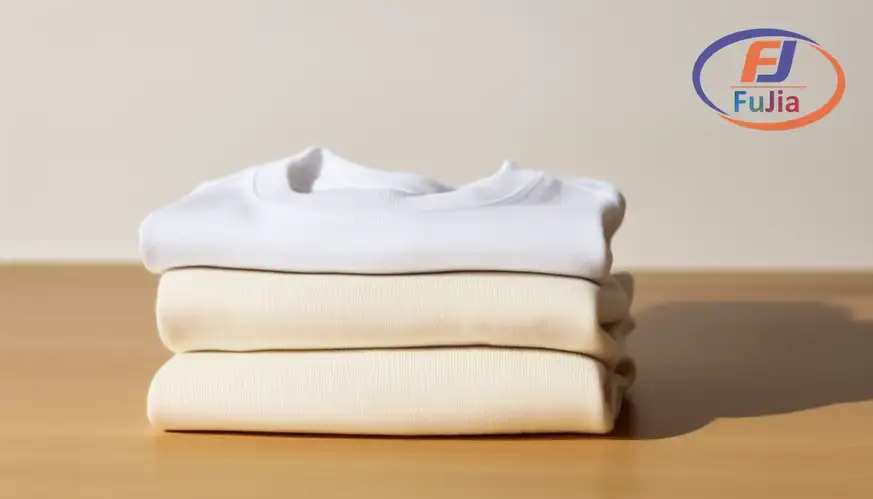
The fabric stack behind the ranking:
The 180-220 gsm band earns its sweet-spot title through failure modes on both sides: shirts under 150 gsm let ink load strike through to the back at 25-35% coverage designs, and fleece-backed fabric over 250 gsm wicks pretreat unevenly unless application weight rises 15-20%. Ring-spun combed cotton wins because its long combed fibers present a flat, uniform surface to the head at 1200 dpi class resolution, and that surface is why a $4 blank can outprint a $2 carded blank on the same machine, per the blank selection logic our apparel printing guide documents across fabric classes.The fabric decision is worth more than the printer decision inside any fixed budget, and shops that upgrade blanks before upgrading machines keep more customers.
Pretreat Math and Cure Discipline
The pretreatment table converts the numbers into shop-floor practice, because pretreat is where cotton DTG durability is actually made. Values assume a standard 38-40 cm adult front print:
| Parameter | Light garments | Dark garments | Failure when skipped |
|---|---|---|---|
| Pretreat weight | 15-18 g | 19-25 g | fading, weak white underbase |
| Application band | 38-40 cm | 38-40 cm | edge dropout |
| Press fixate | 160 °C, 20 s | 160-170 °C, 25-30 s | ink migration |
| Conveyor cure | 170 °C, 2 min | 170 °C, 2-3 min | wash failure by cycle 10 |
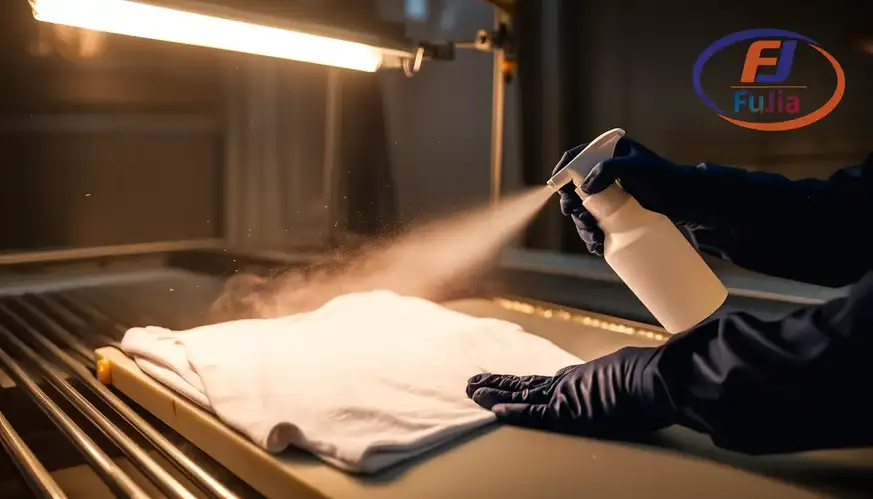
The pretreat application in practice:
When it comes to pretreat, it is the least glamorous and most consequential variable in the chain, because the pigment ink bonds to the pretreat resin layer as much as to the fiber itself. Under-apply by 5 grams on a dark garment and the white underbase loses opacity at wash cycle 8-12, a failure that arrives as a customer complaint rather than a press-side defect. Over-application carries its own tax: a heavy pretreat band yellows white shirts and stiffens the hand, which is why we recommend a gram-scale sprayer over any timer-based habit, per the pretreatment chemistry our consumables guide details for DTG fluid classes. The cure stack completes the discipline: a 20-30 second press at 160-170 °C fixates the surface. Production durability comes from the 2-3 minute conveyor pass at 170 °C that drives the bond through the film.
Wash Data and the Buyer Matching Table
The wash table summarizes what disciplined cotton DTG survives, and the buyer table that follows matches garment programs to expectations. Test protocol: 40 °C machine wash, inside-out, standard detergent, tumble dry low:
| Program element | Expectation at cycle 30 | Expectation at cycle 50 |
|---|---|---|
| Light garment, full cure | 90-95% density retained | visible but sellable fade |
| Dark garment, full cure | white underbase intact | minor cracking at folds |
| Under-cured output | fade begins cycle 10-15 | complaint territory |
| 50/50 blend | color shift at cycle 20 | ghosting of print |
The program matching view:
A wholesale program we supply runs 3,000 dark-garment tees monthly on ring-spun 180 gsm blanks, and its 30-cycle audit samples consistently hold 90-95% print density with the two-step cure and 21 gram pretreat weight, while an earlier single-press cure protocol failed audits by cycle 12 and cost the program a client. The matching logic follows garment economics: fashion tees sold on design live 20-30 wears and any cured DTG outlives them, workwear programs need the full two-step cure and should still set expectations at 50 cycles, and promo one-offs tolerate shortcuts that branded programs never will, per the program discipline our promotional products cases document for apparel lines. We recommend every shop publish its wash expectations internally. The mismatch between promised and delivered durability is the root of most DTG complaints, and a one-paragraph spec sheet prevents it.
Can you DTG print on 100% cotton?
Yes, 100% cotton is the best fabric for DTG printing, and ring-spun combed cotton in the 180-220 gsm band is the production standard because its smooth long fibers hold 1200 dpi class detail and bond strongly with pigment ink chemistry. Light garments need 15-18 grams of pretreat and dark garments 19-25 grams, followed by a press fixate at 160-170 °C and a conveyor cure at 170 °C for 2-3 minutes. Cotton holds 20-30% more printed detail than poly-cotton blends, and the wash data above shows full-cure cotton output retaining 90-95% density at 30 cycles.
Does DTG wash off or fade on cotton shirts?
DTG on properly pretreated and cured cotton fades gradually rather than washing off, with disciplined output retaining 90-95% print density at 30 wash cycles at 40 °C and remaining sellable past 50 cycles with minor fade. Failures come from process gaps rather than the technology: under-pretreating by 5 grams shows opacity loss by cycle 8-12 on dark garments, and skipping the conveyor cure begins fading by cycle 10-15. The 5-cycle wash test at 40 °C before any client run predicts these failures for a couple of dollars in blanks, and shops that test every pretreat batch rarely meet a fade complaint.
Which cotton fabric weight is best for DTG printing?
The best cotton fabric weight for DTG printing is 180-220 gsm, the band where standard pretreat weights work as designed and ink loads up to 35% coverage stay on the face of the fabric. Shirts under 150 gsm show strike-through at heavy coverage, requiring pretreat reduction and ink tuning that complicates production, while fabric over 250 gsm wicks pretreat unevenly and needs application weight raised 15-20% to compensate. Ring-spun combed construction at 180 gsm is the sweet spot inside the band. That position at the center of the band is why it dominates the blank catalogs that production shops buy from.
Is DTG or DTF better for cotton shirts?
DTG and DTF both work on cotton, and the choice follows design coverage and hand-feel priorities: DTG wins on 100% cotton light garments with high-detail photographic prints because the ink lives in the fiber and the hand stays soft across the full print, while DTF wins on heavy-coverage dark designs, blended fabrics, and mixed-material runs because its adhesive film bonds to nearly anything. On 100% cotton at 30 cycles, disciplined DTG holds 90-95% density with no edge lift, and DTF holds comparable density but shows film edge lift at high-wear zones. We recommend DTG for premium cotton programs and DTF for mixed-fabric production, and shops running both split work by fabric content rather than by printer loyalty.
Verdict
DTG printing on cotton rewards process discipline more than hardware spending: ring-spun combed cotton at 180-220 gsm, pretreat at 15-25 grams applied by gram scale, a 160-170 °C press fixate, and a 2-3 minute conveyor cure at 170 °C deliver output that holds 90-95% density at 30 wash cycles. The fabric decision outvalues the printer decision at any budget, pretreat weight is where durability is won or lost, and published wash expectations prevent the complaints that process shortcuts create. Match the program to the durability data and test every batch, and cotton remains the finest canvas DTG can ask for. For a cotton program audit or production pricing, contact Fujia Print with your garment spec.
Sources
- Wikipedia: Direct-to-garment printing: process and ink chemistry.
- AATCC wash test standards: durability testing protocols.
- Fujia Print apparel program cases: wash audit data across programs.
- Cotton Incorporated: fabric construction and weight specifications.
