

Print, make, wear is the complete arc of digital textile design: a pattern imagined on screen, printed onto fabric by digital services or machines, and worn as a finished piece, and the arc scales from a first scarf to a full apparel line without changing its logic. The projects in this guide are ordered as a skills ladder, each one teaching the pattern repeat, color, and fabric lessons the next one needs, and every project can print through local services or offshore production depending on its stage. Designers who follow the ladder build portfolios and production habits together, which is why the sequence matters more than any single project.
Key Takeaways
- The skills ladder runs scarves and tea towels, T-shirt panels, yardage apparel, home decor, then full collections, each adding one design skill.
- Repeating patterns are the core skill: exact tile logic, half-drop layouts, and seamless edges separate hobby output from sellable design.
- Local services print samples at $12-35 per yard with no minimums, and offshore clusters produce proven designs at $1.5-6 per meter.
- 2026’s direction runs toward maximalist layered botanicals, AI-assisted colorways, and textured伪-hand finishes printed flat.
- We recommend printing every design at sample scale before any yardage commitment, because the fabric teaches what the screen hides.
The Project Ladder From First Scarf to Collection
| Project | Skill learned | Print route at this stage |
|---|---|---|
| silk-feel scarf | one-off placement print | local service, 1-2 yards |
| tea towel set | repeating tile basics | local service, 3 yards |
| T-shirt panels and tees | scale and placement on body | DTG services |
| dress yardage | half-drop repeats across meters | local, then offshore |
| home decor pillows | heavy fabrics, color matching | offshore sampling |
| full apparel collection | tech packs, colorways, grading | offshore production |
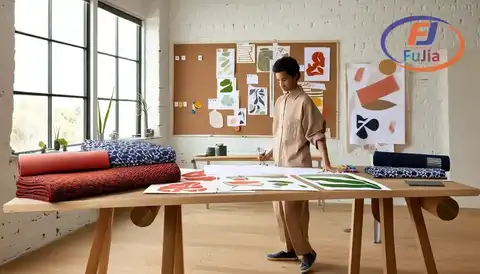
The ladder table is this guide’s spine, and the skills column is why the order works: a scarf teaches placement and edge control on a single panel, tea towels force the first true repeat, T-shirts confront scale on a body, dress yardage demands half-drop repeats that flow across meters, and home decor introduces heavyweight fabrics whose color response differs from silk-feel bases. The collection stage assembles everything into tech packs, colorway families, and graded sizing, and the print route shifts from local sampling toward offshore production exactly when designs are proven, per the sampling-to-production logic our Los Angeles and sourcing guides document at both ends.
The ladder’s pace varies by designer, and its sequence should not. A designer who skips the repeat fundamentals to chase a collection meets the gap in production, where a faulty tile prints its error across 500 meters of production. The same discipline logic our fabric guides document applies to learning as much as to sourcing. We recommend finishing each rung with one sold or gifted piece, because wearing the print is the test that screens cannot run.
The Core Skills Each Project Teaches
Repeats are the first wall, and three concepts clear it: the exact tile, whose edges must mathematically continue into each other; the half-drop, which staggers tile rows so repeats stop reading as grids; and the mirror check, flipping the tile horizontally to catch edge artifacts. A well-built tile prints seamlessly across 10 m of silk or 10,000 m of production cotton. The design files should be built at 150-300 dpi at final size so the print service scales nothing. Design software handles the mechanics, and the designer’s eye for whether a repeat flows is the skill the projects develop over roughly 10 hours of practice, one towel at a time.That eye arrives around the fourth or fifth tile, and never before.
Color is the second wall, because screens and fabric disagree. Designs built in CMYK at 150-300 dpi, proofed as swatches on the chosen base fabric, and approved under daylight at 6500 K travel from screen to shelf with their intentions intact, while RGB files printed blind surprise everyone. The swatch habit is cheap, and we recommend it on every project without exception. The swatch-proof habit that anchors every printing service workflow is also the fastest color education a designer can buy, and the same color discipline our printing process guides document for clients applies doubly to the designers becoming clients.
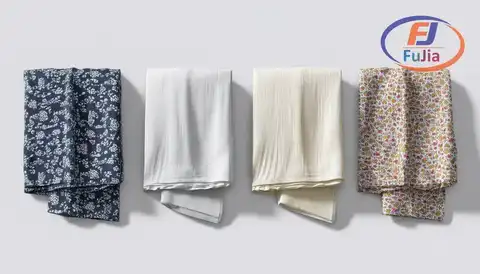
Fabric knowledge is the third wall, and it is the one designers underestimate until the swatches arrive. The ladder teaches it by touching: silk-feel poly prints vivid and drapes soft, cotton sateen reads detailed and presses crisply, linen mutes saturation into texture, and performance knits move color across stretch. The designer who has printed the same pattern across four bases understands substrate as a design material rather than a shipping detail, which is the understanding that collections are built on. Fabric choice is a design decision, and the swatch drawer is the proof. Fabric is the third design tool, after the motif and the color.
Printing Routes at Every Stage
The two printing routes serve the ladder’s two halves, and both deserve the designer’s fluency: one prints days fast, the other prints meters cheap. Local digital services print samples and short runs at $12-35 per yard with no minimums, turning each project into fabric within 2-5 days, and their swatch cards double as the designer’s material education at about 20 cm of proof per color, per the service workflow our Los Angeles printing guide documents from the buyer’s side. Offshore production clusters print proven designs at $1.5-6 per meter with 200-2000 meter MOQs, serving the collection stage where unit economics matter and the design has already survived local proofing.
The route switch follows proof, not enthusiasm: a design that has passed local swatch proofs, washed 5 cycles at 40 °C, and survived real wear is the design that earns an offshore order, because the cluster’s MOQ prices confidence rather than hope. We recommend the two-route structure to every designer at every stage, and the same local-test-then-scale logic our Los Angeles printing guide documents is the structure the fashion industry runs on.
For designers who outgrow services entirely, the machine question arrives, and the answer follows the same order-book honesty every print business runs on: ownership pays at steady weekly yardage above roughly 20-30 meters, services win everywhere else, and the machine classes and their economics sit in our textile machines guide for that stage. The machine buys independence, and the services buy speed, and the ladder uses each where it is strongest. Most working designers run both for years.
The 2026 Direction: Trends Worth Designing Toward
Maximalist layered botanicals lead the commercial direction, with dense overlapping florals, oversized scale, and rich saturation filling the fashion and home markets that minimalism left behind. AI-assisted colorways are the workflow trend, designers generating palette families and pattern variations with generative tools before refining by hand, cutting the variation work that collections require without replacing the taste that sells them. Textured hand-finishes printed flat, faux linen grain, quilted dimension, and woven-look structures, answer the market’s tactile appetite on print-only budgets.
Sustainability signaling continues its shift from claim to specification, with buyers asking for digital printing’s low-water chemistry, on-demand production that kills deadstock, and certified fabrics by name. Designers who document their printing chemistry and run lengths answer the question before it is asked, and the same specification logic our sourcing guides document for buyers applies to the designers supplying them. A designer who can state ink chemistry and wash results in one sentence is selling to 2026’s buyer, not to 2019’s. Trend-chasing is optional, and trend-awareness is not, because the designer whose portfolio photographs against the current market reads current.
A designer case we supply anchors the ladder’s outcome: an independent designer who started with two locally printed scarves, built a twelve-pattern home decor line over eighteen months through the ladder’s stages, and now runs seasonal offshore production against wholesale accounts, with her early tea towels still selling as entry products beside the collection that outgrew them. The ladder built her skills, her portfolio, and her supply chain in the same pass, per the growth patterns our designer cases document.
What are some good ideas for textile design projects?
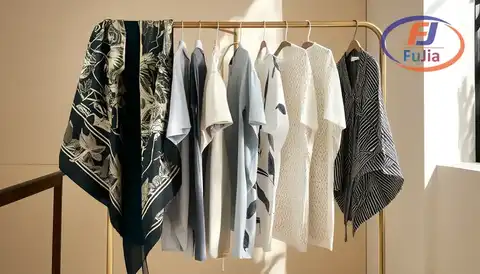
Strong textile design projects follow a skills ladder: a one-off placement scarf to learn edge control, a tea towel set to master repeating tiles, T-shirt graphics to study scale on the body, dress yardage for half-drop repeats across meters, home decor pillows for heavyweight fabrics, and a multi-piece collection to assemble tech packs and colorways. Each project teaches one skill the next one needs, and every design prints at sample scale through local services before any yardage commitment. The ladder matters more than the ideas, because execution skills are what turn good ideas into fabric worth wearing. Start at the scarf regardless of ambition, and let the sequence build the portfolio.
What are some creative design ideas for printing?
Creative directions worth printing in 2026 include maximalist layered botanicals at oversized scale, geometric terrazzo and mosaic structures, hand-painted brushwork scanned at high resolution, photographic collage on silk-feel bases, and faux-texture prints that imitate linen, quilt, and weave on flat fabric. AI-assisted colorway generation multiplies each concept across palettes before hand refinement, and vintage revival patterns reworked in current palettes sell across fashion and decor. The creative filter is printability: designs that tile mathematically, read at their final scale, and flatter their intended base fabric are the ideas that survive printing. Sketch generously, proof early, and let the swatches edit the portfolio.
What is digital printing for textiles?
Digital textile printing is inkjet technology that prints designs directly onto fabric or onto transfer paper, using reactive dyes for cotton, pigment inks for blends and polyester, and sublimation for poly-based bases, with no screens or plates between file and fabric. The process prints short runs economically, changes designs per panel, and produces photographic color that screen printing cannot match, which is why sampling and custom work run digital while mass volume still splits by run length. Fabric selection, color management, and wash fixation complete the process, per the full workflow our textile printing guides document for both designers and producers.
What are the textile design trends for 2026?
Textile design trends for 2026 run toward maximalist layered botanicals at oversized scale, AI-assisted colorway families generated and refined by hand, faux-texture prints imitating weave and quilt on flat surfaces, and sustainability documented by specification rather than claimed by label. Color moves rich and saturated, with jewel tones and warm earth families anchoring both fashion and home markets. Digital printing’s on-demand economics shape the trends as much as aesthetics do, since designs that print per-order reward the long-tail patterns mass production never served. Designers who photograph their portfolios against these directions read current before a client says a word.
Verdict
Print, make, wear is a skills ladder disguised as a project list: scarves teach edges, towels teach repeats, tees teach scale, yardage teaches half-drops, decor teaches weight, and collections teach everything at once, with local services printing the learning and offshore clusters producing the proof. Print every design at sample scale, build the repeat and color discipline the fabric demands, and design toward 2026’s maximalist, AI-assisted, texture-curious market. The arc from idea to worn fabric has never been shorter, and the ladder is how designers climb it without falling. To print your first project or your collection’s sampling run with a partner who knows both ends, contact Fujia Print with your designs.
Sources
- Wikipedia: Digital textile printing: technology overview.
- Wikipedia: Textile design: discipline context.
- AATCC: colorfastness standards.
- Fujia Print apparel cases: designer program examples.
