

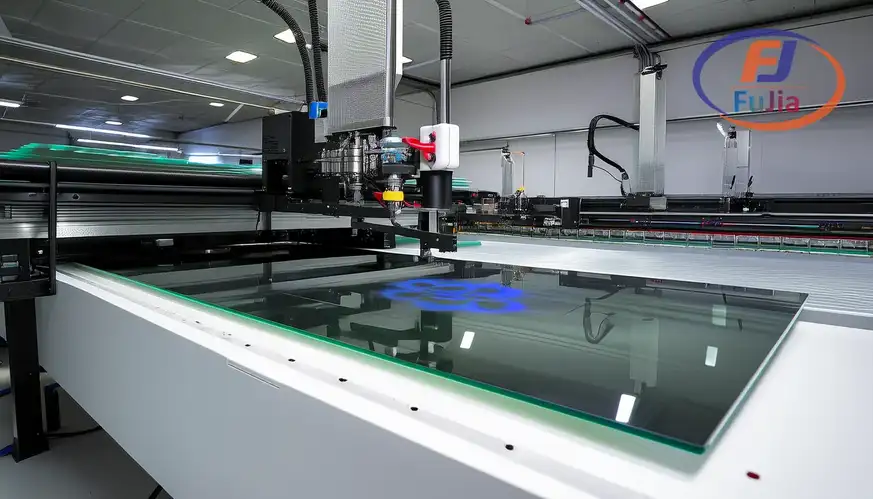
A large UV flatbed printer means a bed beyond the 60×90 cm production standard, typically 1.2-2.5 meters wide at $18,000-60,000, built for the oversized objects that define whole product lines: doors, glass sheets, furniture faces, and the multi-up nesting that turns bed area into daily revenue. The buyer’s question is never whether large beds print well, because they do, and it is always whether the order book contains objects that smaller beds refuse. This guide sizes the large classes, lists the object canon, and runs the economics that separate a strategic purchase from a spacious mistake.
Key Takeaways
- Large means 1.2-1.6 m beds at $18,000-35,000 and 2-2.5 m beds at $35,000-60,000, printing 8-27 m2/hour by class.
- The oversized canon covers doors, 4×8 panels, glass sheets, furniture faces, and layered nesting that small beds turn away.
- Bed area converts to throughput through nesting: a 2 m bed runs 6-10 small jobs per pass with one setup.
- Site logistics scale with the bed, and delivery paths, floor loading, and power belong in the decision before the PO.
- We recommend large beds only when oversized or nested orders recur monthly, because idle width is the most expensive feature in the category.
What Large Means on the Market
| Class | Bed size | Price band | Output |
|---|---|---|---|
| large mid | 1.2-1.6 m | $18,000-35,000 | 8-15 m2/hour |
| large grand | 2-2.5 m | $35,000-60,000 | 15-27 m2/hour |
| reference desk | 30×50 cm | $1,799-2,800 | 1-1.5 m2/hour |
The class table sizes the market from both directions, and the reference row makes the jump honest: a large bed is five to fifteen desk machines laid side by side, printing the same LED-cured physics across the area. The mid-large class at 1.2-1.6 m accepts the 4×8 foot panel and door blanks that anchor construction and retail work, and the grand class at 2-2.5 m serves furniture sheets and multi-meter cladding at production pace. Both classes run servo motion at their upper tiers, because bed width amplifies every registration error the motion system allows, per the class logic our UV printers lineup maintains.
The width purchase is a job purchase, and the honest sizing exercise lists every object the shop has declined or tiled in the last year. A shop turning away doors, full sheets, and multi-piece signage sets has a large-bed case; a shop printing phone cases and plaques has a desk case, and the arithmetic between them is measured in declined orders rather than in inches. We recommend writing the declined-orders list before the quote list, because the bed that pays is the bed the orders already asked for, and the same order-first sizing logic runs through every buying guide we maintain. Declined orders are market research you already paid for.
The Oversized Object Canon
| Object | Typical size | Why small beds fail it |
|---|---|---|
| interior doors | 80×200 cm | exceeds every desk bed |
| 4×8 construction panels | 122×244 cm | the standard sheet size |
| glass and mirror sheets | up to 2×3 m | tiling risks breakage and seams |
| furniture faces | 120×240 cm sheets | grain continuity across the piece |
| multi-piece signage sets | varied | nested in one pass |
The canon table lists the objects that define the large-bed business, and the common thread is continuity: doors, sheets, and furniture faces carry grain, gradients, and matched patterns that tile marks destroy, so the large bed sells seam-free output as much as area. Multi-piece nesting is the volume half of the canon, arranging mixed small jobs across the wide bed for one setup and one operator cycle, and its labor savings compound daily at production pace. The objects are also the clients, fit-out contractors, furniture makers, and glass shops, whose order books quote in sheets rather than pieces, per the application canon our signage production guides document.
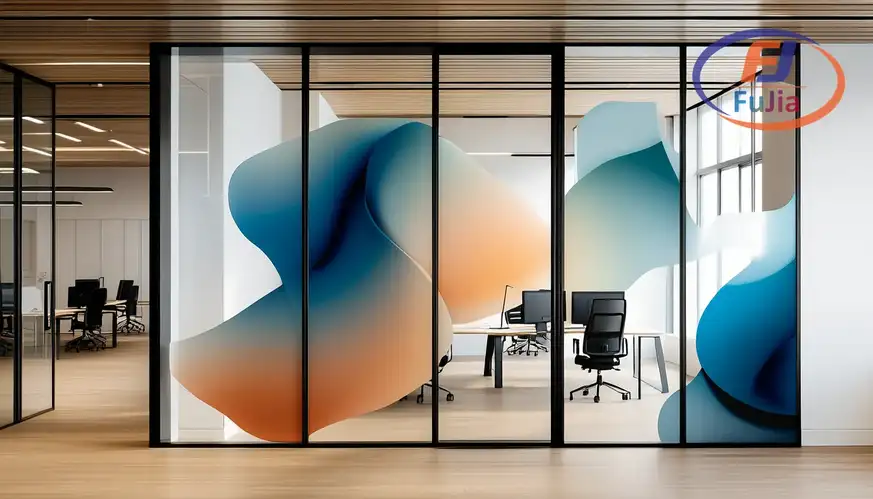
Glass deserves its own line in the canon conversation, because it is the large-bed market’s highest-value substrate: printed glass for shower doors, partitions, and architectural panels retail at multiples of the blank, and the bed’s flatness decides whether the sheet survives handling and prints flat. Glass shops upgrading to large UV flatbeds buy a product line rather than a machine, and the same substrate-value logic our glass printing guide documents at craft scale runs here at architectural scale.
Sizing the Bed to the Orders
| Order profile | Right bed | Monthly capacity |
|---|---|---|
| occasional panels among craft work | desk plus outsourcing | n/a |
| monthly 4×8 and door orders | 1.2-1.6 m | 700-1,500 m2 |
| weekly sheet and nesting volume | 2-2.5 m | 1,800-4,000 m2 |
| contract cladding programs | 2.5 m with servo | 2,900-5,200 m2 |
The sizing table turns the order book into a bed width, and the first row is the escape hatch that keeps this guide honest: shops whose oversized work is occasional should outsource it to a large-bed owner and keep the margin that exists rather than buying the margin that might. The second row is the large-mid class’s design customer, a working shop whose panel orders recur monthly and justify $18,000-35,000 without changing the business. The third and fourth rows are production commitments, and their bed widths follow the nesting math, where a 2 m bed’s per-pass capacity pays the labor savings daily, per the sizing discipline our wide format guide applies in depth.
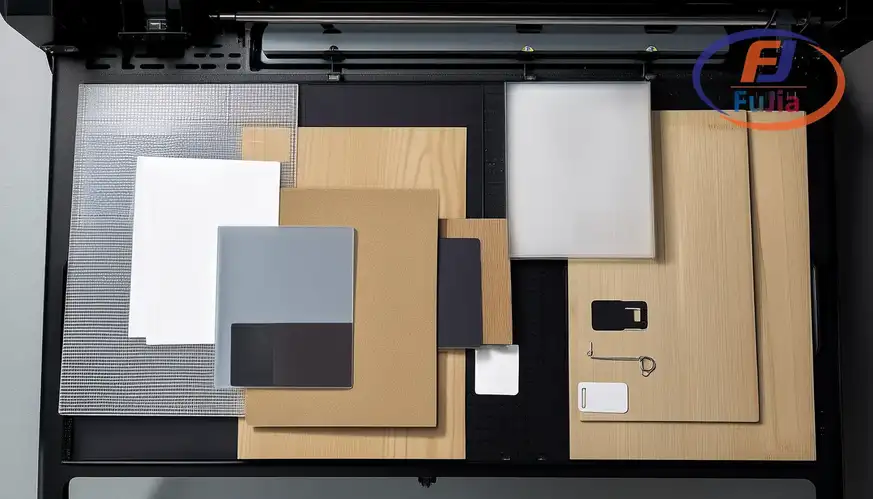
Nesting deserves the sizing arithmetic spelled out, because it is how bed area becomes money: a 2 m bed holds six desk-sized jobs per pass, so six setups collapse into one, and the operator minutes saved per day accumulate into the labor line that pays the width premium. The shops that nest aggressively recover large-bed costs faster than the shops that print one job per pass on a big bed, and the nesting habit, not the bed, is the ROI mechanism.
Site, Installation, and the Real Economics
| Requirement | 1.6 m class | 2.5 m class |
|---|---|---|
| footprint | 12-20 m2 | 25-40 m2 |
| power | single or three-phase | three-phase |
| delivery path | 2 m clear | 2.6-3 m clear |
| crated weight | 800-1,500 kg | 2,000-4,000 kg |
The site table is where large-bed purchases succeed or stall, and the delivery path is the requirement buyers forget until the truck arrives: a 2-4 tonne crated bed needs industrial doors, a straight route, and floor loading that mezzanines rarely offer. Three-phase power is standard at the grand class, and the installation includes the leveling ritual that decides bed flatness for the machine’s life. We recommend photographing the delivery path for the vendor before ordering, because the freight plan prices off reality rather than off ambition, and the same site-first logic our wide format guide applies to the class applies to every large purchase.
The economics close on utilization: a large bed earns through the orders it accepts and the nesting it runs, and ink at $0.40-1.20 per square meter scales gently beside margins of $8-25 per panel. A 1.6 m machine at steady panel volume recovers inside 12-24 months, and the grand class doubles the volume threshold with the nesting multiplier shortening it for shops that run full beds. When it comes to large-bed economics generally, the machine amplifies whatever the order book carries, orders or idleness. The amplifier is why the sizing table comes before the quote.
A fit-out case we supply anchors the large class: a contractor’s print partner running 900-1,600 m2 monthly of wall cladding and door faces on a 1.6 m bed, quoting seam-free matched runs that tiled competitors cannot offer, with the bed recovered inside 14 months of contract volume. The partner’s orders were panel-shaped before the bed arrived, which is the sequence this guide exists to recommend, per the contract-first patterns our production cases document.
How much does a UV flatbed printer cost?
A UV flatbed printer costs $1,799-2,800 at the desk tier, $3,500-8,000 in the mid class, $9,000-28,000 for 6090 production beds, and $18,000-60,000 in the large classes this guide covers, with width and motion class setting each rung. The large classes buy the oversized object canon of doors, panels, sheets, and nested runs that smaller beds refuse, and their economics fill through accepted jobs rather than through sharper printing. The full ladder sits in our flatbed pricing guide, and the sizing exercise, listing the orders each bed accepts, is the honest way to climb it.
What is the best flatbed UV printer?
The best flatbed UV printer is the bed size matched to your object canon: desk class for cases and plaques, 6090 class for standard production jobs, and large 1.2-2.5 m beds for doors, sheets, and nesting volume, with servo motion, true vacuum flatness, and documented installation support as the verification points at the large tiers. Best is the bed your declined-orders list asks for, judged by a demo print on your own oversized substrate rather than on vendor blanks.The large-bed buyers who succeed identified their oversized orders before quoting, and the bed followed the list.
What are some large UV printers available?
Large UV printers available on the market include 1.2-1.6 m mid-width flatbeds at $18,000-35,000 serving panel and door work, 2-2.5 m grand-format servo beds at $35,000-60,000 for furniture sheets and cladding programs, and hybrid roll combinations at $30,000-45,000 for shops split between rigid and banner volume. The classes differ by motion system and nesting capacity as much as by width, and vendor demos on full-size panels at the bed’s corners and center are the verification that photos cannot fake. Shortlist by width class, verify by the five senses on real output, and let the declined-orders list cast the deciding vote. The list has been voting all along, in every job the shop turned away.
What are the downsides of UV printing?
UV printing’s downsides are consistent across sizes: adhesion on unprimed plastics needs promoters, the cured film is not food-contact certified, white ink demands daily circulation, and the machines price above water-based alternatives. At large format the downsides scale with the bed: a stopped 2 m machine idles more revenue per hour, consumable orders grow with daily square meters, and the site requirements of floor, power, and delivery path exclude workshops that desk class fits. None of these downsides is unmanaged at the shops that run the daily rituals and survey their sites, and each one prices into the buying arithmetic rather than against it.
Verdict
The large UV flatbed printer is a capacity commitment: 1.2-2.5 meter beds at $18,000-60,000 that accept the doors, sheets, glass, and nested runs defining whole product lines, with nesting efficiency as the ROI mechanism and site logistics as the gating reality. List the declined orders, size the bed to the list, survey the delivery path, and buy large only when the oversized work recurs monthly. The large bed amplifies the order book faithfully, and the sizing table is what keeps the amplification pointed at profit. To test your oversized panels on a large bed before the commitment, contact Fujia Print with your panel dimensions.
Sources
- Wikipedia: UV curing: LED ink chemistry.
- Wikipedia: Large-format printer: format context.
- AATCC: durability testing standards.
- Fujia Print signage cases: large-panel production examples.
