

Sublimation paper in bulk drops from $0.25-0.35 per retail sheet to $0.08-0.15 at wholesale case quantities, and the buyer who crosses roughly 500 sheets per month is leaving money on every order that still arrives in 100-sheet retail packs. This guide prices the 2026 bulk market with real listings, runs the gram-weight math that decides which paper your products actually need, and marks the volume thresholds where sheet-by-sheet buying stops making sense. The paper is the cheapest part of a sublimation shop and the easiest place to overspend.
\n\n\n\n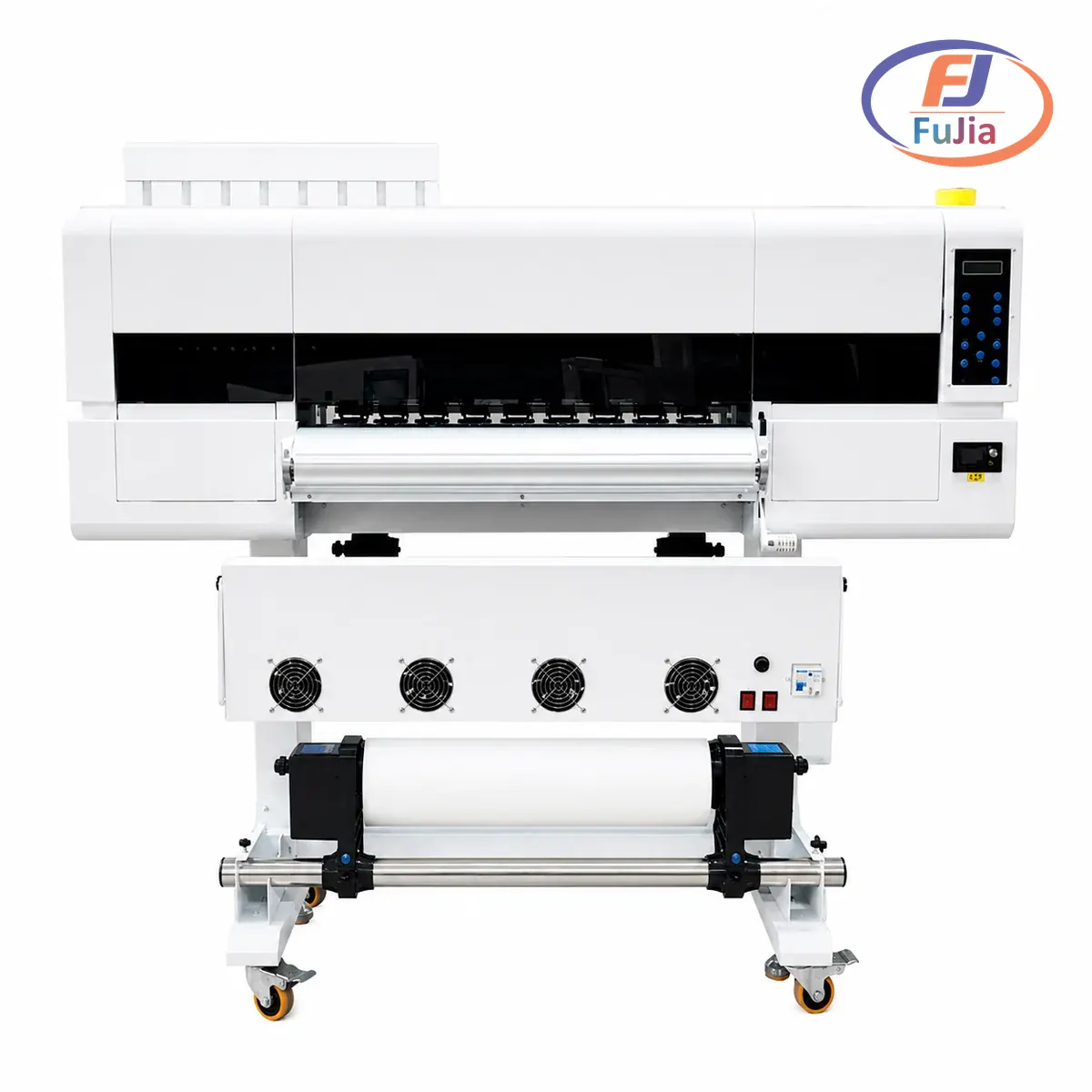
Key Takeaways
\n\n\n\n- \n\n\n
- Real 2026 pricing: 8.5×11 retail packs run $11.99-21.99 per 110-125 sheets ($0.10-0.20/sheet), while bulk 400-500 sheet cases drop to $0.08-0.12 per sheet and 44-inch rolls cut large-format cost to roughly $0.03-0.06 per square foot. \n\n\n
- 120-125 gsm paper suits textiles and tumblers; 100-105 gsm economizes on hard blanks; the gram weight that matters is the one your press time and ink load justify, not the heaviest on the page. \n\n\n
- Roll buying (44 in x 394 ft near $79) beats sheet buying above roughly 1,000 letter-size-equivalent prints monthly, provided a cutter and a roll-capable printer are already in the workflow. \n\n\n
- Wholesale terms open at lower volumes than most sellers expect: manufacturer direct quotes typically start near 20-50 cases, and distributor tiering begins around 500 sheets per month. \n\n\n
- Storage decides bulk value as much as price: sublimation coating absorbs humidity, so a case bought dry and stored open in a garage loses transfer quality that no discount recovers. \n\n\n
What Bulk Actually Changes in the Price
\n\n\n\n| Buying format | \n2026 price | \nEffective per-sheet (8.5×11 eq.) | \nWhere it fits | \n
|---|---|---|---|
| Retail 110-125 sheet pack | \n$11.99-21.99 | \n$0.10-0.20 | \nunder 300 sheets/month | \n
| Bulk 400-500 sheet case | \n$32-45 | \n$0.08-0.12 | \n300-1,000 sheets/month | \n
| 13×19 bulk case | \n$23-58 per 100 | \n$0.23-0.58 | \noversized products | \n
| 44 in x 394 ft roll | \n~$79 | \n~$0.03-0.06 per sq ft | \n1,000+ prints/month | \n
The retail tier deserves its convenience premium only below hobby volume, and the arithmetic is blunt about where that ends. A seller pressing 40 tumblers weekly consumes a 125-sheet pack roughly every three weeks at $0.16 per sheet effective, and the same consumption through 500-sheet cases runs $0.09, a saving of about $12 monthly that scales linearly with output. The case tier is where most working Etsy shops live. The roll tier is where production shops live: a 44-inch roll carries roughly 500 letter-size equivalents per linear 100 feet with zero packaging waste per sheet, and shops running wide-format sublimation on polyester already own the cutter that makes rolls frictionless.
\n\n\n\nVolume math decides the tier faster than any brand comparison. At 300 sheets monthly, retail-versus-case difference is real but small, roughly $20; at 800 sheets it approaches $55 monthly, a meaningful consumables line; at 2,000 sheets the roll-versus-retail gap passes $150 monthly, which is why mid-size shops upgrade to roll feeding before they upgrade printers. We recommend logging a true 30-day sheet count before quoting any wholesale tier, because shops consistently guess 30-40% low on their own consumption, and the tier boundaries below all shift on that one number.
\n\n\n\nThe GSM Decision: 125, 120, or 100
\n\n\n\nGram weight is the spec sellers overpay on most often, and the reason is straightforward: the marketing implies heavier is better and the press says otherwise. Heavier 120-125 gsm paper carries more coating, holds more ink for dense photographic transfers, and resists curl inside mug and tumbler presses, which is why it is the textile standard. Lighter 100-105 gsm paper dries faster, feeds more reliably in high-volume sheet printers, and transfers slightly less ink. That last trait is an acceptable trade on coated hard blanks, where the substrate drinks dye efficiently and cost per sheet runs 15-20% lower.
\n\n\n\n| Product family | \nBest gsm | \nWhy | \nInk load guidance | \n
|---|---|---|---|
| Polyester apparel | \n120-125 | \ndense coverage, no curl under 45-60 s press | \nheavy, photo mode | \n
| Tumblers and mugs | \n120 | \nwraps must not curl at 180 °C, 60 s | \nmedium-heavy | \n
| Coated hard blanks | \n100-105 | \nfast dry, efficient dye uptake | \nmedium | \n
| Photo panels | \n125 | \nmaximum ink for gallery depth | \nheavy | \n
| Sampling and test prints | \n100 | \ncheapest sacrificial surface | \nlight | \n
The honest test costs one afternoon: press the same design at two gram weights on your actual substrate, wash or scrub the result, and compare. Most small shops will find the lighter paper survives on hard blanks and never on apparel, which is exactly the split the table encodes.Supplying sublimation workflows across 50-plus countries, shops that standardize on one paper for everything spend 10-15% more on consumables than shops that split by product family.
\n\n\n\nRoll vs Sheet: The Format Break-Even
\n\n\n\nRolls change the workflow before they change the price, and the change is bigger than most shops expect. Sheet-fed shops buy pre-cut convenience and pay for it in per-sheet premium and format lock-in; roll-fed shops cut their own sizes from 17, 24, and 44-inch stock, waste less on odd formats like 20 oz tumbler wraps and oversized panels, and commit to a cutter and roll-capable printer. The format break-even sits near 1,000 letter-size-equivalent prints monthly: below that, cutting labor eats the paper savings; above it, the $79 roll against $0.10-per-sheet case pricing returns $25-40 monthly per roll consumed. Production shops running multi-roll months compound that into a meaningful line item.
\n\n\n\nA sports bag brand we supply shows the roll tier at production scale: running 60 cm sublimation with a roll heat press, the brand prints full-bleed edge-to-edge designs directly from roll stock, doubled average order value against cut-sheet production, and holds a zero-peeling warranty record because roll workflow removes the seam misalignment that cut sheets introduce. The workflow pairs with the printers cataloged in our sublimation printers lineup, where roll feeding is standard at the 60 cm class. Their setup presumes the wide-format printer already exists; a desktop sheet shop forcing rolls into a letter-size workflow buys complexity, not savings.
\n\n\n\nHow to Qualify a Wholesale Supplier
\n\n\n\nWholesale terms are easier to qualify than most sellers expect, because the tells are consistent across the market. First, published tier pricing: real wholesalers post case and pallet breaks openly, while “contact us for wholesale” pages without numbers usually resell retail stock at a courtesy discount. Second, coating consistency: request two lot numbers of the same SKU and press both, because inconsistent coating between production runs is the failure mode that ruins matched-color orders, and a supplier who cannot speak to lot control is gambling with your dye density. Third, logistics: DDP shipping terms with duties prepaid, SEA freight at 15-25 days for US and EU destinations, and storage guidance in the quote are the marks of a manufacturer-shipper rather than a broker.
\n\n\n\n| Qualification check | \nPass signal | \nFail signal | \n
|---|---|---|
| Tier pricing | \ncase/pallet breaks published | \n“contact us” only | \n
| Lot consistency | \nlot numbers offered per case | \nsingle blended stock | \n
| Shipping terms | \nDDP with duty prepaid | \nEXW with no import guidance | \n
| Storage guidance | \nhumidity and temp specs in quote | \nnone | \n
| Sample policy | \npaid samples with lot reference | \nrefuses samples | \n
The manufacturer-direct route rewards volume with customization: factory orders at 20-50 case quantities open custom sheet sizes, branded packaging, and gsm tuning for specific product lines, options no retail channel offers. Fujia’s consumables line, including the SUP-STD transfer paper tuned to the SUI-STD ink chemistry as one pipeline, exists precisely because matched paper-ink systems hold color across batches in a way that mixed-sourcing workflows chase with ICC profiles. Buyers below case volume should stay with retail brands they can test cheaply; buyers at case volume should be quoting factories directly.
\n\n\n\n

How much does sublimation paper cost?
\u003cp\u003eRetail 8.5×11 packs of 110-125 sheets run $11.99-21.99 ($0.10-0.20 per sheet) in 2026, bulk 400-500 sheet cases run $32-45 ($0.08-0.12 per sheet), 13×19 packs run $23-58 per 100 sheets, and 44-inch rolls run near $79 per 394 feet. The number that matters is cost per finished product: a typical tumbler wrap consumes $0.10-0.30 of paper against a $15-25 personalized blank, so paper is rarely more than 2% of selling price, which is why consistency beats unit price in every tier. Buy on consistency and transfer rate before unit price, because one ruined $20 blank erases a month of per-sheet savings.\u003c/p\u003e
What can I use instead of sublimation paper?
\u003cp\u003eFor true dye sublimation on polyester, nothing substitutes: the coating is what captures and releases dye gas under the 200 °C press, and plain copy paper holds ink on the surface where it smears, so the coating is the product. Butcher paper works only as a protective cover sheet over the transfer, not as the transfer itself, and \u0022sublimation-friendly\u0022 papers without coated release chemistry fail the same way. When the substrate is cotton or the workflow needs dark colors, the substitute is a different process entirely, with DTF transfers for cotton blends and UV DTF for hard objects, and our \u003ca href=\u0022https://fujiaprinter.com/dtf-vs-sublimation-printer/\u0022\u003eDTF versus sublimation\u003c/a\u003e comparison maps that fork in detail. Paper substitutions are process substitutions wearing a shopping list.\u003c/p\u003e
Where can I buy wholesale sublimation blanks?
\u003cp\u003eThe same suppliers who sell bulk paper usually carry blank inventory: specialized blanks distributors serve North America and Europe with case pricing on mugs, tumblers, and polyester apparel, while manufacturer-direct sourcing from production clusters in China cuts blank costs 30-50% at 500-plus piece quantities with 15-25 day SEA shipping, so the sourcing question and the paper question share one answer. Qualify suppliers the same way as paper: published tier pricing, lot consistency on coatings, and DDP shipping terms. Test every blank batch with a corner transfer before committing a full production run. The corner test costs one blank and catches what a pallet of returns would prove expensively.\u003c/p\u003e
Does Hobby Lobby carry sublimation paper?
\u003cp\u003eYes, Hobby Lobby and fellow craft retailers including Michaels carry retail sublimation paper packs, typically 8.5×11 sheets in the $12-27 range from brands like Make Market and SUBMAX. Craft-retail stock serves weekend project volume and same-day needs at the $0.15-0.25 per sheet tier, and it is genuinely good at that job, which is exactly why the question matters. Working sellers use craft stores as emergency backup only, because the same sheet runs $0.08-0.12 in bulk cases, and the craft-retail assortment rarely includes the 13×19 and roll formats that tumblers and oversized products need.\u003c/p\u003e
Verdict
\n\n\n\nBulk sublimation paper buying is pure arithmetic wearing a shopping cart: under 300 sheets monthly, retail packs are honest; 300-1,000, case pricing saves $25-90 monthly; past 1,000, rolls and manufacturer-direct quotes take over and customization opens at 20-50 case volume. Pick gram weight by product family rather than by heaviest-is-best instinct, verify lot consistency before trusting any supplier with matched-color orders, and store every case dry. To quote factory-direct paper matched to a production sublimation line, contact Fujia Print for tier pricing and samples.
\n\n\n\nSources
\n\n\n\n- \n\n\n
- A-SUB sublimation paper: bulk and wholesale tier structure reference. \n\n\n
- SPSI sublimation supplies: roll format pricing and wide-format supply reference. \n\n\n
- Wikipedia: Dye-sublimation printing: transfer chemistry and coating function. \n\n\n
- Wikipedia: Paper density: gram-weight (gsm) measurement background. \n\n\n
