

The best heat press for DTF is a 15×15-inch or larger press with even platen heating, adjustable pressure above 40 psi equivalent, and auto-release timing, because DTF transfers fail on cold spots and uneven pressure before they fail on anything else. This guide scores the three press types on DTF-specific duties, prices the 2026 market from $136 desktop units to $2,850 production machines, and names the specs that separate a press that earns money from one that ruins film. Match the press to your daily piece count and the decision makes itself.
\n\n\n\n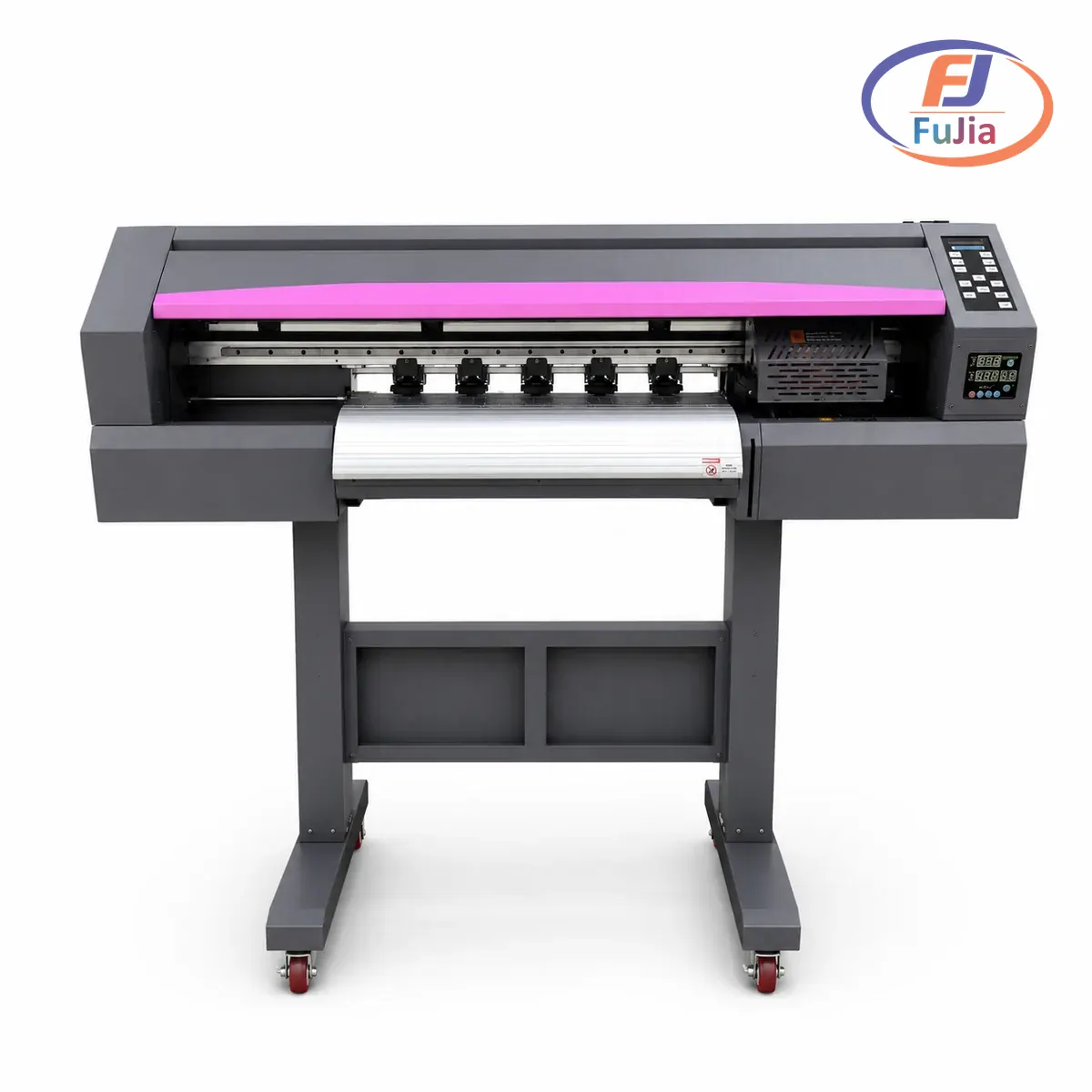
Key Takeaways
\n\n\n\n- \n\n\n
- DTF needs 160 °C for 15 seconds with firm, even pressure and a cold peel, so the press must hold temperature within ±5 °C across the whole platen and recover heat in seconds between pieces. \n\n\n
- Clamshell presses win on price and footprint, swing-away presses win on safety and thick-item access, and pneumatic auto-open presses win on consistency above 200 pieces daily. \n\n\n
- Real 2026 pricing: entry clamshells run $136-300, mid-range auto-open machines like the HTVRONT Auto 2 sit near $360, and production pneumatic lines from Stahls-class brands start near $2,850. \n\n\n
- Pressure uniformity matters more than pressure force; a cheap press with a Z-pattern coil creates cold spots that leave powder unbonded in the transfer center. \n\n\n
- Pair the press to the printer, not the other way around; a 60 cm DTF printer feeding 200-plus transfers daily justifies a pneumatic press, while a desktop A3 machine pairs fine with a $300 clamshell. \n\n\n
What DTF Actually Asks of a Heat Press
\n\n\n\nEvery DTF transfer makes the same three demands, and the press either meets them or the peel tells on it. First, temperature: DTF powder bonds at 160 °C pressed for 15 seconds, and the platen must hold that figure within about ±5 °C edge to edge, because a platen running hot at the center and cool at the corners produces transfers that peel at the borders. Second, pressure: the adhesive needs firm, uniform contact, roughly 30-40 psi across the design, which is why presses with adjustable, repeatable pressure settings outperform “press by feel” knobs the moment someone else operates the machine. Third, recovery: production means pressing the next piece 30 seconds later, and a low-wattage platen that dips 10 degrees after each press spends the whole shift chasing its own setpoint.
\n\n\n\nThe 15-second window is short, and that brevity is exactly why press quality shows. Screen printing cure happens in a conveyor where nobody watches, but a heat press compresses the whole bond into fifteen seconds of contact, so any weakness in heating, pressure, or timing lands on every single shirt. Per AATCC test methods, a correctly pressed DTF transfer holds grade 4-5 color fastness through 50-plus washes; a cold-spotted press cuts that life in half, and the failure shows up as edge lift by wash ten.
\n\n\n\nClamshell vs Swing-Away vs Pneumatic for DTF
\n\n\n\n| Type | \nMechanism | \nDTF strength | \nDTF weakness | \n2026 price band | \n
|---|---|---|---|---|
| Clamshell | \nupper platen lowers straight down | \nfast, cheap, small footprint | \npressure sits at front edge on thick items; burn risk | \n$136-500 | \n
| Swing-away | \nupper platen pivots fully clear | \nfull access, even pressure, safest layout | \nslow cycle, big footprint, heavier | \n$300-1,200 | \n
| Pneumatic / auto-open | \nair cylinder applies and releases pressure | \nidentical pressure every cycle, hands-free | \nneeds compressor, costs more | \n$1,500-4,000+ | \n
Clamshell presses dominate the entry market because they do the one thing DTF needs, flat film on a flat garment, at the lowest price in the industry. The geometry works against them only when the load gets thick, hats, folded seams, layered garments, where the straight-down stroke presses hardest at the hinge side. Swing-away presses lift the upper platen completely clear, which makes placing film on dark cotton a no-burn operation and spreads pressure evenly across whatever thickness you load. Pneumatic presses remove the operator from the pressure equation entirely; the air cylinder drops to the same stop every cycle, which is the difference between 200 identical transfers and 200 slightly different ones.
\n\n\n\n| Budget | \nPress class | \nWhat it handles | \nPairs with | \n
|---|---|---|---|
| Under $300 | \nmanual clamshell 15×15 | \n50-100 transfers daily, one operator | \nA3 desktop DTF printer | \n
| $300-800 | \nauto-open clam 15×15-16×20 | \n100-200 daily, timer release | \nA3 dual-head line | \n
| $800-2,000 | \nswing-away 16×20 | \nmixed decoration, thick items | \n60 cm dual-head printer | \n
| $2,000+ | \npneumatic auto 16×20 | \n300-plus daily, multi-shift | \n4-head production line | \n
The pairing rule matters more than any single review: the press is the bottleneck that decides whether the printer’s output ships or stacks up. An A3 desktop machine producing 2-3 m²/h saturates a $250 clamshell by mid-afternoon, and a 4-head line printing 27 m²/h needs pneumatic consistency just to keep film moving through the cell. Full press-and-printer cell math, including what each printer tier produces per hour, lives in our DTF printers lineup guide, and the finishing-side equipment is broken down further in our DTF printer with shaker and oven walkthrough.
\n\n\n\nThe 3 Specs That Decide DTF Peel Quality
\n\n\n\nHeating element construction comes first, because it is the spec no listing photo reveals. Quality platens use cast aluminum with embedded heating rods that spread temperature evenly; cheap presses string a Z-pattern coil across the plate, and the spaces between coil runs run 10-15 degrees cooler, right where a full-front transfer’s center sits. Press a test strip across the platen with thermal paper, or simpler, press a black-ink test transfer and look for powder gloss variation, glossy where it bonded, matte where it did not.
\n\n\n\nPressure uniformity is second, and the tell is edge lift on real garments. The press needs a pressure adjustment that locks, a knob with a marked setting rather than a free-spinning screw, so the same pressure repeats across a shift and across operators. Wattage is the honest proxy here: a 1,400 W platen recovers between presses, and a 900 W unit on a 16×20 surface is telling you the heat distribution will be an apology. Auto-release timing is third; DTF cold peel means the film comes off after the press opens and the piece cools to roughly room temperature for 30-60 seconds, and an auto-open timer frees the operator to load the next garment while the previous one cools, which is how one bench sustains 150-plus pieces daily.
\n\n\n\nWhen it comes to specs versus price, the three specs above are what the money buys between a $150 press and a $1,500 one. On DTF work the difference shows up as reject rate, not print quality. Both presses print the same film; only one of them ships every piece the printer produces.
\n\n\n\nReal 2026 Picks by Budget
\n\n\n\n| Press | \nType | \n2026 street price | \nPlaten | \nWhy it fits DTF | \n
|---|---|---|---|---|
| VEVOR 12×15 5-in-1 | \nclamshell | \n$136-180 | \n12×15 in | \ncheapest credible entry, hobby volume | \n
| GARVEE 15×15 6-in-1 | \nclamshell | \n$140-200 | \n15×15 in | \nfull-front transfers on a starter budget | \n
| VEVOR 16×24 1700W | \nclamshell | \n$260-320 | \n16×24 in | \nproduction platen size at entry price | \n
| LOKLiK Auto Heat Press | \nauto clamshell | \n$236 | \n15×12 in | \nauto-release, clean beginner UX | \n
| HTVRONT Auto 2 | \nauto clamshell | \n$360 | \n15×15 in | \nauto-open + even heating, 100-200/day | \n
| xTool WonderPress | \nmodular auto | \n$399 | \n15×15 in | \nauto pressure memory, accessory track | \n
| Stahls Hotronix Fusion IQ | \nswing-away | \n$2,850 | \n16×20 in | \nbenchmark evenness, full workflow control | \n
Fitting press cells alongside printer lines, the sub-$300 tier is real DTF capacity, not a toy tier, provided the workload stays under roughly 100 pieces daily and the operator accepts manual timing. The HTVRONT Auto 2 and LOKLiK Auto units earn their premium by making release timing automatic, which removes the most common beginner failure, peeling too early or pressing too short, from the process entirely. The Hotronix Fusion IQ sits at the top because its evenness and workflow programming hold up across multi-shift production, and shops running 60 cm printers past 200 daily pieces land there or on pneumatic equivalents, where $2,850 is the entry ticket. The mid-tier auto units are the right choice for most buyers, because the $2,500 between them and a Fusion IQ buys capacity tolerance, not print quality.
\n\n\n\nWhich Press Fits Which DTF Shop
\n\n\n\nMatch the press to daily piece count and the printer on the bench. A solo Etsy seller running an A3 desktop DTF printer presses 40-80 pieces daily, and a $250-360 auto-release clamshell covers that with margin to grow. A custom apparel shop with a 60 cm dual-head machine printing 8-13 m²/h needs swing-away access for mixed garments plus auto-open timing, the $800-2,000 band. A production floor running a 4-head line at 27 m²/h feeds presses continuously, and pneumatic auto units at $2,500-plus pay for themselves in consistency because one operator now oversees two presses instead of hand-cycling one.
\n\n\n\nA mixed e-commerce seller we supply illustrates the pairing arithmetic from the printer side: their corporate gift distributor moved decoration in-house on a 60 cm dual-head line, consolidated three suppliers down to one, cut minimums from 500 pieces to 50, and compressed delivery from 21 days to 7, and the unsung piece of that cell was the auto-release press that let one operator run pressing while a second loaded the printer. Order volume decides the press, the same way it decides the printer. We recommend writing your last 30 days of actual piece counts on paper before choosing a press tier, because the number ends the debate faster than any spec sheet.
\n\n\n\nBuy the press your printer can saturate, not the press a review score likes. A $300 auto clamshell and a $2,850 Fusion IQ produce identical single transfers; they differ in what happens at piece 150 of the day.
\n\n\n\n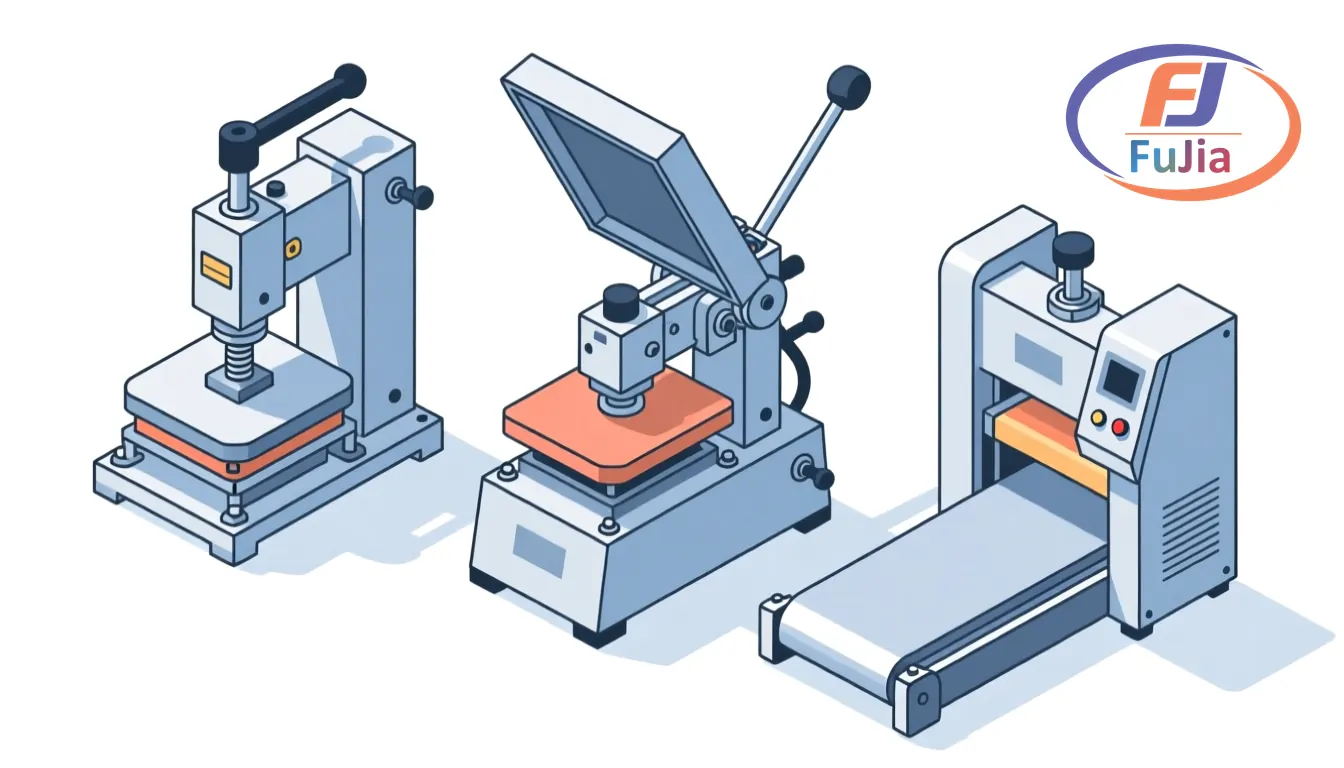
Do you need a special heat press for DTF?
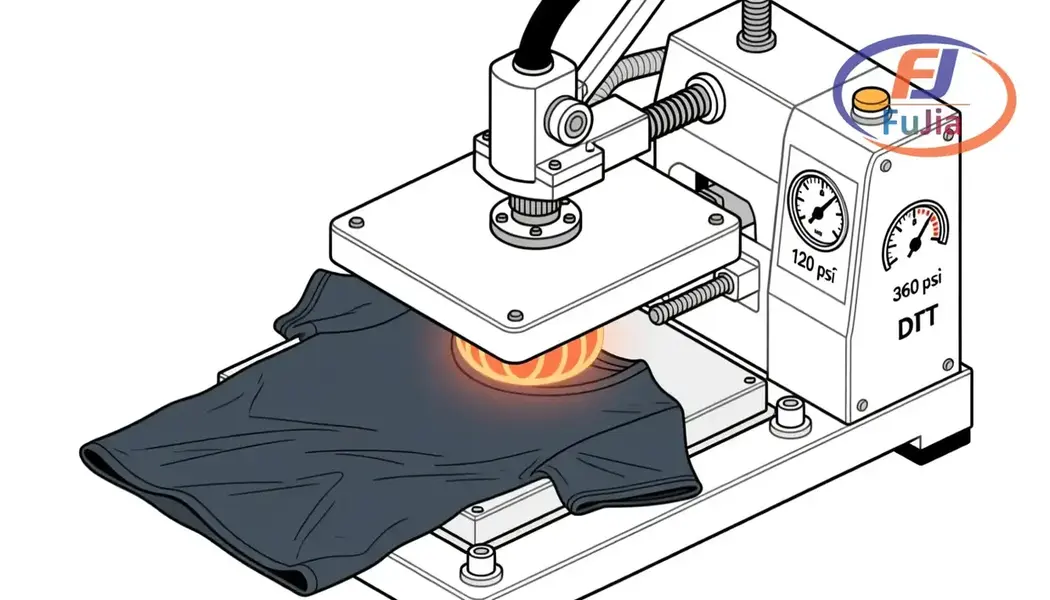
You need a press that meets DTF’s specific demands rather than a DTF-branded machine: 160 °C capability within ±5 °C across the platen, firm adjustable pressure around 30-40 psi, and a timer, ideally auto-release, matched to the 15-second press window. Any press class, clamshell, swing-away, or pneumatic, works when those three boxes are ticked. The failures come from cheap platens with cold spots and from presses whose pressure drifts between cycles, not from missing a DTF logo on the box. We recommend testing any press with a black-ink transfer before production day, because the peel exposes cold spots instantly.
What heat to press DTF transfers?
Press DTF transfers at 160 °C for 15 seconds with firm, even pressure, then let the piece cool and cold-peel the film after roughly 30-60 seconds. A second post-press of 5 seconds with a Teflon sheet improves wash durability by re-flattening the adhesive. Temperatures below 150 °C leave powder unbonded, and temperatures above 175 °C gloss the finish and can scorch cotton, so a press that holds setpoint matters as much as the setpoint itself. Dial the pressure until a scrap test transfer shows full powder gloss across the whole design, then lock the knob and log the setting.
What kind of press do you need for DTF transfers?
A flat-platen press sized to your largest transfer, 15×15 inches covering most front prints and 16×20 inches covering tabloid sizes, with even heating and repeatable pressure. Clamshell presses suit tight budgets and standard garments; swing-away presses suit mixed decoration including hats and thick items; pneumatic presses suit volumes above 200 pieces daily where consistency per cycle decides reject rates. The transfer does not care about the press type, only about the temperature, pressure, and time it receives.
What are the top 5 heat presses?
For DTF work in 2026: the VEVOR 16×24 1700 W at $260-320 anchors the budget production size; the LOKLiK Auto Heat Press at $236 makes release timing automatic for beginners; the HTVRONT Auto 2 at $360 is the mid-tier workhorse for 100-200 pieces daily; the xTool WonderPress at $399 adds pressure memory and accessory modularity; and the Stahls Hotronix Fusion IQ at $2,850 is the production benchmark for evenness and multi-shift duty. Rank them by your daily count and the list orders itself.
Verdict
\n\n\n\nThe best heat press for DTF is the one whose platen holds 160 °C evenly, whose pressure repeats every cycle, and whose size matches the largest transfer your orders contain; everything else on the spec sheet is decoration. Entry clamshells from $136-320 cover under 100 pieces daily, auto-release machines from $236-400 remove operator error through 200 daily, and pneumatic production presses from $2,500 keep 300-plus-piece days consistent. Buy the press your DTF printer can saturate, verify evenness with a black test transfer before production, and to pair press recommendations with a printer cell sized to your orders, contact Fujia Print for a configuration consult.
\n\n\n\nSources
\n\n\n\n- \n\n\n
- ColDesi heat press buyer’s guide: press selection framework and Digital Knight positioning. \n\n\n
- Ninja Transfers heat press guide: platen sizes, press types, construction quality criteria. \n\n\n
- AATCC: wash fastness test methods behind DTF durability claims. \n\n\n
- Wikipedia: Heat press: press mechanism background. \n\n\n
