

DTF printer maintenance requires 10-15 minutes of daily tasks (nozzle check, white ink circulation, capping station wipe), 30-45 minutes of weekly tasks (encoder strip cleaning, wiper blade inspection, ink line check), and monthly component replacement (dampers every 3-4 months, wiper blades every 6 months). The global digital textile printing market reached $5.8 billion in 2024 and is projected to hit $11.6 billion by 2030 at 12.7% CAGR, meaning more print shops than ever depend on consistent DTF maintenance routines to protect equipment investments ranging from $500 to $21,995.
Key Takeaways
- A DTF printhead does not wear out from printing. It wears out from inadequate maintenance. A $15 damper replaced on schedule prevents a $997 printhead replacement.
- Daily maintenance takes 10-15 minutes: nozzle check, white ink agitation, capping station wipe, humidity verification (40-60% RH).
- White ink is the highest maintenance item because titanium dioxide pigment has a specific gravity of 4.2 g/cm3, more than four times denser than water, causing it to settle within hours without circulation.
- Weekly tasks target the capping station, wiper blade, encoder strip, and ink lines. Monthly tasks replace consumable parts before they fail.
- Fujia Print DTF printers include automatic white ink circulation with auto power-off, which keeps white ink moving even during standby and reduces manual maintenance by 60-80%.
Why DTF Printer Maintenance Matters
DTF ink is thicker and more pigment-dense than standard aqueous ink. The print speeds are high. The operating cycles are long. All of this accelerates wear on the maintenance components that protect the printhead. For a complete overview, see the Fujia DTF printer lineup guide.
The printhead does not wear out from printing. It wears out from inadequate maintenance. The dampers, wiper blade, and capping station are consumables that degrade on a predictable schedule. When they are not replaced on time, they begin to damage the printhead they were designed to protect.
According to Grand View Research, the global digital textile printing market generated $5,800.3 million in revenue in 2024, with direct-to-fabric accounting for $4,256.5 million. The market is projected to reach $11,596.4 million by 2030 at 12.7% CAGR. This growth means thousands of new operators entering DTF production without established maintenance protocols, leading to premature printhead failures and unnecessary equipment costs.
Daily DTF Printer Maintenance Checklist
Every production day, before loading the first job, complete these tasks in sequence. Total time: 10-15 minutes.
| Task | Time | Why It Matters | Tool Needed |
|---|---|---|---|
| Nozzle check pattern | 30 seconds | Detects partial clogs before they ruin a production job | RIP software |
| White ink agitation | 30-60 seconds | Resuspends settled TiO2 pigment before it enters printhead | Manual shake or auto circulation |
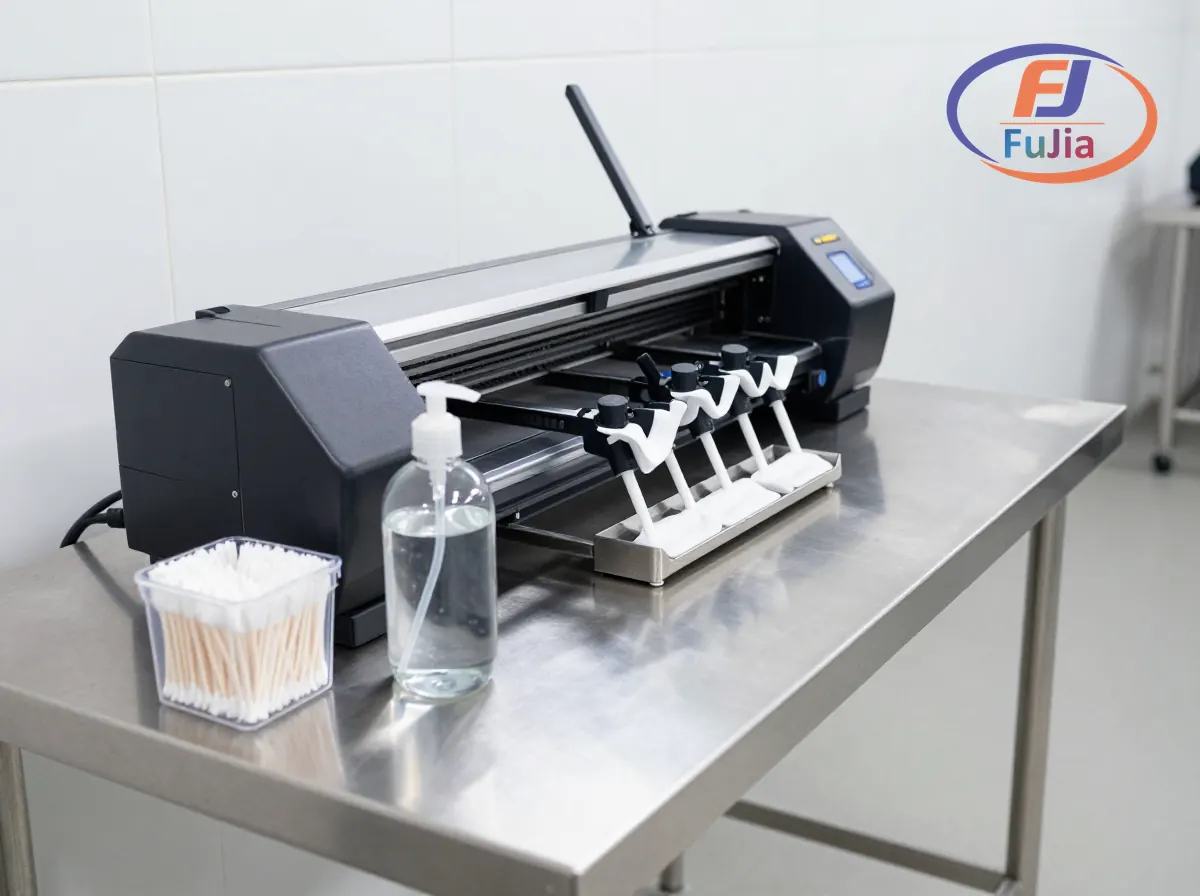
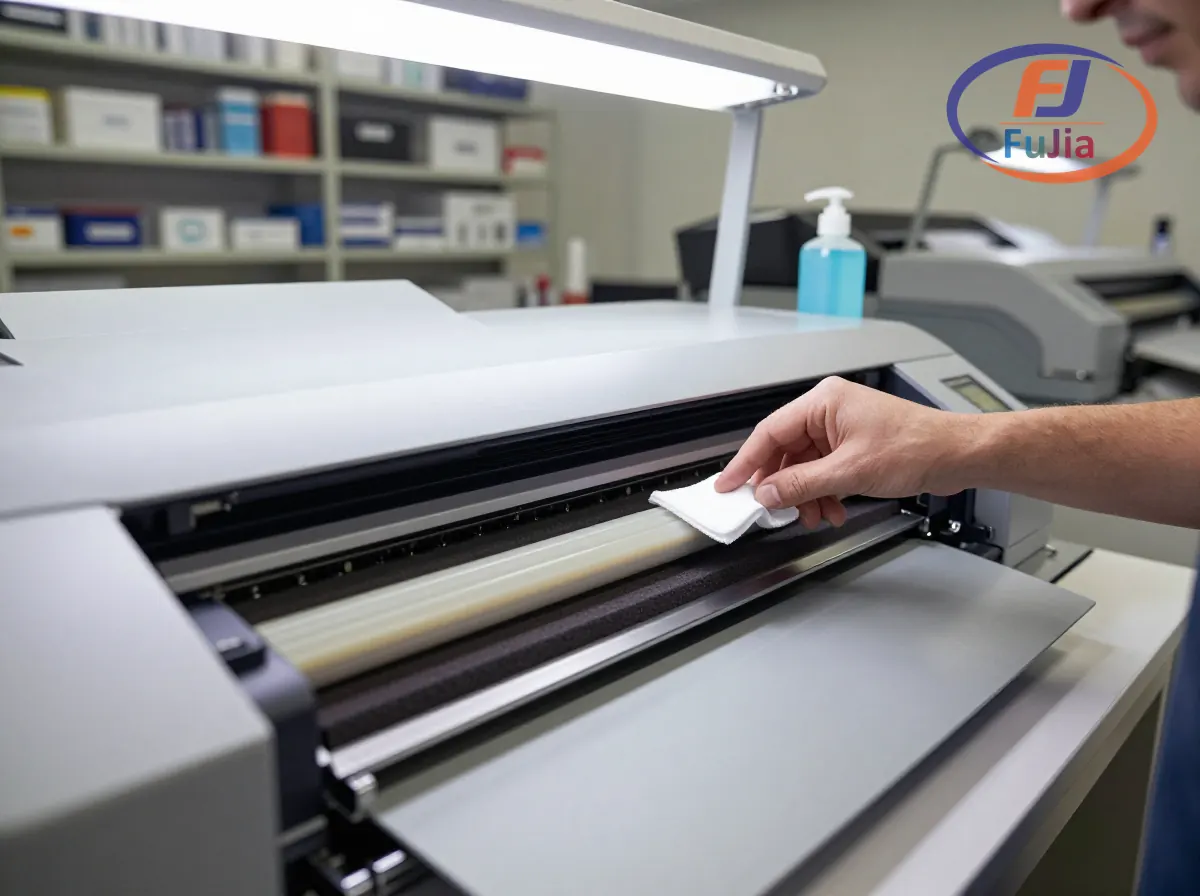
| Capping station wipe | 60 seconds | Removes ink buildup that prevents proper printhead sealing | Foam swab + cleaning solution |
| Ink level check | 30 seconds | Prevents air ingestion from low ink supply | Visual inspection |
| Humidity verification | 30 seconds | Below 30% RH causes nozzle drying; above 70% causes powder clumping | Hygrometer |
| Print platen wipe | 60 seconds | Removes film fragments and dried ink that cause head strikes | Lint-free cloth |
| Powder chamber check | 2-3 minutes | Removes residual powder that contaminates future prints | Soft brush or vacuum |
Nozzle Check: The Most Important 30 Seconds
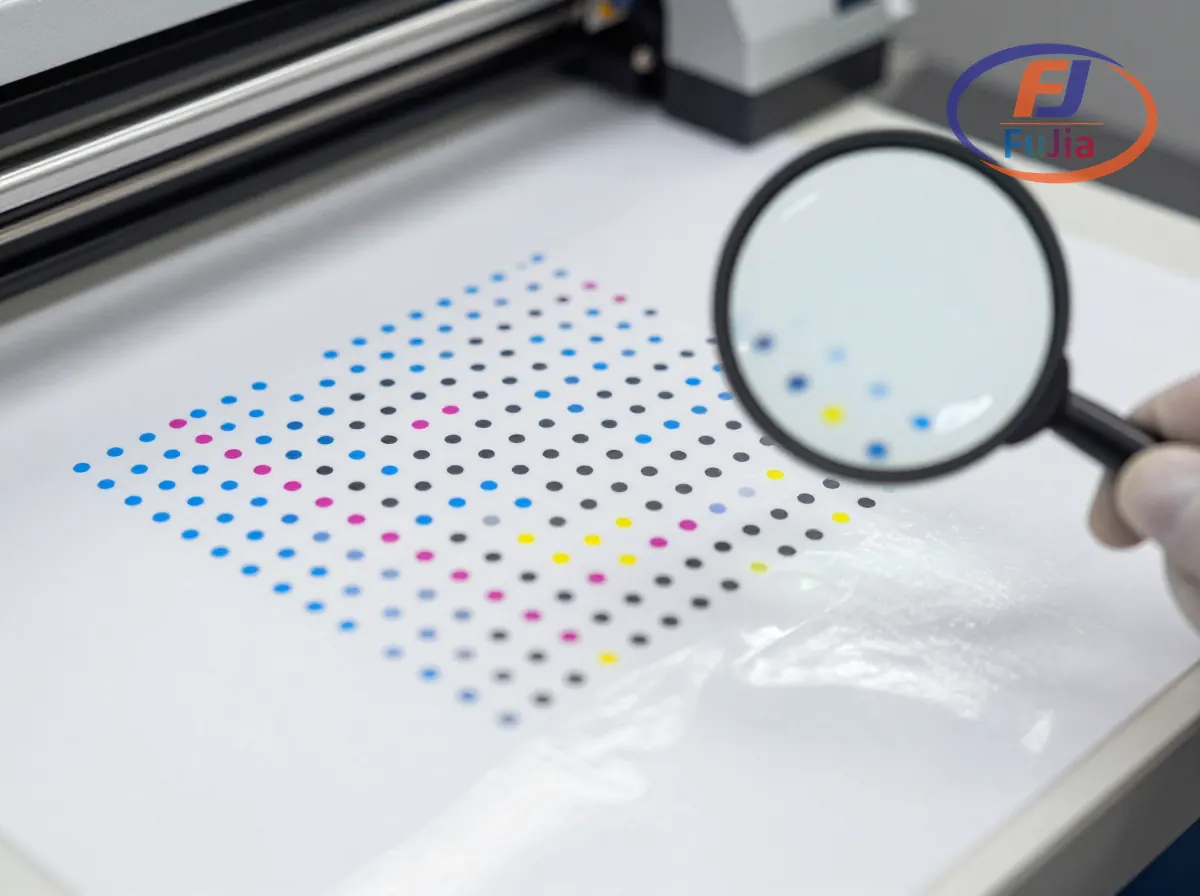
A nozzle check pattern tells you immediately whether all nozzles are firing. Catching a partial clog at this stage costs one cleaning cycle. Missing it costs a ruined production job and potentially a damaged head from firing starved nozzles.
Log the result. A record of daily nozzle checks makes it easy to spot gradual degradation before it becomes a failure. If missing nozzles appear, run one cleaning cycle, then reprint the nozzle check. Maximum 3 cycles per session. If 3 cycles do not clear the pattern, investigate the dampers rather than running more cleaning cycles, which wastes ink and stresses the printhead.
White Ink: The Core Maintenance Challenge
White ink gets its opacity from titanium dioxide (TiO2) pigment. Research published in the Journal of Colloid and Interface Science confirms that TiO2 particles with a density of 4.2 g/cm3 settle rapidly in aqueous carriers, with 300nm particles sinking 1cm within 15 hours in water without agitation. In a DTF ink system, this settlement begins within hours and can block printhead channels within days on a stationary printer.
On printers with manual ink systems, shake the white ink bottle for 30-60 seconds before each production session. On printers with automatic circulation like the Fujia Print A1 DTF 2-Head, the system continuously pumps white ink through the supply lines at scheduled intervals, keeping pigment suspended without manual intervention.
Weekly DTF Printer Maintenance
At the end of the last production day each week, complete these tasks. Total time: 30-45 minutes.
Capping Station Deep Clean
DTF ink accumulates in the capping station faster than standard aqueous inks. A capping station with heavy ink buildup cannot form a proper seal over the nozzle plate during idle. This means nozzles begin to dry within hours rather than days.
Use a lint-free swab and approved cleaning solution. Do not use sharp tools or excessive pressure. Clean the rubber cap surfaces, surrounding ink residue, and waste ink buildup. If suction feels weak after cleaning, the capping station may need replacement (typically every 12-18 months in daily production).
Wiper Blade Inspection
The wiper blade removes excess ink from the printhead surface after each cleaning cycle. A wiper loaded with old dried ink does not clean the nozzle plate. It smears contamination across it.
Wipe the blade with a lint-free swab dampened with cleaning solution. If the blade is visibly hardened, deformed, or has visible nicks, replace it immediately. Cleaning a damaged wiper does not restore its function. Wiper blades cost $5-15 and should be replaced every 3-6 months depending on production volume.
Encoder Strip Cleaning
The encoder strip is a thin transparent strip that tells the printhead carriage its exact position. Ink mist and dust accumulate on the encoder strip over time, causing banding and misalignment. Clean it weekly with a lint-free cloth lightly dampened with distilled water. Never use alcohol or cleaning solution on the encoder strip, as these can damage the printed graduations.
Ink Line and Damper Inspection
Inspect ink supply tubes for kinks, cracks, or loosening at connection points. A kinked tube causes starvation. A cracked tube introduces air. A loose connection introduces air continuously. Check dampers for air bubbles or discoloration suggesting cross-channel contamination. Either condition indicates the damper is failing and needs replacement.
Monthly DTF Printer Maintenance
In high-volume production (full production days), schedule these tasks every 3-4 weeks.
| Component | Replacement Interval | Cost | Failure Symptom |
|---|---|---|---|
| Ink dampers | 3-4 months | $10-15 each | Air bubbles, missing nozzles, color shift |
| Wiper blade | 3-6 months | $5-15 | Ink streaking, poor nozzle cleaning |
| Capping station | 12-18 months | $30-60 | Weak suction, poor printhead sealing |
| Encoder strip | 18-24 months | $20-40 | Persistent banding after cleaning |
| Printhead | 18-24 months (factory) / 6-12 months (converted) | $300-997 | Permanent missing nozzles after cleaning cycles |
Replace ink dampers proactively in high-volume DTF production. Do not wait for starvation, missing nozzles, or color shifting to appear. By the time symptoms emerge, the damper has been degrading for weeks and may already have caused nozzle stress. Replace all dampers as a set.
Belt Tension and Lubrication
Check belt tension monthly. A loose belt causes banding and misalignment. Lubricate the carriage rod lightly with machine oil. The Fujia Print A1 DTF 2-Head uses a THK silent guide rail with a Leadshine servo motor, which requires minimal lubrication compared to generic round rail systems. Check the Honson mainboard diagnostic panel for error codes related to motor positioning.
White Ink Circulation: Manual vs Automatic
The maintenance difference between a printer with and without automatic white ink circulation is significant over a two-year production period. The table below shows the real-world impact:
| Factor | Manual Agitation Only | Automatic Circulation |
|---|---|---|
| Daily white ink task | Shake bottle 30-60 seconds | System runs automatically |
| Weekend idle protocol | Manual flush or stirring required | Circulation runs in standby |
| Monday morning clog rate | High (48-72 hour settlement) | Low (continuous circulation) |
| Ink waste from deep cleaning | 50-100ml per restart | 10-20ml per restart |
| Printhead replacement frequency | Every 12-18 months | Every 18-24 months |
| Cleaning solution usage | 500ml/month | 200ml/month |
Fujia Print DTF printers include an auto power-off circulation system that keeps white ink moving even during standby mode. The system prevents TiO2 precipitation and runs during power outages using residual system pressure. A Kenya print workshop using the Fujia Print A1 DTF 2-Head reported 40% reduction in waste ink after switching from a manual-agitation printer, with zero Monday morning white ink clogs over a 6-month period. For a comparison of DTF printers with and without automatic circulation, see our DTF printer with white ink guide.
Common DTF Maintenance Mistakes
Running Too Many Cleaning Cycles
Excessive cleaning cycles waste ink and accelerate wear on the capping station and wiper blade. Maximum 3 cleaning cycles per session. If 3 cycles do not clear the nozzle check pattern, the problem is mechanical (damper, capping station, or ink line), not a clog that more cleaning will fix.
Ignoring Humidity
Below 30% RH, the nozzle face drying rate overtakes the print frequency ability to keep the nozzle meniscus wet. Above 70% RH, DTF powder adhesive absorbs atmospheric moisture, clumps during application, and causes adhesion failures on pressing. A room humidifier or dehumidifier at the printer station is a production investment, not a comfort one.
Using Alcohol to Clean the Printhead
Alcohol-based cleaners cause DTF ink solvents to evaporate too quickly and worsen clogging. Use only DTF-specific cleaning solution formulated for piezoelectric printheads. The ASTM F2037 standard practice covers ink jet print lifetime prediction under typical office environmental conditions, confirming that chemical compatibility between cleaning agents and ink formulations directly affects printhead longevity.
Skipping Nozzle Checks on “Quiet” Days
Printers that sit idle are at higher risk than printers running daily. If your printer will not run production for more than 48 hours, print a nozzle check every day and run a cleaning cycle if any nozzles are missing. White ink settles continuously regardless of whether the printer is printing or idle.
DTF Maintenance Cost Analysis
| Maintenance Item | Annual Cost | Prevents | ROI Calculation |
|---|---|---|---|
| Dampers (4x per year) | $40-60 | Printhead starvation ($300-997) | 5-16x return |
| Wiper blades (2x per year) | $10-30 | Nozzle contamination ($300-997) | 10-33x return |
| Cleaning solution (12 bottles) | $120-240 | All of the above | N/A (consumable) |
| Capping station (1x per year) | $30-60 | Poor sealing, nozzle drying | 5-16x return |
| Hygrometer + humidifier | $50-100 | Humidity-related clogging | Pays for itself in 1 saved printhead |
Total annual maintenance cost: $250-490. One printhead replacement: $300-997. The shops that get 18-24 months from a printhead share one habit: they follow a consistent maintenance schedule.
How often should I clean my DTF printer?
DTF printer cleaning follows a three-tier schedule: daily tasks (10-15 minutes) before each production session including a nozzle check pattern, white ink agitation, capping station wipe, and humidity verification. Weekly tasks (30-45 minutes) at the end of the last production day include capping station deep clean, wiper blade inspection, encoder strip cleaning with distilled water, and ink line inspection for kinks or air bubbles. Monthly tasks (1-2 hours) include proactive damper replacement every 3-4 months, wiper blade replacement every 3-6 months, belt tension check, and carriage rod lubrication. Shops running 8+ hour production days should perform monthly maintenance every 3 weeks rather than 4. The daily nozzle check is the single most important task: it takes 30 seconds and catches partial clogs before they ruin production jobs or damage the printhead from dry firing.
Why does white ink clog more than CMYK in DTF printing?
White DTF ink clogs more than CMYK because it contains titanium dioxide (TiO2) pigment with a specific gravity of 4.2 g/cm3, more than four times denser than water. Research published in the Journal of Colloid and Interface Science demonstrates that TiO2 particles sink rapidly in aqueous carriers, with 300nm particles settling 1cm within 15 hours without agitation. CMYK inks use organic colorants with a specific gravity close to water (1.0-1.1 g/cm3) that stay suspended with minimal agitation. In a DTF printer, white ink settlement begins within hours and can block printhead channels within days on a stationary printer. This is why Monday morning clogs are the most common DTF problem: the printer sat idle over the weekend, giving TiO2 48-72 hours to settle throughout the ink system. Printers with automatic white ink circulation solve this by continuously moving ink through the supply lines, preventing settlement at the source.
How long does a DTF printhead last with proper maintenance?
A factory-built DTF printhead lasts 18-24 months with proper maintenance, while a converted inkjet printhead (Epson L1800, ET-8550) lasts 6-12 months. The lifespan difference comes from printhead grade: factory DTF printers use industrial Epson I3200 or XP600 printheads rated for DTF ink viscosity, while converted printers use consumer-grade photo printheads not designed for white ink. The key factors extending printhead life are: daily nozzle checks (catches clogs early), automatic white ink circulation (prevents TiO2 settlement), damper replacement every 3-4 months (prevents starvation), humidity maintained at 40-60% RH (prevents nozzle drying), and maximum 3 cleaning cycles per session (prevents cleaning solution damage). Fujia Print DTF printers use industrial Epson I3200 printheads with automatic sealed moisturizing and pumping systems, achieving 18-24 month printhead lifespans in daily production environments across 50+ countries.
What humidity should a DTF printer room be?
A DTF printer room should be maintained at 40-60% relative humidity (RH) with temperature at 20-26 degrees Celsius (68-79 degrees Fahrenheit). Below 30% RH, the water carrier in DTF ink evaporates faster at the nozzle plate than print frequency keeps it refreshed, causing dried ink deposits on the nozzle face. Above 70% RH, DTF powder adhesive absorbs atmospheric moisture, clumps during application, and causes adhesion failures during heat pressing. In climates with seasonal humidity variation, a room humidifier or dehumidifier at the printer station is a production investment, not a comfort feature. The shops with consistent white ink problems are almost always the ones running without humidity control. A $50 hygrometer placed near the printer and checked daily during the nozzle check routine is sufficient monitoring. Fujia Print DTF printers include real-time temperature and humidity monitoring as a standard feature on the mainboard diagnostic panel.
Conclusion
DTF printer maintenance requires 10-15 minutes daily, 30-45 minutes weekly, and 1-2 hours monthly. The total annual maintenance cost of $250-490 prevents printhead replacements costing $300-997 each. Explore Fujia Print DTF printers with automatic white ink circulation and sealed moisturizing systems, or read our DTF printer cleaning solution guide for consumable recommendations.
