

A DTF printer under $2000 lets a solo maker or small shop print full-color transfers in-house without the four-figure leap to production hardware. This article covers the entry A3 models, their real speed, and the support that separates a working budget printer from a frustrating one.
Key Takeaways
- A DTF printer under $2000 is an A3 or A4 desktop unit with 1 or 2 Epson printheads, not a modified inkjet.
- Fujia’s A3 single-head DTF runs 2 to 3 m² per hour at 1440 dpi and fits a 20 m² workspace.
- Fujia backs entry DTF printers with a 2 year warranty, 48 hour parts dispatch, and 3 day remote onboarding.
- A Brazilian studio on Fujia’s A3 desktop DTF cut per-order cost 64 percent with a 5.5 month payback.
What Is a DTF Printer Under $2000?
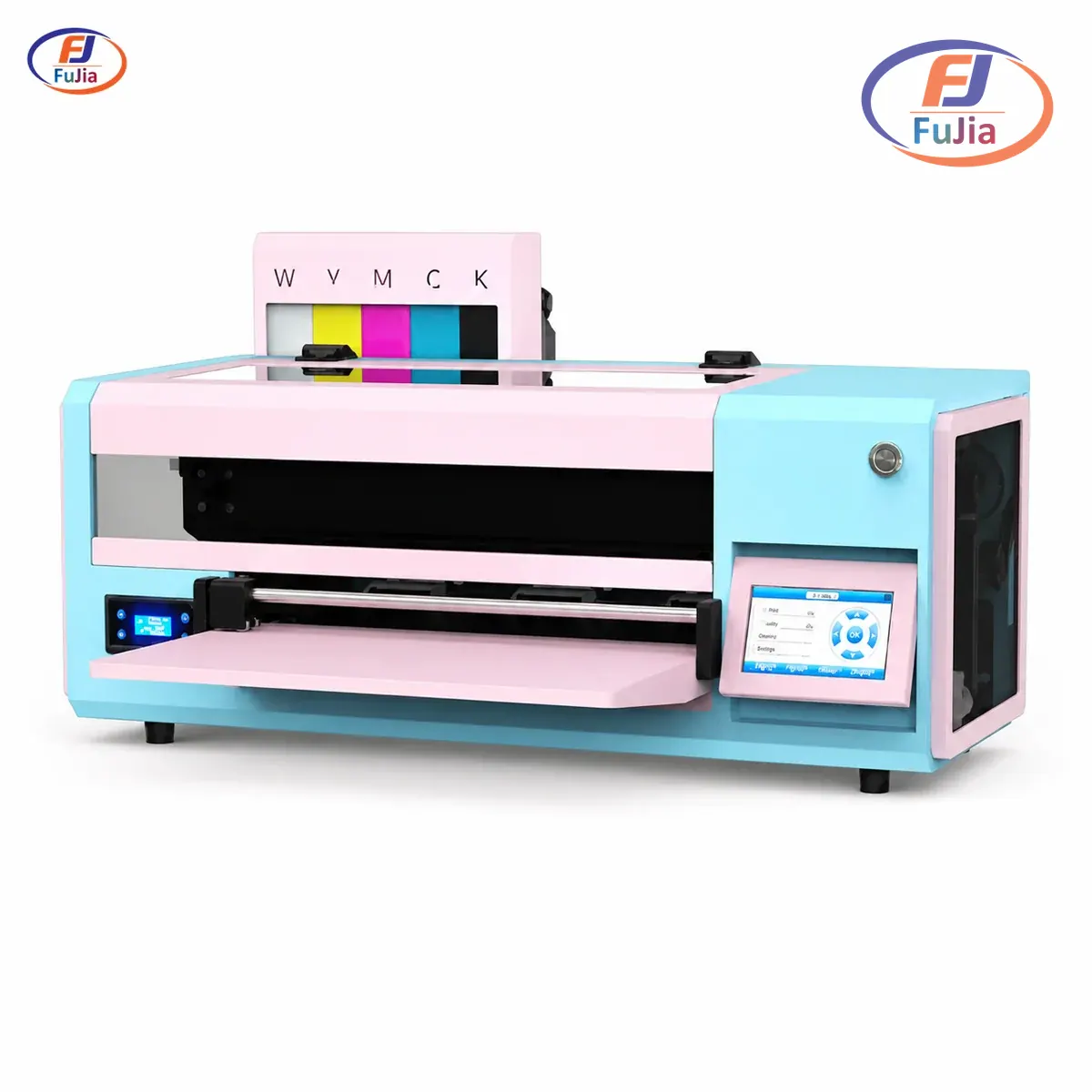
A DTF printer under $2000 is a desktop direct-to-film machine built for entry and low-volume work rather than factory output. It prints a mirrored CMYK plus white design onto PET film, shakes adhesive powder over the wet ink, cures it, and the transfer presses onto cotton, polyester, and blends at 160°C for 15 seconds with a cold peel. At this price the printer is an A3 or A4 unit with one Epson XP600 or two entry Epson heads, a 300 mm width, and a small powder shaker built into the base.
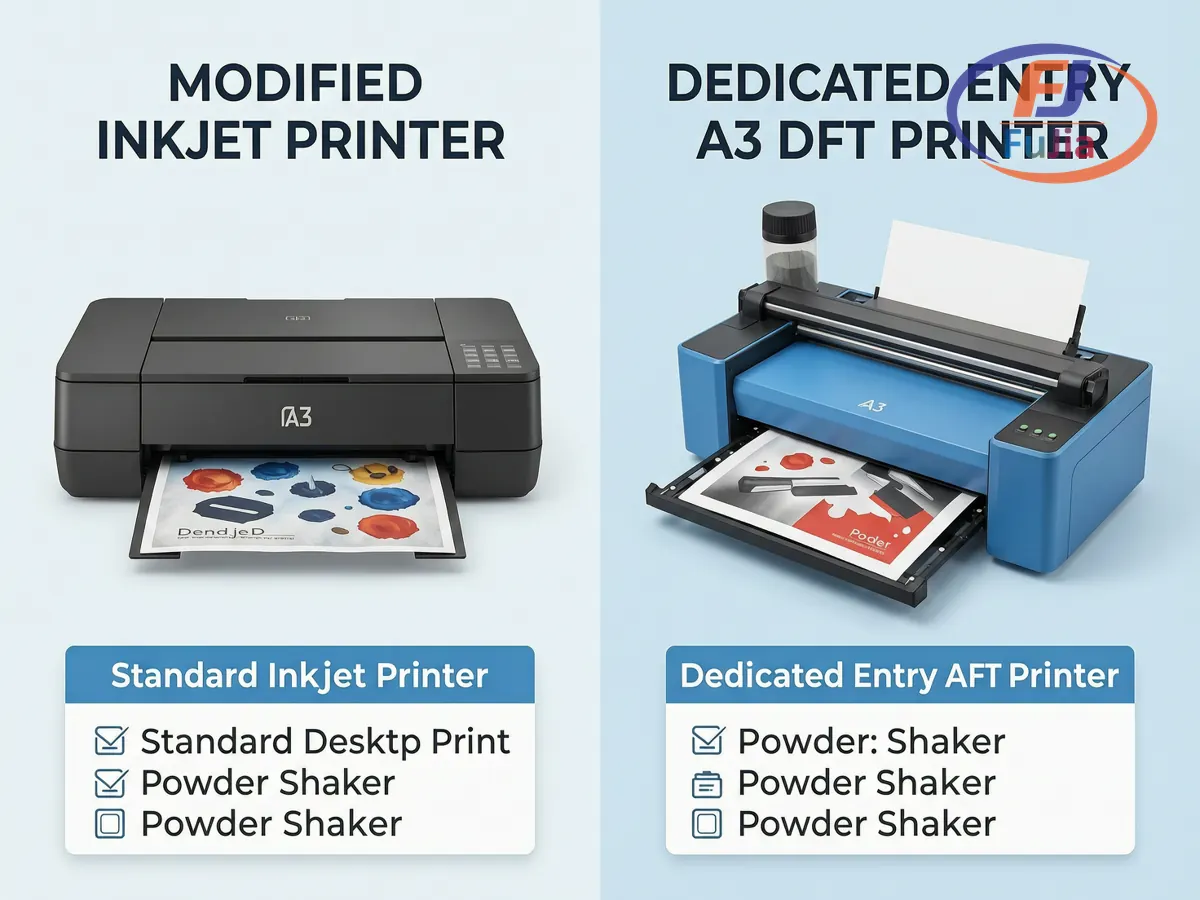
The budget tier splits into two kinds. A modified inkjet like the Epson L1800 costs $500 to $800 but was never designed for DTF, so the film path and white ink circulation are improvised and fail early. A dedicated entry DTF printer costs $1,000 to $2,000 and ships with the parts that make daily printing safe: a real printhead, a powder shaker, and firmware that holds the white ink in motion. The inkjet printing method is the same drop-on-demand technology behind both, but only the dedicated unit is built to survive it.
What You Get for the Money
Spending under $2000 buys specific capability, not compromise on the core process. Fujia’s A3 single-head DTF uses one Epson XP600 printhead across a 300 mm width and holds 2 to 3 m² per hour at up to 1440 dpi, enough for 20 to 50 shirts a day. The dual-head A3 version adds a second head for faster gang sheets. Both run CMYK plus white plus light cyan and light magenta, with siphon and positive pressure ink supply at 1,000 to 1,500 ml per color so long runs stay cheap. The RIP software supports Maintop, Photoprint, Flexi, and RIIN, so the printer drops into a workflow you may already use.
Fujia Entry DTF Models Compared
| Model | Printheads | Width | Speed | Workspace |
|---|---|---|---|---|
| A3 DTF 1-Head | 1x Epson XP600 | 300 mm | 2 to 3 m²/hr | Fits 20 m² room, standard bench |
| A3 DTF 2-Head | 2x Epson | 300 mm | Faster gang sheets | Small studio |
| A1 DTF 2-Head | 2x Epson I3200 | 650 mm | 8 to 13 m²/hr | Production shop (above budget) |
Every entry model uses the same industrial details as Fujia’s larger printers: a Honson mainboard, Leadshine servo motor, and THK guide rail, plus an auto white-ink circulation system that runs during a power cut. That component tier is why a sub-$2,000 unit still earns its place in a working shop. Material standards bodies such as NIST publish the reference data used to rate how wash-fast a transfer is, and Fujia’s DTF transfers hold 50 plus washes with Grade 4 to 5 color fastness. The full DTF printers range shows where each model sits in that trade-off.
Is a DTF Printer Under $2000 Worth It?
The math works once volume covers the fixed cost of ownership. Across the 500 plus print businesses Fujia serves, shops that fill 1,500 to 3,000 pieces per month typically see payback inside 3 to 8 months, and apparel clients report 60 percent margin at 3,000 plus pieces per month. A Brazilian studio on Fujia’s A3 desktop DTF cut per-order cost by 64 percent, from R$18 to R$6.5, with a 5.5 month payback while fitting inside a 20 m² workspace. The printer price under $2,000 is small next to the saving on outsourced screen printing once a shop passes about 3,000 identical pieces, where per-piece cost drops below traditional methods.
Break-even varies by region, since shops with higher labor cost see faster return, and the support behind the machine matters as much as the sticker. Fujia’s entry DTF line carries a 2 year warranty, ships common parts within 48 hours, and includes a lifetime engineering group, so a sub-$2,000 printer keeps earning instead of waiting on a repair.
What is the best cheapest DTF printer?
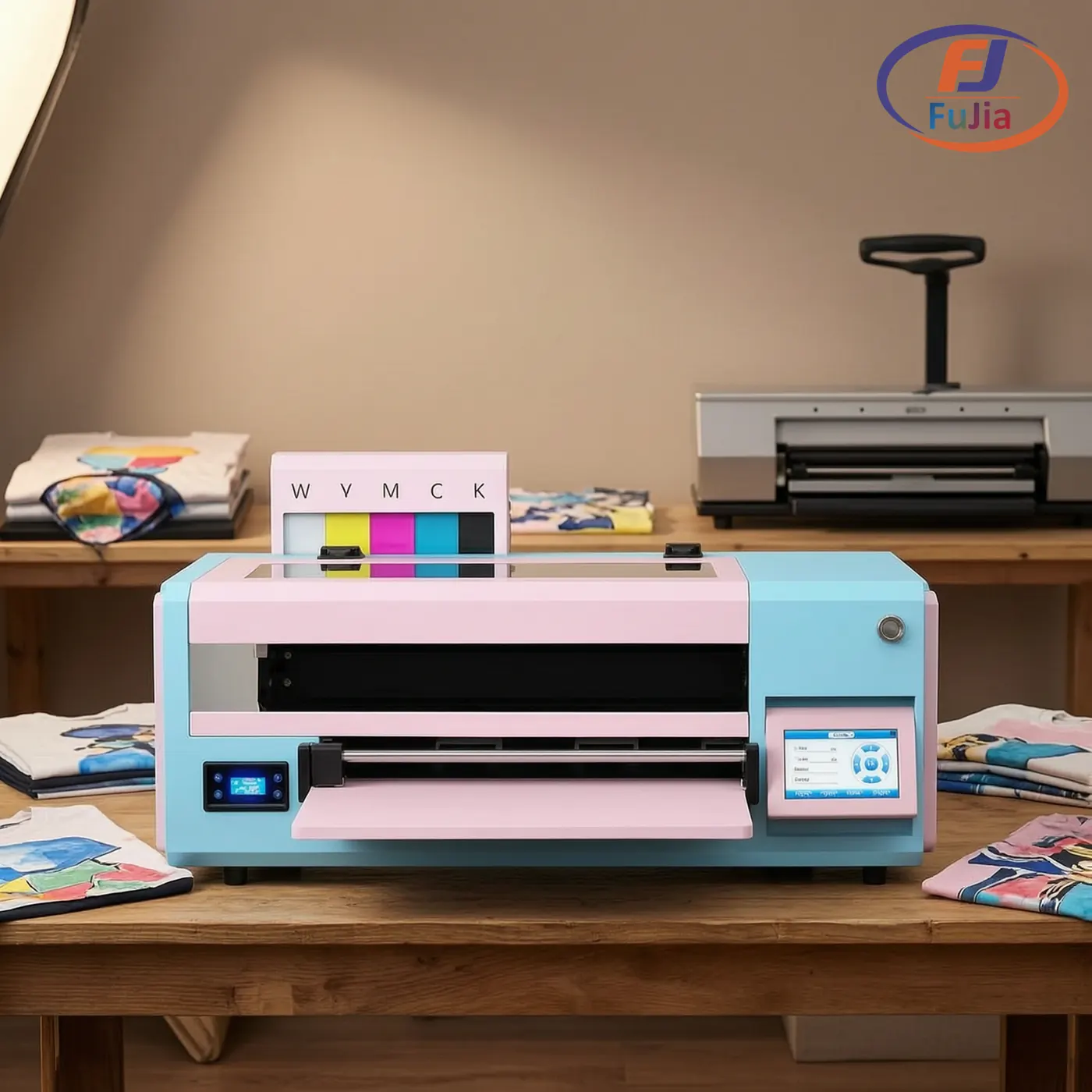
The best cheapest DTF printer is a dedicated entry unit with a real Epson printhead, not a modified inkjet, because the film path and white ink system decide whether it survives daily use. Within a $2,000 budget the A3 single-head DTF with one Epson XP600 is the safe floor: it holds 2 to 3 m² per hour at up to 1440 dpi and fits a standard workbench. A two-head A3 model costs a bit more but shortens gang-sheet time for shops above 50 shirts a day. The deciding factor is support, since a clogged head costs more than the price gap between models. Fujia’s entry DTF printers use a Honson mainboard, Leadshine servo, and THK guide rail, and ship with a 2 year warranty, 48 hour parts dispatch, and 3 day remote onboarding, which is what keeps a cheap printer working instead of sitting in a box.
What DTF printer is under $1 000?
A DTF printer under $1,000 is the lowest tier of dedicated desktop DTF, usually an A4 or small A3 unit with a single entry printhead, while modified inkjet conversions sit even lower at $500 to $800. The dedicated sub-$1,000 printer prints the same CMYK plus white process as larger machines but at slower speed and a narrower width, so it suits proofing, hobby work, and very low daily volume. Fujia positions its A3 desktop DTF in the entry production tier rather than the bare minimum, because the Honson mainboard, Leadshine servo, and THK guide rail raise reliability above the cheapest boxes. If your plan is real monthly volume, spend the extra few hundred to stay under $2,000 with a two-head A3 unit, since the per-piece cost and uptime beat the lowest-price machine over a year of use.
Which printer is best for DTF printing?
The printer best for DTF printing is a dedicated direct-to-film machine with Epson printheads and a built-in powder shaker, not a converted inkjet, because the white ink circulation and film path are what fail first on improvised builds. For an under-$2,000 budget the A3 single-head DTF with one Epson XP600 is the standard pick, holding 2 to 3 m² per hour with the uptime daily printing needs. A two-head A3 model suits shops above 50 shirts a day. The heads matter less than the motion system around them: Fujia pairs them with a Honson mainboard, Leadshine servo motor, and THK guide rail so a long run holds quality without drift. Add the 160°C, 15 second, cold peel step and 50 plus wash durability, and the result survives commercial laundering, which is the real test of best for a print business.
Is a DTF printer worth the money?
A DTF printer is worth the money for shops that reach steady monthly volume, because the per-piece cost drops far below outsourced screen printing below about 3,000 identical pieces. Fujia’s own case files show a Brazilian studio on an A3 desktop DTF cutting per-order cost by 64 percent, from R$18 to R$6.5, with a 5.5 month payback inside a 20 m² workspace. Across the 500 plus print businesses Fujia serves, payback typically lands within 3 to 8 months once a shop fills 1,500 to 3,000 pieces per month, and apparel clients report 60 percent margin at 3,000 plus pieces per month. For a hobbyist with a few shirts a month the math is weaker, so the machine pays off when volume covers the ownership cost, and the 2 year warranty plus 48 hour parts dispatch protect that return.
Conclusion
A DTF printer under $2000 is a real desktop direct-to-film setup when you pick a dedicated unit with proper printheads and support. For the full A3 DTF lineup and factory-direct pricing, see the Fujia Print DTF printers or read apparel printing results from real customers.
