

UV ink manufacturing in China concentrates in Guangdong and Shanghai chemistry clusters, producing hard and flexible ink lines at $10-30 per liter across quality tiers, with OEM programs opening at 200 kilogram MOQs for production shops whose ink spend justifies custom chemistry. The China ink supply serves most of the global UV printer fleet, and the buyer’s task is the same one sublimation and DTF buyers face: separating formulating mills from repackagers before production commits to either. This page maps the mill geography, prices the ink tiers, and documents the vetting that volume buyers run on any chemistry supplier.
\n\n\n\n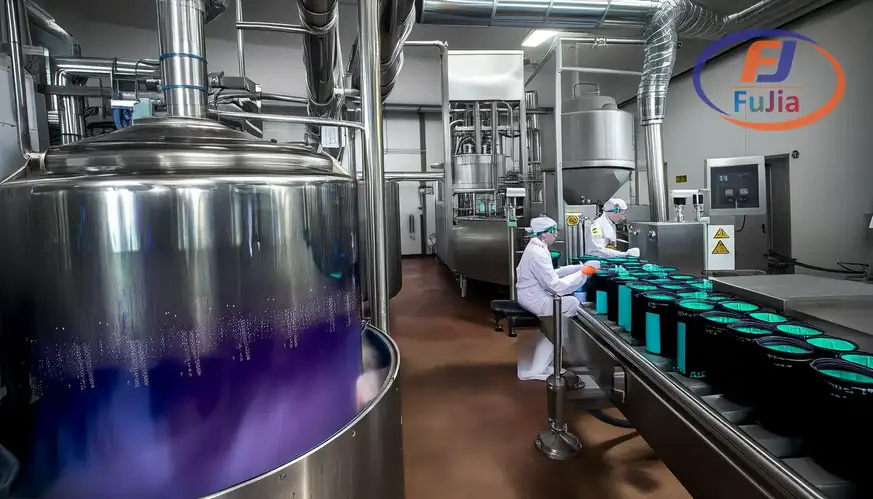
Key Takeaways
\n\n\n\n- \n\n\n
- Mill geography: Guangdong leads UV ink production near the printer manufacturing belt, with Shanghai chemistry clusters serving industrial lines. \n\n\n
- Ink tiers: hard rigid-surface inks at $15-30 per liter, flexible inks at $10-25, and white ink carrying a 20-30% premium across both classes. \n\n\n
- OEM programs open at 200 kilogram MOQs with custom color profiles and viscosity matching to your head platform. \n\n\n
- Batch documentation is the mill test: per-batch viscosity, density, and filtration records separate formulators from repackagers in one request. \n\n\n
- We recommend matching ink tier to printer tier, because premium heads deserve documented chemistry and budget heads forgive commodity ink that premium heads would punish. \n\n\n
The Mill Geography Table
\n\n\n\nThe geography table locates the UV ink supply, and the proximity to printer manufacturing is not a coincidence but a supply-chain design: ink mills cluster where head platforms are built because formulation feedback loops run shortest when chemistry and hardware share a postal code. Prices are factory-direct per liter:
\n\n\n\n| Mill region | \nSpecialization | \nPrice per liter | \nNotes | \n
|---|---|---|---|
| Guangdong | \nfull UV ink range | \n$10-30 | \nprinter belt adjacency | \n
| Shanghai cluster | \nindustrial rigid lines | \n$15-30 | \nGen5-class chemistry | \n
| Regional traders | \nrepackaged volumes | \nvaries | \nno formulation | \n
The mill map in one frame:
\n\n\n\nGuangdong’s ink production grew inside the printer manufacturing belt, and the adjacency means mill chemists work with the same head platforms their customers run, which shortens the formulation feedback loop that ink compatibility depends on, per the supply-chain geography our consumables sourcing guides document across ink categories.The Shanghai cluster’s industrial rigid lines serve Gen5-class production printers that demand tighter filtration, and the regional trader layer completes the market by moving mill output to buyers the mills never meet. The trader layer serves a purpose at sample volumes, and volume buyers outgrow it the moment batch documentation enters the purchase conversation.
\n\n\n\nThe Ink Tier Table and the OEM Door
\n\n\n\nThe tier table prices UV ink by class and quality, and the OEM column marks the production program door that opens at volumes retail buying never reaches. All classes assume LED-cure compatible chemistry at 385-395 nm wavelengths:
\n\n\n\n| Ink class | \nQuality tier | \nCommodity tier | \nWhite premium | \n
|---|---|---|---|
| Hard rigid ink | \n$20-30 per liter | \n$10-15 | \n+20-30% | \n
| Flexible ink | \n$15-25 per liter | \n$10-14 | \n+20-30% | \n
| OEM program | \n$12-20 per liter | \nat 200 kg MOQ | \ncustom profiled | \n
The tiers in view:
\n\n\n\nWhen it comes to matching ink tier to printer tier, premium Gen5 and i3200 heads cost $400-800 each and punish commodity ink with clogged dampers and shortened life, while XP600 heads at $150-300 tolerate commodity chemistry for their shorter working lives, per the head-ink matching our ink guides document across platform families. The white premium is chemistry rather than markup, because titanium dioxide loading costs what it costs. Dark-product shops should price their white consumption as its own ledger line. We recommend buyers compute head replacement cost into the ink tier decision, because the saved $10 per liter that costs a $600 head is the most expensive discount in the consumables chain.
\n\n\n\nMill Vetting and the OEM Protocol
\n\n\n\nThe vetting table runs the checks that separate formulating mills from repackagers, and the OEM protocol that follows covers production-scale commitments. Ink chemistry lives within tight bands of 8-12 cps viscosity and 50-65% RH storage, and the mill that documents both bands is the mill whose batches behave:
\n\n\n\n| Vetting item | \nMill evidence | \nRepackager evidence | \n
|---|---|---|
| Formulation team | \nchemists discuss viscosity bands | \nsales quotes tiers | \n
| Batch documentation | \nper-batch spec sheets | \nmarketing brochures | \n
| Head testing record | \npublished head-hours data | \ncompatibility claims only | \n
| Facility tour | \nmixing and filtration visible | \nwarehouse footage | \n
| Sample acceptance | \nwelcomes your head test | \nships without testing | \n
The OEM protocol in practice:
\n\n\n\nWe recommend the head-hours question as the fastest screen in the chain, because a mill that tests on actual head platforms publishes survival data, and one that reformulates for every customer order cannot, per the chemistry-vetting patterns our ink sourcing cases document across UV programs. The OEM protocol runs 200 kg MOQs into custom color profiles and viscosity matching, with batch documentation contracted alongside supply, and the archived print standard remains the document every reorder argument resolves against. OEM chemistry inherits the mill’s process discipline exactly as private-label film does. The vetting happens before the contract rather than after the first clogged damper, and that timing is the whole protocol.
\n\n\n\n
Who are the UV ink manufacturers in China?
UV ink manufacturers in China concentrate in Guangdong province near the printer manufacturing belt and in Shanghai chemistry clusters serving industrial rigid lines, producing hard and flexible ink classes at $10-30 per liter across quality and commodity tiers. The market includes formulating mills with chemistry teams and head-testing benches, plus a repackager layer that bottles volumes without formulation capability. The vetting question of head-hours data and per-batch documentation separates the two in one conversation, and the mill layer is where volume buyers belong.
How much does UV ink cost from Chinese manufacturers?
UV ink from Chinese manufacturers costs $20-30 per liter for hard rigid-surface formulations at quality tier, $15-25 for flexible inks, and $10-15 at commodity tiers, with white ink carrying a 20-30% premium for titanium dioxide loading across all classes. OEM programs at 200 kg MOQs price $12-20 per liter with custom profiles, and head replacement at $400-800 per unit is the cost that cheap ink schedules early. Head compatibility rather than per-liter price determines true cost. Premium heads at $400-800 each punish cheap chemistry with shortened life that erases the discount inside one head cycle, and that arithmetic is why ink tier follows head tier.
What is the difference between hard and flexible UV ink?
Hard and flexible UV ink differ in crosslink density: hard formulations cure to 2H-4H scratch-resistant rigidity for glass, metal, and acrylic, while flexible formulations keep elongation for polycarbonate, vinyl, and wrapping substrates that bend after printing. The failure modes are immediate and opposite, with hard ink cracking on flex and flexible ink scratching on abrasion, and the substrate’s post-print motion chooses the class. Manufacturers produce both classes because the UV category spans armor substrates and gymnastics substrates, and shops running mixed product lines stock both.
Is Chinese UV ink good quality?
Chinese UV ink at the quality tier is good chemistry with documented batch behavior, produced by mills whose chemists work adjacent to the printer manufacturing belt and test on the same head platforms the global fleet runs. The commodity tier trades filtration and pigment grade for price, and the difference shows in damper life and head cycles rather than in first-print appearance. Matching ink tier to head tier resolves the quality question: premium heads deserve documented chemistry, budget heads run commodity ink within their shorter working lives of 6-12 months, and the head-hours record is the honest quality test.
Verdict
\n\n\n\nUV ink manufacturing in China maps to Guangdong and Shanghai chemistry clusters producing hard and flexible classes at $10-30 per liter, with OEM programs at 200 kilogram MOQs opening custom chemistry to production shops whose head platforms justify documented supply. The vetting protocol of head-hours data, per-batch documentation, and live facility tours separates formulating mills from repackagers in one request, and the ink-tier-to-head-tier matching is the decision that turns per-liter price into real cost. Match chemistry to heads, demand batch records, and archive the print standard. For platform-matched UV ink with head-testing documentation, contact Fujia Print with your printer model and ink volume.
\n\n\n\nSources
\n\n\n\n- \n\n\n
- Wikipedia: UV curing: ink chemistry fundamentals. \n\n\n
- Wikipedia: Ink: formulation components and classes. \n\n\n
- Epson industrial printheads: head compatibility requirements. \n\n\n
- Fujia Print ink sourcing guides: mill vetting and matching cases. \n\n\n
