

UV DTF bottle printer 360 workflows put full-wrap designs on tumblers and bottles through two routes: sheet-wrap UV DTF, where a flat printer outputs a design sized to the bottle’s circumference that applies by hand in seconds, and true 360-degree rotary printing, where cylindrical fixtures rotate bottles under the head for direct printing at $3,000-15,000 station prices. The sheet-wrap route dominates small business because it needs no rotary hardware, and the 360 rotary route earns its premium in volume shops where per-unit labor becomes the constraint. This page compares both routes, prices the stations, and matches each to the tumbler business it serves.
\n\n\n\n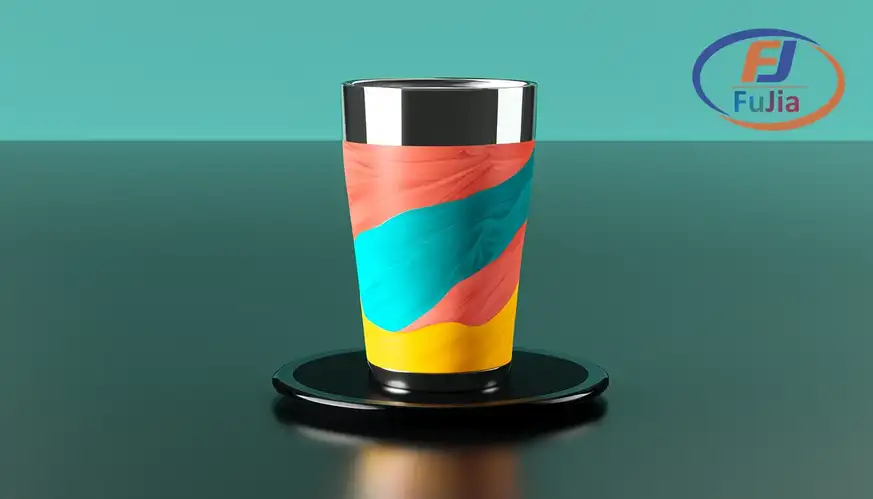
Key Takeaways
\n\n\n\n- \n\n\n
- Sheet-wrap route: any A3 or A3 plus UV DTF printer outputs wrap designs at $1,800-6,000 station cost, applied by hand at 30-60 seconds per bottle. \n\n\n
- True 360 rotary route: cylindrical roller fixtures print direct at $3,000-15,000, running 2-4 minutes per bottle with zero alignment labor. \n\n\n
- Wrap design math: a 20 oz tumbler needs a design 20-25 cm tall by 26-30 cm wide depending on taper, and seam overlap of 3-5 mm hides the joint. \n\n\n
- Adhesive strength on curved surfaces comes from the film, not from pressure, which is why wraps survive dishwasher cycles when applied to clean degreased bottles. \n\n\n
- We recommend sheet-wrap for businesses under 50 bottles daily and rotary for volume shops, because the labor line flips the economics at scale. \n\n\n
The Two Routes Table
\n\n\n\nThe routes table prices both paths to full-wrap bottles, and the labor column is where the decision hides. Prices assume complete stations including printer:
\n\n\n\n| Route | \nStation cost | \nPer-bottle time | \nLabor type | \nBest volume | \n
|---|---|---|---|---|
| Sheet-wrap UV DTF | \n$1,800-6,000 | \n30-60 s application | \nhand alignment | \nunder 50 daily | \n
| 360 rotary direct | \n$3,000-15,000 | \n2-4 min machine time | \nload and unload | \n50+ daily | \n
Both routes in one frame:
\n\n\n\nThe sheet-wrap route’s physics are simple: UV DTF film conforms to the cylinder as its adhesive layer bonds, and the wrap seam disappears under a 3-5 mm design overlap, per the transfer mechanics our UV printers guides document across cylindrical applications. The rotary route prints direct with no seam at all, and its fixtures rotate the bottle at constant speed under the head while LED lamps cure each pass, which produces seamless coverage at machine pace rather than hand pace.The seam question decides craft customers, and the labor question decides businesses, which is why the routes coexist across every tumbler market.
\n\n\n\nThe Wrap Design Math and Application Discipline
\n\n\n\nThe design table specs the wrap dimensions that make or break a seam, and the taper of the bottle changes every number. Values cover the most common drinkware formats:
\n\n\n\n| Bottle format | \nDesign height | \nCircumference width | \nSeam overlap | \n
|---|---|---|---|
| 20 oz straight tumbler | \n20-25 cm | \n26-30 cm | \n3-5 mm | \n
| 30 oz straight | \n24-28 cm | \n30-33 cm | \n3-5 mm | \n
| Wine glass style | \n15-20 cm | \n24-27 cm tapered | \n3-5 mm, split wrap | \n
| Can cooler | \n10-12 cm | \n24-26 cm | \n3-5 mm | \n
The application in practice:
\n\n\n\nWhen it comes to application discipline, the film bonds to whatever the surface carries. Fingerprint oil or mold-release residue that is invisible to the eye becomes the lifting line at wash cycle 5, which is why the isopropyl wipe before application is a step and not a suggestion. Application runs from the seam edge with gradual pressure toward the overlap, squeegeeing air outward. The whole operation takes 30-60 seconds on a straight tumbler once the rhythm holds. We recommend buyers apply five practice wraps before selling any, because the learning curve is real but short. The fifth wrap looks nothing like the first, per the application training our drinkware cases document for new wrap businesses.
\n\n\n\nThe Station Table and Business Fit
\n\n\n\n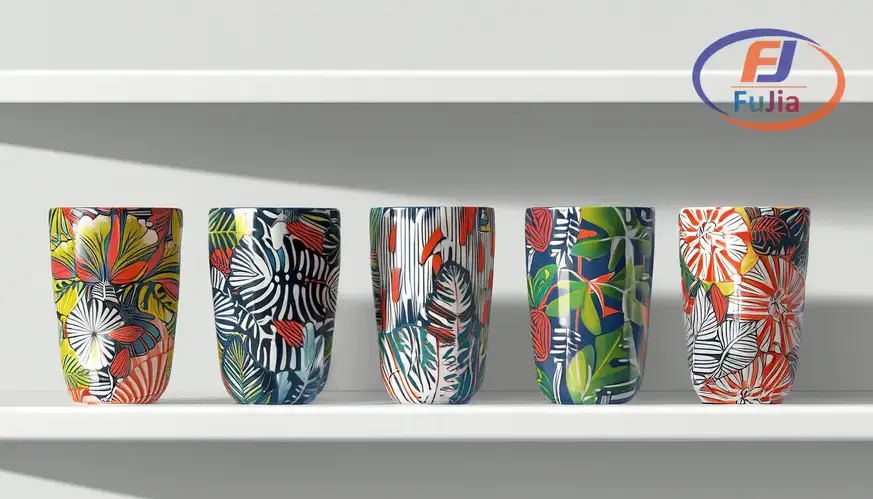
The station table prices both routes completely, and the business table that follows matches each to its honest operator. Rotary figures cover benchtop cylindrical UV units at trade pricing:
\n\n\n\n| Station component | \nSheet-wrap | \n360 rotary | \n
|---|---|---|
| Printer | \n$1,800-6,000 (A3 class) | \n$3,000-12,000 | \n
| Laminator (wrap only) | \n$300-900 | \nnot needed | \n
| Rotary fixture | \nnot needed | \nincluded or $500-2,000 | \n
| Consumables opening stock | \n$200-500 | \n$200-500 | \n
| Complete station | \n$2,300-7,400 | \n$3,500-15,000 | \n
The business match in one frame:
\n\n\n\nA tumbler seller we supply started sheet-wrap on an A3 station and crossed into rotary at 70 bottles daily, and the arithmetic that triggered the move was pure labor: 45 minutes of daily application time at the old volume became the rotary machine’s warm-up period, per the scaling trigger pattern our promotional products cases document across drinkware businesses. We recommend the same trigger logic: sheet-wrap until application time crowds production, and rotary when the labor line becomes the bottleneck rather than the printer. Craft sellers applying 10-20 bottles daily should never buy rotary. The machine’s premium buys speed that low volume cannot drink, and the sheet-wrap route serves that stage at a third of the capital.
\n\n\n\n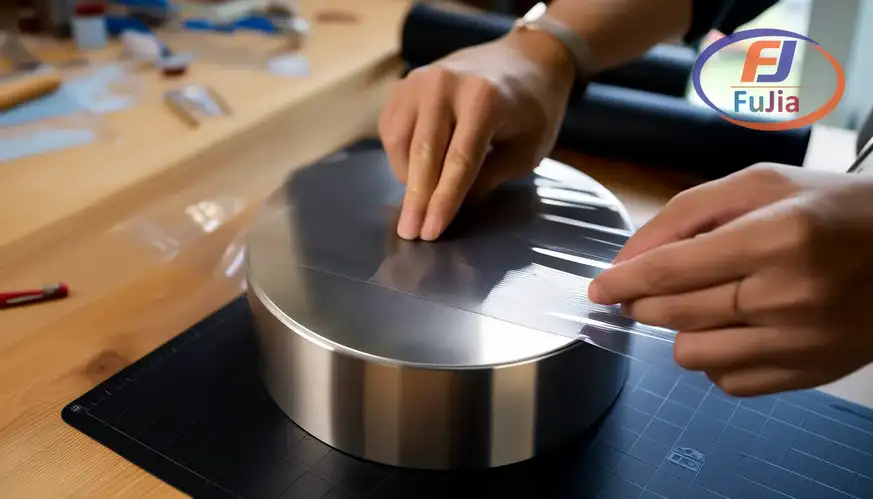
What is a UV DTF bottle printer 360?
A UV DTF bottle printer 360 refers to full-wrap cylindrical printing for bottles and tumblers through two routes: sheet-wrap workflows where a flat UV DTF printer outputs designs sized to the bottle circumference for hand application, and true 360-degree rotary printers that rotate bottles under the head for seamless direct printing. Sheet-wrap stations run $1,800-6,000 and suit under 50 bottles daily, while rotary units price $3,000-15,000 for volume shops where hand-application labor becomes the constraint. Both routes produce dishwasher-durable wraps when bottles are degreased before application.
How much does a 360 bottle printing machine cost?
A 360 rotary bottle printing machine costs $3,000-12,000 for benchtop cylindrical UV units, with complete rotary stations reaching $15,000 once fixtures and consumables join, while the sheet-wrap alternative needs only an $1,800-6,000 A3-class UV DTF station plus a $300-900 laminator. The rotary premium buys seamless printing and zero alignment labor at 2-4 minutes per bottle, and the sheet-wrap route trades a visible seam for a station under $7,000 complete. Volume decides the value: under 50 bottles daily belongs to sheet-wrap, and production lines belong to rotary.
Can UV DTF wraps go in the dishwasher?
UV DTF wraps survive dishwasher cycles when applied to properly degreased bottles, because the adhesive bonds chemically to clean surfaces and the cured film resists water and heat that would defeat vinyl stickers. Hand washing extends life further, and the failures that do occur trace to application surface contamination rather than to the film itself, which is why the isopropyl wipe before application is the step that determines dishwasher survival. Expect 30-plus cycles on clean-applied wraps. Set customer expectations at top-rack washing for maximum life, and the returns line stays as quiet as the application was careful.
Is a tumbler wrap business profitable?
A tumbler wrap business is profitable at $8-25 per decorated bottle against $1-3 in wrap material cost, with sheet-wrap stations under $7,000 paying back inside 100-300 bottles and custom designs commanding the top of the price range. The margins cover labor well below 50 bottles daily, and the rotary upgrade follows only when application time crowds production capacity. Local sports teams, bridal parties, and corporate gifting are the recurring demand engines, and sellers who build repeatable design templates rather than one-off artwork serve that demand at scale.
Verdict
\n\n\n\nUV DTF bottle printer 360 workflows come in two honest routes: sheet-wrap stations at $2,300-7,400 complete that hand-apply full wraps in under a minute per bottle, and true 360 rotary machines at $3,500-15,000 that print seamless cylinders at machine pace for shops past 50 bottles daily. The wrap math of 20-25 cm by 26-30 cm designs with 3-5 mm seam overlap decides fit, the isopropyl wipe decides dishwasher survival, and the labor line decides when the rotary upgrade pays. Start with sheet-wrap, learn the application rhythm, and let bottle volume order the rotary. For complete tumbler stations from sheet-wrap to rotary, contact Fujia Print with your daily volume.
\n\n\n\nSources
\n\n\n\n- \n\n\n
- Wikipedia: UV curing: LED film curing behind both routes. \n\n\n
- Wikipedia: Cylinder: the geometry behind wrap design math. \n\n\n
- SGIA printing resources: drinkware decoration standards. \n\n\n
- Fujia Print UV DTF guides: cylindrical application workflows. \n\n\n
- Fujia Print drinkware cases: tumbler business economics. \n\n\n
