

A 1 liter bottle of DTF ink prices $18-35 depending on color and quality tier, prints roughly 80-125 standard shirts at 8-12 milliliters of coverage per garment, and lands at $0.15-0.44 of ink cost per shirt before film and powder join the ledger. The liter bottle is the production unit of the DTF ink world: small enough to stay fresh within its shelf life, large enough to escape craft-bottle pricing, and the reference point every bigger format quotes against. This page prices the liter across colors and tiers, runs the coverage math into per-print cost, and times the liter-versus-gallon break-even honestly.
\n\n\n\n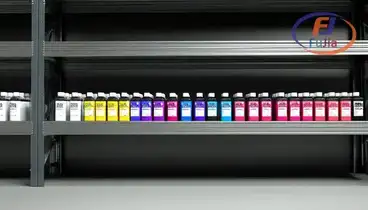
Key Takeaways
\n\n\n\n- \n\n\n
- Liter pricing: CMYK at $18-28 per bottle, white at $22-35 for its heavier pigment load, with quality tiers at the top of each band. \n\n\n
- Coverage runs 8-12 ml per standard shirt at normal designs, so one liter yields 80-125 prints, and dark garments with white underbase drink the most. \n\n\n
- Per-shirt ink cost lands at $0.15-0.44, joining film at $0.30-0.50 and powder at $0.10-0.20 for a full transfer ledger near $0.55-1.10. \n\n\n
- White ink consumption runs 1.5-2x CMYK on dark garments, which is why white bottles empty first in every mixed-production shop. \n\n\n
- We recommend liter bottles for consumption under 4 liters monthly and gallon jugs above it, because the jug discount only beats liter freshness past that line. \n\n\n
The Liter Price Table by Color and Tier
\n\n\n\nThe price table maps the liter bottle across the color set, and the white line carries its premium honestly. The spread between CMYK and white is chemistry, not marketing, and the spread inside each color is quality. Prices reflect quality-tier factory and trade supply in 2026:
\n\n\n\n| Color | \n1 liter price | \nNotes | \n
|---|---|---|
| Cyan | \n$18-28 | \nstandard load | \n
| Magenta | \n$18-28 | \nstandard load | \n
| Yellow | \n$18-28 | \nstandard load | \n
| Black | \n$16-26 | \nhighest coverage per ml | \n
| White | \n$22-35 | \nTiO2 pigment premium | \n
The liter lineup:
\n\n\n\nWhite earns its premium through chemistry rather than marketing: its titanium dioxide loading at 18-25 percent costs formulators real money, and the same loading is what makes dark-garment printing possible at all, per the white-ink economics our consumables guides document across the DTF chain.The liter price spread between vendors tracks quality more closely than buyers expect, because filtration and pigment grade are the costs that cheap ink skips, and the $8 saved per bottle returns as clogged dampers within weeks at production duty.
\n\n\n\nCoverage Math and the Per-Shirt Ledger
\n\n\n\nThe coverage table converts liters into shirts, and the ledger table that follows joins the full transfer cost chain. Coverage is where ink buying becomes arithmetic rather than opinion, because the milliliters per shirt decide everything downstream. Figures assume standard adult designs printed at 720×1440 dpi on production settings:
\n\n\n\n| Design type | \nInk per shirt | \nShirts per liter | \nInk cost per shirt | \n
|---|---|---|---|
| Small logo front | \n5-8 ml | \n125-200 | \n$0.09-0.28 | \n
| Standard front | \n8-12 ml | \n80-125 | \n$0.15-0.44 | \n
| Full coverage dark | \n15-20 ml | \n50-66 | \n$0.30-0.70 | \n
| Ledger line | \nCost per shirt | \n
|---|---|
| Ink | \n$0.15-0.44 | \n
| Film | \n$0.30-0.50 | \n
| Powder | \n$0.10-0.20 | \n
| Full transfer | \n$0.55-1.10 | \n
The ledger in view:
\n\n\n\nWhen it comes to the ledger, ink is the middle line. Buyers who optimize it while ignoring film waste optimize the wrong variable, because film at $0.30-0.50 per shirt usually carries more recoverable cost than the ink line, per the transfer-ledger discipline our cost guides apply across the DTF chain. White consumption deserves its own tracking column in every shop’s records, because dark-garment volume drains white at 1.5-2x the CMYK rate and the first empty bottle in a mixed shop is almost always white. We recommend logging liters against shirts monthly, because that ratio is the earliest warning of both ink drift and design-coverage creep. Shops printing at 720×1440 dpi on standard settings hold the 8-12 ml band reliably. Drift outside it signals a settings or design change worth investigating.
\n\n\n\nThe Liter Versus Gallon Break-Even
\n\n\n\nThe break-even table times when jug formats beat liters, and the freshness variable is what keeps liters honest below the line. Jug pricing assumes 5-liter containers at trade discounts:
\n\n\n\n| Monthly consumption | \nBest format | \nPrice per liter | \nFreshness risk | \n
|---|---|---|---|
| Under 2 liters | \n1 liter bottles | \n$18-28 | \nnone | \n
| 2-4 liters | \nliter multi-pack | \n$16-25 | \nlow | \n
| 4-8 liters | \n5 liter jug | \n$13-20 | \nmoderate | \n
| 8+ liters | \njug + drum mix | \n$11-18 | \nmanaged by rotation | \n
The break-even in one frame:
\n\n\n\nA two-printer shop we supply consumes 6-8 liters monthly and buys 5-liter jugs with dated rotation, saving roughly $25-40 monthly against liters while keeping ink inside its 12-month shelf life through first-in-first-out discipline, per the format rotation our supply cases document across production shops. We recommend the 4-liter monthly line as the switch point, because below it the jug discount cannot outrun the risk of ink aging in the bottle, and above it the liters themselves become the storage problem. Store bottles at 15-25 °C away from light, and the shelf life holds where the label promises. White ink deserves its own consumption math in every shop, because its faster drain rate at 1.5-2x CMYK volume often crosses the jug line a full tier earlier than the colors do. Print settings at 720×1440 dpi keep the coverage table honest, and drift from that baseline is the first suspect when liters start disappearing faster than the ledger says.
\n\n\n\n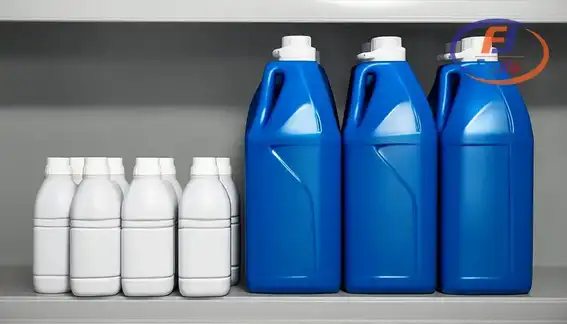
How many shirts does 1 liter of DTF ink print?
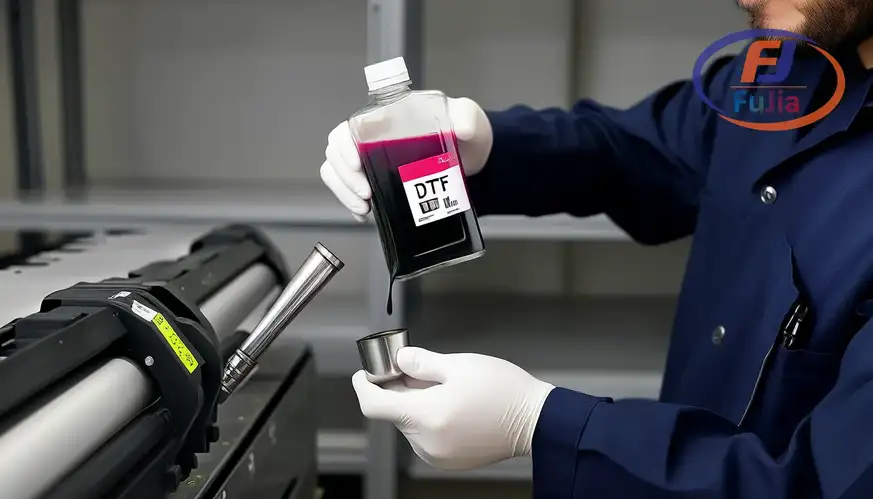
One liter of DTF ink prints 80-125 standard adult shirts at 8-12 ml of coverage per garment, reaching 125-200 shirts for small logo designs at 5-8 ml and dropping to 50-66 for full-coverage prints at 15-20 ml on dark garments. White ink consumption runs 1.5-2x the color rate on dark work because the underbase layer carries the opacity, so shops should track white as its own consumption line. At $18-35 per liter, ink cost per shirt lands at $0.15-0.44 for standard designs, joining film and powder for a full transfer ledger of $0.55-1.10. Stores sealed and kept below 25 °C hold the ink at full potency through the 12-month window, which is the freshness math every bulk decision runs on.
How much does a 1 liter bottle of DTF ink cost?
A 1 liter bottle of DTF ink costs $18-28 for CMYK colors and $22-35 for white, whose titanium dioxide pigment loading carries the premium, with quality-tier inks at the top of each band and budget inks below it. Craft-sized bottles under 250 milliliters price proportionally higher at $8-15, and 5-liter jugs drop to $13-20 per liter for shops past 4 liters monthly. The liter bottle is the production reference unit, and prices far under the band deserve filtration and batch documentation questions before they deserve trust.
Is it cheaper to buy DTF ink in gallons?
DTF ink in gallon or 5-liter formats is cheaper per liter at $13-20 against $18-28 for liters, but the total cost turns on consumption: shops using under 4 liters monthly pay more in aged ink than they save per liter, while shops above that line save $25-60 monthly with dated rotation. Ink shelf life runs about 12 months sealed, and first-in-first-out discipline is what makes jug formats honest at any scale. The switch point is 4 liters monthly. White ink often crosses it a tier earlier, because its consumption rate runs 1.5-2x the colors and the jug discount lands there first.
What is the shelf life of DTF ink?
DTF ink shelf life runs about 12 months sealed in cool dark storage, with opened bottles best consumed within 3-6 months for white and 6 months for CMYK colors, because pigment settling and chemistry drift begin once air enters the bottle. Dated bottles and first-in-first-out rotation are the disciplines that keep ink inside its window, and ink past its date shows as color drift and nozzle trouble before it fails outright. Shops should buy the format their monthly consumption can finish fresh, which is exactly the liter-versus-jug decision the break-even math above prices.
Verdict
\n\n\n\nThe 1 liter DTF ink bottle prices $18-28 for CMYK and $22-35 for white, prints 80-125 standard shirts at 8-12 milliliters each, and lands ink at $0.15-0.44 per shirt inside a transfer ledger of $0.55-1.10 that film usually dominates. White drinks 1.5-2x the color rate on dark garments and deserves its own consumption tracking, the liter-versus-jug break-even sits at 4 liters monthly, and dated first-in-first-out rotation is what keeps any format honest inside ink’s 12-month shelf life. Track liters against shirts monthly, buy the format your consumption keeps fresh, and let the per-shirt ledger rather than the bottle price drive the ink decision. For liter-format DTF ink with batch documentation, contact Fujia Print with your color mix.
\n\n\n\nSources
\n\n\n\n- \n\n\n
- Wikipedia: Direct-to-film printing: ink’s role in the transfer chain. \n\n\n
- Wikipedia: Ink: pigment and dye formulation fundamentals. \n\n\n
- AATCC wash test standards: print durability protocols. \n\n\n
- Fujia Print consumables guides: ink economics and ledger templates. \n\n\n
