

DTF ink for XP600 heads is pigment textile ink formulated to Epson’s XP600 piezo specification: viscosity near 8-12 cps, particle filtration at sub-micron levels, and a surface tension tuned to fire cleanly through the head’s 720-nozzle channels at 3200 dpi-class addressing. The XP600 is the workhorse head of the budget DTF tier, and its ink relationship is the whole story of the platform, because well-formulated ink runs 6-12 months of production per head while cheap ink kills the same head in weeks. This page specs what compatible ink actually requires, the settings that protect the head, and the care routine that stretches head life to its ceiling.
\n\n\n\n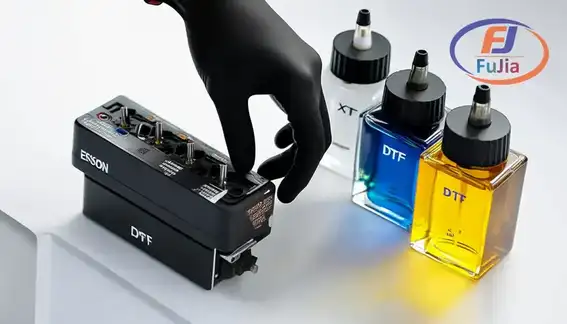
Key Takeaways
\n\n\n\n- \n\n\n
- XP600-compatible DTF ink specs: viscosity 8-12 cps, filtration below 0.5 micron, pH 7-9, and pigment loading tuned for textile washing standards. \n\n\n
- Head life runs 6-12 months at production duty with good ink and daily care, and 3-6 weeks with adulterated ink and no circulation habit. \n\n\n
- Settings that protect the head: print at 720×1440 dpi, keep white density at spec rather than maxed, and run the 385-400 °F cure the ink was formulated for. \n\n\n
- The daily routine is 5 minutes: nozzle check, purge on gaps, and white circulation, with weekly damper inspection catching what daily checks miss. \n\n\n
- We recommend buying ink with documented XP600 testing from the supplier, because viscosity numbers on a datasheet mean nothing without a head-hours record. \n\n\n
What XP600 Compatibility Actually Requires
\n\n\n\nThe spec table lists the ink properties the XP600 head demands, and every line is a filtration or chemistry decision the formulator makes before the bottle ships:
\n\n\n\n| Ink property | \nXP600 requirement | \nWhat failure looks like | \n
|---|---|---|
| Viscosity | \n8-12 cps at 25 °C | \nstarved firing, drop drift | \n
| Particle filtration | \nbelow 0.5 micron | \nnozzle clogging within days | \n
| pH | \n7-9 neutral range | \nhead corrosion long-term | \n
| Surface tension | \n28-35 mN/m | \nsatellite drops, misting | \n
| Pigment loading | \ntextile-wash grade | \nfading at early cycles | \n
The ink and head in context:
\n\n\n\nThe XP600 fires through 720 nozzles per channel with firing frequencies tuned for desktop-class duty, and its tolerance band is narrower than industrial heads, which is why ink formulated for i3200 or Gen5 platforms does not automatically suit it, per the head architecture our consumables guides document across Epson families.The compatibility claim on a label means little, and the compatibility record means everything: suppliers who run XP600 test benches publish head-hours data, and suppliers who rebrand generic ink publish viscosity numbers copied from someone else’s datasheet.
\n\n\n\nSettings That Protect the Head
\n\n\n\nThe settings table lists the print-side discipline that keeps ink and head in agreement, and each line is a place where impatience shortens head life:
\n\n\n\n| Setting | \nRecommended | \nHead risk when violated | \n
|---|---|---|
| Print resolution | \n720×1440 dpi | \noverheating at higher modes | \n
| White density | \nat spec, not maxed | \nover-firing wears nozzles | \n
| Cure temperature | \n100-110 °C melt stage | \nmismatched flow at press | \n
| Print head height | \n2-3 mm | \nhead strikes at lower gaps | \n
| Ambient conditions | \n20-25 °C, 50-65% RH | \nviscosity drift off spec | \n
The settings in practice:
\n\n\n\nWhen it comes to white density, maxing the white channel to fix a weak underbase fires every nozzle at full duty continuously. The XP600’s duty cycle was not designed for that, which is why the fix belongs in ink quality rather than in laydown, per the operating discipline our budget-platform cases document across XP600 shops. The ambient lines matter more than desk operators expect, because viscosity moves with temperature and a cold morning prints differently than the afternoon. The 20-25 °C band keeps the ink where its formulation assumed it would live. We recommend a thermometer on the wall as standard equipment, because the room is part of the ink system.
\n\n\n\nThe Care Routine and Realistic Head Life
\n\n\n\nThe routine table prices the daily and weekly care that separates 12-month heads from 3-week heads, and the life table that follows sets honest expectations per duty level:
\n\n\n\n| Routine task | \nFrequency | \nTime | \nFailure prevented | \n
|---|---|---|---|
| Nozzle check | \ndaily | \n2 min | \nsilent nozzle loss | \n
| Purge on gaps | \nas needed | \n3 min | \npermanent clogging | \n
| White circulation | \ndaily | \nautomated | \npigment settling | \n
| Damper inspection | \nweekly | \n5 min | \nsudden ink starvation | \n
| Capping station wipe | \nweekly | \n3 min | \ndried ink killing seals | \n
| Duty level | \nInk quality | \nExpected head life | \n
|---|---|---|
| Production daily | \ndocumented compatible | \n6-12 months | \n
| Production daily | \nundocumented cheap | \n3-8 weeks | \n
| Craft intermittent | \ndocumented compatible | \n12-18 months | \n
| Any duty | \nno circulation habit | \nweeks, regardless | \n
A decoration shop we supply runs its XP600 machine on 11-month head cycles by treating the routine table as non-negotiable, and its previous head lasted 5 weeks under a different ink vendor whose formula tested fine on paper and failed in the damper, per the head-economics records our budget-platform cases document across XP600 fleets. We recommend the same record-keeping: log head install dates, ink batch numbers, and failure causes, because three heads of history turn ink buying from a gamble into a decision. No routine rescues ink that was wrong from the bottle. The documented-testing question belongs before the purchase rather than after the first clog, and one sample run answers it cheaper than any head.
\n\n\n\n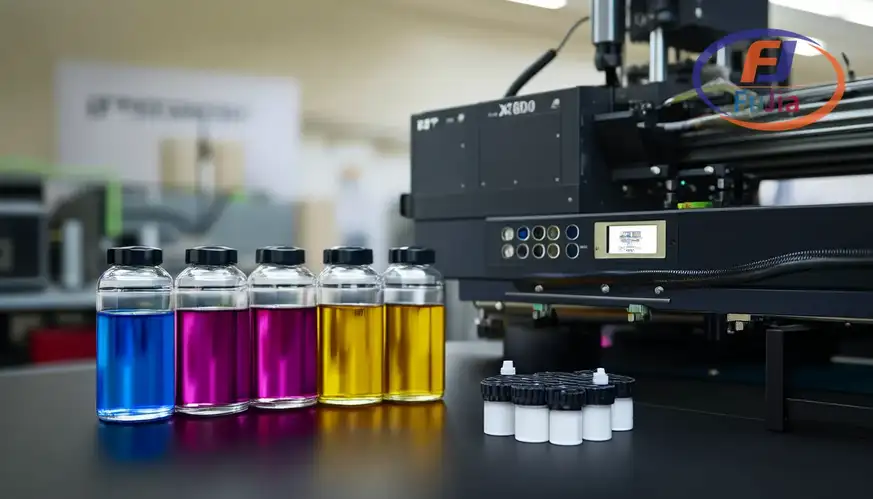
Can I use DTF ink in an Epson printer?
DTF ink works in Epson printers with piezo heads such as the XP600, i3200, and EcoTank families, provided the ink is formulated for that specific head’s viscosity and filtration requirements and the printer is dedicated to DTF permanently, because pigment DTF ink never washes back out of the lines. Thermal-head Epsons do not exist, but thermal-head HP and Canon machines cannot run DTF ink at all. Use DTF ink only in a printer dedicated to DTF, keep it within the head’s viscosity band, and the piezo Epson platform runs DTF reliably. The heads run their full 6-12 month life range when the ink matches, and mismatched ink is the variable that shortens every other number.
How long does an XP600 printhead last with DTF ink?
An XP600 printhead lasts 6-12 months at daily production duty with documented compatible DTF ink and a daily care routine of nozzle checks, purges, and white circulation, and it can reach 12-18 months at intermittent craft duty. The same head dies in 3-8 weeks on undocumented cheap ink, and in weeks on any ink when the circulation habit is missing. The variables are ink quality, duty cycle, and care discipline. Shops that log head dates and ink batches convert head replacement from a surprise into a scheduled line item. That schedule is what production planning actually needs, and it costs nothing but a notebook.
What ink can I use in an XP600 head?
An XP600 head accepts DTF ink formulated to its specification: viscosity of 8-12 cps at 25 °C, particle filtration below 0.5 micron, pH in the 7-9 neutral band, and pigment grade tuned for textile washing. Ink marketed for other head families does not automatically suit the XP600, because narrower tolerance bands than industrial heads make formulation mismatch show as clogging within days. Buy from suppliers who test on XP600 benches and publish head-hours records, and verify compatibility with a sample run before committing to production quantities.
Why does my XP600 printhead keep clogging?
An XP600 printhead keeps clogging for four recurring causes: ink below the head’s filtration standard depositing pigment in nozzles, missing white-ink circulation letting titanium dioxide settle in the channel, ambient conditions outside 20-25 °C shifting viscosity off spec, or a worn capping station letting nozzles dry between sessions. Work the list in order: verify the ink’s testing record, run a full circulation cycle, stabilize the room, and inspect the cap top for dried residue. Clogging that survives all four points to a failing damper filter rather than the head, and dampers cost a fraction of heads to replace.
Verdict
\n\n\n\nDTF ink for XP600 heads is a formulation contract: viscosity at 8-12 cps, sub-micron filtration, and textile-grade pigment are the chemistry side, while 720×1440 dpi settings, spec-honest white density, and a 5-minute daily care routine are the operational side, and both sides together deliver 6-12 months of production life per head. The documented-testing question belongs before the purchase, the room thermometer belongs on the wall, and the head-hours log belongs in the shop because three heads of history turn ink buying into a decision. Buy tested ink, run the routine, and schedule heads instead of mourning them. For XP600-tested DTF ink with head-hours documentation, contact Fujia Print with your machine model.
\n\n\n\nSources
\n\n\n\n- \n\n\n
- Epson industrial printheads: XP600 family specifications. \n\n\n
- Wikipedia: Inkjet printing: piezo head architecture. \n\n\n
- Wikipedia: Direct-to-film printing: ink’s role in the chain. \n\n\n
- Fujia Print consumables guides: XP600 fleet records and care protocols. \n\n\n
