
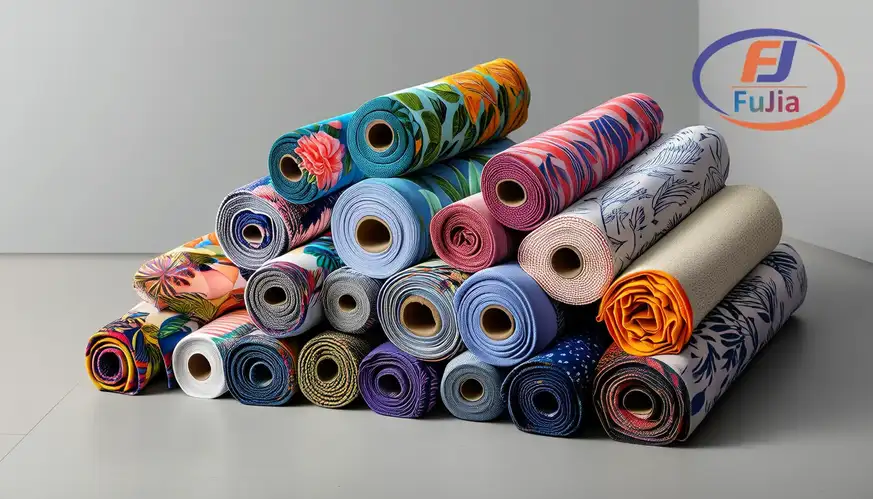
Digital print suppliers for stretch textiles divide into three service classes: Chinese integrated mills printing polyester-spandex at $3-9 per meter with 10-50 meter minimums, Western digital print bureaus at $12-35 per meter with no minimums, and blank-fabric converters where clients supply base cloth at $2-5 per meter of printing only. The stretch category adds a technical layer flat fabrics never ask for, because spandex content above 15 percent narrows the ink and temperature window, and the supplier worth hiring is the one whose swim or activewear references survive a 30-cycle stretch-wash test. This page compares the classes, prices the stretch fabric types, and lists the criteria that sort real suppliers from brochure suppliers.
Key Takeaways
- Base fabric pricing: polyester-spandex 82/18 at $3-9 per meter printed from China, nylon-lycra swim classes at $5-12, and bureau printing alone at $12-35 per meter.
- Stretch content rules the process: up to 20 percent spandex prints beautifully with disperse dye on polyester bases, and nylon blends need acid or transfer-specific workflows.
- MOQs run 10-50 meters at Chinese digital mills against no-minimum bureaus at 3-5x the price, and sample runs of 1-5 meters are standard everywhere.
- The wash test decides the hire: 30 cycles at 40 °C with 20 percent stretch between cycles separates production suppliers from trial ones.
- We recommend ordering the same 3-meter test file from two suppliers and comparing hand, stretch recovery, and color depth before committing a season.
The Supplier Class Table
The class table prices the three sourcing routes, and the classes serve different volume stages rather than competing head-on. All prices are printed, finished fabric:
| Supplier class | Price per meter | MOQ | Lead time | Best for |
|---|---|---|---|---|
| Chinese integrated mill | $3-9 | 10-50 m | 15-25 days | production lines |
| Western print bureau | $12-35 | none | 3-10 days | sampling, capsules |
| Converter (client fabric) | $2-5 print only | 100+ m | 10-20 days | brands with base stock |
The classes in one frame:
The Chinese integrated mill owns the production middle: it buys polyester-spandex base cloth by the ton, prints at 1.6-3.2 m widths on disperse lines, and ships finished rolls at prices no Western bureau approaches, per the sourcing economics our apparel printing operations document for swim and activewear programs. The bureau class earns its multiple on speed and zero commitment, which makes it the sampling instrument rather than the production answer, and a brand that samples at the bureau and produces at the mill runs both instruments correctly.The converter class fits established brands holding base-cloth stock, because its $2-5 printing line converts warehouse fabric into printed inventory without doubling the fabric spend.
Stretch Fabric Types and What They Demand
The fabric table prices the stretch categories suppliers actually stock, and each type carries its own ink and handling demands. Prices are printed output from Chinese mills at production volumes:
| Fabric type | Composition | Printed price per meter | Demands |
|---|---|---|---|
| Activewear knit | 82/18 poly-spandex | $4-8 | disperse ink, gentle wash |
| Swimwear lycra | 80/20 nylon-lycra | $5-12 | acid or transfer workflow |
| Four-way stretch | 88/12 poly-spandex | $5-9 | recovery testing |
| Stretch ponte | 65/35 rayon-poly-spandex | $6-10 | lower-temp fixation |
The fabric bench:
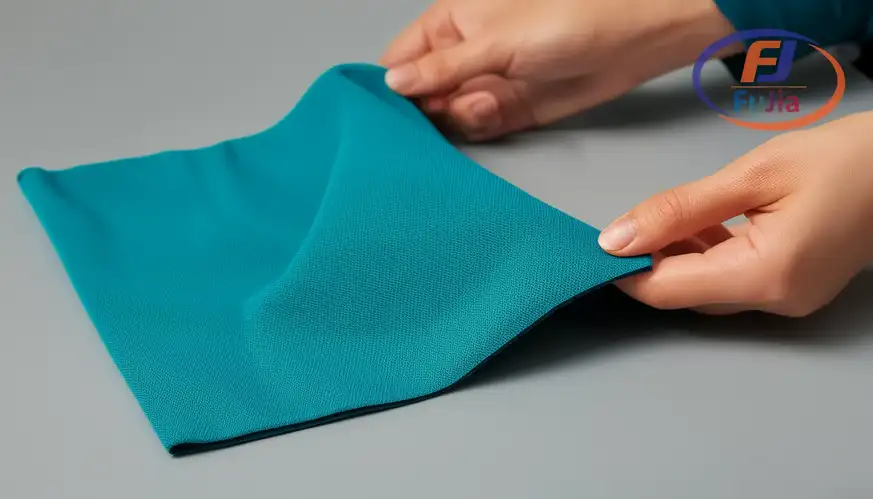
When it comes to spandex content, the elastane fiber does not accept sublimation dye, so every printed stretch fabric is a polyester-or-nylon system carrying elastic threads. The printer’s fixation temperature must stay under the point where elastane relaxes and recovery dies. Mills that print swim lycra weekly run this balance in their sleep, while generalist bureaus sometimes scorch a 20 percent spandex base at 400 °F and hand the brand a garment that bags at the knee inside a month. We recommend asking every candidate supplier two questions before sampling: what spandex ceiling they print routinely. What fixation temperature their stretch line runs, because the answers sort specialists from generalists faster than any price list.
The Supplier Evaluation Protocol
The evaluation table lists the checks that separate production suppliers from brochure suppliers, and the protocol costs one test file and two weeks:
| Criterion | Test method | Passing standard |
|---|---|---|
| Color depth | same file, two suppliers | visual and densitometer match |
| Stretch recovery | 20 percent stretch, 30 cycles | no bagging, print intact |
| Wash fastness | 40 °C, 30 cycles | grade 4 or better |
| Hand feel | vs unprinted base | no stiffening or coating |
| Roll consistency | across 3 rolls | visible uniformity |
The evaluation in practice:
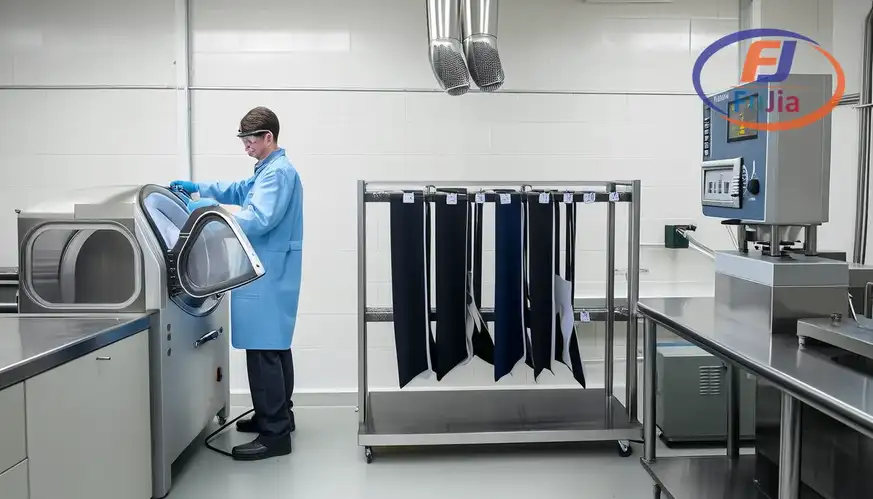
A swimwear brand we supply ran the protocol on two mills before its 2026 season, and the losing bid taught the lesson the table exists for: its cheaper quote printed gorgeous flat color and failed the stretch-recovery test at cycle 18, turning every garment into a return, while the winning mill’s $0.80 higher per-meter price held grade 4 fastness through all 30 cycles, per the qualification discipline our promotional products and apparel cases apply to fabric programs. We recommend running the same 3-meter test file through both candidates and washing both through the full protocol, because two weeks of testing prices out cheaper than one season of returns, and the suppliers who welcome the protocol are answering the quality question before you place the order.
How much does it cost to print stretch fabric digitally?
Printing stretch fabric digitally costs $3-9 per meter from Chinese integrated mills on polyester-spandex bases, $5-12 on nylon-lycra swimwear classes, and $12-35 per meter at Western print bureaus with no minimums. Converter services that print client-supplied base cloth charge $2-5 per meter for the printing alone. Sampling runs of 1-5 meters are standard across all classes, and production pricing activates at 50-100 meters where mill pricing compresses 10-20 percent against sample rates.
Which fabric is best for digital printing in stretch categories?
Polyester-spandex at 80-85 percent polyester content is the best stretch fabric for digital printing, because disperse dye bonds directly with the polyester fibers at fixation temperatures that 15-20 percent spandex tolerates, and the printed result holds stretch recovery through 30 wash cycles. Nylon-lycra prints beautifully through acid-dye or transfer workflows and dominates premium swimwear. Four-way stretch knits at 88/12 poly-spandex serve activewear lines. The universal rule is that the elastane never takes the dye, so the polyester or nylon fraction is the printing canvas that the supplier’s chemistry must respect.
What should I look for in a stretch fabric printing supplier?
A stretch fabric printing supplier should pass five checks: same-file color depth against a competitor, stretch recovery through 30 cycles at 20 percent elongation, wash fastness at grade 4 or better after 30 cycles at 40 °C, hand feel matching the unprinted base, and roll-to-roll consistency across production lots. Ask the spandex ceiling they print routinely and the fixation temperature their stretch line runs, because the answers reveal specialists before any sample arrives. Suppliers who welcome the test protocol are answering the quality question in advance, and resistance to testing is itself the answer.
How do I get my own fabric printed?
Getting your own fabric printed runs a four-step path: prepare your design as a seamless repeat file at 150-300 dpi for the print width, order 1-3 meter samples from two suppliers with your file, run the wash and stretch protocol on the samples, then commit the production run to the supplier that passes. Chinese mills need 10-50 meter minimums and 15-25 day lead times, bureaus print single meters in days at higher prices, and converters print your stocked base cloth at $2-5 per meter from 100 meters. The sample step is non-negotiable, because stretch fabrics fail in washing and recovery rather than in the first look.
Verdict
Digital print fabric suppliers for stretch textiles sort into three working classes, and the production answer is usually a Chinese integrated mill printing polyester-spandex at $3-9 per meter with 10-50 meter minimums, while bureaus handle sampling at 3-5x the price and converters serve brands holding base stock. The stretch category’s real hiring test is technical: spandex ceiling, fixation temperature, and a 30-cycle stretch-wash protocol that separates swim-grade specialists from generalists whose prints bag at the knee. Sample the same file through two suppliers, wash both through the protocol, and let recovery rather than color close the hire. For stretch-fabric printing from a mill that swims in this category daily, contact Fujia Print with your base cloth spec.
Sources
- Wikipedia: Spandex: elastane fiber chemistry and temperature limits.
- Wikipedia: Digital textile printing: ink and fixation processes.
- AATCC wash test standards: fastness testing protocols.
- Fujia Print apparel programs: swim and activewear sourcing cases.
