

A digital label printing machine in 2026 spans four tiers that share a name and almost nothing else: $95-335 thermal desktops for shipping labels, $1,549-4,200 inkjet color printers for product labels, $13,000-14,100 digital label presses with die-cutting, and $15,000-85,000 production presses for commercial label houses. This guide prices each tier with real listings, splits the three printing processes by what they physically can do, and runs the per-label math that decides when in-house printing beats ordering labels. Most buyers asking this question need one of two machines, and the deciding fact is whether labels are a product or a package.
\n\n\n\n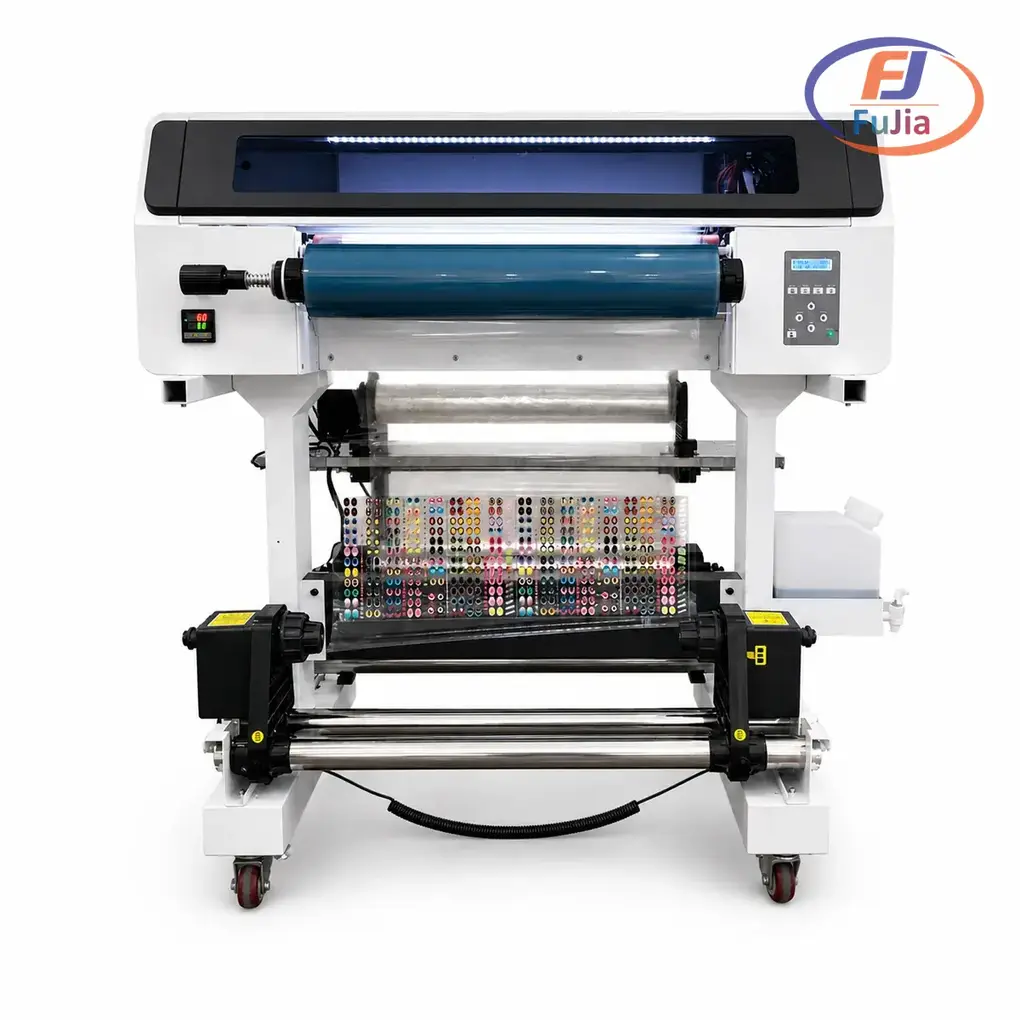
Key Takeaways
\n\n\n\n- \n\n\n
- Four 2026 tiers: thermal desktops ($95-335, shipping and barcode only), inkjet color label printers ($1,549-4,200, short-run product labels), digital label presses ($12,995-14,100, print-plus-die-cut rolls), and production presses ($15,000-85,000, commercial volume). \n\n\n
- Three processes with hard boundaries: thermal prints single-color stock, inkjet prints full color on label rolls, and UV DTF prints crystal labels that hand-transfer onto any rigid surface without a press. \n\n\n
- Real per-label economics: inkjet color runs $0.03-0.15 per label against outsourced label costs of $0.10-0.50, and in-house breaks even against outsourcing below roughly 3,000 identical labels per design. \n\n\n
- The die-cut question gates the press tiers: only machines with integrated cutting (Primera-class print-and-cut, IColor-class press) produce finished labels; roll inkjets without cutting still need a converter or a desktop cutter. \n\n\n
- UV DTF is the tier-skipping option for rigid-product branding: no label stock, no press, 10-15 second hand application, and a 3H-plus scratch hardness that survives shipping and handling. \n\n\n
The Four Tiers and What They Actually Print
\n\n\n\n| Tier | \n2026 price | \nExamples | \nPrints | \nOutput ceiling | \n
|---|---|---|---|---|
| Thermal desktop | \n$95-335 | \nBrother QL-600/800/1110NWB, Rollo | \nsingle color on thermal stock | \nshipping, barcode, name tags | \n
| Inkjet color label printer | \n$1,549-4,200 | \nPrimera LX500/LX600, Afinia L701 | \nfull color on label rolls | \n1,000-3,000 labels/day | \n
| Digital label press | \n$12,995-14,100 | \nIColor 400, entry press class | \ncolor + digital die-cut | \n3,000+ finished labels/day | \n
| Production press | \n$15,000-85,000 | \nEpson SurePress class, pro presses | \nroll-to-roll production | \ncommercial volume | \n
The thermal tier answers a different question than the rest of this market: it prints logistics labels, addresses, and barcodes on heat-sensitive stock, single color, at brilliant cost per label, and it cannot print a photographic product label at any setting. The inkjet color tier is where product-label in-house printing actually lives: Primera-class machines feed die-cut label rolls and print photographic color at 4,800 dpi-class resolution, up to roughly 3,000 labels daily. The press tiers add integrated finishing, digital die-cutting that cuts any shape without dies, which is the capability that turns printed roll into finished product. Production presses scale that capability to contract-label work.
\n\n\n\nPer-label economics drive every tier decision, and the inputs are simpler than the spec sheets suggest. Inkjet color printing runs $0.03-0.15 per label in ink and label stock against typical outsourced short-run label pricing of $0.10-0.50, and the in-house premium is time: someone loads rolls, clears misfeeds, and packs finished labels. The press tiers justify themselves on finishing and volume, the die-cut capability alone removes converter fees and lead times, and production presses price against contract-label margins rather than in-house savings. We recommend writing down your last 90 days of label orders, count, sizes, colors, turnaround pain, before pricing any tier. The order history picks the machine more reliably than any spec sheet.
\n\n\n\nThree Processes, Three Physical Limits
\n\n\n\n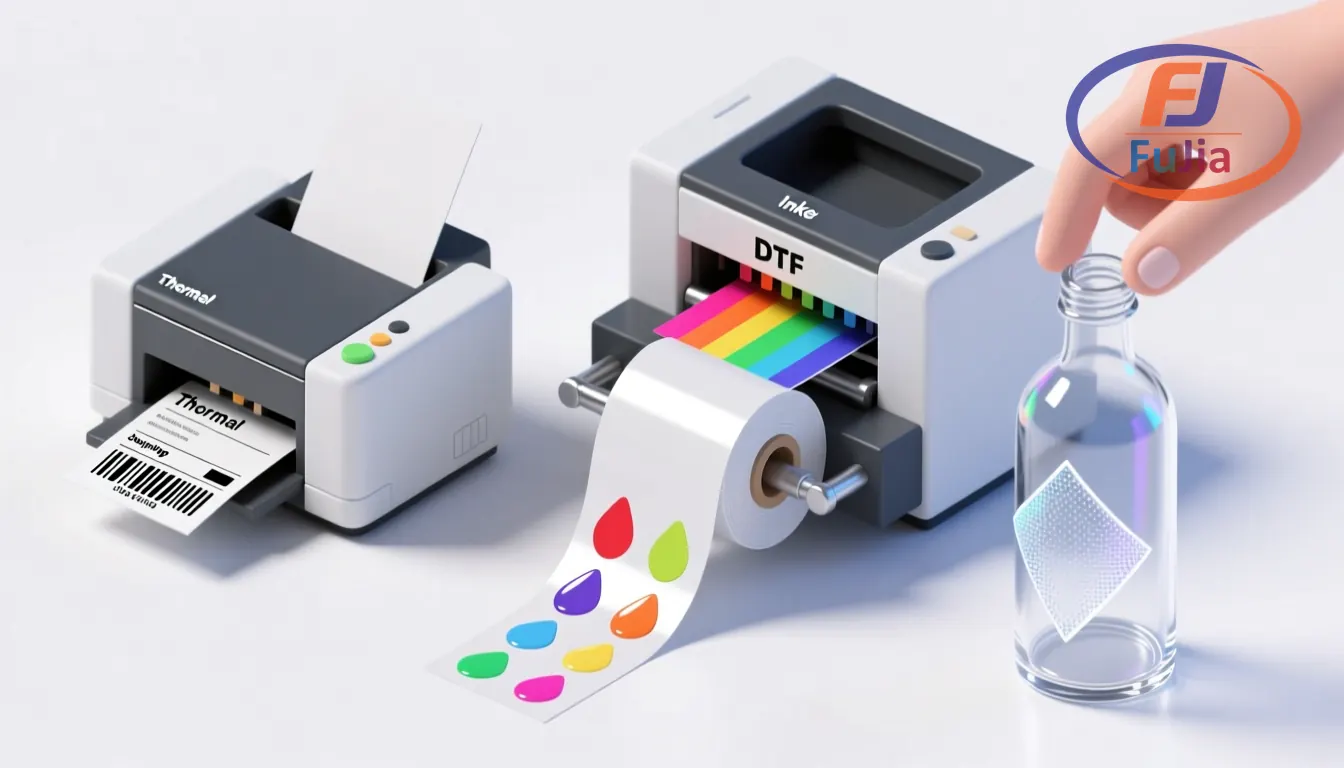
The printing process sets what a label can be, and the limits are physics rather than marketing. Thermal transfer burns single-color images onto coated stock, cheap and archival but monochrome by nature. Inkjet sprays dye or pigment onto label paper or synthetic rolls, full photographic color, water-fast with pigment inks, but constrained to label stocks that feed through the machine. UV DTF prints the design onto AB film, laminates it into a crystal decal, and hand-transfers it to any rigid surface in 10-15 seconds with no press and no label stock at all, with a 3H-plus scratch-hardness finish that survives shipping, washing, and handling.
\n\n\n\n| Need | \nThermal | \nInkjet roll | \nUV DTF | \n
|---|---|---|---|
| Photographic color | \nno | \nyes | \nyes | \n
| Any-shape rigid surface | \nno | \ndie-cut stock only | \nyes, hand-applied | \n
| Clear crystal look | \nno | \nclear stock possible | \nsignature look | \n
| Per-label cost | \n$0.01-0.03 | \n$0.03-0.15 | \n$0.02-0.05 | \n
| Daily ceiling (solo) | \n1,000+ | \n1,000-3,000 | \n1,000-5,000+ | \n
A small appliance brand we supply anchors the UV DTF tier with numbers: moving from screen-printed labeling to a UV A1 flatbed plus UV DTF, the brand lifted daily output from 200 to 800 pieces, cut design loading from 2-3 hours to 30 seconds, and eliminated the $150-400 per-screen setup that made short runs uneconomical. A 3C accessories maker runs the same play at smaller scale, pairing a UV A2 flatbed with a UV DTF A3 for same-day shipping at 60% lower per-label cost. Both stories live on our product labeling applications page. The honest split is substrate-shaped: packaged goods that live on shelves want roll labels or press labels with that finished-goods look, and rigid products, bottles, devices, tools, branded merchandise, take UV DTF crystal labels at the lowest cost per unit in the table.
\n\n\n\nWhat In-House Label Printing Actually Saves
\n\n\n\nThe savings math has three inputs the listings never mention: label volume per design, SKU count, and turnaround pressure. Below roughly 3,000 identical labels per design, outsourced printing charges setup and short-run premiums that in-house machines avoid entirely, which is why short-run-heavy buyers go in-house first. High SKU count rewards digital die-cutting, because every shape change on an analog line means new dies and on a digital press it means a file, and turnaround pressure prices the queue itself: outsourced labels ship in days, and a production line that stops for labels loses more per hour than a $2,000 inkjet costs per year.
\n\n\n\n| Buyer profile | \nRight tier | \nWhy | \n
|---|---|---|
| E-commerce shipping | \nthermal desktop $95-335 | \nbarcode and address only | \n
| Small brand, shelf products | \ninkjet color $1,549-4,200 | \nshort runs, full color | \n
| Multi-SKU brand | \ndigital press $12,995-14,100 | \ndie-cut freedom, no converter | \n
| Rigid-product maker | \nUV DTF $2,000-8,000 | \nno stock, no press, any shape | \n
| Contract label house | \nproduction press $15,000+ | \ncommercial volume | \n
When it comes to the outsourcing break-even, it moves with your design count, not just your volume. A shop ordering 10,000 labels of one design should keep outsourcing, because press-scale pricing beats any in-house machine at that run length; a shop ordering 500 labels across 40 designs monthly is paying short-run premiums on every order and is exactly who the inkjet and UV DTF tiers were built for. Most small brands will find their order history puts them in the second camp. The machine that fits is a $2,000-4,000 decision rather than a $14,000 one.
\n\n\n\n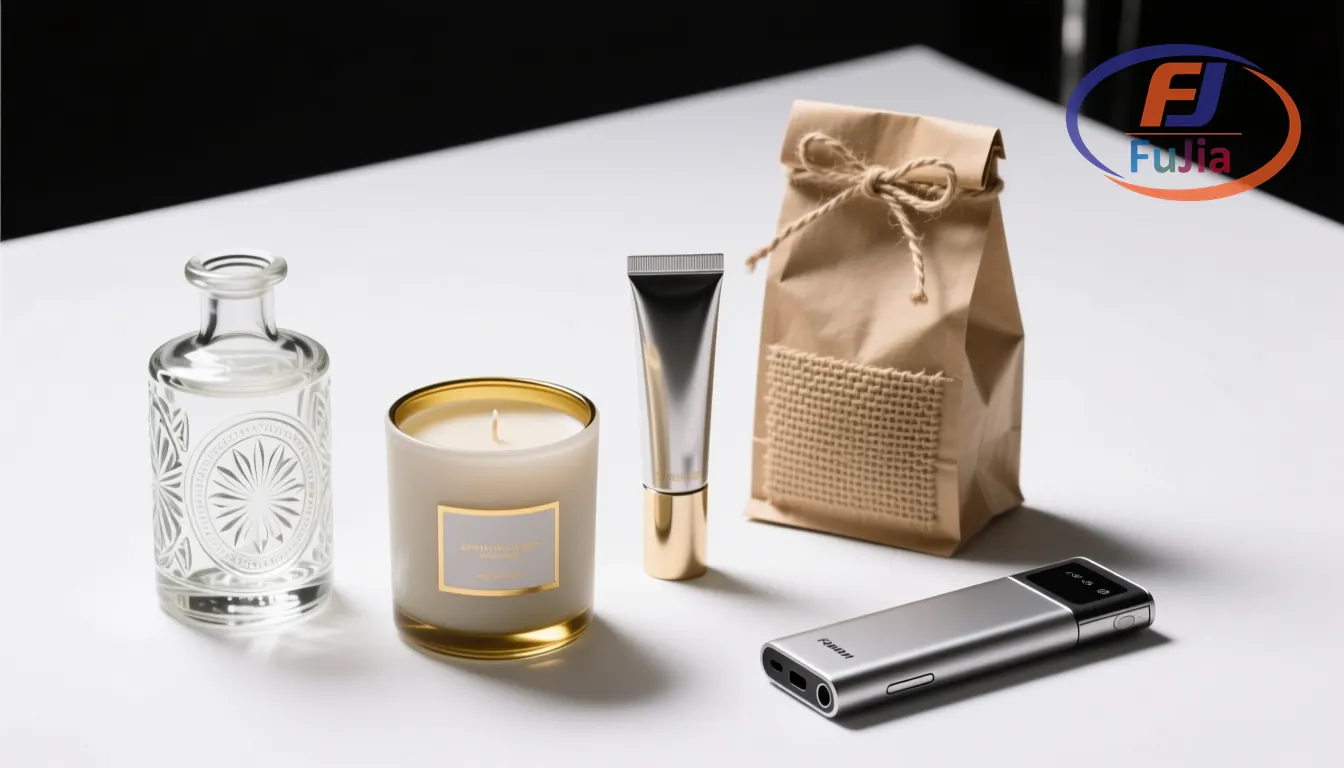
How much does a label printing machine cost?
\u003cp\u003eBy tier in 2026: thermal desktops run $95-335 (Brother QL-600 at $94.99, QL-1110NWB at $334.99, Rollo at $279.99), inkjet color label printers run $1,549-4,200 (Primera LX500 at $1,549, LX600 at $1,995, Afinia L701 at $4,203), digital label presses with die-cutting run $12,995-14,100 (IColor 400 class), and production presses span $15,000-85,000 (Epson SurePress class). Factor consumables per tier: thermal stock is pennies, inkjet rolls run $0.03-0.15 per label, and UV DTF film-and-ink runs $0.02-0.05 per label. Price the tier against your per-design volume, not against the sticker alone. A $300 mistake is a lesson; a $14,000 mistake is a lease payment on a machine that prints shipping labels.\u003c/p\u003e
What is the best machine for printing labels?
\u003cp\u003eThe best label machine matches label type to process: thermal desktops for shipping and barcode labels, Primera-class inkjet for full-color product labels under 3,000 daily, an IColor-class digital press when any-shape die-cutting and multi-SKU runs justify $13,000-plus, and a UV DTF setup for branding rigid products where crystal labels hand-apply in 10-15 seconds. Within the inkjet tier, pigment-ink models buy water-fastness for products that see moisture, and dye models buy vivid color for dry goods. Judge every candidate on cost per finished label at your volume, including the labor of finishing. The machine that wins on paper and the machine that wins on your bench are frequently different, so let a sample run arbitrate.\u003c/p\u003e
How much does a digital printing machine cost?
\u003cp\u003eDigital label and printing machines span the full market: $95-335 for thermal desktops, $1,549-4,200 for color label inkjets, $12,995-14,100 for digital label presses, and $15,000-85,000 for production press class. The same digital-printing logic prices other categories too, with UV flatbeds at $5,500-8,000-plus for direct-to-object work and wide-format machines higher, per our \u003ca href=\u0022https://fujiaprinter.com/uv-printers/\u0022\u003eUV printers\u003c/a\u003e lineup. Whatever the category, the honest number is total cost per finished piece at your volume, because sticker price and cost per unit move in opposite directions across the tiers.\u003c/p\u003e
Can a regular printer print labels?
\u003cp\u003eA regular office inkjet prints on full-sheet label stock and works for occasional, hand-applied labels at hobby scale, but it is not a label machine: no die-cut roll feeding, no roll handling, and per-label cost stays high because sheet stock wastes layout space. Dedicated label machines exist precisely because roll feeding, roll tensioning, and cut control are the actual engineering. For product-scale labeling, the jump from sheet-stock improvisation to a $1,549 roll inkjet or a UV DTF setup repays itself in material waste and labor within months at realistic volumes. Until that volume arrives, sheet stock is an honest tool rather than a trap.\u003c/p\u003e
Verdict
\n\n\n\nA digital label printing machine is a tier-and-process decision: thermal for logistics, inkjet color for short-run product labels, digital presses for die-cut freedom at multi-SKU volume, and UV DTF for branding any rigid product at $0.02-0.05 per label. Write down the last 90 days of label orders before pricing anything, because volume per design and SKU count pick the tier more reliably than spec sheets. To see UV DTF crystal labels on your own products before committing, contact Fujia Print for a sample run.
\n\n\n\nSources
\n\n\n\n- \n\n\n
- Primera color label printers: inkjet label tier pricing and specifications. \n\n\n
- Epson SurePress digital label presses: production press class reference. \n\n\n
- Wikipedia: Label printer: thermal and inkjet label printing mechanisms. \n\n\n
- Wikipedia: Die cutting: digital die-cutting background. \n\n\n
