

Sublimation paper in 13×19 inch, the A3+ super-size format, runs $12.99-57.95 per pack in 2026 and exists for one reason: products that swallow a letter sheet whole, from 20 oz tumblers to adult XXL shirt fronts to oversized wall panels. This guide prices the format across real listings, names the printers that actually feed 13-inch stock, and runs the math on when one super-size sheet beats two tiled letter transfers. The format is a tool, and like every tool it punishes buyers who adopt it for the wrong products.
\n\n\n\n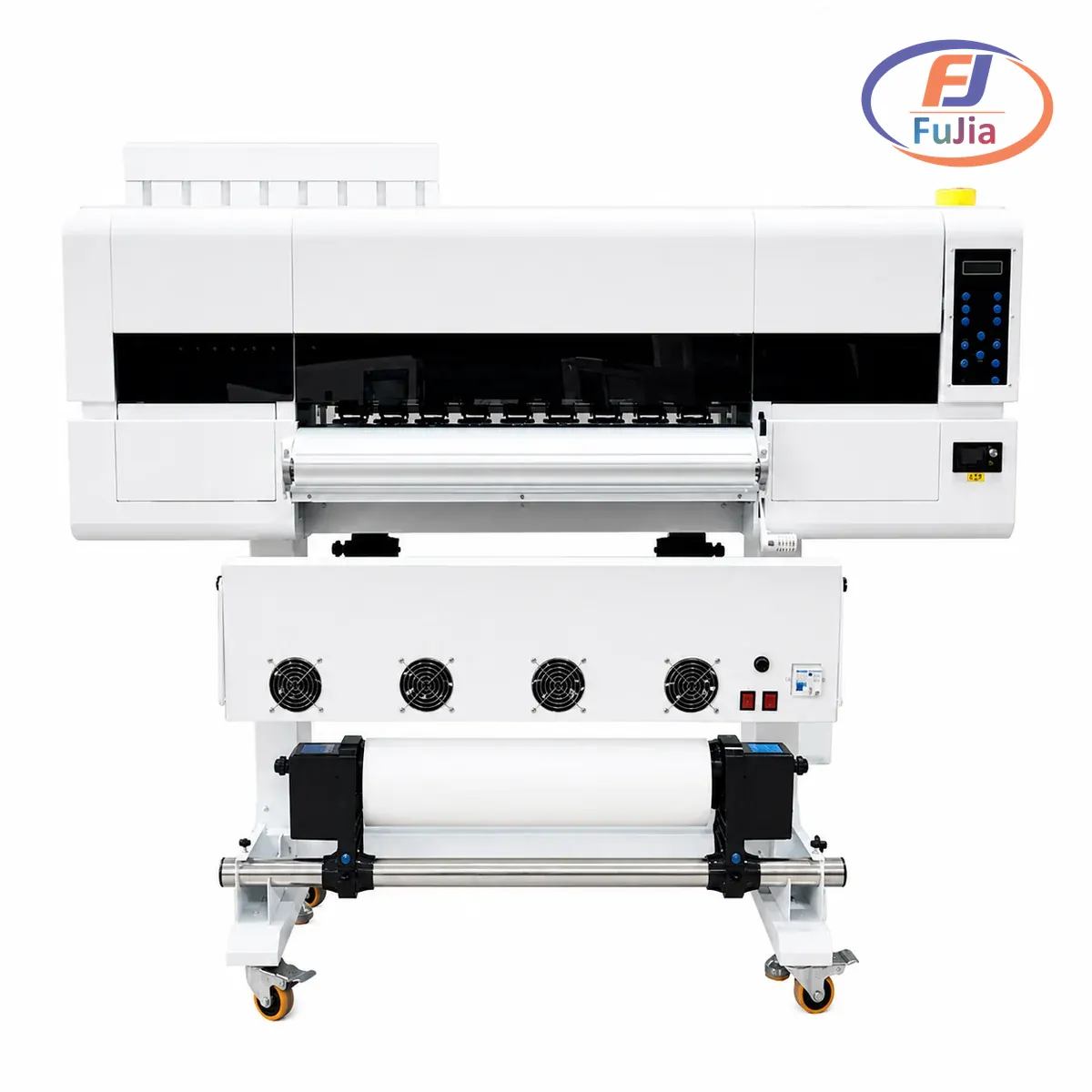
Key Takeaways
\n\n\n\n- \n\n\n
- Real 2026 pricing: economy 13×19 packs run $12.99-13.50 per 20-110 sheets, mainstream 100-sheet packs run $23-35.95, and premium grades like Neenah Jetcol reach $54.99-57.95 per 100. \n\n\n
- A3+ printing needs a printer whose carriage physically accepts 13-inch stock: Epson ET-15000 and EcoTank A3+ class, Epson F570 24-inch, and wide-format converted machines; letter-size printers cannot be upgraded into the format. \n\n\n
- One 13×19 sheet covers a full 20 oz tumbler wrap, an adult XXL front, or a 12×18 photo panel in a single press, eliminating the seam alignment that tiled letter sheets introduce. \n\n\n
- Effective per-sheet economics: economy grades land near $0.12-0.23 per sheet and premium near $0.55, so grade selection matters more in this format than in 8.5×11 because each sheet carries a whole product. \n\n\n
- The format wastes money on small products: a mug wrap printed on 13×19 stock pays for coverage it throws away, which is why working shops split formats by product family rather than standardizing on super-size. \n\n\n
Why 13×19 Exists: Products That Swallow Letter Size
\n\n\n\nThe letter-size sheet, 8.5×11 inches, was designed for documents, and sublimation products have quietly outgrown it. A 20 oz straight tumbler needs a wrap roughly 12.5 inches long before seam allowance; an adult XXL full-front print runs 12-14 inches wide; a gallery photo panel at 12×18 leaves a letter sheet two inches short in both directions. The options at that point are three: tile multiple letter transfers and fight seam alignment on every press, step up to 13×19 super-size sheets and press once, or move to roll-fed wide format at 17, 24, or 44 inches. The 13×19 format sits in the middle as the cheapest entry into whole-product pressing, because it runs on A3+ desktop printers that cost a fraction of wide-format machines.
\n\n\n\nThe seam argument deserves specifics because it is the entire case for the format. A tiled transfer puts two ink deposits on one product with a visible junction line where dye density doubles or halves, and 60-second press cycles give no second chance at alignment. A single 13×19 sheet presses the full design in one pass with uniform dye gas and zero junction geometry, and the wrap lands with continuous color from rim to base. For products sold on visual continuity, all-over-print shirts, full-wrap tumblers, seamless panels, that difference is the difference between a reorder and a return.
\n\n\n\nReal 2026 Prices Across Grades
\n\n\n\n| Grade | \nProduct example | \nPack size | \n2026 price | \nPer sheet | \n
|---|---|---|---|---|
| Economy | \nTBS Economy | \n20 sheets | \n$13.50 | \n$0.68 | \n
| Economy bulk | \nA-SUB 105 gsm | \n110 sheets | \n$12.99-25 | \n$0.12-0.23 | \n
| Mainstream | \nKoala 123 gsm | \n50 sheets | \n$14-25 | \n$0.28-0.50 | \n
| Mainstream bulk | \nInkOwl | \n100 sheets | \n$35.95 | \n$0.36 | \n
| Premium | \nNeenah Coldenhove Jetcol | \n100 sheets | \n$54.99-57.95 | \n$0.55-0.58 | \n
The grade ladder prices exactly what it delivers. Economy 105 gsm stock suits hard blanks and test runs where dye uptake efficiency matters more than ink density; mainstream 120-125 gsm carries the photographic loads that apparel and panels demand; premium Jetcol-class engineering buys high-release coatings that transfer more ink per drop and matter most on gallery products where color depth is the selling point. The honest selection rule mirrors every other consumable: match the grade to the product’s ink load, and test one pack of each before standardizing.
\n\n\n\nPer-product economics frame the decision better than per-sheet prices. A full-wrap tumbler on premium 13×19 paper carries $0.55 of paper against a $18-25 personalized product, under 3% of selling price; the same wrap tiled on two letter sheets of economy stock runs $0.24 of paper but adds 3-5 minutes of alignment labor and carries the seam risk. We recommend grading up when the product retails above $20 and grading down for volume hard blanks, because the paper cost is trivial against both the labor and the failure cost at those price points.
\n\n\n\nWhich Printers Feed 13-Inch Stock
\n\n\n\n| Printer class | \nFeeds 13×19? | \nNotes | \n
|---|---|---|
| Letter-size EcoTank (ET-2800 class) | \nno | \ncarriage physically caps at 8.5 in | \n
| A3+ EcoTank (ET-15000 class) | \nyes | \nthe converted-sublimation mainstream for super-size | \n
| Epson F170 purpose-built | \nno | \n8.5 in desktop format | \n
| Epson F570 (24 in) | \nyes | \nOEM sublimation, roll and sheet | \n
| Wide-format converted (17-44 in) | \nyes | \nroll-fed, cuts any size | \n
The printer is the gate on the whole format, and the gate is physical rather than a driver setting. Letter-size carriages cannot accept 13-inch stock, so shops already converted on ET-2800-class machines face a printer upgrade to enter super-size, while ET-15000-class owners already hold the entry ticket. The F570 adds OEM peace of mind at 24 inches with both sheet and roll feeding, and true wide-format machines make the 13×19 question irrelevant by cutting every size from roll stock. Our sublimation printers lineup maps the full width ladder from A3+ conversion through 60 cm production platforms.
\n\n\n\nReal-world friction is supply, not hardware: 13×19 stock sells out and delays more often than letter size because it is a lower-volume SKU at every retailer, a pattern any search of tumbler-maker forums confirms with backorder complaints on the format. Shops running super-size as their production backbone keep a two-brand rotation for exactly that reason. The format’s supply variance is the strongest argument for case-quantity buying of whichever grade passes testing.
\n\n\n\nWhen Super-Size Beats Tiling (and When It Does Not)
\n\n\n\nThe decision matrix is product-shaped, not price-shaped. Super-size wins on wraps and full-coverage apparel where seam risk is unacceptable and the product carries a $20-plus price point; tiling wins on small hard blanks where two mug prints fit one letter sheet anyway and economy stock prices dominate; roll feeding wins on mixed production above roughly 1,000 prints monthly where cutting any size beats stocking three sheet formats. A mug brand we supply illustrates the middle path: the brand moved from 15 single-color SKU production to 60-plus full-color SKUs on sublimation at 5,000-plus pieces monthly, and the workflow splits sheet formats by product family, letter stock for standard mugs and super-size for full-wrap drinkware, keeping paper cost matched to what each product actually earns.
\n\n\n\nWhen it comes to format upgrades, they are workflow decisions disguised as shopping decisions. The shop that buys 13×19 stock for an occasional oversized order pays premium per-sheet pricing on everything and still owns a letter workflow; the shop that commits to whole-product pressing buys the A3+ printer, the format rotation. The case quantities together. The per-product economics land where the table predicts. Most small shops will find the honest answer is a split rotation rather than a single format. That is fine. Rotation beats standardization whenever products vary as much as sublimation products do.
\n\n\n\n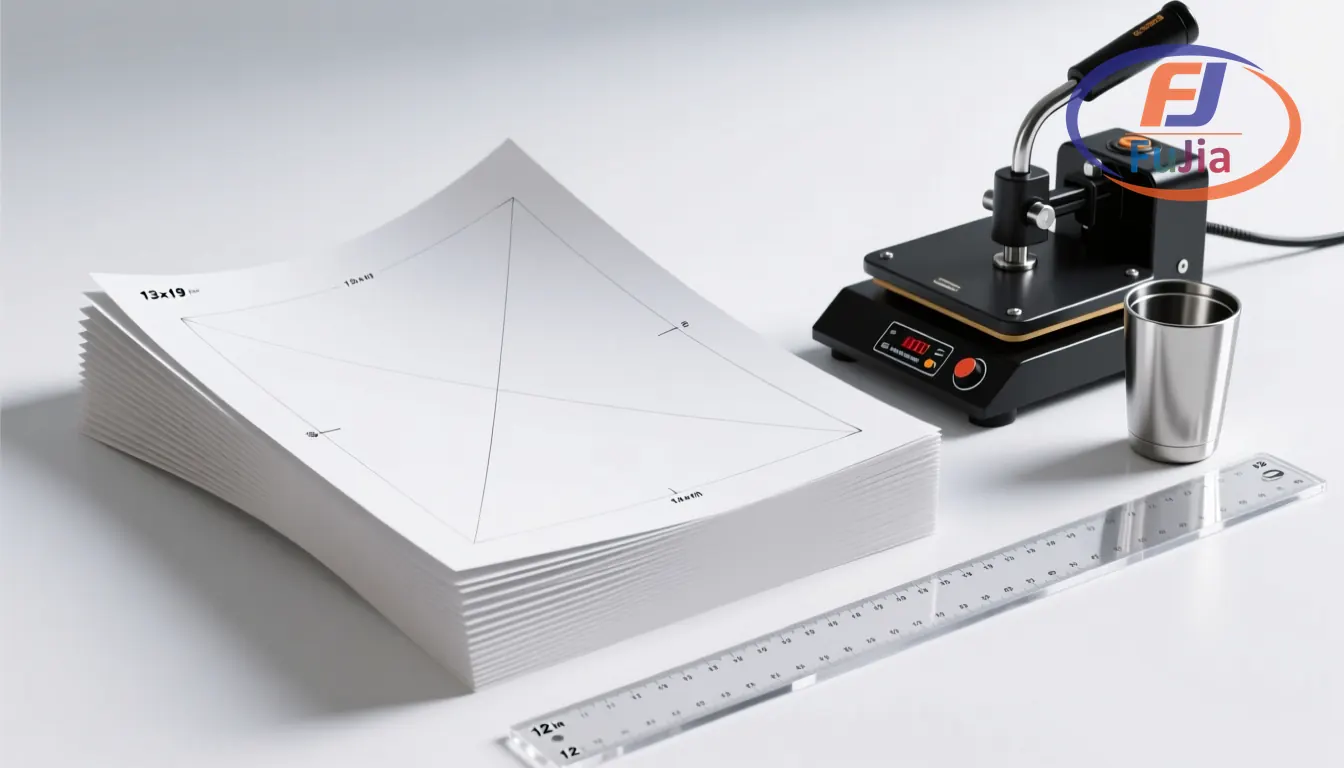
What sublimation printer can print 13×19?
\u003cp\u003ePrinters that physically accept 13-inch-wide stock: the Epson ET-15000 and fellow A3+ EcoTank class in converted sublimation duty, the Epson SureColor F570 at 24 inches in OEM sublimation duty, and wide-format converted machines from 17 to 44 inches feeding roll or sheet. Letter-size printers including the F170 and ET-2800 class cannot be upgraded into the format because the carriage geometry caps at 8.5 inches. Choose by weekly super-size volume: A3+ desktops serve under 200 sheets weekly, and the F570 or wide-format class takes over past that line.\u003c/p\u003e
What sizes does sublimation paper come in?
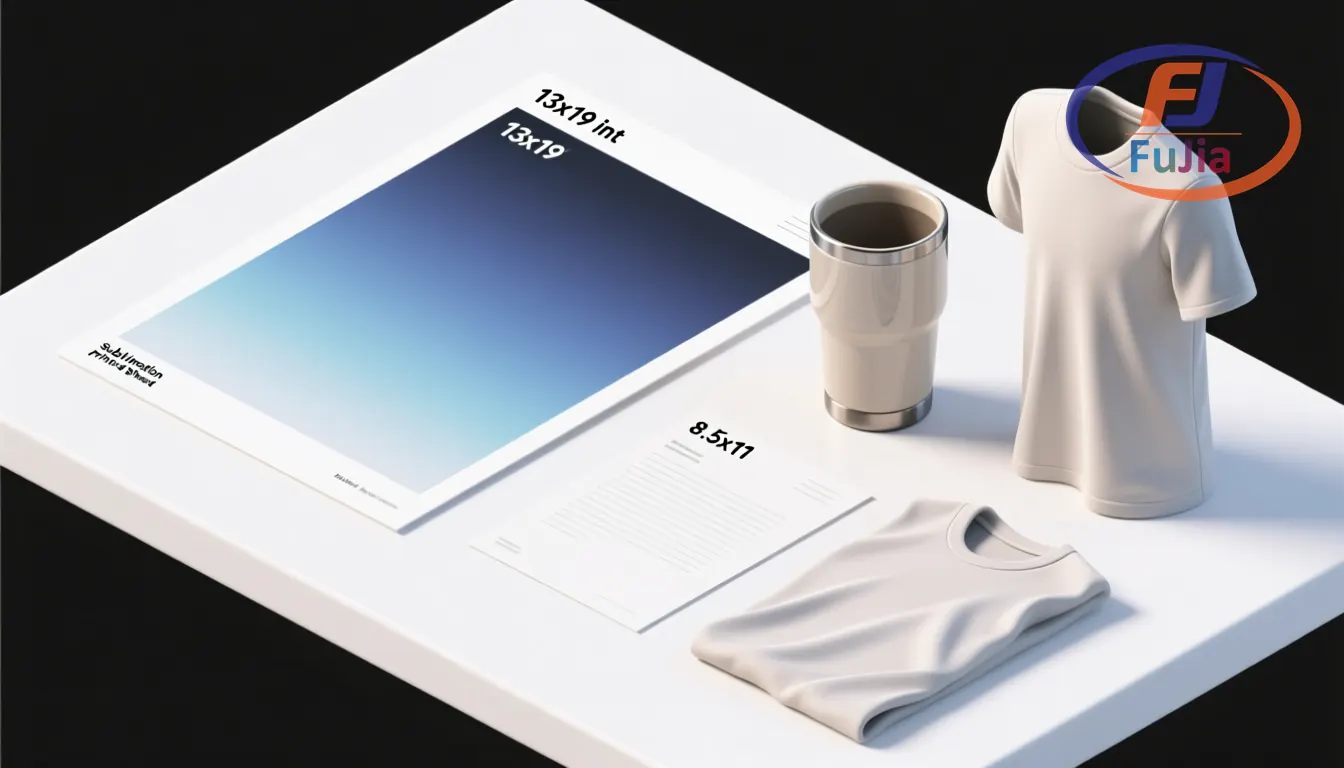
\u003cp\u003eThe sheet ladder runs 8.5×11 letter, 11×17 tabloid, 13×19 super-size (A3+), and 17×25 or larger specialty formats, with rolls spanning 17, 24, 36, and 44 inches by 100-394 feet. Each sheet size maps to product families: letter for mugs and baby apparel, tabloid for adult shirts, 13×19 for full-wrap drinkware and XXL fronts, rolls for mixed production cutting custom sizes. Gram weights run 100-125 gsm across all formats, and the same grade-selection logic applies regardless of sheet dimensions. When in doubt, buy the smallest pack of each size and let your own press results pick the rotation.\u003c/p\u003e
Can I print sublimation paper on a regular printer?
\u003cp\u003eYes, with two conditions: the printer must use piezo inkjet heads, which is every Epson inkjet and the reason EcoTank conversions dominate, and it must be dedicated to sublimation ink permanently, because regular dye ink and sublimation ink cross-contaminate beyond recovery. Laser printers cannot sublimate at all, since their fuser heat fixes toner rather than releasing dye. The conversion path and its warranty math are covered in detail in our \u003ca href=\u0022https://fujiaprinter.com/sublimation-epson-ink/\u0022\u003esublimation ink guide\u003c/a\u003e, including which Epson models convert cleanly and which resist.\u003c/p\u003e
Does Hobby Lobby sell sublimation paper?
\u003cp\u003eYes, Hobby Lobby and other craft retailers stock retail sublimation paper, overwhelmingly in 8.5×11 letter packs with limited 11×17 availability and almost no 13×19 presence, because super-size is a working-seller format rather than a weekend-craft format. For 13×19 stock, online suppliers including A-SUB, Koala, InkOwl, and Neenah distributors carry consistent inventory, with case pricing at 100-sheet quantities. Craft retail serves the letter-size hobby market well. The super-size production market belongs to online and manufacturer-direct channels, and pretending otherwise costs a week of backorder waiting per order.\u003c/p\u003e
Verdict
\n\n\n\nSublimation paper 13×19 is the entry ticket to whole-product pressing: one sheet covers a full tumbler wrap, an XXL front, or an oversized panel in a single seam-free press, priced from $0.12 economy to $0.55 premium per sheet in 2026. The format requires an A3+ or wider printer, rewards case buying against the format’s supply variance, and pays for itself only on products that genuinely swallow letter size. Grade by product family, keep a two-brand rotation, and to match super-size paper to a production sublimation platform, contact Fujia Print for format and grade samples.
\n\n\n\nSources
\n\n\n\n- \n\n\n
- Koala sublimation paper: 13×19 format specifications and gsm grading. \n\n\n
- Neenah Coldenhove Jetcol: premium high-release paper engineering reference. \n\n\n
- Wikipedia: Paper size: A3+ and super-size format standards. \n\n\n
- Wikipedia: Dye-sublimation printing: transfer chemistry background. \n\n\n
