

A UV printer for phone cases needs three things above all else: a flat bed that holds a grid of cases, white ink circulation that keeps overnight nozzles alive, and LED curing hard enough to survive keys scraping plastic, and the 2026 market sells that package from about $1,180 for entry A4 units to $8,000-plus for 6090 production flatbeds. This guide prices every tier with real listings, names the specs that separate case shops that scale from ones that stall, and runs the per-cycle output math that decides which machine pays for itself. Match the bed size to your weekly case count and the choice becomes arithmetic.
\n\n\n\n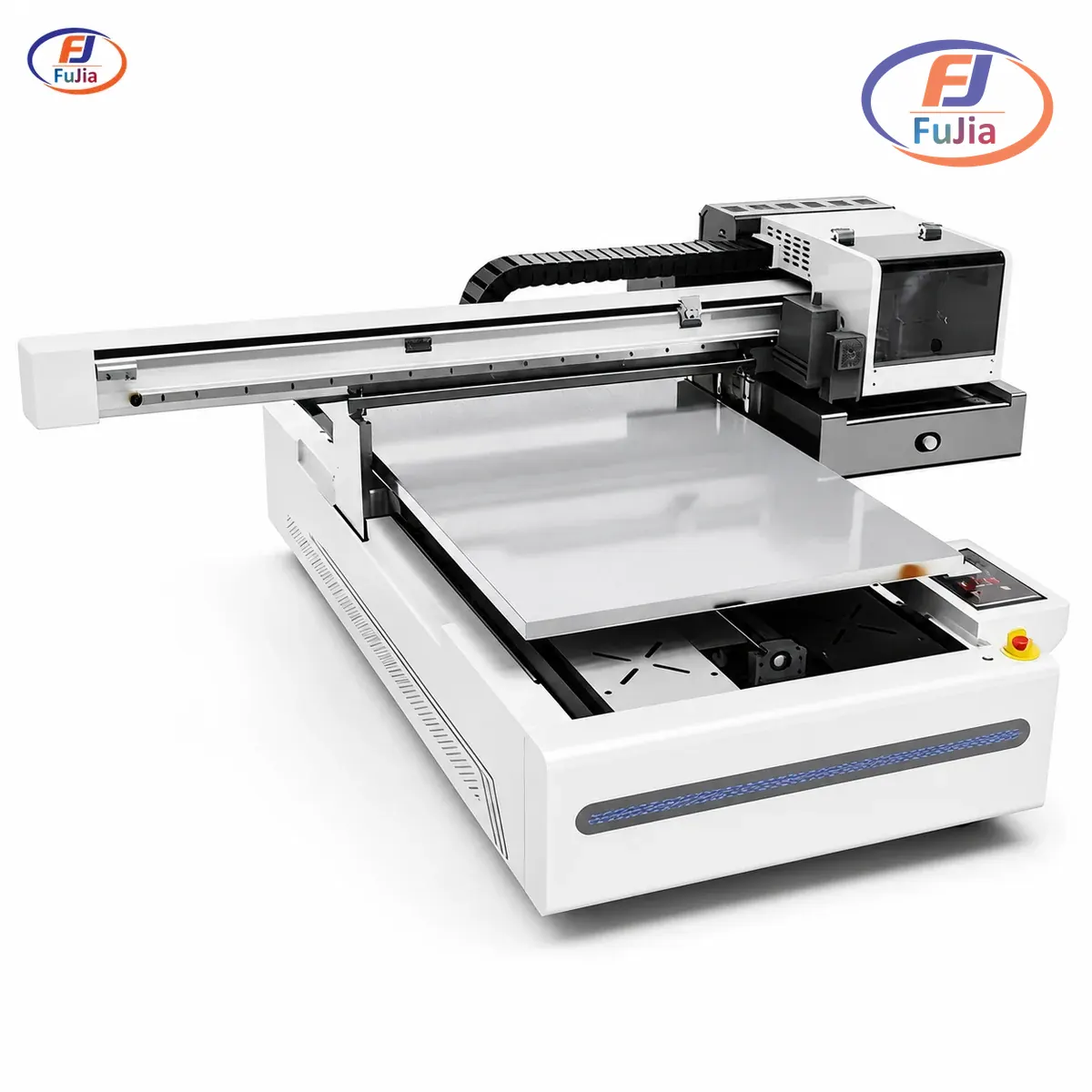
Key Takeaways
\n\n\n\n- \n\n\n
- UV printing is the gold standard for phone cases because it prints directly on TPU, PC, silicone, and leather with white ink, varnish, and instant LED curing; sublimation needs coated blanks and screen printing needs per-color screens. \n\n\n
- Real 2026 pricing: entry A4/A5 flatbeds run $1,180-2,700, A3 flatbeds $2,700-4,500, and 6090-class production beds $5,500-8,000-plus. \n\n\n
- The five specs that matter for case work: white ink circulation, auto height sensing up to 100 mm, varnish channel for 3D texture, RIP grayscale control, and a bed jig system that fixes cases in a grid. \n\n\n
- Output math: a 6090 bed holds roughly 30-48 cases per cycle at 2-4 minutes per run, which is 500-1,000 cases daily on one shift, against 2-3 minutes per case on entry machines. \n\n\n
- Phone case demand rarely stays phone case demand; the same bed prints acrylic tags, golf balls, USB drives, and wooden plaques, which is why bed size should anticipate the product mix you will sell in six months. \n\n\n
Why UV Wins the Phone Case Market
\n\n\n\nPhone case decoration splits into four technologies, and the case itself decides the winner. UV flatbed printing cures ink directly onto the case surface, whether that surface is TPU, polycarbonate, silicone, or leather, with a white underbase that makes colors pop on black cases and a varnish layer that adds texture customers pay extra for. Sublimation prints only onto specially coated inserts that you glue into generic case shells, two processes per product and a plastic edge that shows. Screen printing handles bold single-color logos in bulk but needs one screen per color and collapses on photographic designs. Heat transfer film sits at the low end, and its prints scuff off within weeks of pocket life.
\n\n\n\nThe economics follow the process. A direct-to-case UV print consumes $0.05-0.15 of ink per case, sells the finished product at a $5-15 personalization premium over the blank, and needs no consumable beyond ink and occasional varnish. UV-cured ink bonds to the case polymer hard enough to survive key-scrape and pocket abrasion, which is exactly the failure mode that kills transfer-based case decoration. Per AATCC-style rub testing on cured UV ink, properly cured prints hold through hundreds of abrasion cycles, the difference between a case that looks new at month three and one that embarrasses the customer.
\n\n\n\nReal 2026 Prices by Tier
\n\n\n\n| Tier | \nExample machines | \n2026 price | \nBed | \nCases per cycle | \n
|---|---|---|---|---|
| Entry A4/A5 flatbed | \nSonpuu-class A5, eBay A4 units | \n$1,180-2,700 | \n4-8 cases | \n2-3 min | \n
| A3 flatbed | \nDAQIN-class, generic A3 | \n$2,700-4,500 | \n8-15 cases | \n3-4 min | \n
| 6090 production | \nFujia 6090, Alibaba 6090 listings | \n$5,500-8,000+ | \n30-48 cases | \n2-4 min | \n
The entry tier is a real UV printer and a real learning platform, and its limits are bed arithmetic rather than print quality. An A4 bed holds four to eight cases, and at two to three minutes per cycle including loading, one operator tops out near 150-250 cases daily, which serves an Etsy shop and stalls a promo distributor. The A3 tier doubles the grid and adds reliable auto height sensing, and it is the tier where most working case shops actually live. The 6090 tier changes the product: a 600×900 mm bed laid out with case jigs holds 30-48 units, prints the full grid in one pass, and turns phone cases from a side item into a production line.
\n\n\n\n| Spec | \nWhy it matters for cases | \nEntry tier reality | \nProduction tier reality | \n
|---|---|---|---|
| White ink circulation | \nwhite pigment settles in hours; clogged white channel kills black-case work | \npump or absent | \nfull circulation + stirring | \n
| Auto height sensing | \ncases vary by shell; fixed focus scraps grids | \nfixed or manual | \nauto, up to 100 mm | \n
| Varnish channel | \n3D/embossed texture commands premium pricing | \nrare | \nCMYK+W+V standard | \n
| Bed jig system | \ncases must sit exactly or the grid misprints | \ntape or loose trays | \nmachined jig grid | \n
| RIP grayscale | \nsmooth photos on small surfaces need ink limits tuned | \nbasic driver | \nfull RIP control | \n
The Five Specs That Matter for Case Work
\n\n\n\nWhite ink circulation is the spec that decides whether your machine prints black cases on Monday morning. UV white pigment is a heavy suspension, and in a pump-less system it settles into sludge overnight, which is why entry machines demand manual agitation rituals and why the Fujia 6090 runs an automatic circulation loop that keeps the white channel alive, the same engineering logic as DTF white systems. Auto height sensing is second, because a case grid with mixed shell thicknesses needs the head to measure per-zone clearance; a fixed-focus entry bed compensates with shims and hope, and hope misprints grids.
\n\n\n\nVarnish is third and it is the revenue spec: spot gloss, matte contrast, and 3D embossed texture command 30-50% higher per-unit pricing on premium cases, per the same varnish economics that play out across UV signage work. Bed jigs are fourth, and they are the unglamorous difference between 40 aligned cases and 40 slightly rotated ones; a machined grid that seats each shell at a repeatable position turns multi-case cycles into a stamping operation. RIP grayscale control is fifth, phone cases are small canvases where banding shows, and proper ink-limit calibration is what separates photographic skin tones from postered ones.Fitting case shops, the varnish channel and jig system are the two specs buyers skip and then retrofit, so price them in from day one.
\n\n\n\nPer-Cycle Output Math and Which Tier Fits
\n\n\n\nThe case-per-cycle arithmetic decides what the machine earns, so it deserves better than vibes. An entry A4 bed with 6 cases at 3 minutes per cycle runs about 120 cases per hour of pure pressing, but loading and unloading six small objects takes longer than the print, so realistic solo output lands at 60-100 cases per hour, 400-600 per day before the operator’s hands give out. An A3 bed at 12 cases runs roughly double that. The 6090 grid at 30-48 cases cycles in 2-4 minutes and, critically, loading happens while the previous grid prints on dual-table workflows, which is how the same single operator sustains 500-1,000 cases per day.
\n\n\n\nThe promotional-product case on our site makes the tier jump concrete: a phone case brand we supplied expanded from 12 to 40-plus SKUs within 60 days of installing a 6090 with a rotation jig, cut batch time from 48 hours to 4, and now ships 8,000-plus finished cases per month at a 75% margin. That volume is unreachable on desktop hardware not because desktop machines print worse, but because their bed arithmetic cannot compound. A Kenyan glassware workshop running the same 6090 platform shows the other side of the bed’s flexibility: 200 to 300 finished pieces daily across glassware, with waste cut from 15% to 9%, because the cases were only ever part of the plan.
\n\n\n\nThe real question with tier selection is simple: the printer you buy for phone cases will spend a third of its life on things that are not phone cases, acrylic display tags, golf balls, USB sticks, wooden plaques, wallet leather, so the honest sizing question is not “how many cases do I print now” but “what product mix do I want to be selling in six months.” Under 100 cases weekly, an entry A4 pays; a promo shop with mixed rigid goods lands at A3; wholesale volume with SKU variety belongs on the 6090 bed, which is why our UV printers lineup and promotional products application page read as one decision.
\n\n\n\n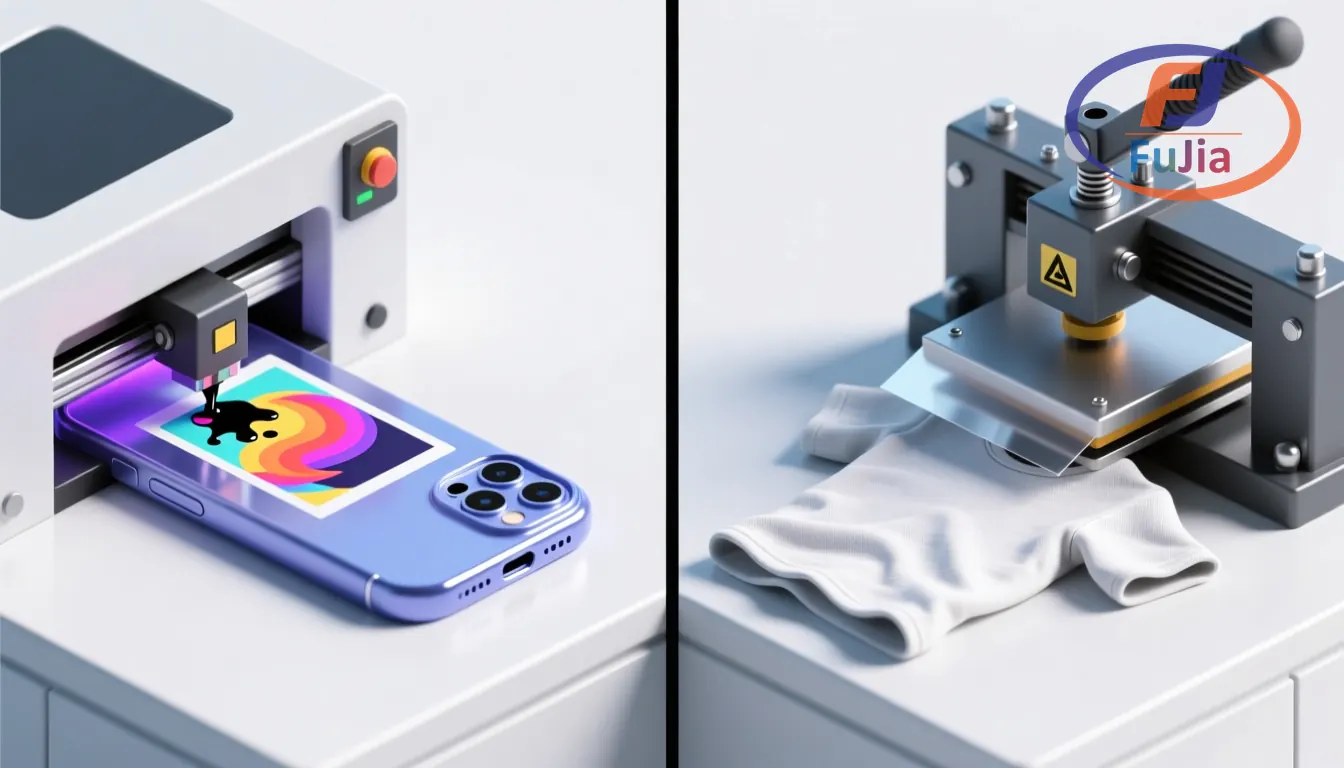
Can UV printing be used on phone cases?
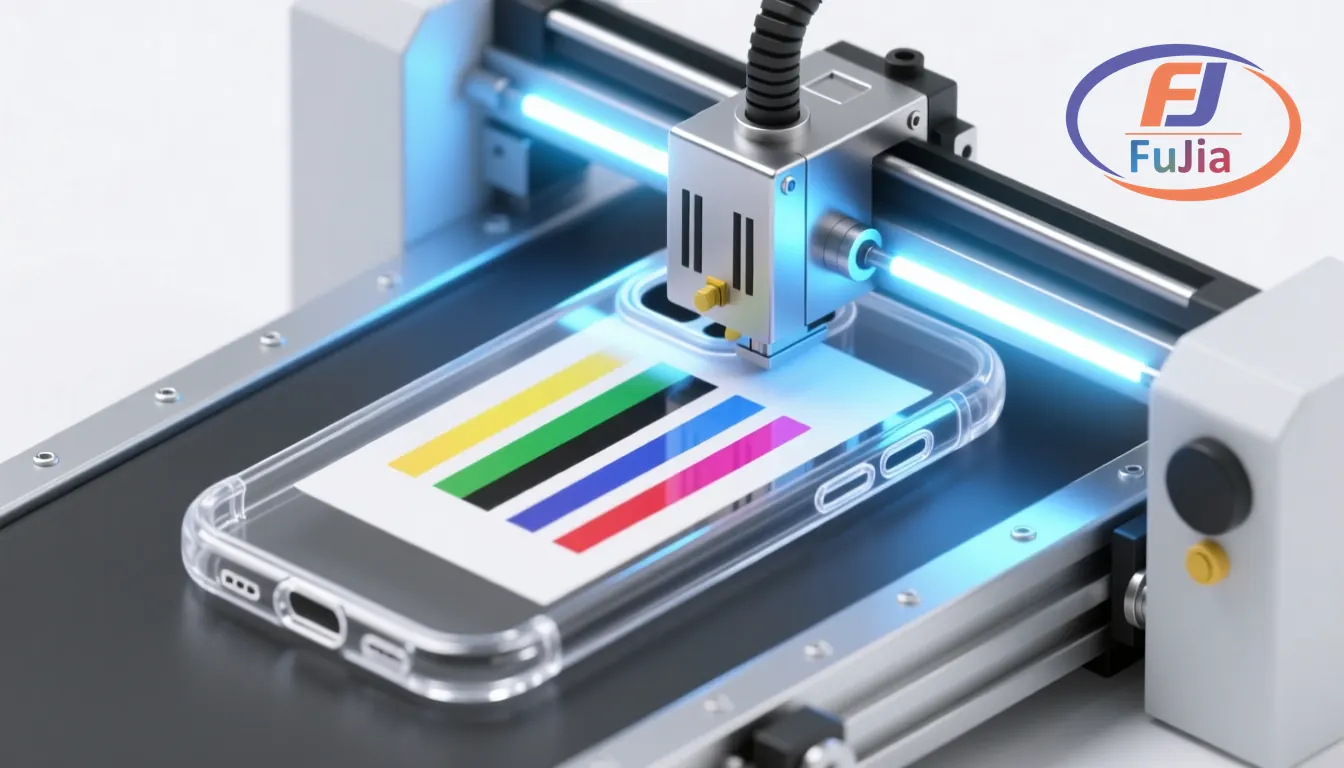
Yes, and it is the best process for the job: UV ink cures directly onto TPU, polycarbonate, silicone, and leather cases with a white underbase for dark shells and optional varnish for texture. The cured print survives pocket abrasion and key scrapes that lift transfer films within weeks. The only requirements are a flatbed that can fix the case in position, height clearance for curved shells, and white ink circulation if black-case work matters to your orders.
What printer do you need to make phone cases?
A UV flatbed printer is the production answer: an entry A4/A5 unit from $1,180-2,700 handles under 100 cases weekly, an A3 flatbed at $2,700-4,500 serves working case shops, and a 6090 production bed at $5,500-8,000-plus prints 30-48 cases per cycle for wholesale volume. Sublimation and heat transfer setups decorate coated inserts rather than the case itself, and screen printing only pays on bulk single-color logo runs. Choose by weekly case count and by the other rigid products you plan to run on the same bed.
How much does a phone case UV printer cost?
Real 2026 listings run from $1,180 for entry flatbed units through $2,658-2,829 for compact A3-class machines on marketplace listings, up to $5,500-8,000-plus for industrial 6090 flatbeds with white circulation and varnish channels. Add running consumables to any comparison: ink runs $0.05-0.15 per case, varnish adds a separate supply line, and jigs are a one-time fixture cost. The honest metric is cost per finished case at your volume, where the 6090 grid math usually beats desktop machines above roughly 200 cases daily. Budget a sample-ink-and-media allowance for the first month, because case substrates vary more than listings admit.
What is the best machine to print on phone cases?
The best machine is the tier whose bed matches your order flow: A4-class for craft volume, A3 for daily mixed production, 6090 for wholesale SKU variety, and the specs that matter in every tier are white ink circulation, auto height sensing, a varnish channel, and a jig system that holds cases in a repeatable grid. Most small shops will regret buying on price alone and skipping the jig and varnish specs, because both get retrofitted at higher cost later. Test print your actual case models before signing, and judge alignment across a full grid cycle rather than on a single hero case.
Verdict
\n\n\n\nA UV printer for phone cases is a bed-size decision wrapped around five specs, and the 2026 market prices the tiers honestly: $1,180-2,700 entry beds for craft volume, $2,700-4,500 A3 flatbeds for working shops, $5,500-8,000-plus 6090 grids for wholesale production where 30-48 cases print per cycle. Prioritize white ink circulation, height sensing, varnish, jigs, and RIP control, and remember the bed will spend a third of its life on products that are not cases. Price the tier your order book supports, test on your actual shells, and to run your case models on a 6090 grid before you commit, contact Fujia Print for a sample print session.
\n\n\n\nSources
\n\n\n\n- \n\n\n
- Roland DGA glass and direct-to-object printing: industrial UV direct-to-object reference. \n\n\n
- Procolored UV printer lineup: market pricing reference for direct-to-case UV machines. \n\n\n
- Wikipedia: Ultraviolet curing: LED curing chemistry behind UV ink adhesion. \n\n\n
- Wikipedia: Phone accessory: case materials and market context. \n\n\n
