

For photo-real, small-batch, full-color work, DTG is the better pick; for simple logos, tough fabrics, and shops without ink, heat transfer wins. This comparison breaks down cost, durability, and best use.
Key Takeaways
- Winner for photo-real full color and small batches: DTG.
- Winner for simple logos, names, and tough or synthetic fabric: Heat Transfer.
- Bottom line: DTG for detail and no per-design labor; heat transfer for simplicity and the lowest startup cost.
- Next step: match the method to your monthly volume and artwork type before you buy hardware.
Side-by-Side Comparison
Last updated: 2026-07
| Feature | Direct-to-Garment (DTG) | Heat Transfer (HTV) |
|---|---|---|
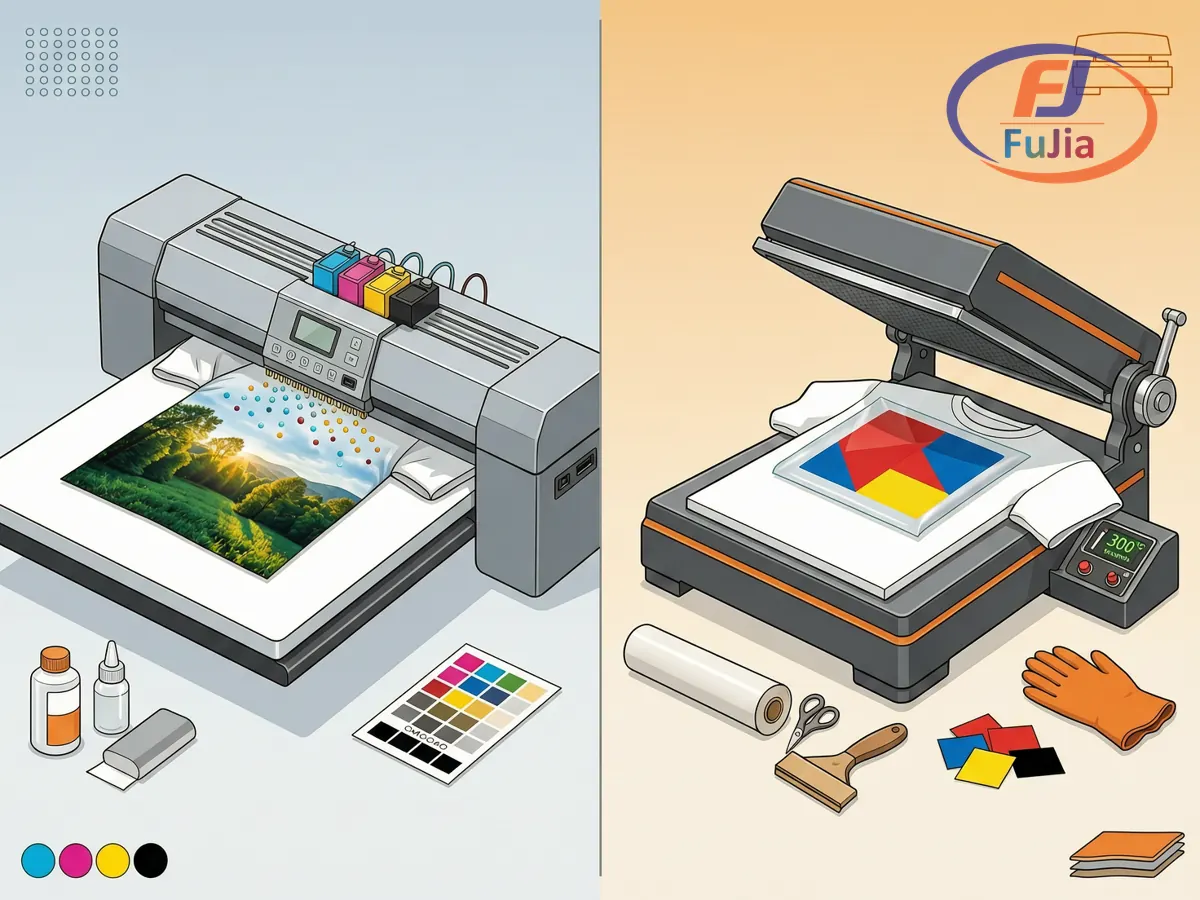
| How it works | Water-based ink into the fiber | Vinyl sheet pressed onto the surface |
| Setup | None, print from file | Cut and weed the vinyl |
| Best for | Photos, gradients, small batches | Simple logos, names, numbers |
| Fabric range | Cotton and high-cotton blends | Cotton, polyester, nylon, blends |
| Durability | 50 plus washes, AATCC Grade 4 to 5 | Very high, survives commercial wash |
| Equipment cost | Higher (printer plus pretreat) | Lower (cutter plus heat press) |
| Per-piece cost | Lower at volume | Higher per unique design |
| Color count | Unlimited, photo-real | Limited by vinyl colors loaded |
DTG: Strengths
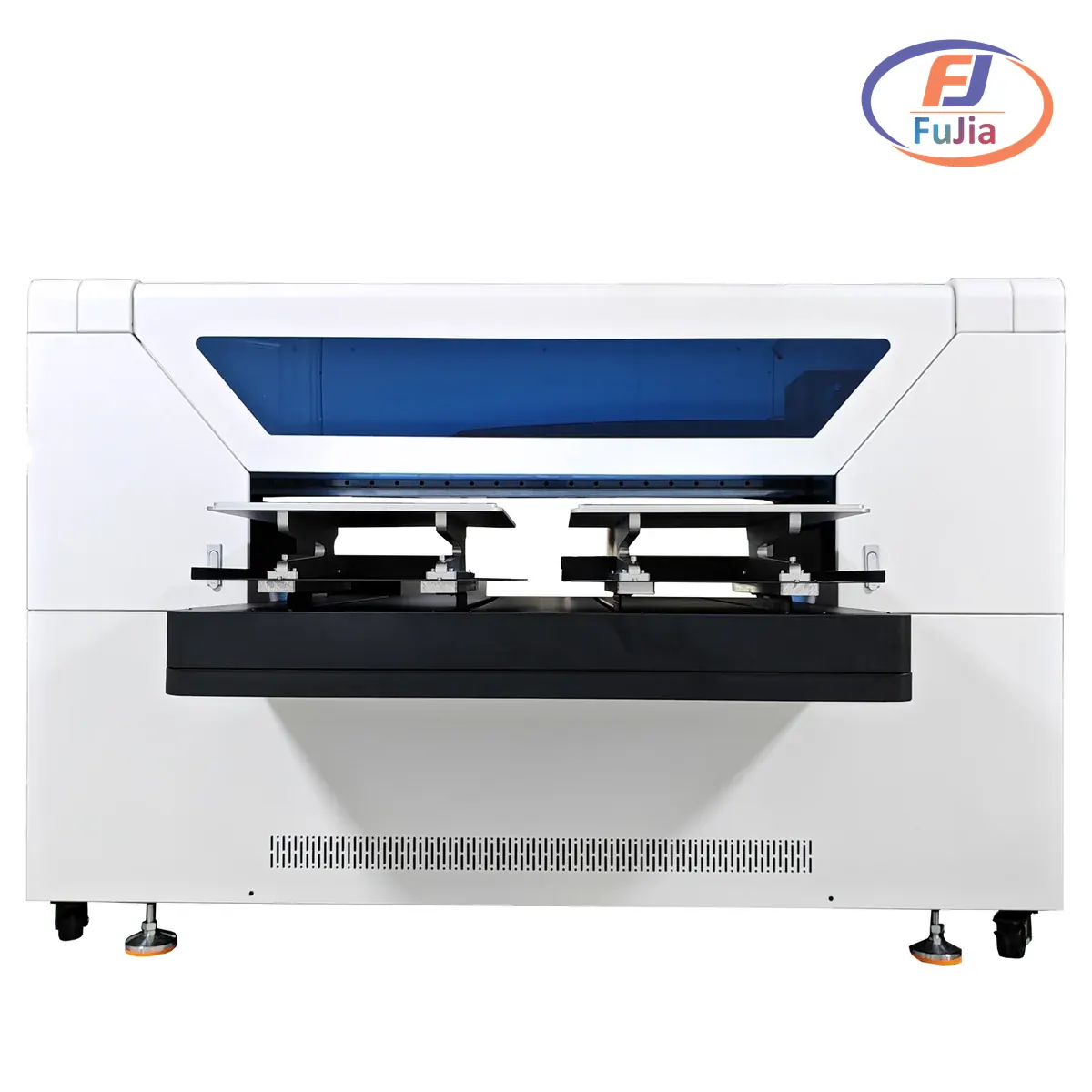
Direct-to-garment prints ink straight into the cotton fiber, so the result feels like part of the shirt with no film on top. Fujia’s A1 dual-station DTG uses two Epson I3200 printheads and lays down millions of tone steps, which is why it handles photographs, gradients, and small text in many colors that a vinyl layer cannot. The direct-to-garment printing method needs no cutting or weeding, so a one-off design costs the same to produce as the thousandth, and small batches stay practical.
DTG fits on-demand and custom work: a single photo shirt, a small run of event tees, or art with constant variation. The process uses a pretreatment step and a cure at 170°C for 30 seconds, and finished prints hold 50 plus washes at Grade 4 to 5 color fastness on cotton-leaning fabric. For shops that print detail and change artwork every order, DTG removes the per-design labor that vinyl demands. Fujia’s DTG printers carry the same 2 year warranty and 48 hour parts dispatch as the rest of the line.
Heat Transfer: Strengths
Heat transfer, usually heat-transfer vinyl, cuts a colored sheet and presses it onto the garment at about 160°C for 15 seconds, with no ink and no pretreatment. A heat press and a vinyl cutter handle cotton, polyester, and nylon blends, which makes it the safer pick for tough or synthetic fabric where DTG ink bonds weakly. The pressed vinyl sits on the surface and survives commercial laundering, so simple logos, names, and numbers stay crisp through years of wear.
The big draw is startup cost and simplicity. A cutter and press cost far less than a DTG printer plus a pretreatment unit, and there is no ink to manage or clog. The trade-off is labor: every unique design must be cut and weeded, so a complex multi-color mark takes real hands-on time per item. Heat transfer is the right call for repeat simple marks, team names, and shops that want to start cheap and stay on easy fabric. Fujia builds the DTG side of this choice and the heat presses used for the vinyl side.
Head-to-Head: Cost
The upfront cost favors heat transfer by a wide margin, but the per-piece cost flips with volume. DTG carries a higher entry price for the printer and pretreatment, yet its running cost per shirt drops once a shop prints past a few hundred pieces a month, because there is no cutting or weeding per design. Heat transfer stays cheap to set up but adds cutting and weeding time for every unique design, so cost per unique item stays higher no matter the run size.
Material standards bodies such as NIST publish the reference data used to rate wash fastness, and both methods hold up under proper cure. Across the 500 plus print businesses Fujia serves, shops under about 500 pieces per month often find heat transfer the cheaper entry, while DTG pulls ahead past that volume on per-piece cost. Match the method to your real monthly volume before you commit to hardware.
Which Should You Choose?
| If you need… | Pick |
|---|---|
| Photo-real images, gradients, small batches | DTG |
| Simple logos on nylon or synthetic blends | Heat Transfer |
| The lowest startup cost | Heat Transfer |
| No per-design cutting or weeding labor | DTG |
Verdict
Pick DTG for photo-real, small-batch, full-color work, and pick heat transfer for simple logos, tough fabrics, and the lowest startup cost. DTG needs pretreatment and cotton-leaning fabric, while heat transfer adds weeding labor for every unique design. For factory-direct DTG and the full lineup, see Fujia Print DTG printers or read apparel printing results from real customers.
Is heat transfer better than DTG?
Heat transfer is better than DTG for simple logos, names, and numbers on tough or synthetic fabrics, and for shops that want the lowest startup cost without managing ink and pretreatment. A heat press and a vinyl cutter handle cotton, polyester, and nylon blends, and the pressed vinyl survives commercial laundering. DTG is better when the artwork is photographic, has gradients, or changes every order, because it prints ink straight into the fiber with no weeding and no per-design cutting. The honest answer is that neither wins everywhere: pick heat transfer for repeat simple marks and DTG for detailed, low-volume, full-color work. Fujia builds the A1 dual-station DTG with two Epson I3200 heads for the detail side, while the heat-transfer side needs only a cutter and press.
What lasts longer, heat transfer or DTG?
Both methods last a long time when applied correctly, but heat transfer vinyl tends to edge out DTG on the hardest fabrics. DTG ink soaks into the fiber and holds 50 plus washes at AATCC Grade 4 to 5 color fastness on cotton and high-cotton blends, which is commercial durability. Heat transfer vinyl bonds on the surface and survives commercial laundering on cotton, polyester, and nylon alike, with less dependence on fabric composition. The weak points differ: DTG fade shows first on low-cotton blends, while poorly pressed vinyl can peel at the edges. Proper cure matters for both, DTG at 170°C for 30 seconds and vinyl at about 160°C for 15 seconds, so follow the temperature and the wash stays sharp for years.
Is DTG higher quality than heat transfer?
DTG is higher quality than heat transfer for photo-real and full-color artwork, because it lays down millions of ink tones straight into the fabric with no visible layer. Heat transfer sits a thin vinyl film on top, which reads as slightly raised and limits color to the vinyl stock you load. For detailed gradients, skin tones, and small text in many colors, DTG wins clearly. For a bold single-color logo, heat transfer matches DTG visually and beats it on fabric range and startup cost. Quality also depends on the garment: DTG needs cotton-leaning fabric and pretreatment, while heat transfer works on almost any material. So DTG is the higher-quality choice for complex images, and heat transfer is the higher-quality choice for simple marks on tricky fabrics.
What is cheaper, heat transfer or DTG?
Heat transfer is cheaper to start, because a cutter and a heat press cost far less than a DTG printer plus a pretreatment unit. The per-piece math flips with volume. DTG has a higher upfront cost but a low running cost per shirt once you print past a few hundred pieces a month, since there is no cutting or weeding labor per design. Heat transfer stays cheap to set up but adds cutting and weeding time for every unique design, so cost per unique item stays higher. Across the 500 plus print businesses Fujia serves, shops under about 500 pieces per month often find heat transfer the cheaper entry, while DTG pulls ahead past that volume on per-piece cost. Match the method to your monthly volume before you buy the hardware.
